
Why Protecting Your HVAC During Hurricane Season Can Save You Thousands
Protecting your HVAC during hurricane season is one of the most important — and most overlooked — steps a homeowner can take before a storm hits. A few simple actions before the storm can mean the difference between powering your AC back on the day after landfall and waiting weeks for a replacement unit.
Here's a quick summary of what to do:
- Shut off your HVAC at both the thermostat and the circuit breaker before the storm arrives.
- Anchor the outdoor condenser with hurricane straps to prevent it from shifting or tipping.
- Clear the area around your unit of any loose objects that could become flying debris.
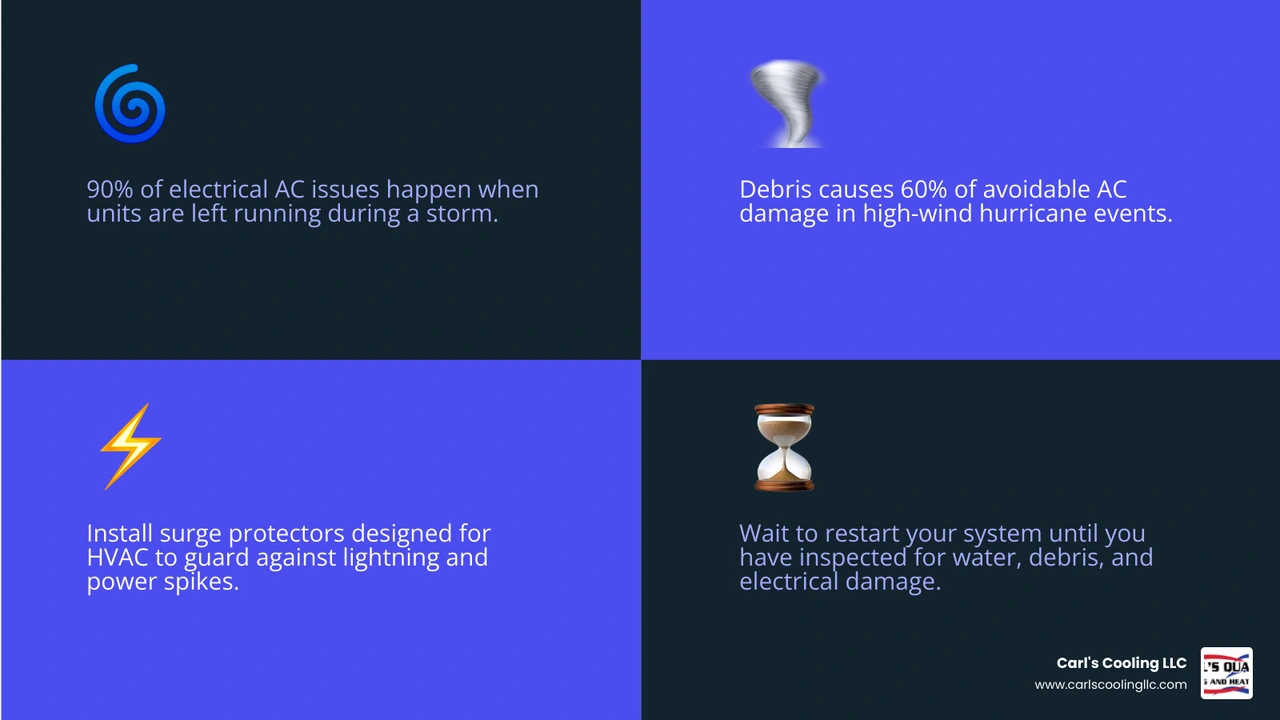
- Install a surge protector designed for HVAC systems to guard against lightning and power spikes.
- Wait before restarting — inspect for water damage, debris, and electrical issues before turning the system back on.
Hurricane season runs from June 1 through November 30, with peak activity between mid-August and late October. That's a long window of risk for your cooling system. Nearly 90% of electrical AC issues occur when units are left running during a storm, and debris alone accounts for 60% of avoidable AC damage in high-wind events. In the Montgomery County area, where summer heat doesn't let up even after a storm passes, losing your AC isn't just uncomfortable — it can be a real health risk.
The good news is that most hurricane damage to HVAC systems is preventable. You don't need to be an expert. You just need to know what to do — and when to do it.
Protecting your hvac during hurricane season terms made easy:
- how extreme humidity stresses your cooling system
- how power outages from storms affect your system
- post hurricane hvac inspection checklist
The Importance of Protecting Your HVAC During Hurricane Season
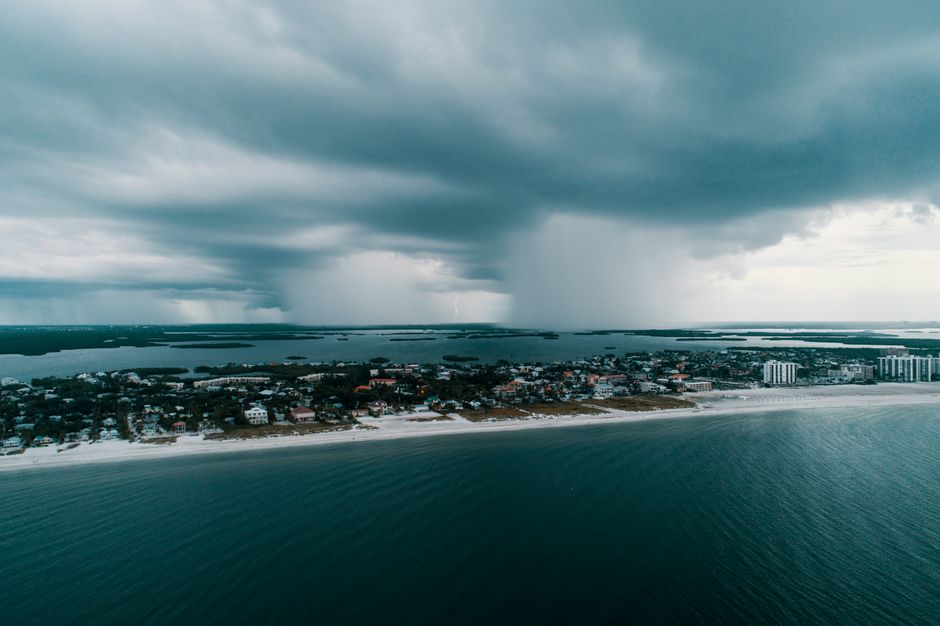
Living along the Texas Gulf Coast, from the serene shores of Lake Conroe to the bustling neighborhoods of North Houston and Spring, we are no strangers to intense summer weather. As we navigate the 2026 hurricane season, safeguarding our homes requires looking beyond window shutters and sandbags. Our heating, ventilation, and air conditioning (HVAC) systems are among the most expensive and vulnerable assets on our properties.
When a tropical storm or hurricane moves inland, it brings a combination of destructive forces:
- Extreme Wind Gusts: Hurricane-force winds can easily exceed 100 mph, generating enough force to shift or completely topple a standard 200+ pound outdoor AC condenser unit.
- Flying Debris: Tree branches, loose patio furniture, and unsecured yard items can transform into high-velocity projectiles. When these strike the delicate aluminum fins and copper coils of your condenser, they can cause irreversible structural damage.
- Electrical Surges and Lightning Strikes: Lightning strikes and sudden power grid failures are incredibly common during severe Gulf Coast storms. A single electrical spike can fry your system's sensitive control boards, blow capacitors, and burn out the compressor motor.
- Inland Flooding: Torrential downpours can quickly saturate the soil, causing standing water to accumulate around your outdoor equipment. If water rises high enough to submerge the electrical components of your unit, it can ruin the system entirely.
Understanding How Texas Gulf Coast Heat and Hurricanes Affect Your HVAC highlights why proactive preparation is so vital. If your system fails during a storm, you may find yourself trapped in a stifling, humid home during the hottest months of the year. Taking time for Safeguarding Your HVAC System for Hurricane Season ensures that when grid power is safely restored, your family can return to a cool, healthy indoor environment.
Pre-Storm Preparation: Hardening Your System
The best time to prepare for a hurricane is during "clear sky" days, long before a tropical system is named or enters the Gulf of Mexico. Trying to secure an outdoor condenser while wind gusts are picking up and hardware stores are sold out is a recipe for disaster.
We recommend establishing a routine pre-season maintenance schedule. A complete check-up ensures your system is operating at peak efficiency and helps identify structural vulnerabilities that could fail under pressure. This is a vital component of a comprehensive HVAC Maintenance Checklist for Hot Humid Gulf Coast properties.
During a pre-season inspection, we focus on:
- Checking electrical connections for tightness and signs of wear.
- Examining the concrete mounting pad to ensure it hasn't cracked, tilted, or sunk into our sandy local soil.
- Clearing away vegetation, vines, and weeds within a five-foot radius of the outdoor unit to maximize airflow and minimize potential wind-blown debris.
- Securing loose panels and checking mounting bolts.
Investing a little time in these early checks plays a massive role in Extending Your HVAC System Lifespan and ensuring your system is resilient enough to handle whatever the season throws our way.
Physical Safeguards for Protecting Your HVAC During Hurricane Season
Securing the physical structure of your outdoor unit is paramount. Your AC condenser sits on a concrete or composite pad. Over time, soil erosion from heavy rains can cause these pads to shift, putting strain on the copper refrigerant lines and electrical conduit.
To physically harden your outdoor unit against high winds:
- Install Hurricane Straps: These are heavy-duty, galvanized steel or aluminum bands designed to anchor the condenser directly to its concrete foundation. Under building codes in many storm-prone areas, these straps are rated to withstand winds up to 150 mph. If your unit lacks straps, or if the existing straps are rusted and corroded from years of humid Gulf Coast air, they should be replaced immediately.
- Clear the Impact Zone: Walk your yard and identify potential flying hazards. Trim back tree branches within 10 feet of the unit. During a storm warning, store all potted plants, patio chairs, toys, and gardening tools safely indoors or in a secure garage.
- Check the Mounting Bolts: Ensure the bolts connecting the unit’s base to the pad are tight and free of severe rust. If the concrete pad itself is cracked or sinking, it should be professionally leveled and stabilized.
Electrical Protection: Protecting Your HVAC During Hurricane Season
While physical damage from flying branches is highly visible, electrical damage is often invisible and far more common. Lightning strikes and sudden power grid fluctuations can send devastating high-voltage spikes through your home's wiring.
Power outages and the subsequent power restoration process are notoriously hard on electrical appliances. To learn more about this threat, read about How Power Outages from Storms Affect Your System.
To protect your system's delicate electronic components:
- Install a Dedicated HVAC Surge Protector: Unlike standard power strips used for televisions, a dedicated HVAC surge protective device (SPD) is wired directly into your system's outdoor electrical disconnect box. It acts as a sacrificial barrier, absorbing massive voltage spikes (up to tens of thousands of amps) and safely diverting them away from your compressor and control boards.
- Upgrade to Whole-Home Surge Protection: For comprehensive peace of mind, installing a whole-home surge protector at your main electrical panel helps shield your indoor air handler, smart thermostats, and other major home appliances.
Taking these electrical precautions is one of the most effective strategies for Preventing Unexpected AC System Failures when the local power grid behaves unpredictably during severe weather.
The 24-Hour Storm Countdown Checklist
When a hurricane or tropical storm warning is officially issued for our area, it’s time to execute your immediate, 24-hour countdown plan. This phase is all about protecting the system from active hazards while keeping your home as comfortable as possible during the initial hours of a power outage.
One highly effective tactic is the pre-cooling strategy. Your home’s walls, furniture, and flooring can act as a "thermal battery." About 12 to 24 hours before the storm is expected to make landfall:
- Lower your thermostat 3 to 5 degrees below your normal setting (down to 68°F or 70°F).
- Keep all windows, blinds, and curtains tightly closed to trap the cold air inside.
- Avoid running heat-generating appliances like the clothes dryer, dishwasher, or oven.
- By deeply cooling the structure of your home, you can maintain a comfortable indoor temperature for hours after the power grid inevitably goes offline.
Once the storm is imminent, perform the Power Down Protocol:
| Pre-Storm Checklist Action | Purpose of the Action |
|---|---|
| Turn off the AC at the thermostat | Prevents the system from trying to cycle on and off rapidly as power fluctuates. |
| Flip the dedicated HVAC circuit breaker to OFF | Disconnects the physical electrical path to prevent high-voltage surges from reaching the compressor and control boards. |
| Remove and store window AC units | Prevents high winds from blowing the unit inward, causing water intrusion and severe window frame damage. |
| Check and clean the indoor air filter | Ensures clean air and maximum airflow once the system is safely restarted post-storm. |
| Document with photos | Take clear, timestamped photos of your indoor and outdoor HVAC equipment for insurance records. |
Flipping the breaker to "Off" is non-negotiable. If the power flickers repeatedly during a storm, an active AC system will try to restart constantly. This rapid cycling can overheat the compressor motor and destroy the capacitor. For more safety tips during severe weather events, review our guide on How to Stay Safe During a Heating or Cooling Emergency.
Post-Storm Recovery: Safely Restarting Your AC
Once the storm has passed and the skies clear, you might be tempted to immediately flip your breaker back on and blast the AC. Resist this urge! Turning on a damaged or waterlogged HVAC system can cause catastrophic electrical shorts, turn minor repairs into total system replacements, and even pose a fire hazard.
Before restoring power, perform a thorough visual inspection using this checklist:
- Check for Standing Water: Is there water surrounding the outdoor unit? If the condenser was submerged in floodwater, do not turn it on.
- Inspect for Physical Damage: Are there large dents, fallen tree branches, or bent metal fins on the unit?
- Look for Displaced Equipment: Has the unit shifted on its concrete pad, or are the refrigerant lines bent, cracked, or showing signs of an oil leak (which indicates a refrigerant leak)?
- Check the Fan Cage: Peer through the top grill. Is the fan blade clear of leaves, twigs, or debris?
- Inspect the Indoor Area: Look around your indoor air handler or furnace. Are there signs of water dripping from the ceiling or roof leaks that may have saturated the indoor electrical components?
For a detailed step-by-step walkthrough, refer to our Post-Hurricane HVAC Inspection Checklist.
If you spot any of these issues, keep the power breaker off and call for professional assistance. Our team is always ready with Emergency HVAC Repair Tips for Montgomery County Homeowners to help you navigate the aftermath of a storm safely.
If your system has been compromised, attempting a DIY restart can void your manufacturer warranty. Knowing When an HVAC Failure is a True Emergency is key to protecting both your household's safety and your financial investment.
Long-Term Hurricane Resilience and Upgrades
If you live in a low-lying or flood-prone area—such as certain neighborhoods near Lake Conroe or low-elevation zones in Houston—you may want to consider long-term physical upgrades to protect your equipment from rising waters.
- Elevate the Outdoor Unit: Elevating your outdoor condenser on a heavy-duty, hurricane-rated platform is one of the single most effective ways to prevent flood damage. Raising the unit even 12 to 24 inches above the local 100-year flood level can keep critical electrical parts and the compressor completely dry during heavy rainfall events.
- Grade the Surrounding Yard: Ensure the ground around your outdoor HVAC pad slopes away from the foundation. This natural drainage path helps prevent pooling water from accumulating around the unit's base.
- Install Advanced Surge Protection: If you haven't already, make a dedicated surge protector a permanent part of your electrical setup. These devices are incredibly cost-effective compared to the cost of replacing fried circuit boards or a seized compressor.
Frequently Asked Questions About Hurricane HVAC Prep
To help you prepare, we’ve gathered answers to some of the most common questions we receive from homeowners throughout our service areas.
Should I cover my AC unit during a hurricane?
This is one of the most common points of confusion. Never cover your AC unit while it is running. Doing so blocks all exhaust air, causing the compressor to overheat rapidly and burn out.
If you have completely powered down the system at the circuit breaker, you can cover the top of the unit with a piece of plywood or a professional, breathable hurricane cover to protect the fan blade and coils from flying debris.
However, do not wrap the entire unit tightly in plastic tarps or garbage bags. Plastic traps moisture and humidity inside the cabinet. In our hot, humid Gulf Coast climate, this trapped moisture creates a greenhouse effect that accelerates rust, corrodes delicate electrical terminals, and can trigger mold growth on the coils in as little as 48 hours. If you do use a temporary breathable cover, remove it immediately after the storm passes.
How long should I wait to turn my AC back on after a power outage?
When utility companies work to restore power after a widespread outage, the electrical grid is highly unstable. Voltage fluctuations, brownouts, and sudden power spikes are incredibly common as linemen bring different sectors back online.
We recommend waiting at least 20 to 30 minutes after your home’s main power has fully stabilized before flipping your HVAC breaker back on. This gives the grid time to settle down. Additionally, many modern digital thermostats have a built-in 5-minute safety delay to prevent the compressor from short-cycling, which is a great built-in defense mechanism.
What should I do if my outdoor unit was submerged in floodwater?
If your outdoor condenser was submerged in standing water, do not attempt to turn it on. Even clean rainwater can ruin electrical controls, start capacitor circuits, and damage the compressor motor if power is applied while components are wet. If the water was brackish or salty, it will trigger rapid galvanic corrosion on the aluminum coils and copper connections within 48 hours.
Keep the circuit breaker in the "Off" position. The unit must be opened, cleaned, thoroughly dried, and inspected by a licensed HVAC professional to verify that it is electrically safe to operate before power is restored.
Conclusion
Taking the time for protecting your hvac during hurricane season is a simple, highly effective way to safeguard your home's comfort and avoid unexpected repair bills. By following the physical and electrical safety steps outlined in this guide, you can rest easy knowing your cooling system is ready to weather the storm.
Don't wait for a tropical system to enter the Gulf of Mexico before taking action. If you need assistance securing your system, installing a dedicated surge protector, checking your concrete pad, or performing a comprehensive pre-season tune-up, we are here to help.
From Conroe and Montgomery to The Woodlands and beyond, our family-owned team is dedicated to keeping your home safe and cool. Contact us today or visit our Houston HVAC Services page to schedule your professional storm-readiness inspection!