
Why Texas Gulf Coast Heat and Hurricanes Put Your HVAC System at Serious Risk
How Texas Gulf Coast heat and hurricanes affect your HVAC comes down to three relentless forces working against your system every single day: crushing heat, suffocating humidity, and the ever-present threat of violent storms. For homeowners and business owners in Conroe, Montgomery, and the surrounding Gulf Coast region, that means your air conditioner isn't just cooling your home — it's fighting a battle on multiple fronts, season after season.
Here's a quick breakdown of the key ways Gulf Coast conditions stress your HVAC system:
- Extreme heat drives energy consumption up 20-50% above 95°F, pushing your system toward near-constant operation
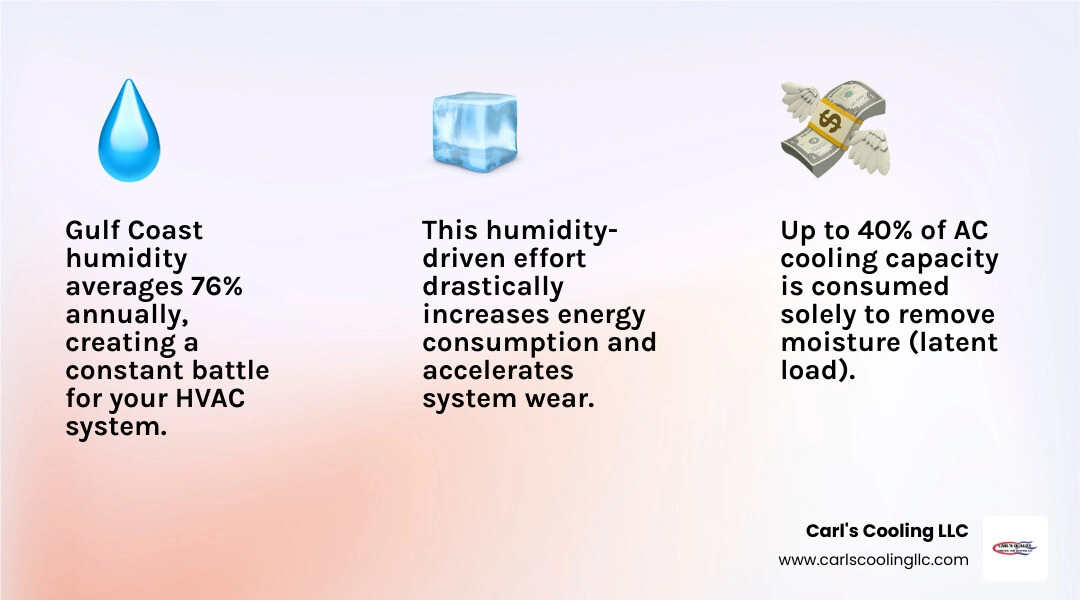
- High humidity (averaging 76% annually in coastal areas) consumes up to 40% of your AC's total cooling capacity just to remove moisture from the air
- Salt air corrosion eats through condenser coils, aluminum fins, and electrical connections, cutting system lifespan from 15-20 years down to as few as 7-12 years
- Hurricane-force winds above 100 mph can dislodge or destroy outdoor condenser units and send debris tearing through components
- Flooding can short-circuit electrical systems and introduce mold-feeding moisture into ductwork — even from shallow water exposure
- Power surges during and after storms send damaging voltage spikes into sensitive HVAC electronics, frying capacitors and circuit boards
The result? An HVAC system that ages faster, breaks down more often, and costs more to run — unless you know what you're up against and take steps to protect it.
How Texas Gulf Coast Heat and Hurricanes Affect Your HVAC
Living in Southeast Texas, particularly in areas like The Woodlands, Spring, and Cypress, we are no strangers to the "triple-digit" days. In fact, cities like Austin and Houston often see more than 30 days a year where the mercury tops 100°F. When the outdoor temperature crosses the 95°F threshold, your air conditioner enters a zone of extreme stress.
Most AC systems are designed to maintain a 75°F indoor temperature when it is 95°F outside. Once we hit 105°F, your home gains heat faster than the system can remove it. This leads to energy consumption spikes of 30% to 50% as the unit runs near-continuously to keep up. This struggle involves two types of heat: sensible heat (the temperature you see on the thermostat) and latent load (the moisture in the air). In our region, Texas Heat: It's No Joke, and the humidity can consume up to 40% of your cooling capacity before the temperature even begins to drop. To keep your home comfortable without breaking the bank, you must Improve AC Efficiency in Summer Heat by ensuring your system is clean and properly charged.
Recognizing early signs of how Texas Gulf Coast heat and hurricanes affect your HVAC
Your system will often tell you it's struggling long before it completely shuts down. If you notice any of these AC System Warning Signs, it’s time to take action:
- Weak Airflow: If the air coming from your vents feels like a light breeze rather than a steady stream, your blower motor or coils may be failing.
- Muggy Indoor Air: If the thermostat says 72°F but you feel "sticky," your system isn't effectively removing the latent load.
- Constant Cycling: An AC that never turns off is a sign that it’s losing the battle against the outdoor heat.
- Rising Energy Bills: Unexpected spikes in your utility costs often point to a loss in mechanical efficiency.
- Unusual Noises: Grinding or squealing sounds often indicate that the motor or compressor is under extreme duress.
Long-term protection against how Texas Gulf Coast heat and hurricanes affect your HVAC
Protecting your investment starts with Regular Maintenance to Prevent AC Repairs. In April 2026, we are operating under the newer SEER2 standards, which are more rigorous than previous efficiency ratings and better reflect the actual conditions of a Texas summer.
Beyond maintenance, ensure your system is the right size. A common myth in Texas is that "bigger is better," but an oversized unit will "short-cycle," turning off before it can remove humidity. We use Manual J load calculations to ensure every installation in Montgomery and Conroe is perfectly matched to the home's square footage, insulation, and window exposure.
Salt Air Corrosion and Reduced System Lifespan
While the sea breeze feels great at the beach, it carries sodium chloride—salt—deep into your HVAC system. Even if you live slightly inland in places like Magnolia or Tomball, coastal winds can still carry salt particles that settle on your outdoor unit.
This salt air acts as an accelerant for rust and corrosion. It specifically targets the aluminum fins and copper condenser coils. As the metal pits and thins, you’ll experience refrigerant leaks and a massive drop in cooling efficiency. This is why Professional HVAC Maintenance Solutions are non-negotiable for Gulf Coast residents. Without regular coil cleaning to rinse away salt deposits, your system's lifespan is dramatically shortened.
| Feature | Inland HVAC (e.g., North Texas) | Coastal HVAC (Texas Gulf Coast) |
|---|---|---|
| Typical Lifespan | 15 - 20 Years | 7 - 12 Years (without protection) |
| Main Threat | Dust and Heat | Salt, Humidity, and Hurricanes |
| Maintenance Need | Annual | Bi-Annual (Minimum) |
| Corrosion Risk | Low | High |
Hurricane Readiness: Securing Your System Against High Winds and Floods
When hurricane season arrives, your outdoor condenser unit becomes the most vulnerable part of your home’s infrastructure. These units are often hollow and relatively lightweight, meaning wind gusts exceeding 100 mph can actually shift them off their pads or carry them away entirely.
To prevent this, we recommend wind-rated anchoring and hurricane straps that secure the unit to a heavy masonry or concrete platform. Furthermore, flying debris—tree limbs, patio furniture, or shingles—can crush the delicate fins of your unit at high velocities. Safeguarding Your HVAC System for Hurricane Season involves more than just physical security; it also means Preventing Unexpected AC System Failures by elevating the unit at least one foot above the base flood elevation in flood-prone areas like Jersey Village or Houston.
Managing Humidity and Indoor Air Quality in Coastal Texas
Humidity in the Gulf Coast regularly hovers between 60% and 80%. When this moisture-heavy air hits the cold surfaces of your HVAC system, it creates condensation. If your system isn't draining correctly, this moisture becomes a breeding ground for mold and mildew in your ductwork and HVAC closets.
Common AC Drainage Problems & Solutions often involve clearing clogged condensate lines that have become backed up with algae. If you find yourself asking, "Why Is My AC Leaking Water?", it is likely due to the system being overwhelmed by the humidity. For many of our neighbors in Lake Conroe and The Woodlands, we recommend whole-home dehumidifiers. These systems work alongside your AC to pull gallons of water out of the air daily, allowing the AC to focus solely on cooling the temperature.
Electrical Safety: Surge Protection and Post-Storm Restarts
Lightning is a frequent companion to Gulf Coast storms. A single strike can send 300 million volts into a home’s wiring. Even if the strike isn't direct, the power surges that occur when the grid is restored after a hurricane can be just as deadly to your HVAC’s circuit boards and capacitors.
Troubleshooting AC Electrical Problems often reveals that a "dead" AC after a storm is simply the result of a blown capacitor—an inexpensive part that fails while protecting the more expensive compressor. However, to truly protect your system, you should install a dedicated HVAC surge protector.
Before restarting your system after a major storm or flood, a Complete HVAC System Inspection Guide is essential. If your outdoor unit was submerged in floodwater, do not turn it on. Mud and silt can be cleaned out if the power was off, but running a wet unit can cause a permanent short-circuit.
Frequently Asked Questions about Gulf Coast HVAC Care
Should I cover my AC unit with a tarp during a hurricane?
No. Covering your unit with a tarp or plastic wrap can actually do more harm than good. These materials trap moisture against the metal, accelerating rust and encouraging mold growth. Additionally, if the wind catches the tarp, it can act like a sail and pull the unit off its mounting. Instead, use a manufacturer-approved, breathable cover specifically designed for storm protection, and remove it immediately after the storm passes to allow airflow.
How often should I clean my outdoor coils to remove salt buildup?
If you live within a few miles of the coast, we recommend a gentle rinsing of your outdoor coils with a garden hose once a month. This helps remove the fine layer of salt and sand that accumulates. For a deeper clean that removes salt from deep within the fins, a professional coil cleaning should be part of your bi-annual maintenance plan.
Is it safe to turn my AC back on immediately after a flood?
It is only safe if the water did not reach the electrical components of the outdoor unit or the indoor air handler. If there was any standing water around your unit, you must keep the power off at the breaker. A professional must inspect the wiring, clean out any silt or debris, and ensure the motor is dry before it is safe to restore power.
Conclusion
At Carl's Cooling LLC, we understand that the Texas Gulf Coast is a beautiful place to live, but it is one of the most demanding environments in the world for an HVAC system. Whether you are in Conroe, Montgomery, or any of our service areas across Montgomery County, our team is here to ensure your home remains a cool sanctuary.
From emergency AC repair during a heatwave to installing hurricane-resistant systems and specialized wine cellar cooling, we provide the local expertise you need. Don't let the heat and salt air shorten the life of your system. If you're looking for reliable Houston HVAC Services or need a seasonal tune-up in The Woodlands, give us a call today. We’ll help you weather the storm and keep your family comfortable all year long.