
Why Is My Heat Pump Freezing Up in the Summer Heat?
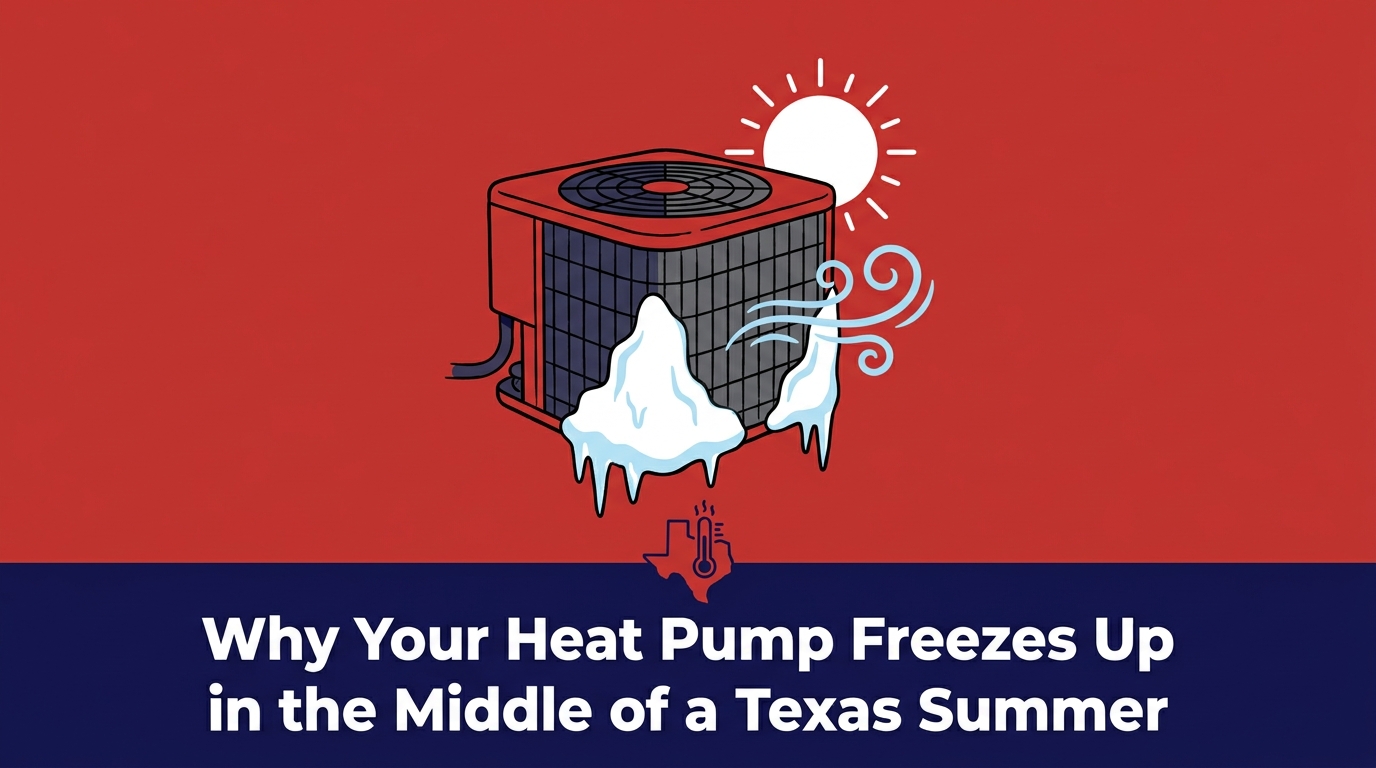
Why is your heat pump running constantly but failing to cool the house, and why is there a solid block of ice on the indoor unit? Finding a frozen solid indoor coil while your house is sweltering is one of the most frustrating paradoxes a homeowner can face. When 100-degree outdoor temperatures are beating down on your roof, the last thing you expect to find inside your utility closet is a chunk of ice.
If you are dealing with this exact scenario, you are facing a critical decision point: determining if this is a simple airflow issue you can safely thaw yourself, or if it indicates a deeper mechanical failure that requires professional intervention. Whether you need comprehensive air conditioning services to diagnose a sealed-system failure, or you simply want to secure your system's reliability with a proactive HVAC maintenance plan, understanding how this paradox happens is your first step.
Many homeowners do not realize that in cooling mode, a heat pump operates exactly like a standard air conditioner. It uses the exact same refrigeration cycle to absorb heat from inside your home and pump it outside. Because the mechanical process is identical, your heat pump is susceptible to the exact same freeze-up risks as a traditional AC unit. To get your home comfortable again, we need to look at the straightforward, honest diagnostics behind why that ice formed in the first place.
Understanding the Heat Pump Freeze-Up Paradox
To understand why ice forms during the hottest part of the year, we have to look at the science of condensation. Your heat pump cools your home by pumping cold liquid refrigerant through the indoor evaporator coil. As warm indoor air blows across this freezing cold metal coil, the refrigerant absorbs the heat. Simultaneously, the cold coil acts like a glass of ice water on a hot day—it pulls moisture out of the air.
Here in Conroe, extreme humidity means heat pumps extract gallons of water from the indoor air every single day. Under normal conditions, this heavy condensation simply drips down into the drain pan and flows safely outside. However, the system relies on a constant, heavy flow of warm indoor air to keep the physical metal coil above the freezing point. If that warm airflow drops, the temperature of the coil plummets rapidly.
By August and late summer, when your system has been working overtime for months, the conditions for a freeze-up are highly elevated. Without sufficient warm air blowing over the cold refrigerant, the heavy condensation freezes instantly. What starts as a thin layer of frost quickly cascades into a solid block of ice. That ice acts as a physical barrier, further choking off the airflow and causing the system to freeze even faster.
• Normal Operation — Airflow Status: Strong, unobstructed — Coil Temperature: Above 32°F — Condensation State: Liquid water draining safely
• Restricted Airflow — Airflow Status: Weak or blocked — Coil Temperature: Below 32°F — Condensation State: Rapidly freezing into solid ice
• Low Refrigerant — Airflow Status: Normal but ineffective — Coil Temperature: Plummeting below 32°F — Condensation State: Frosting over and building ice blocks
Recognizing the Early Warning Signs: Heat Pump Not Cooling
You rarely discover the ice block the moment it begins to form. Instead, the primary symptom that drives homeowners to check their utility closet is the realization of their heat pump not cooling the house effectively. The freezing process happens in stages, and your home's comfort level will drop significantly before the ice becomes visible.
Because the ice block acts as a heavy layer of insulation over the evaporator coil, it physically prevents the cold refrigerant from absorbing any heat from your home's air. The blower motor continues to push air through the ductwork, but that air simply bounces off the ice and returns to your rooms just as warm as it left. This is why you will feel lukewarm or room-temperature air coming from your supply vents.
If you notice any of the following early warning signs, especially during 100-degree outdoor temperatures, it is time to check the indoor air handler:
• Continuous running: The heat pump runs for hours without ever cycling off, yet the indoor temperature on the thermostat never drops.
• Weak vent pressure: The volume of air coming out of your registers feels noticeably weaker than usual, indicating something is blocking the path inside the unit.
• Elevated indoor humidity: The house feels sticky and clammy because the frozen coil can no longer extract moisture from the air.
• Hissing or bubbling noises: Strange sounds coming from the indoor unit can precede a freeze-up if a refrigerant leak is the underlying cause.
If your home feels unusually warm and the system is running continuously, walk over to your indoor unit. If you see frost on the copper refrigerant lines or a block of ice encasing the coil, you must take immediate action to protect the compressor.
Immediate Steps to Safely Thaw a Frozen Indoor Coil
When you discover a frozen heat pump, your first instinct might be to panic or try to remove the ice yourself. As a veteran-owned company, we believe in honest diagnostics and empowering homeowners. Sometimes, a freeze-up is caused by a simple oversight that you can resolve without paying for a service call. However, thawing the unit safely is critical to avoid destroying the equipment.
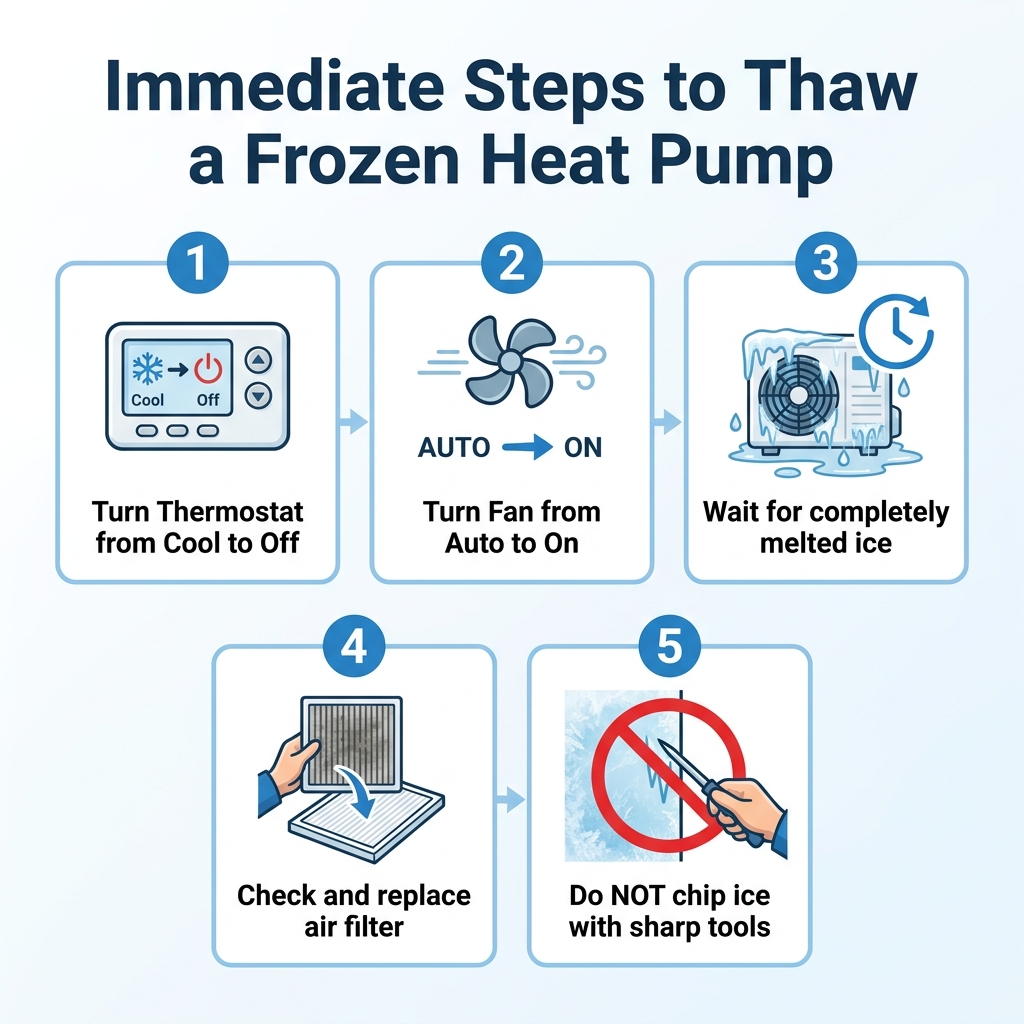
Take these immediate steps the moment you find ice on your indoor unit during late summer:
1. Turn the thermostat from 'Cool' to 'Off' immediately: This is the most critical step. You must stop the compressor from pumping more cold refrigerant into the indoor coil. Running a frozen system can permanently destroy the outdoor compressor.
2. Turn the fan setting from 'Auto' to 'On': While the cooling cycle is off, forcing the indoor blower fan to run continuously will push warm room air over the frozen coil, significantly accelerating the melting process.
3. Wait for the ice to melt completely: Patience is required here. Depending on the size of the ice block and the temperature inside your utility closet, thawing can take anywhere from 2 to 24 hours. Put down towels to catch any overflowing water if the drain pan gets overwhelmed.
4. Check and replace the air filter once thawed: Pull out the filter and inspect it. If it is caked in dust, replace it with a fresh one before turning the cooling mode back on.
5. Never use sharp objects to chip the ice: Do not use knives, screwdrivers, or scrapers to break the ice off the coils. The copper lines are highly pressurized and incredibly thin. A single puncture will release all your refrigerant and require an expensive coil replacement.

The Most Common Culprit: Restricted Airflow and Clogged Filters
If you successfully thaw the unit, you need to know why it froze in the first place. The number one cause of a frozen indoor coil is restricted airflow, and the most frequent culprit behind that restriction is a clogged air filter. Your heat pump requires a specific volume of air passing over the coil to operate correctly. When that volume drops, the coil temperature drops with it.
By August and late summer, your HVAC system has likely been running almost continuously for months. A filter that looked perfectly clean in May can easily become a dense wall of dust, pet dander, and debris by late July. As the filter clogs, it creates a massive drop in static pressure. The blower motor simply cannot pull enough warm air through the dense dirt to keep the evaporator coil above freezing.
Beyond the filter, secondary airflow issues can also cause a freeze-up. Blocked return vents—often covered by heavy furniture or rugs—starve the system of air. Similarly, closing too many supply registers in unused rooms increases pressure inside the ductwork, slowing down the overall air velocity. We recommend a routine filter replacement schedule, checking it every 30 days during peak cooling season, to maintain proper indoor air quality and system health.
How Air Quality Impacts Coil Performance
When a filter becomes heavily soiled, it doesn't just block air; it can also start letting microscopic particles bypass the media entirely. Dust, dirt, and pet dander that slip past a clogged filter get pulled directly into the wet evaporator coil. Because the coil is covered in condensation, this debris sticks to the metal fins like glue.
Over time, this creates a thick layer of grime directly on the coil. This dirt acts as a powerful insulator, physically blocking the cold refrigerant from absorbing heat from the passing air. Even if you put a brand-new filter in, a severely dirty coil will continue to freeze up because the heat transfer process has been compromised.
When to Suspect a Refrigerant Leak or Mechanical Failure
If you have thawed the unit completely, replaced the air filter, and ensured all your vents are open, but the system freezes up again the next day, you are no longer dealing with a simple airflow issue. Recurring freeze-ups during 100-degree outdoor temperatures almost always point to a sealed-system failure that requires a licensed professional.
The most common mechanical cause of a frozen heat pump is low refrigerant (often referred to generically as Freon). It sounds counterintuitive that a lack of cooling fluid causes a system to freeze, but it comes down to pressure. When refrigerant levels drop, the pressure inside the evaporator coil drops as well. Lower pressure forces the refrigerant to expand at a much lower temperature, causing the coil to drop well below the freezing mark and turning normal condensation into solid ice.
It is important to clarify that heat pumps do not "consume" or burn up refrigerant like a car burns gas. It operates in a closed, pressurized loop. If your system is low on refrigerant, it means there is a physical leak somewhere in the copper lines, the coils, or the fittings. Adding more refrigerant without fixing the leak is just a temporary bandage.
One local homeowner called us in the spring after dealing with a system that kept struggling and freezing. Previous technicians had missed a slow leak, repeatedly just topping off the system. Our thorough diagnostic finally pinpointed the freon line leak so it could be properly repaired, stopping the freeze-ups for good.
Mechanical failures can also trigger freezing. If the indoor blower motor fails, or the capacitor that starts the motor burns out, zero air will move across the coil. Checking refrigerant levels, brazing copper lines, or replacing high-voltage blower motors requires specialized tools and licensing. If you suspect these issues, you need professional heat pump services to safely restore your system.
Frequently Asked Questions About Summer Heat Pump Freeze-Ups
Why is my heat pump freezing up in the summer?
A heat pump freezes in the summer when the indoor evaporator coil drops below 32 degrees, causing normal humidity condensation to turn into ice. This is usually caused by restricted airflow, most commonly a dirty air filter, which prevents warm indoor air from keeping the coil above freezing. Alternatively, a refrigerant leak can cause a severe pressure drop that forces the coil temperature to plummet, leading to rapid ice formation even on the hottest days of the year.
Should I turn off my heat pump if it's frozen?
Yes, you should immediately turn the cooling mode off at the thermostat to prevent severe compressor damage. Continuing to run a frozen heat pump forces the outdoor compressor to work against a completely blocked system, which can cause the compressor to overheat and fail permanently. You should leave the thermostat fan setting to "On" to help circulate warm indoor air over the ice and speed up the thawing process.
How long does it take for a frozen heat pump to thaw?
It can take anywhere from 2 to 24 hours for a frozen heat pump to thaw completely, depending on the severity of the ice block and your indoor temperatures. A minor layer of frost might melt in a few hours with the fan running, but a solid block of ice encasing the entire coil and copper lines will take much longer. You must wait until the ice is 100% melted before turning the cooling mode back on, or the freezing cycle will immediately start again.
Can low refrigerant cause a heat pump to freeze in cooling mode?
Yes, low refrigerant is a primary cause of heat pumps freezing in cooling mode. When there is a leak in the system, the low pressure in the evaporator coil causes the temperature of the remaining refrigerant to plummet below freezing. This ultra-cold temperature freezes the surrounding condensation instantly. Because heat pumps do not consume refrigerant naturally, a low charge always indicates a physical leak that a professional must locate and repair.
Why is my heat pump not cooling?
Your heat pump is not cooling because a frozen coil acts as a physical barrier, preventing the system from absorbing heat from your home's air. The ice insulates the cold refrigerant from the warm indoor air blowing past it. As a result, the air passing through the ductwork does not get conditioned, and your vents will blow room-temperature or lukewarm air while the system runs continuously without dropping the thermostat temperature.
Get Honest Diagnostics for Your Frozen Heat Pump
Dealing with a frozen system in late summer is stressful, but taking the right diagnostic steps can protect your equipment from permanent damage. If you have turned the system off, let the ice melt completely, and replaced a dirty filter, you have done everything a homeowner can safely do. If you turn the system back on and it freezes again, professional help is needed to check the sealed refrigerant lines and blower motor components.
Proactive care is the best way to avoid late-summer breakdowns and ensure your indoor air quality remains high without sacrificing comfort. Don't let a small freon leak turn into a catastrophic compressor failure. If your heat pump is struggling to keep up with the Texas heat, scheduling a thorough inspection or securing an HVAC maintenance plan will give you the peace of mind that your home will stay reliably cool all season long.