
Why Seasonal HVAC Tips for Montgomery County Homeowners Matter More Than You Think
Following the right seasonal HVAC tips for Montgomery County homeowners can mean the difference between a system that runs reliably all year and one that fails on the hottest day in August or the coldest night in January. Montgomery County's Gulf Coast climate pushes heating and cooling systems harder than almost anywhere else in Texas — with brutal summer humidity, scorching heat, and the occasional winter freeze all taking a toll on your equipment.
Here's a quick look at the most important seasonal HVAC tasks to keep your system running strong:
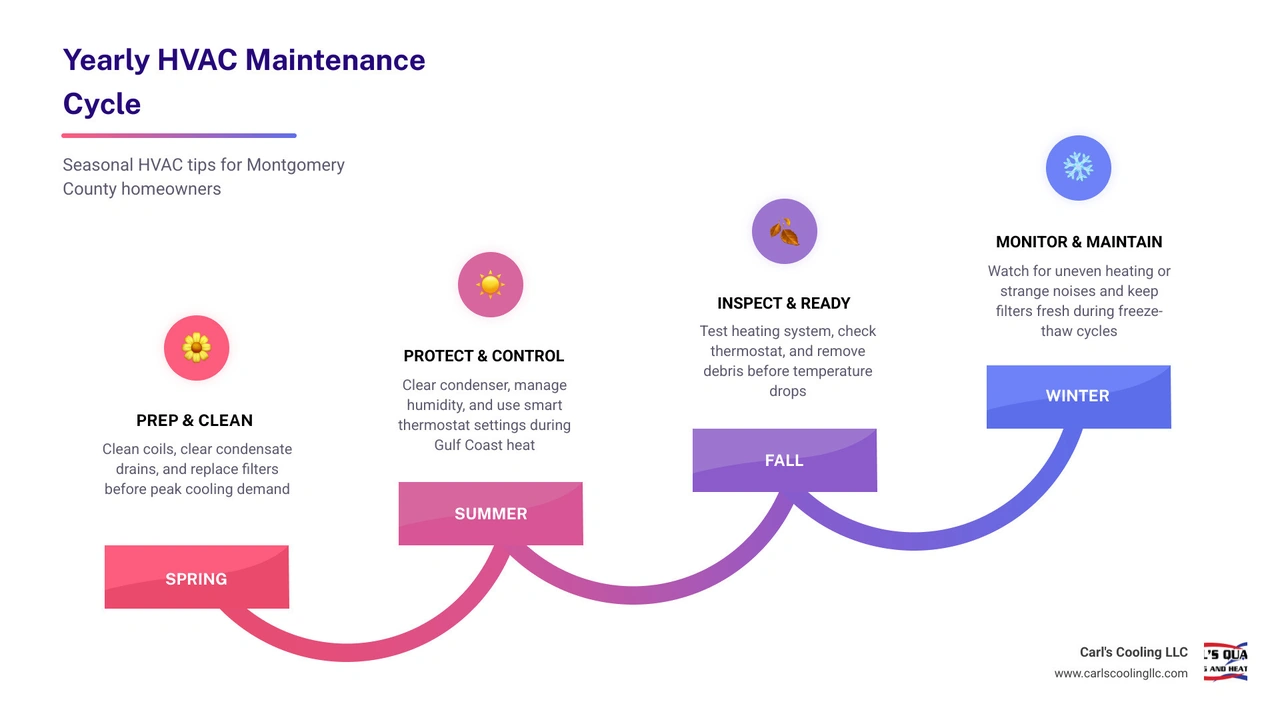
- Spring - Clean coils and condensate drain lines, replace air filters, and schedule a professional AC tune-up before peak cooling season.
- Summer - Keep condenser units clear, monitor humidity levels, and set your thermostat strategically to reduce energy bills.
- Fall - Inspect your heating system, test your thermostat, and clear debris from outdoor units before temperatures drop.
- Winter - Check heat pump performance, replace filters, and watch for warning signs like uneven heating or unusual noises.
- Year-round - Change filters regularly, schedule annual maintenance, and consider a smart thermostat to manage comfort and costs.
Heating and cooling account for nearly 50% of a typical household's summer energy bill in the DMV and Gulf Coast regions. Skipping routine maintenance doesn't just risk your comfort — it drives up your monthly costs and shortens the life of expensive equipment. Whether you're preparing for another Montgomery County summer or getting your heater ready for a winter cold snap, staying ahead of seasonal maintenance is the smartest move you can make as a homeowner.
Glossary for seasonal hvac tips for montgomery county homeowners:
- how extreme humidity stresses your cooling system
- how to help your ac during heat waves
- post hurricane hvac inspection checklist
How the Texas Gulf Coast Climate Impacts Your Heating and Cooling Systems

Living on the Texas Gulf Coast means our homes experience some of the most intense climate conditions in the country. From Cypress to Conroe and up to Willis, our HVAC systems are subjected to prolonged periods of high heat, dense humidity, and unpredictable weather events. Understanding How Montgomery County Climate Affects Your HVAC System is key to protecting your investment and ensuring year-round indoor comfort.
The biggest challenge for local air conditioners is the sheer volume of moisture in the air. When outdoor relative humidity levels hover around 70% to 90%, your AC has to work twice as hard. It cannot simply lower the temperature; it must first strip gallons of water from the air to make your home feel comfortable. This dual burden is known as the latent heat load. On a typical 95°F day in The Woodlands, an air conditioning system can pull anywhere from 4 to 8 gallons of water out of your indoor air daily.
Additionally, our region is prone to severe weather, especially during hurricane season. High winds, heavy downpours, and power surges can easily damage outdoor condenser units. Debris like pine needles, leaves, and twigs can clog fins and restrict airflow.
Even our winters present unique challenges. While we do not experience prolonged sub-zero temperatures, the rapid swings between mild afternoons and sudden overnight freezes create freeze-thaw cycles. This temperature volatility causes metal components to expand and contract rapidly, which can loosen electrical connections, stress refrigerant lines, and accelerate the wear and tear on your heat pump or furnace.
Essential Seasonal HVAC Tips for Montgomery County Homeowners
To combat the intense local weather, proactive home maintenance is your best line of defense. By implementing a few straightforward HVAC Maintenance Tips for Homeowners, you can dramatically extend your system's lifespan, preserve healthy indoor air quality, and keep your monthly utility bills from skyrocketing.
Let’s break down your seasonal game plan into actionable steps for spring, summer, fall, and winter.
Spring Prep and Seasonal HVAC Tips for Montgomery County Homeowners
Spring is the absolute best time to prepare your cooling system for the upcoming summer onslaught. Taking a few proactive steps in March or April will prevent your system from breaking down when temperatures climb past 90°F in June.
- Clean the Coils and Fins: Your outdoor condenser unit relies on clean aluminum fins and copper coils to dump heat outside. Over the fall and winter, dirt, grass clippings, and pollen build up on these surfaces. Use a soft brush or a low-pressure garden hose to gently rinse away this grime. Never use a pressure washer, as the high force will bend the delicate metal fins.
- Clear the Condensate Drain Line: Because our AC units remove so much humidity, the condensate drain line is constantly active. Algae, mold, and dust can easily form a gelatinous clog inside this pipe. To prevent water damage and system shut-offs, flush your drain line with half a cup of white vinegar every spring.
- Replace Air Filters: A dirty filter acts like a wall to airflow. It forces your system to run longer, consumes more energy, and can even cause your indoor evaporator coil to freeze over.
- Schedule Professional Maintenance: While DIY tasks are helpful, a certified technician should inspect your refrigerant charge, test electrical contacts, and measure airflow. Be sure to read up on the Spring HVAC System Maintenance Tips and understand the overall Importance of Spring Maintenance to see why a professional tune-up is a non-negotiable step.
Summer Readiness and Seasonal HVAC Tips for Montgomery County Homeowners
Once summer arrives in Montgomery County, your air conditioner is running almost continuously. During this high-demand season, your primary goals are maintaining system efficiency and reducing the overall cooling load on your home.
- Maintain Outdoor Clearance: Ensure there is at least a two-foot clear zone around your outdoor condenser unit. Trim back any climbing vines, tall bushes, or weeds. If the outdoor unit is crowded, it cannot release heat efficiently, which dramatically increases energy consumption.
- Manage Indoor Humidity: Keep your AC fan setting on "AUTO" rather than "ON." When the fan runs continuously on "ON," it blows air over a wet evaporator coil that has just finished a cooling cycle, pushing that moisture right back into your living spaces. Run bathroom exhaust fans during and for 20 minutes after showers to expel excess humidity.
- Optimize Thermostat Settings: To balance comfort and savings, set your thermostat to 78°F when you are at home. When you head out for work or errands, raise the temperature by 7 to 10 degrees. You can find more detailed guidance on optimizing your system by reviewing our Summer AC Maintenance Tips and our specialized HVAC Maintenance Checklist for Hot Humid Gulf Coast.
Fall and Winter Maintenance Strategies
As the summer heat finally breaks, it is time to shift your focus to heating readiness. Do not wait for the first true cold snap to turn on your furnace or heat pump.
- Test the Heating Cycle Early: In October, turn your thermostat to "HEAT" and set the temperature a few degrees above the room's current reading. Let it run for 15 minutes. It is completely normal to smell a slight burning odor initially as accumulated dust burns off the heating elements. However, if that smell persists, or if you hear loud rattling, shut it down and call for service.
- Inspect the Heat Exchanger and Venting: For gas furnaces, safety is paramount. A cracked heat exchanger can leak carbon monoxide into your home. A professional fall inspection will verify that your heat exchanger is completely intact and that your exhaust vents are clear of bird nests or debris.
- Winterize Your Outdoor AC Unit: If you have a standalone air conditioner (not a heat pump), you should winterize it. Shut off the power at the outdoor disconnect box to prevent the unit from accidentally turning on during a warm winter day. Clean the unit thoroughly, vacuuming out any leaves or pine needles from the base. Finally, place a rigid cover (like a piece of treated plywood weighted down with a brick) over the top of the unit to keep out falling debris. Never wrap the entire unit in plastic tarps, as this traps moisture inside, leading to severe rust, corrosion, and an ideal nesting spot for rodents.
- Know When to Schedule: Timing is everything. Learn When to Schedule Fall AC Services to beat the winter rush and ensure your family stays warm safely.
Maximizing Energy Efficiency and Lowering Utility Bills
With energy costs on the rise, finding ways to lower your utility bills without sacrificing comfort is a top priority for Montgomery County homeowners. Fortunately, several simple adjustments and home upgrades can yield massive savings.
First, consider upgrading to an ENERGY STAR certified smart thermostat. These devices learn your daily routine and automatically adjust temperatures when you are asleep or away. On average, smart thermostats deliver an 8% savings on annual cooling costs, which equates to roughly $150 to $250 back in your pocket each year.
Second, do not ignore your attic. Inadequate attic insulation acts like an open window, allowing scorching heat to radiate down into your living spaces during summer and letting precious warmth escape in the winter. Upgrading your attic insulation to recommended R-values can slash your cooling costs by 20% to 30%.
Third, manage solar heat gain. Installing high-quality window treatments, blinds, or solar window films can reduce solar heat gain through your windows by up to 77%. Keeping your curtains closed on south- and west-facing windows during hot summer afternoons blocks out a tremendous amount of heat.
Finally, never underestimate the power of clean airflow. A clogged air filter can reduce your system's overall cooling capacity by up to 15%, forcing it to run longer and draw more power. Be sure to check When to Change Your HVAC Air Filter to keep your system breathing easy.
The table below outlines how minor household adjustments can add up to major annual utility savings:
| Home Upgrade / Adjustment | Estimated Energy Savings | Real-World Impact |
|---|---|---|
| Raise Thermostat 1°F (above 72°F) | ~3% savings on cooling costs | Lower monthly electric bills during peak summer |
| Smart Thermostat Installation | 8% average savings on cooling | Saves roughly $150–$250 per year |
| Set Thermostat 7–10°F higher when away | ~10% annual cooling savings | Reduces unnecessary system wear while you're at work |
| Replacing a Clogged Air Filter | Up to 15% improvement in efficiency | Restores proper airflow and prevents evaporator coil freeze-ups |
| Upgrading Attic Insulation | 20% to 30% reduction in cooling load | Keeps your home cooler in summer and warmer in winter |
| Installing Window Treatments | Up to 77% reduction in solar heat gain | Drastically reduces radiant heat entering through glass |
Preventing Costly Repairs and System Breakdowns
The worst time to deal with an HVAC breakdown is in the middle of a triple-digit heatwave. Fortunately, most major system failures do not happen overnight. Your system will almost always give you warning signs that something is wrong before it shuts down completely.
Keep an eye and an ear out for these common red flags:
- Unusual Noises: Squealing, screeching, banging, or loud rattling sounds point to failing motor bearings, loose belts, or blower wheel issues. A hissing sound often indicates a refrigerant leak.
- Inconsistent Temperatures: If some rooms in your Magnolia or Spring home feel like an icebox while others are warm and humid, your system is struggling. This can be caused by duct leaks, a failing compressor, or incorrect system sizing.
- Sudden Utility Spikes: If your electricity bill jumps dramatically compared to the same month last year, but your family's daily habits haven't changed, your HVAC system is likely running inefficiently due to dirty components or failing parts.
The most effective way to prevent these emergencies is to enroll in a regular preventative maintenance plan. Routine professional inspections allow technicians to spot minor issues — like a worn contactor or a weak capacitor — and replace them before they cause a total system shutdown. Discover How to Prevent HVAC Emergencies with Maintenance and consult our comprehensive Ultimate HVAC Maintenance Guide Montgomery County to keep your system running safely and efficiently year-round.
Frequently Asked Questions About Montgomery County HVAC Care
When is the best time to schedule spring and fall HVAC tune-ups in Montgomery County?
The ideal time to schedule your HVAC tune-ups is during the "shoulder seasons." This means booking your spring cooling check-up between late February and April, and your fall heating check-up between late September and November.
Scheduling during these windows ensures your system is primed and ready before extreme weather hits. It also allows you to avoid the peak season rush, meaning you will have your choice of convenient appointment times and won't have to wait behind emergency repair calls.
What are the top signs that my home's HVAC system needs seasonal service?
You should schedule a service call immediately if you notice:
- Weak airflow coming from your registers.
- The system frequently turning on and off (short-cycling).
- Ice forming on the copper refrigerant lines or the indoor evaporator coil.
- Excess humidity inside your home, even when the AC is running.
- Musty odors coming from your vents, which can indicate mold growth inside your ductwork or drain pan.
How does high humidity affect my air conditioner's performance?
High humidity increases the "latent heat load" on your system. Your air conditioner must cool the humid air until the water vapor condenses into liquid water and drains away. Only after this moisture is removed can the system effectively lower the actual air temperature.
When humidity levels are exceptionally high, your AC has to run much longer cycles to keep you comfortable. If your system is oversized, it may cool the air too quickly and shut off before it has a chance to remove the humidity, leaving your home feeling cold and clammy.
Conclusion
Taking care of your heating and cooling system is one of the most important responsibilities of owning a home in the Texas Gulf Coast region. By following these seasonal HVAC tips for Montgomery County homeowners, you can keep your utility bills low, protect your family's indoor air quality, and make sure your system is ready to handle whatever weather Texas throws our way.
From routine spring check-ups and summer humidity control to winter heating safety, staying proactive is always more cost-effective than waiting for a major breakdown. If you want to ensure your system is in peak condition, let our friendly, experienced team help. Schedule expert HVAC services with Carl's Cooling LLC today, and let us keep your home comfortable in Conroe, Montgomery, and beyond!