
Stop Before You Pour: The Truth About Bleach in Your AC Drain
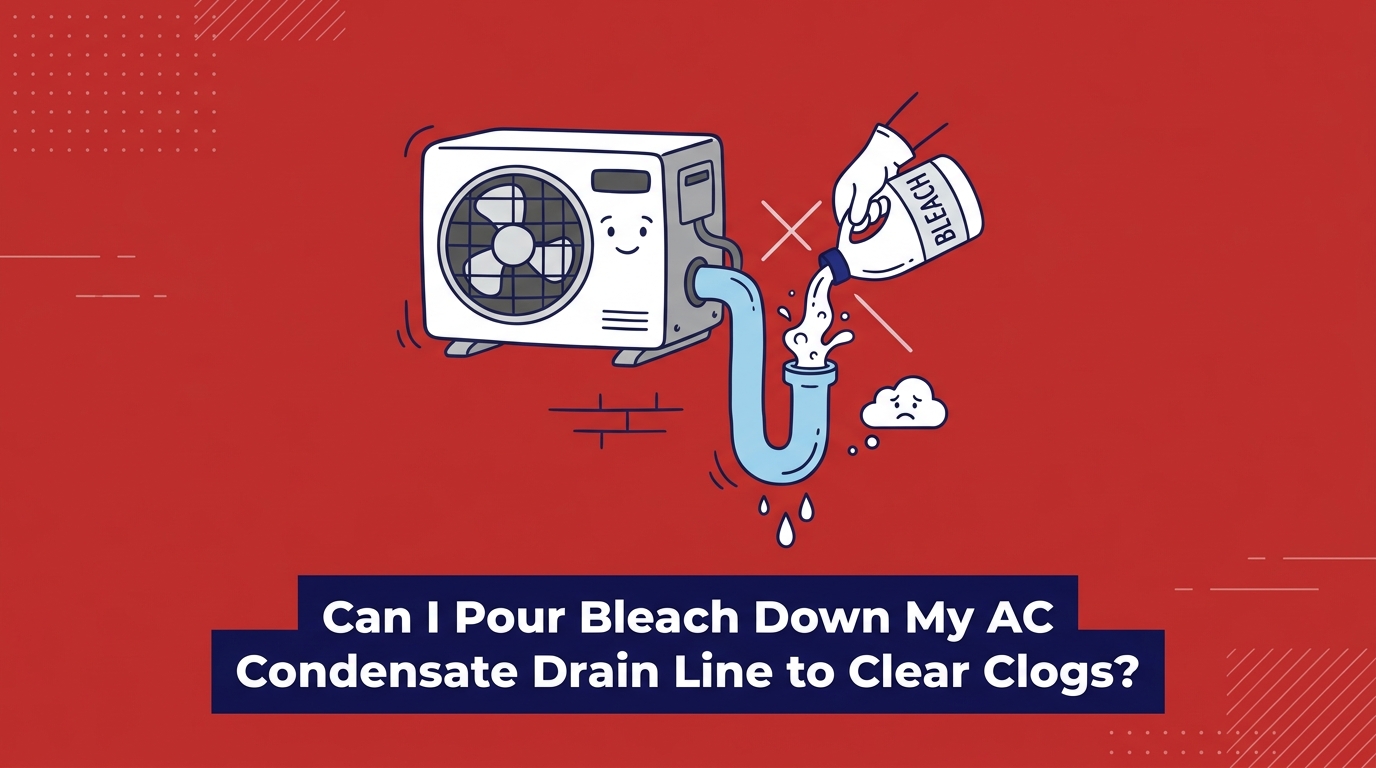
Are you staring at a backed-up air conditioning unit, holding a jug of household cleaner, and asking yourself: "Can I Pour Bleach Down My AC Condensate Drain Line to Clear Clogs?" At Carl's Quality Cooling and Heating LLC, our technicians field this question constantly, especially as end-of-season cooling demands peak. The short, definitive answer is no. Do not pour bleach down your AC condensate drain line. When you are dealing with a sluggish or completely blocked drainage system, reaching for the strongest chemical under your sink feels like a logical, fast DIY solution. However, bleach introduces severe risks that far outweigh the temporary convenience of clearing a clog.
While bleach is highly effective at killing the algae and biological slime that typically cause these blockages, it aggressively attacks the structural integrity of your plumbing. You might clear the immediate backup, but you are quietly setting the stage for a much larger, more destructive plumbing failure down the road. If you are struggling with a stubbornly clogged system and recurring drainage issues, you need a safer approach. For expert help, explore our air conditioning services to see how professional care keeps your system running safely and efficiently.
How Bleach Quietly Destroys PVC Cement
To understand why bleach is so dangerous to your air conditioning system, you have to look at how your condensate drain line is constructed. The white plastic pipes carrying water away from your indoor unit are made of polyvinyl chloride (PVC). The PVC plastic itself is relatively resilient and can withstand exposure to many household chemicals. The vulnerability lies in the joints.
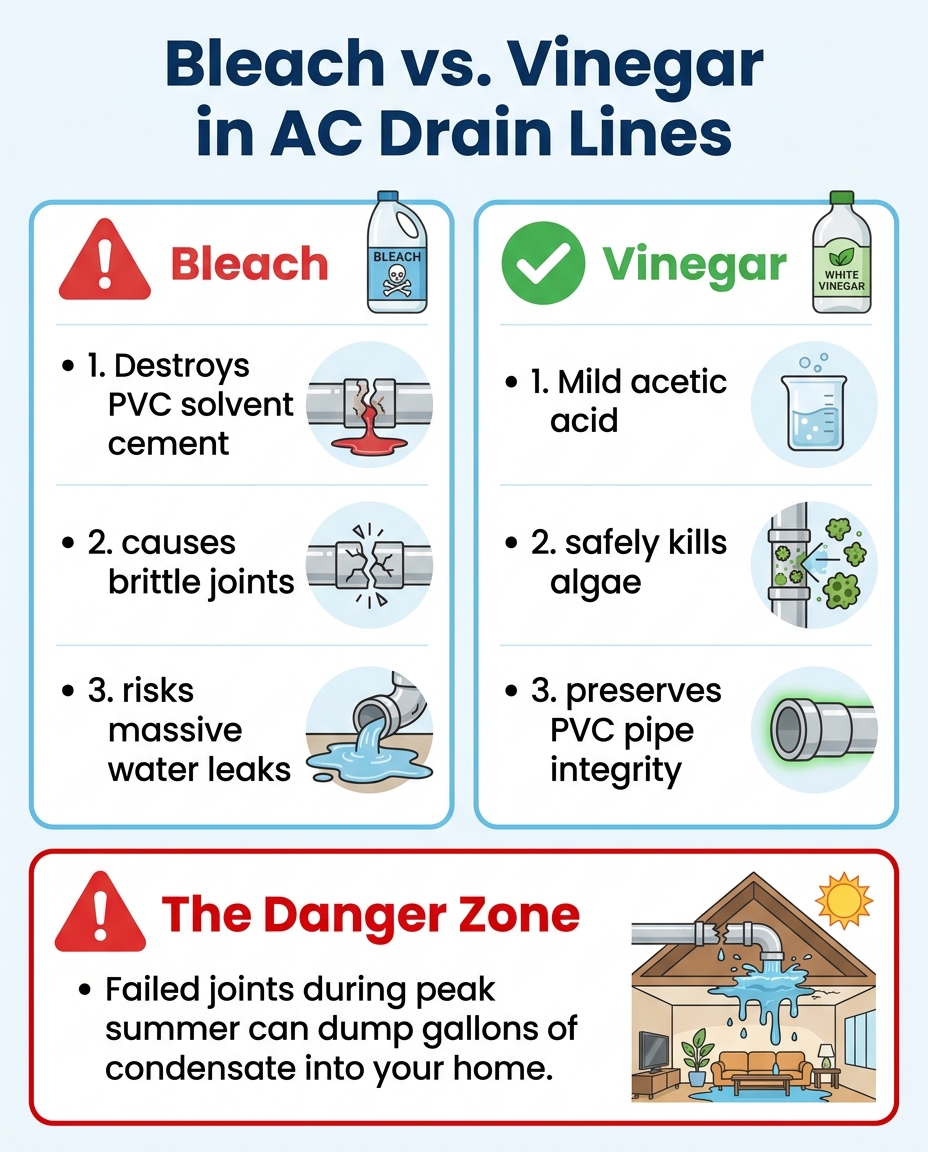
PVC pipes are not screwed together; they are chemically fused using a specialized solvent cement. This glue melts the outer layer of the plastic to create a watertight seal. Sodium hypochlorite—the active ingredient in household bleach—is a powerful oxidizer. When you pour bleach down the drain, it reacts with the PVC solvent cement. Over time, this chemical reaction strips away the flexible, sealing properties of the glue, causing it to become brittle, flake, and eventually fail.
As a veteran-owned business serving the Conroe area, our team at Carl's Quality Cooling and Heating LLC has replaced countless PVC joints ruined by harsh chemicals. We believe in doing things right the first time. We focus on disciplined, long-lasting solutions rather than reckless chemical shortcuts that compromise your system's integrity. Repeatedly treating your drain line with bleach turns a simple maintenance task into a ticking time bomb. Once that solvent cement degrades, the joint cracks, and your minor clog transforms into a major plumbing break right inside your home. Homeowners in Conroe TX often discover this the hard way when an oxidized pipe joint suddenly gives way in the middle of the night.
The Chemical Breakdown: Pipe vs. Glue
• PVC Pipe (Polyvinyl Chloride) — Reaction to Bleach (Sodium Hypochlorite): Generally resistant; surface may slightly discolor over years of exposure. — Long-Term Outcome: Pipe remains largely intact, though repeated high-concentration exposure can cause micro-abrasions.
• PVC Solvent Cement (Glue) — Reaction to Bleach (Sodium Hypochlorite): Highly reactive; oxidizes rapidly upon contact with strong bases. — Long-Term Outcome: Becomes brittle, loses adhesive properties, and cracks under the weight of flowing water.
• Metal Drain Pans/Coils — Reaction to Bleach (Sodium Hypochlorite): Accelerates corrosion and rust immediately upon contact. — Long-Term Outcome: Pits the metal, leading to premature failure of the evaporator coil or drain pan.
If you want to protect your plumbing while keeping your system running smoothly, a safer, systemic approach is required. Enrolling in a routine HVAC maintenance plan ensures your drain lines are cleared using safe, professional methods that never jeopardize your pipe joints.
The High Cost of Water Damage During Peak Cooling Season
The risk of a bleach-induced PVC joint failure becomes catastrophic when you factor in the sheer volume of water your air conditioner produces. Your AC unit does more than just lower the temperature of the air; it also acts as a powerful dehumidifier. As warm indoor air blows over the freezing cold evaporator coil, moisture condenses into liquid water, drips into a drain pan, and flows outside through the PVC line.
In late August, as families gear up for the back-to-school transition, the lingering extreme Gulf Coast humidity forces AC systems to run constantly. Our technicians regularly see the aftermath of these overworked systems. During this period, an average residential air conditioner can extract anywhere from 5 to 20 gallons of water out of your indoor air every single day. That is the equivalent of leaving a garden hose dripping directly into your attic or utility closet.
What Happens When a Weakened Joint Fails?
If you have been using bleach to clear out algae, and the PVC cement finally gives way during peak August late-summer humidity, all of that condensation has nowhere to go but into your home's structure. The progression of water damage is rapid and expensive:
• Attic saturation: Water pours out of the broken joint, soaking the fiberglass or blown-in insulation, rendering it useless and heavy.
• Ceiling collapse: The saturated insulation presses down on your drywall ceiling. Drywall turns to mush when wet, eventually buckling and collapsing into your living room or hallway.
• Wall cavity flooding: If the unit is housed in an interior closet, the water travels down the wooden studs, warping baseboards and ruining hardwood or laminate flooring.
• Hidden mold growth: Even if you catch the leak quickly, the trapped moisture in the dark, warm spaces of your home creates an ideal environment for toxic mold to spread within 48 hours.
The financial difference between clearing a minor biological clog and repairing extensive structural water damage is massive. Preventative safety is always cheaper than disaster recovery.
White Vinegar: The Safe, Effective DIY Alternative
If bleach is off the table, how are you supposed to manage the biological growth that inevitably builds up in your plumbing? When homeowners search the internet asking, "Can I pour bleach down my AC condensate drain line," what they are really looking for is a reliable way to kill algae and mold. Based on our years of maintaining HVAC systems throughout Conroe, we always recommend distilled white vinegar as the correct, plumbing-safe DIY alternative.
White vinegar contains mild acetic acid. This acid is strong enough to kill the vast majority of biological slime, mold, and mildew that thrive in dark, damp drain lines, but it is gentle enough that it will not oxidize or degrade your PVC solvent cement. It is a highly effective preventative measure that protects both your indoor air quality and your home's structural integrity.
How to Safely Flush Your Line with Vinegar
1. Turn off your AC unit: Always shut down the system at the thermostat to stop the flow of condensation while you work.
2. Locate the access tee: Find the T-shaped PVC pipe near your indoor air handler. It usually has a removable cap.
3. Pour slowly: Remove the cap and slowly pour one cup of distilled white vinegar down the pipe.
4. Let it sit: Allow the vinegar to sit in the line for about 30 minutes to break down the biological buildup before turning the system back on.
While vinegar is fantastic for routine prevention, it is a mild acid. If your line is already completely packed with a dense, solid clog of dust, pet hair, and thick algae, pouring vinegar on top of it will not magically dissolve the blockage. For more detailed troubleshooting on standing water issues, review our guide on AC drainage problems and solutions.

Signs Your Condensate Clog Requires Professional Clearing
There is a distinct line between proactive DIY maintenance and a plumbing emergency that requires specialized tools. If you have tried flushing the system with vinegar but the water refuses to drain, you are dealing with a severe, compacted blockage. Knowing when to step back and call a technician can save you from accidentally puncturing your pipes or damaging sensitive electrical components.
When to Call for Backup
• Standing water in the drain pan: If the primary drain pan beneath your indoor coil is overflowing or filled to the brim with stagnant water, the main line is entirely blocked.
• The AC shuts off automatically: Modern air conditioners are equipped with a float switch. If water backs up too high in the pan, this switch trips and cuts power to the unit to prevent flooding. If your thermostat is blank or the AC won't turn on, a clogged drain is a likely culprit.
• Water pooling around the indoor unit: If you see water stains on the ceiling below your attic unit, or puddles forming around your garage air handler, the system is already overflowing.
• Gurgling noises: A persistent bubbling or gurgling sound coming from the PVC pipe indicates that water is struggling to push past a partial blockage.
Never attempt to clear a stubborn clog by shoving a wire coat hanger, a plumbing snake, or any sharp object down the PVC pipe. The plastic curves and elbows can easily be punctured by rigid metal, leaving you with a permanent leak that requires pipe replacement.
Professionals use specialized equipment to safely restore flow without harsh chemicals. Technicians attach high-powered wet/dry vacuums to the outside termination point to suction the clog out, or they use regulated bursts of compressed nitrogen to safely push the blockage through the pipe. Our team at Carl's Quality Cooling and Heating LLC recently rescued a Conroe TX homeowner who faced a completely faulty AC unit during intense late-summer Texas heat. A technician serviced the unit the very same day they called, ensuring the complex drainage and cooling work was done correctly and at a fair price. When you hit a wall with DIY methods, scheduling professional AC service is the safest path forward.
Long-Term Prevention: Keeping the Drain Line Clear Year-Round
Shifting your mindset from emergency unclogging to routine, systemic health is the best way to avoid drainage disasters. The Gulf Coast climate creates a constant, ideal breeding ground for biological slime. Dark, damp, and warm environments allow algae to multiply rapidly, which means your system requires recurring preventative care rather than one-time chemical attacks.
One of the most overlooked factors in condensate drainage is indoor air quality. When your air filter becomes clogged with dust, pet hair, and debris, that dirt bypasses the filter and coats the freezing evaporator coil. As condensation forms on the coil, it washes that dirt down into the drain pan. The mixture of dust and biological slime creates a thick, mud-like substance that easily clogs narrow PVC pipes. Changing your air filter every 30 to 90 days is a critical first step in keeping the drain line clear.
The Value of Professional Tune-Ups
Routine professional maintenance goes far beyond just checking the refrigerant levels. A comprehensive tune-up includes proactive drain line clearing and pan treatments to ensure water flows freely all season long.
• Proactive flushing: Technicians clear out minor buildup before it has a chance to solidify into a major clog.
• Algaecide tablets: Safe, time-release treatments can be placed in the drain pan to prevent biological growth for months at a time.
• Float switch testing: Ensuring your emergency shut-off switch actually works prevents catastrophic flooding if a clog does occur.
• System inspection: Catching a slow-draining line in April prevents a complete system shutdown during August late-summer humidity.
During a recent routine maintenance visit, one of our expert technicians at Carl's Quality Cooling and Heating LLC thoroughly inspected a customer's system, explained the potential drainage problems that were developing, and provided clear preventative options. The customer was able to decide what was best for their family, gaining total peace of mind that their system was ready for the heavy cooling season.
Frequently Asked Questions About AC Drain Line Maintenance
To help you maintain a healthy, leak-free system, we have compiled the most common questions homeowners ask about managing their condensate plumbing.
What can I pour down my AC drain line to unclog it?
Use distilled white vinegar for preventative maintenance and to clear mild biological buildup. When homeowners ask us, "Can I pour bleach down my AC condensate drain line," we always redirect them to vinegar because it is safe and effective. Avoid bleach, Drano, or any other harsh chemical drain cleaners. For severe, solid clogs that vinegar cannot break down, physical removal via a specialized wet/dry vacuum or a professional service call is required.
Will bleach damage my AC drain pipe?
Bleach primarily damages the PVC solvent cement (the glue) holding the pipe joints together, rather than the plastic pipe itself. Over time, the strong oxidizing nature of bleach causes these glued joints to become brittle, crack, and eventually leak water into your home. Furthermore, if bleach fumes or liquid come into contact with the metal components of your AC, such as the evaporator coil, it can rapidly accelerate rust and corrosion.
Is vinegar or bleach better for AC drain lines?
Vinegar is significantly better and vastly safer for your air conditioning system. Distilled white vinegar is a mild acetic acid that effectively kills algae, mold, and mildew without degrading your plumbing materials. Bleach, on the other hand, is a harsh oxidizer that destroys PVC glue and risks causing expensive water damage.
How much vinegar do I pour down my AC drain line?
A standard preventative treatment requires about one cup of distilled white vinegar. You should pour it very slowly into the access tee near your indoor air handler. For optimal prevention, this simple maintenance task can be performed every two to three months during the peak cooling season when your AC is producing the most condensation.
What happens if my AC drain pan overflows?
Most modern HVAC systems are equipped with an emergency float switch that will automatically shut off the air conditioner to prevent the pan from flooding your home. If this switch fails, or if your older system does not have one, the water will spill over the sides of the pan. This overflow can cause severe ceiling collapses, ruined drywall, and extensive structural damage. An overflowing pan is a clear indicator of a completely blocked drain line that needs immediate professional attention.
Protect Your System and Your Home from Drain Line Disasters
Maintaining a clear condensate drain line is vital for the health of your HVAC system, but how you clear it matters just as much. Using harsh chemicals like bleach risks expensive water damage by slowly destroying the PVC glue that holds your plumbing together. Instead, rely on distilled white vinegar for safe, effective routine prevention. If you are dealing with stubborn, recurring clogs in Conroe TX, do not wait for a pipe to burst or a ceiling to cave in. Reach out today to schedule a thorough inspection or join a routine maintenance plan, and let our professionals keep your system draining flawlessly all year long.