



Why Regular HVAC Maintenance Matters for Every Homeowner
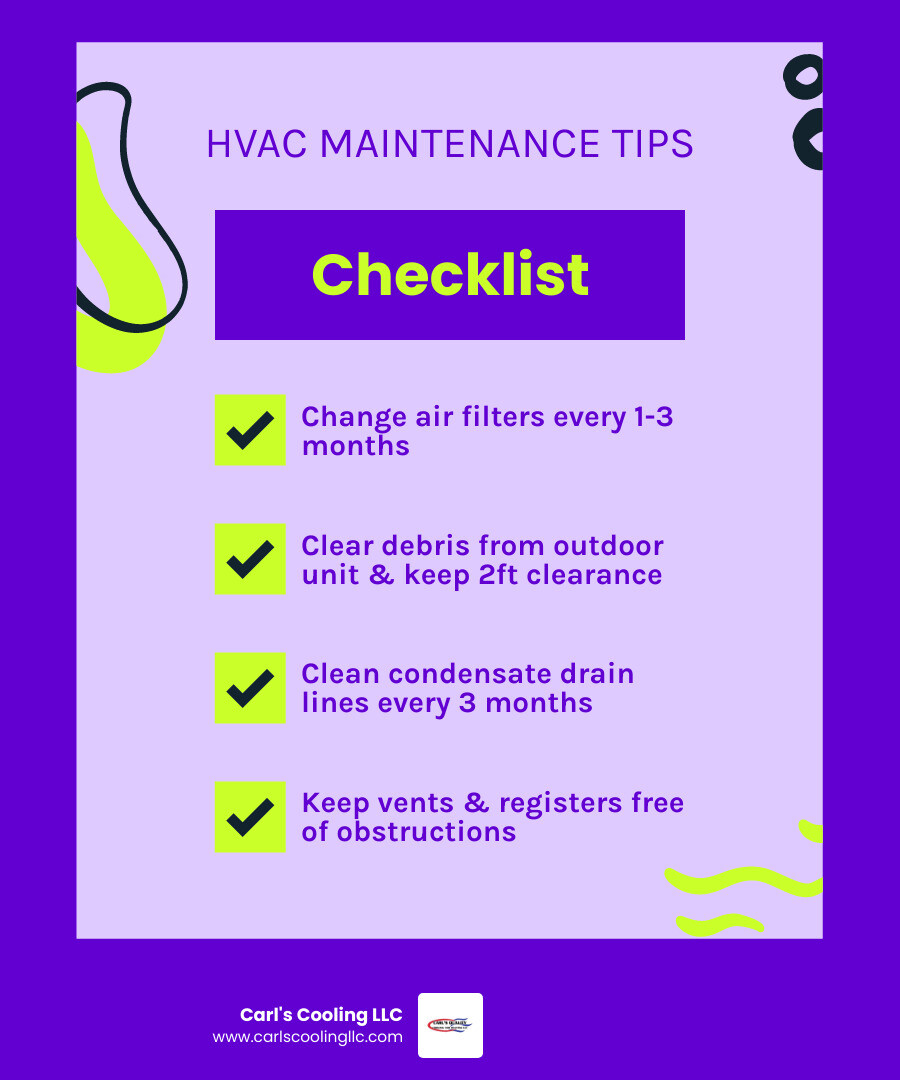
HVAC maintenance tips for homeowners come down to a handful of consistent habits that protect your system, lower your energy bills, and keep your home comfortable year-round:
- Change air filters every 1-3 months
- Clear debris from your outdoor unit and keep shrubs at least 2 feet away
- Clean condensate drain lines every 3 months
- Keep vents and registers free of furniture and obstructions
- Test carbon monoxide detectors monthly
- Schedule a professional inspection at least once a year
- Check thermostat settings seasonally and consider upgrading to a smart model
Most homeowners don't think about their HVAC system until something goes wrong — usually on the hottest or coldest day of the year. In fact, 42% of homeowners have dealt with HVAC problems during a heat wave, and only 32% have done even basic cleaning or maintenance to keep their system running right.
That's a problem, because small, overlooked issues — a clogged filter here, a debris-blocked outdoor unit there — quietly chip away at your system's efficiency and lifespan. A dirty filter alone can drive up your energy use and accelerate wear on your equipment. Leaky ducts can waste up to 30% of your conditioned air before it ever reaches a room. These aren't just comfort issues; they're wallet issues.
The good news? Most of what keeps an HVAC system healthy is simple, affordable, and well within reach of any homeowner. This guide walks you through everything you need to know.
Essential hvac maintenance tips for homeowners

When we talk about hvac maintenance tips for homeowners, the conversation always starts with the air filter. It is the single most important DIY task you can perform. Your air filter is the gatekeeper of your home's air quality, trapping dust, pet dander, and pollen. However, its primary job is actually to protect the internal components of your furnace or air handler.
For most homes in areas like Conroe or The Woodlands, we recommend changing your filter every 1 to 3 months. If you have pets or family members with allergies, you might need to swap it out every 30 to 45 days. A dirty filter forces your motor to work harder, which can lead to early equipment failure. By keeping these filters clean, you can cut your energy consumption by 5% to 15%. For more detailed advice, check out our Essential AC Maintenance Tips.
Moving outside, your condensing unit needs room to "breathe." We often see beautiful landscaping in Magnolia and Montgomery that accidentally chokes the AC unit. You should maintain at least a 2-foot clearance around the entire unit. Remove leaves, grass clippings, and twigs that accumulate against the fins. If the fins are clogged with dirt, you can gently rinse them with a garden hose (never use a pressure washer, as it will bend the delicate metal fins). Taking these steps is part of the Regular Maintenance to Prevent AC Repairs that keeps your system from overheating during a Texas July.
Seasonal hvac maintenance tips for homeowners
In the climate of Southeast Texas, our systems work overtime. To ensure they are ready for the shift in workload, we recommend a "pre-season" approach.
- Spring Cooling Prep: Before the humidity hits in April 2026, focus on your air conditioner. This involves cleaning the coils and ensuring the condensate line is clear. Following Spring HVAC System Maintenance Tips ensures you aren't stuck waiting for a repair during the first 90-degree day.
- Fall Heating Prep: Even though our winters are mild, your furnace needs a checkup before the first cold snap. Dust that has settled on the heat exchanger over the summer can create that "burning" smell when you first turn it on. Understanding Why You Need to Perform a Fall Maintenance helps prevent pilot light issues or ignition failures.
Scheduling a Seasonal AC Tune-Up The Woodlands TX is the best way to bridge these seasons without a hitch.
Safety-focused hvac maintenance tips for homeowners
Safety is our top priority. For homeowners with gas furnaces, carbon monoxide (CO) is a silent risk. We recommend testing your CO detectors monthly and replacing the batteries annually.
You should also take a peek at your furnace's burner flame. A healthy natural gas flame should be a crisp, steady blue. If you see a yellow, orange, or green flame, it indicates incomplete combustion, which could mean carbon monoxide is being produced. In this case, shut the system down immediately. Proactive steps like these Prevent Emergency Furnace Breakdowns and keep your family safe.
Don't forget the condensate drain line. High humidity in places like Spring and Humble means your AC pulls gallons of water out of the air. This water travels through a plastic drain line. If algae or mold grows in that line, it can clog and cause water damage to your ceiling or floors. We suggest flushing the line with a cup of vinegar every three months to keep it clear.
Maximizing Airflow and Efficiency Throughout Your Home
Your thermostat is the "brain" of your HVAC system. If it isn't calibrated correctly, your system might run too long or not long enough. Many homeowners are now upgrading to smart or programmable thermostats. These models allow you to set schedules so you aren't cooling an empty house while you're at work in Houston or Willis. Some smart models even provide energy reports and maintenance reminders, making it easier to stay on top of your hvac maintenance tips for homeowners.
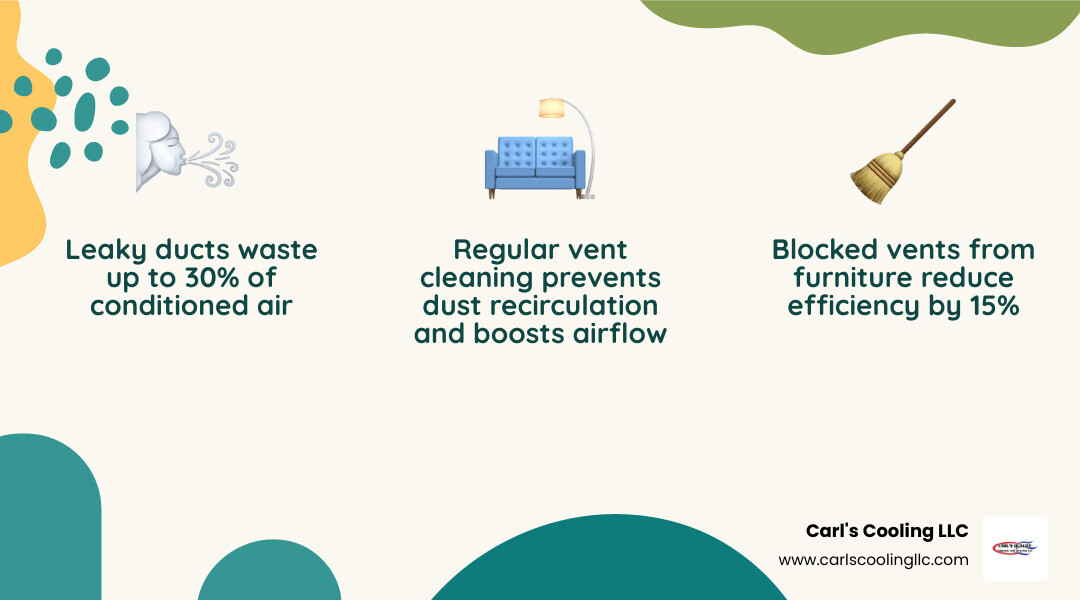
Airflow is just as critical as the equipment itself. Did you know that leaky ducts can waste up to 30% of your airflow? If you have rooms that never seem to get cool enough, you might have a duct leak or a disconnection in your attic. Sealing these leaks with mastic or foil-backed tape can significantly boost your system's efficiency.
Furthermore, take a walk through your home and check your vents. It’s common to find a rug, a set of heavy drapes, or a sofa blocking a floor or wall register. This creates backpressure on the system, which can reduce efficiency by up to 15%. Keep your registers clean by vacuuming them regularly to prevent dust buildup from circulating back into your air.
Professional Maintenance and System Longevity
While DIY tasks are essential, there are things only a professional should handle. A comprehensive Professional HVAC Maintenance Solutions visit includes checking refrigerant levels, tightening electrical connections, and lubricating all moving parts to reduce friction.
For those in The Woodlands or Conroe, an Annual Furnace Service ensures that gas connections are tight and the heat exchanger is free of cracks. These professional checks are vital because only 47% of homeowners have had their systems serviced in the last year, leaving the other 53% at risk for sudden breakdowns.
With proper maintenance, how long can you expect your system to last?
- Furnaces: 15 to 20 years
- Heat Pumps: Approximately 16 years
- Central AC Units: 10 to 15 years
If you live in Magnolia, our Home Heat Pump Maintenance Guide Magnolia TX provides specialized tips for these dual-purpose systems. Similarly, for homes utilizing modern, efficient cooling in smaller spaces, our Ductless Mini-Split Maintenance Guide covers the unique needs of those units.
Recognizing When Your System Needs Professional Attention
Even with the best hvac maintenance tips for homeowners, parts eventually wear out. Knowing the Signs Your HVAC Needs Inspection can save you from a total system replacement.
Keep an ear out for unusual noises. Squealing, banging, or grinding sounds often point to a failing belt or motor bearing. If you notice a "burning" smell that persists for more than a few minutes, or if your utility bills suddenly spike without a change in weather, your system is likely struggling.
Other red flags include:
- Frequent Cycling: The unit turns on and off every few minutes.
- Inconsistent Temperatures: Some rooms are freezing while others are sweltering.
- Water Leaks: Finding a puddle around your indoor unit is a sign of a clogged drain or a frozen coil.
- Weak Airflow: If you can barely feel air coming out of the vents, your blower motor or ductwork needs attention.
Frequently Asked Questions about HVAC Maintenance
How long do HVAC systems typically last with proper care?
With consistent maintenance, most HVAC systems last between 15 and 25 years. Furnaces tend to be the most durable, often reaching the 20-year mark, while air conditioning units usually last between 10 and 15 years due to the heavy workload they face during our hot Texas summers.
How often should I change my air filters?
We recommend checking your filter every month. For a standard household, changing it every 90 days is usually sufficient. However, if you have pets, live in a dusty area like a new construction zone in Woodforest, or suffer from allergies, you should change it every 30 to 60 days. Using high-efficiency MERV 11 or 12 filters can help capture smaller particles like bacteria and viruses.
How much can maintenance improve energy efficiency?
Regular maintenance can improve your system's efficiency by up to 15%. When you consider that heating and cooling make up about half of the average home's energy use, that 15% translates to significant savings on your monthly utility bills. It also prevents the "efficiency tax" caused by dirty coils and clogged filters.
Conclusion
Taking care of your heating and cooling system doesn't have to be a mystery. By following these hvac maintenance tips for homeowners, you are investing in the comfort and safety of your family. From the simple act of swapping a filter to scheduling your annual professional checkup, every step helps extend the life of your equipment and keep your bills manageable.
At Carl's Cooling LLC, we are proud to serve our neighbors across Conroe, Montgomery, and the surrounding communities. We know how much you rely on your AC to get through the summer and your furnace to stay cozy in the winter. If you're looking for a worry-free way to stay on top of these tasks, consider joining our Professional HVAC Maintenance Plan. We’ll handle the technical details so you can simply enjoy the comfort of your home.


