
Why Hurricane Season Is One of the Biggest Threats to Your Cooling System
How hurricane season affects your cooling system is something every homeowner in Montgomery County needs to understand before the first named storm of the year forms in the Gulf. Hurricanes don't just knock out power and flood streets — they attack your AC from multiple directions at once: flying debris, voltage surges, saltwater exposure, and standing water can all cause serious damage to your outdoor condenser, electrical components, and ductwork in a matter of hours.
Here is a quick summary of the main ways hurricanes put your cooling system at risk:
- High winds and debris can bend condenser fins, crack fan blades, and send projectiles into your outdoor unit
- Power surges and grid instability are responsible for nearly 90% of electrical AC failures that happen when units are left running during a storm
- Flooding and water intrusion can short-circuit motors, corrode wiring, and permanently damage control boards
- Saltwater and humidity accelerate corrosion on aluminum fins and copper coils, sometimes shortening equipment life by years
- Mold growth can begin inside ductwork within 48 hours once humidity rises above 60% during an extended power outage
The good news is that most of this damage is preventable. With the right steps taken in the seven days before a storm makes landfall, you can protect your system, avoid a costly replacement, and get your home cool again much faster after the storm passes.
Understanding How Hurricane Season Affects Your Cooling System
To fully appreciate the importance of storm preparation, it helps to understand the exact mechanics of how hurricane season affects your cooling system. When a major storm rolls through Southeast Texas, your HVAC system faces a combination of physical, electrical, and environmental stressors.
Whether you live in Conroe, Spring, or Magnolia, our regional climate already subjects your air conditioner to heavy workloads. When hurricane season peaks between June and November, those everyday stresses escalate into acute threats. You can read more about these regional challenges in our guide on How Texas Gulf Coast Heat and Hurricanes Affect Your HVAC.
Wind, Water, and Surges: How Hurricane Season Affects Your Cooling System
The most immediate threats during a hurricane are high winds, flying debris, and localized flooding. Hurricane-force winds can easily exceed 75 mph, with major storms pushing past 110 mph. At these speeds, loose lawn chairs, tree branches, and shingles become high-velocity projectiles that can dent your condenser's metal cabinet, crush the delicate aluminum fins, or shatter the fan motor assembly.
Water intrusion is equally devastating. While outdoor condenser units are designed to withstand heavy, wind-driven rain, they are not engineered to be submerged. If rising floodwaters cover your unit's electrical components, the compressor motor, control board, and wiring will short-circuit and corrode.
Simultaneously, the electrical grid becomes highly unstable. Lightning strikes, falling utility poles, and rapid grid switching create massive power surges and brownouts. If your air conditioner is left running when these electrical fluctuations occur, the sudden voltage spikes can instantly fry your system’s capacitors, control boards, and compressor. To dive deeper into this issue, check out our article on How Power Outages from Storms Affect Your System.
Saltwater and Humidity: How Hurricane Season Affects Your Cooling System's Lifespan
The damage doesn't stop once the wind dies down. For homes in our southern service areas closer to the coast, such as El Lago, storm surges and strong winds can carry salt-laden moisture miles inland. When saltwater coats the copper coils and aluminum fins of your outdoor unit, it initiates rapid galvanic corrosion. This salt-air exposure can degrade the metal within 24 hours, severely reducing heat transfer efficiency and shortening the system's overall lifespan.
Furthermore, hurricanes bring extreme humidity and prolonged power outages. When your air conditioner is offline for several days, the indoor relative humidity quickly climbs past 60%. Without active airflow and dehumidification, mold spores can colonize your drywall, carpets, and the interior of your ductwork in as little as 48 hours. This drastically degrades your indoor air quality and requires expensive remediation. Understanding these long-term environmental impacts is a key part of Protecting Your HVAC During Hurricane Season.
The Science of Storms: How Hurricanes Act as Heat Engines
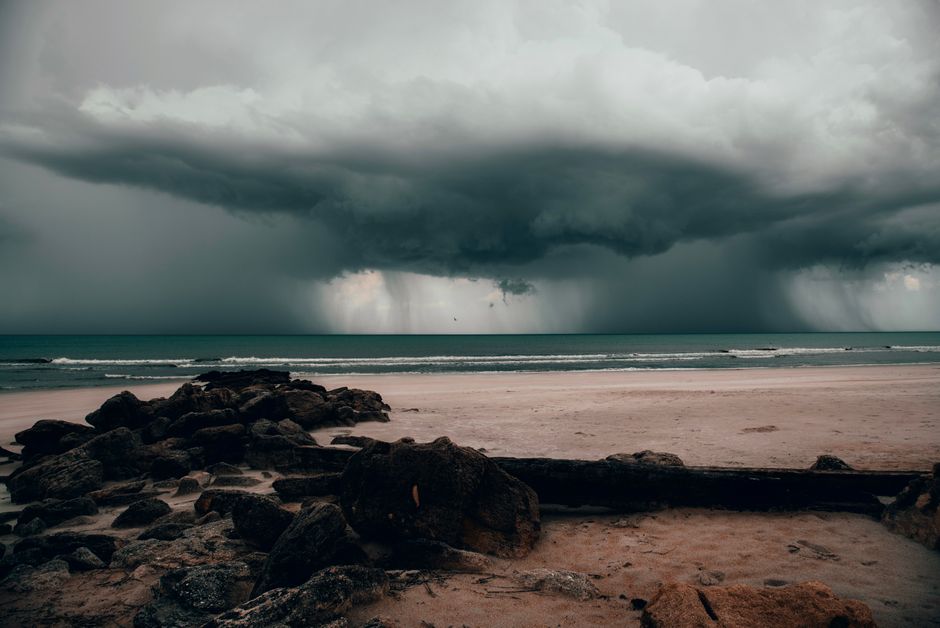
To truly understand the power we are protecting our homes against, we have to look at the physics of these massive weather systems. Meteorologists and physicists describe hurricanes as giant thermodynamic heat engines.
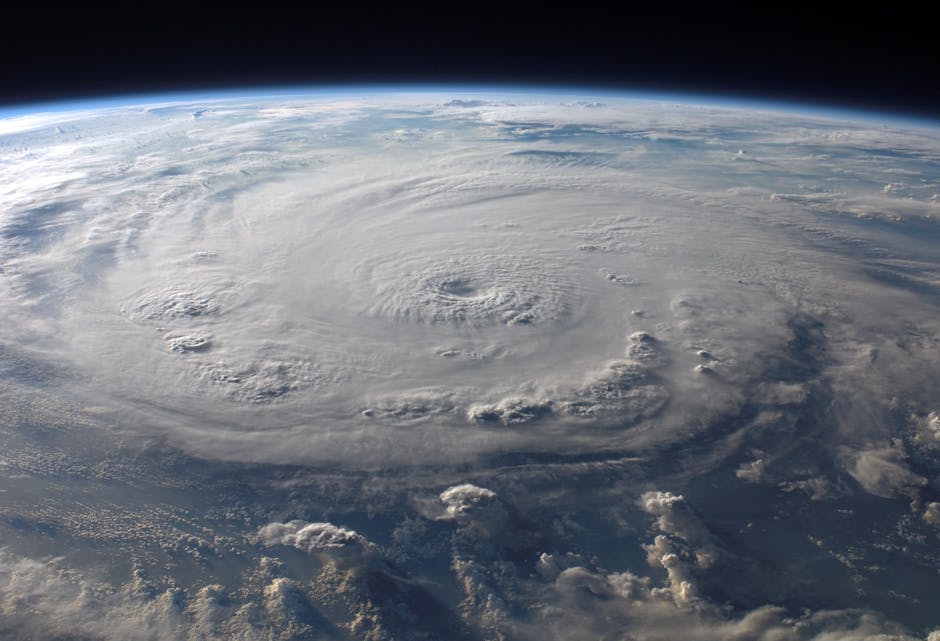
A hurricane operates on a classic thermodynamic cycle. It extracts thermal energy from the warm ocean surface (the heat source), converts a portion of it into mechanical energy (the swirling winds), and releases the remaining heat into the extremely cold upper troposphere (the heat sink). This heat transfer is incredibly efficient, operating across a temperature difference equivalent to nearly 100 Kelvin between the warm sea surface and the top of the troposphere (roughly 10 to 15 kilometers up).
The primary fuel for this engine is latent heat. As warm ocean water evaporates, it turns into water vapor, carrying immense amounts of latent heat upward. When this moisture rises and cools in the upper atmosphere, it condenses into clouds and rain, releasing that stored latent heat back into the surrounding air. This release warms the core of the storm, lowering the atmospheric pressure at the surface, which in turn draws in more warm, moist air to fuel the cycle.
Six Key Conditions for Hurricane Development
For this massive thermodynamic heat engine to spark to life and sustain itself, six specific atmospheric and oceanic conditions must align:
- Warm Ocean Water: The sea surface temperature must be at least 26°C (79°F) down to a depth of about 50 meters. This warm water provides the continuous thermal energy and moisture required to fuel the storm.
- Coriolis Force: Hurricanes cannot form within 5 degrees latitude of the equator. Without the Coriolis force generated by the Earth's rotation, the incoming air would rush straight into the low-pressure center, filling it in before the storm could begin to spin.
- Saturated Lapse Rate: The atmosphere must cool rapidly with height. This vertical temperature gradient allows warm, moist air to rise rapidly, driving deep convection and latent heat release.
- Low Vertical Wind Shear: Wind shear is the difference in wind speed and direction at different altitudes. Strong upper-level winds will tear the vertical structure of a developing storm apart, preventing the heat engine from organizing.
- High Relative Humidity: High moisture levels from the surface through the mid-levels of the troposphere are necessary. Dry air entering the storm causes cloud water to evaporate, which cools the air and disrupts the rising updrafts.
- A Pre-existing Disturbance: Hurricanes do not spontaneous generate; they require an initial seed. In the Atlantic, these seeds are often tropical waves—areas of low pressure and shower activity that migrate off the west coast of Africa.
How Hurricanes Cool the Ocean and Air
While hurricanes are destructive, they also serve as the Earth's natural thermostat. A normal hurricane releases energy at an astonishing rate—about 200 times the entire world-wide electrical generating capacity. By doing so, they lift massive amounts of heat out of the ocean and redistribute it toward the poles, cooling both the local ocean and the surrounding atmosphere.
This oceanic cooling happens through several distinct physical mechanisms:
- Upwelling: The intense low-pressure center of the hurricane acts like a giant straw, sucking up the ocean surface. At the same time, the powerful cyclonic winds push surface water outward, forcing colder, deeper ocean water to rise to the surface.
- Cloud Albedo: The dense, expansive cloud canopy of a hurricane reflects incoming solar radiation back into space, preventing sunlight from warming the water below.
- Evaporative Cooling: The extreme wind speeds greatly accelerate evaporation, which extracts thermal energy directly from the top layer of the ocean.
- Cold Rain: Massive volumes of cold rain falling from high altitudes directly cool the ocean surface layer.
This cooling effect is incredibly powerful. Historically, Hurricanes Katrina and Rita each cooled Gulf of Mexico water temperatures by more than 4°C along their direct paths, lowering the entire Gulf’s average sea-surface temperature by about 1°C in late summer 2005.
Your 7-Day Hurricane HVAC Preparation Checklist
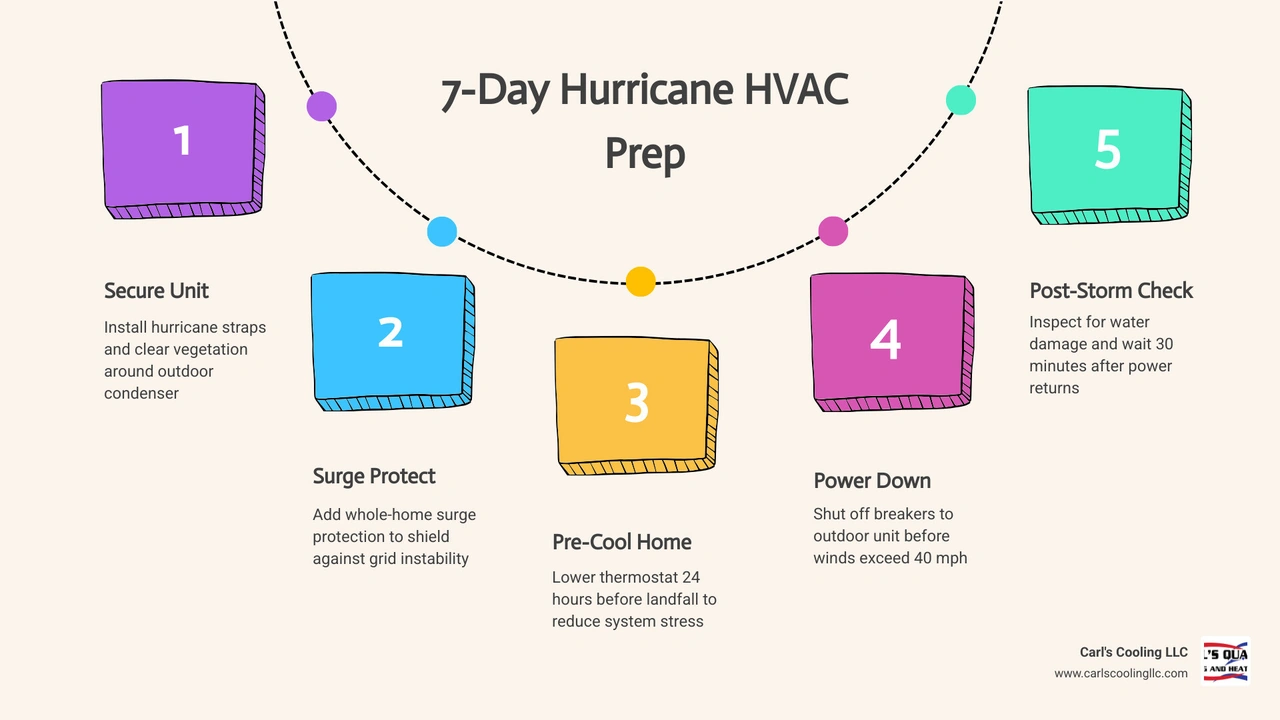
Now that you know the science behind these storms and how they threaten your home, let's look at how to protect your air conditioner. If a tropical storm or hurricane enters the Gulf and is projected to impact Southeast Texas, you should follow this structured 7-day preparation timeline to secure your system.
Taking proactive, early action prevents last-minute stress and ensures your equipment is physically hardened before the outer rainbands arrive. For a comprehensive overview of long-term storm-proofing, you can refer to our guide on Safeguarding Your HVAC System for Hurricane Season.
Days 7 to 2: Hardening and Securing Your System
During the early stages of the countdown, focus on physical safeguards and heavy-duty protection.
- Inspect the Concrete Pad: Ensure your outdoor condenser unit sits on a level concrete pad that hasn't shifted or cracked. If you live in a low-lying, flood-prone area of Conroe or Montgomery, consider having the pad elevated 12 to 24 inches above the base flood elevation.
- Install Hurricane Straps: Secure your condenser to its concrete pad using heavy-duty, corrosion-resistant galvanized steel or stainless steel hurricane straps. These straps anchor the unit against wind loads up to 150 mph.
- Clear a Buffer Zone: Trim all tree branches, shrubs, and vegetation within a 5-to-10-foot radius of your outdoor unit. Remove loose yard items, patio furniture, potted plants, and toys that could become airborne projectiles.
- Verify Surge Protection: Install a dedicated, HVAC-specific surge protector at your outdoor electrical disconnect box, paired with a whole-home surge protector at your main electrical panel. Standard power strips are not enough to protect high-draw AC compressors from lightning strikes.
Day 1: The 24-Hour Pre-Storm Countdown
As the storm approaches and landfall is imminent, transition to immediate operational prep.
- Pre-Cool Your Home: Lower your thermostat 3 to 5 degrees below your normal setting 12 to 24 hours before the storm hits. This turns your home into a "thermal battery," storing cool air in your walls, furniture, and flooring. If the power goes out, your home will remain comfortable for much longer.
- Power Down the System Safely: Once the outer bands of the storm begin to arrive, turn off your air conditioner at the thermostat.
- Flip the Circuit Breaker: Go to your home's main electrical panel and flip the HVAC circuit breakers to the "Off" position. This physically disconnects your system from the grid, protecting its delicate electronics from the severe voltage fluctuations and surges that occur as power lines fail.
Post-Storm Recovery: Safe Inspection and Restart Protocols
Once the storm has passed and the skies clear, your immediate instinct will likely be to flip the breaker back on and cool down your house. However, rushing to restart your system without a proper inspection can permanently ruin your compressor or cause electrical fires.
Before you restore power, follow a careful safety protocol. For an easy-to-use reference, keep our Post-Hurricane HVAC Inspection Checklist handy.
Step-by-Step Post-Storm Inspection
With the main circuit breaker still turned off, walk outside and conduct a thorough visual assessment of your outdoor condenser unit:
- Check for Standing Water: If your yard flooded and water rose high enough to submerge any portion of the outdoor cabinet, do not turn the power back on. The unit must remain off until it is professionally inspected and cleaned.
- Clear Debris: Remove any branches, leaves, mud, or wind-blown trash that has accumulated around or inside the unit.
- Inspect the Fins and Cabinet: Look for bent aluminum fins, dented metal panels, or loose electrical conduit. If the fins are heavily crushed, airflow will be restricted, which can cause the compressor to overheat.
- Examine Electrical Wiring: Look for frayed, exposed, or disconnected wires leading from the house to the unit. If you see any signs of electrical damage, keep the breaker off.
Safe Restart and Stabilization Protocols
If your visual inspection reveals no standing water, structural damage, or exposed wiring, you can proceed with restarting your system. However, you must still follow these grid-stabilization steps:
- Wait for Grid Stability: Do not turn your AC on the instant your neighborhood's power is restored. The local power grid is often highly unstable during the first 20 to 30 minutes of restoration, experiencing rapid voltage spikes and drops as utility crews balance the load.
- Flip the Breaker On First: Flip your HVAC circuit breaker back to the "On" position, but leave the thermostat set to "Off".
- Allow the Crankcase Heater to Warm Up: Wait at least 30 minutes before turning the system on at the thermostat. This delay allows the compressor's internal crankcase heater to warm up the refrigerant and oil, vaporizing any liquid refrigerant that may have settled in the compressor oil while the system was off. This prevents "slugging," which can destroy your compressor valves on startup.
- Listen for Unusual Noises: When you finally turn the thermostat to "Cool," stand near the outdoor unit for the first 60 seconds. If you hear loud rattling, screeching, buzzing, or chattering, shut the system off immediately at the thermostat and call for a professional assessment.
Frequently Asked Questions About Storm-Proofing Your AC
To help you make the best decisions for your home, we’ve compiled and answered some of the most common questions we receive from homeowners in Conroe, Montgomery, and The Woodlands regarding storm preparation.
| Feature / Consideration | Breathable HVAC Cover (Mesh/Canvas) | Airtight Plastic Tarp / Wrap |
|---|---|---|
| Protects Against Debris? | Yes, deflects leaves, twigs, and small objects. | Yes, but can easily tear in high winds. |
| Traps Moisture? | No, allows air to circulate and dry out. | Yes, creates a "greenhouse effect" that causes rust. |
| Can AC Run with Cover On? | No, must be removed before operating. | No, will cause immediate compressor failure. |
| Promotes Mold Growth? | No, breathable material prevents mold. | Yes, traps humidity and fosters mold/mildew. |
Should I cover my AC unit during a hurricane?
You should never wrap your outdoor AC unit in airtight plastic wrap or heavy plastic tarps. These materials trap humidity inside the cabinet, creating a greenhouse effect that accelerates rust on electrical components and promotes mold growth on the coils.
If you want to protect your unit from falling debris, you can use a specially designed, breathable, hurricane-rated mesh cover or place a heavy piece of plywood over the top of the unit, securing it with ratchet straps. However, you must only do this when the system is completely powered down at the breaker, and you must remove the cover immediately after the storm before restarting the system.
What should I do if my outdoor AC unit gets flooded?
If rising water submerges any part of your outdoor condenser, keep the circuit breaker turned off. Even after the floodwaters recede, do not attempt to turn the system on. Silt, mud, and saltwater can coat the electrical contacts, fan motor, and compressor terminals.
Turning the system on while it is dirty can cause a major electrical short, permanently destroying the system's electronic components. The unit must be professionally washed, dried, and tested by a licensed technician before power is safely restored.
How long should I wait to turn my AC back on after a power outage?
We recommend waiting at least 20 to 30 minutes after your home's main power is fully restored before flipping your HVAC breaker back on. This protects your system from the initial voltage fluctuations that occur as the electrical grid stabilizes. Once you turn the breaker back on, wait another 30 minutes before turning the thermostat on to allow the compressor's crankcase heater to safely warm up the system's oil.
Protect Your Comfort with Carl's Cooling LLC
Living in Southeast Texas means that hurricane season is a natural part of our lives, but storm-related AC damage doesn't have to be. By taking a proactive approach to securing, powering down, and safely restarting your cooling system, you can protect your investment, maintain your indoor air quality, and ensure your home is ready to cool down quickly once the storm passes.
Whether you need a pre-season safety inspection, professional surge protection installation, or emergency post-storm repairs, our family-owned team is here to help. We proudly serve homeowners and businesses across Montgomery County, including Conroe, Montgomery, Spring, Magnolia, and The Woodlands.
Don't wait for a tropical storm warning to find out if your system is secure. Schedule expert storm prep in Montgomery, TX with Carl's Cooling LLC today, and keep your home safe, cool, and ready for whatever the Gulf sends our way.