
A Deceptive Late-Summer Cycle: Why Your Heat Pump Won't Turn Off
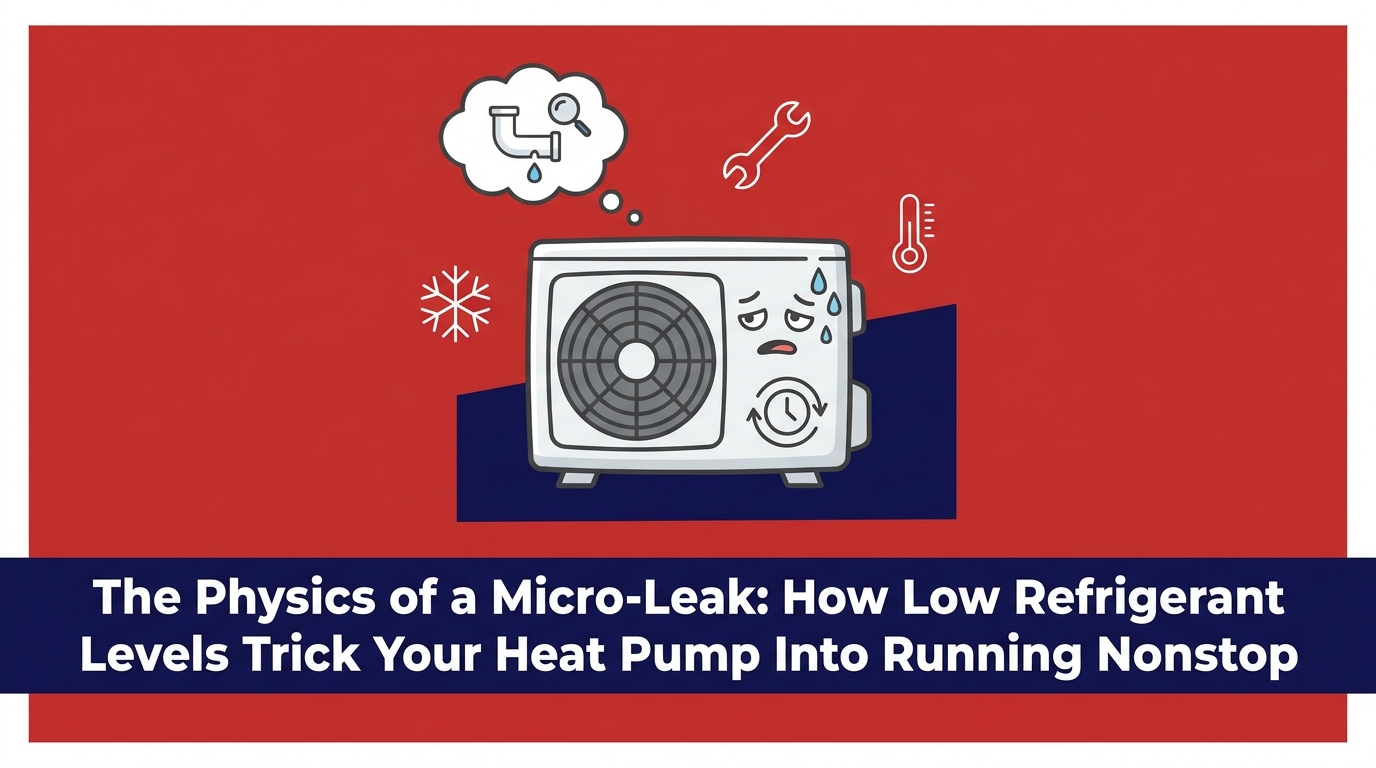
August late-summer heat is relentless here in Conroe, TX, especially as families transition back into the school routine. But understanding exactly how low refrigerant levels trick your heat pump into running nonstop is the difference between a quick repair and a catastrophic system failure. When the temperature spikes, it is easy to assume your system is simply working hard to keep up with the extreme outdoor weather. You might hear the fan spinning day and night, yet the air coming out of your vents feels lukewarm, and your home never quite reaches that comfortable temperature you set on the thermostat.
This continuous, ineffective cycle is rarely just a symptom of a hot day. Instead, it points to a physical breakdown inside your equipment—specifically, a micro-leak that has depleted the chemical charge your system relies on to function. When you need professional HVAC services, recognizing this mechanical failure early can save you from replacing a burned-out compressor. Understanding why this happens requires looking past the thermostat and diving into the actual physics of how your system moves heat.
The Mechanics of Heat Absorption and Dehumidification
To understand why a system refuses to shut down, you first have to understand what it is actually trying to do. Heat pumps do not create cold air out of nothing, and they do not "consume" refrigerant like a car consumes gasoline. Instead, they operate on a closed-loop system where refrigerant continuously circulates, changing from a liquid to a gas and back again to absorb heat from inside your house and release it outside.
The Role of Pressure and Volume
Inside your indoor air handler sits the evaporator coil. For this coil to do its job, the refrigerant inside it must be maintained at a very specific pressure and volume. When warm indoor air blows across this precisely chilled coil, the refrigerant absorbs the heat. Simultaneously, the drastic drop in temperature causes moisture in the air to condense on the coil and drain away, effectively dehumidifying your home.
The Climate Impact
In a region like Conroe TX, extreme high humidity in late summer demands peak evaporator coil performance. The moisture in the air holds a tremendous amount of latent heat. If your system cannot pull that humidity out of the air, your home will feel incredibly uncomfortable, sticky, and warm, regardless of what the thermostat reads.
When your system lacks the exact chemical volume required for this heat exchange, the entire process falls apart. Without enough refrigerant to absorb the heat and chill the coil, moisture removal completely fails. The air blowing through your vents remains humid, and the indoor environment feels stagnant.
• Proper Refrigerant Charge — Heat Absorption: Optimal heat transfer at the evaporator coil. — Dehumidification: Moisture condenses efficiently and drains away. — Indoor Comfort Level: Cool, crisp, and comfortable.
• Low Refrigerant (Micro-Leak) — Heat Absorption: Poor heat transfer; coil cannot reach target temperature. — Dehumidification: Fails to remove moisture; latent heat remains high. — Indoor Comfort Level: Warm, sticky, and constantly running.
How a Minor Micro-Leak Traps Your System in a Continuous Loop
It does not take a massive, catastrophic blowout to completely derail your cooling cycle. In fact, even a seemingly minor 10% drop in refrigerant charge destroys the heat absorption cycle. Because the system is engineered to operate under strict pressure parameters, missing just a fraction of that chemical volume throws the entire mechanical process off balance.
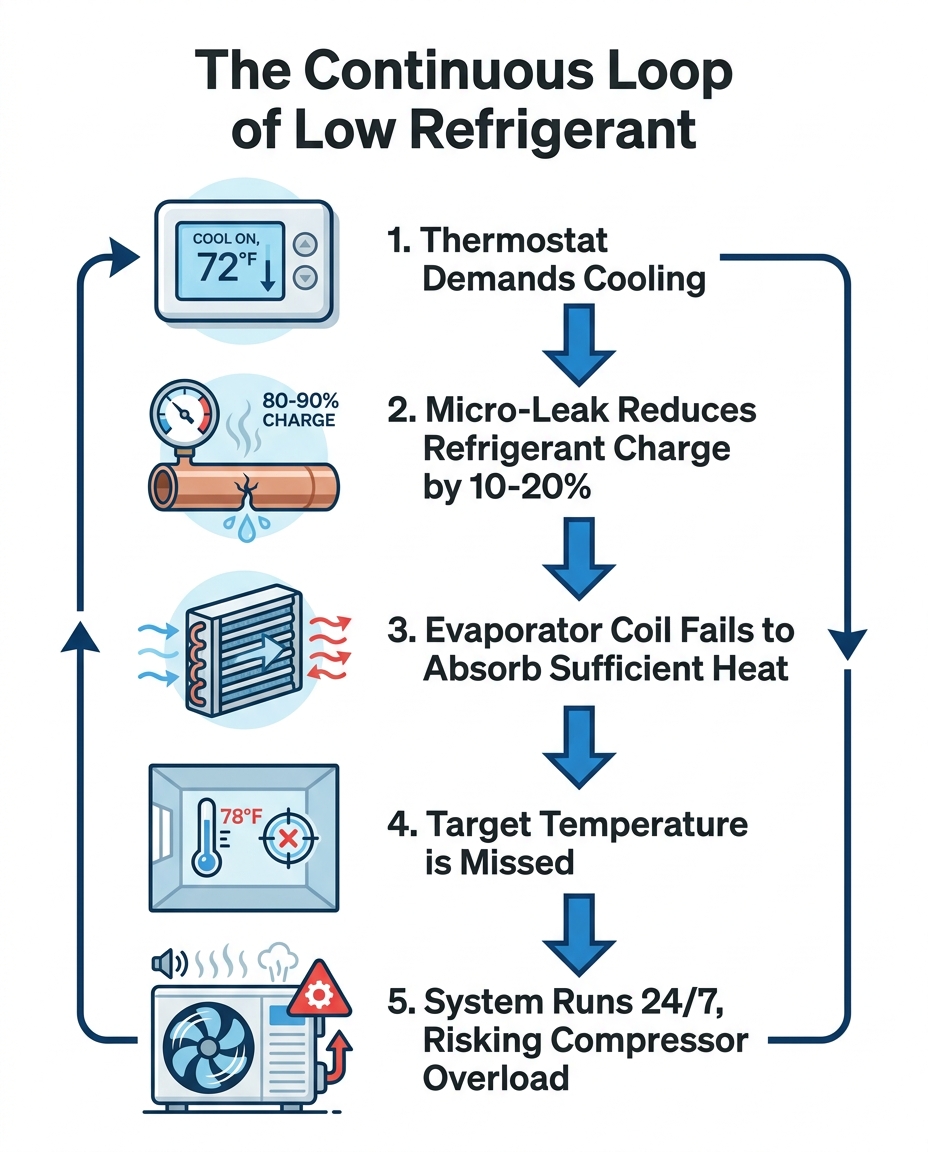
When this happens, your equipment gets trapped in an endless cycle. Here is exactly how that continuous loop unfolds:
1. The Initial Demand: Your thermostat registers that the room is too warm and sends a signal to the heat pump to begin the cooling cycle.
2. The Failed Exchange: The system turns on and blows air across the evaporator coil. However, because of the 10% drop in refrigerant charge, the coil cannot absorb enough heat from the passing air.
3. The Missed Target: The air pushed back into your living space is only slightly cooler than room temperature. The indoor ambient temperature never drops enough to satisfy the thermostat's set point.
4. The Endless Cycle: Because the thermostat is never satisfied, it never sends the signal to shut the system down. The heat pump runs 24 hours a day, desperately trying to reach a baseline temperature it can no longer physically achieve.
If you are wondering why your heat pump is running but not cooling, this mechanical loop is almost always the culprit.
The Thermostat Disconnect
The thermostat acts as the brain of your HVAC setup, constantly monitoring the room's ambient temperature and sending a cooling demand when it rises above your preferred setting. It is a simple command-and-control device. It does not know that your system is low on refrigerant; it only knows that the room is 78 degrees when you asked for 72 degrees. Because the supply air isn't cold enough to overcome the heat load in the house, the indoor temperature never drops to satisfy that set point, causing the thermostat to hold the system in the "on" position indefinitely.
Compressor Thermal Overload
The continuous running is not just an annoyance; it is a severe mechanical hazard. The compressor, located in your outdoor unit, is the heart of the system. It works incredibly hard to pump the refrigerant through the lines. Naturally, this generates a massive amount of heat. The compressor relies on the cool, returning refrigerant gas to cool its internal motor windings. A low charge means there is not enough chemical returning to the compressor to cool it down. Consequently, the compressor runs hotter and longer than it was ever designed to, accelerating catastrophic wear and risking complete thermal failure.

Why Refrigerant "Top-Offs" Ignore the Root Cause
Because a heat pump operates in a sealed, closed-loop system, it never naturally uses up or "burns off" its refrigerant. If your system is low, there is only one physical explanation: you have a leak. Unfortunately, a common, ineffective band-aid approach in the industry is to simply top off the system with more chemical and walk away. This ignores the root cause entirely.
Adding more chemical without finding the source of the escape is like constantly refilling a tire with a nail in it. You are paying for a temporary fix while the underlying problem continues to damage your equipment. Micro-leaks in the copper lines, the evaporator coil, or the condenser coil require specialized electronic leak detectors or UV dyes to locate accurately. Because refrigerants are highly regulated chemicals with strict environmental handling requirements, finding and sealing these leaks requires proper tools and training.
This is where working with our veteran-owned team at Carl's Quality Cooling and Heating LLC makes a profound difference. In our years of servicing HVAC systems across Conroe, we've seen countless units trapped in this cycle. Veteran-owned precision means approaching a diagnostic with discipline and accountability. Instead of taking the easy route of an endless top-off, our technicians focus on honest diagnostics and permanent solutions. For example, a local homeowner reached out to us late last summer dealing with an unidentified leak in their refrigerant line. Instead of just adding more chemical, our team performed a thorough diagnostic to pinpoint the exact location of the micro-leak, allowing the job to be completed correctly and permanently. Finding and fixing the actual leak is the only way to restore the integrity of the closed loop.
Secondary Warning Signs Your Heat Pump is Starved for Refrigerant
While continuous operation is the most obvious red flag, our technicians typically see a few other symptoms when dispatched to struggling systems. Catching these secondary warning signs early—especially during the back-to-school August heat—can help you determine when to call for air conditioning services before the compressor fails entirely.
• Hissing or bubbling noises: If you hear a faint hissing sound near the indoor air handler or the outdoor condenser, it is often the auditory sign of refrigerant escaping through a tiny puncture or cracked weld under high pressure.
• Ice buildup on the evaporator coils: It sounds contradictory, but low refrigerant causes ice. When the chemical volume drops, the pressure inside the evaporator coil drops with it. This forces the temperature of the coil to plummet below freezing. The moisture in the air condenses on the coil and instantly freezes into a block of ice, further choking off airflow.
• Sudden, unexplained energy bill spikes: Because the system is trapped in a 24/7 continuous loop, it is constantly drawing massive amounts of electricity. If your usage suddenly skyrockets without a major change in your daily habits, a starved system is a likely culprit.
• Warm or room-temperature air from supply vents: If you hold your hand up to the vent and the air feels no different than the ambient room temperature, the heat absorption cycle has completely failed.
• Short cycling after freezing: Sometimes, the system will run constantly until the coil freezes solid, at which point internal safety switches may force the system to rapidly turn on and off (short cycle) as it struggles to push air through the ice block.
Frequently Asked Questions About Heat Pump Continuous Operation
Why is my heat pump running constantly but not cooling?
Your system runs constantly because poor heat transfer prevents it from reaching the thermostat's target temperature. When the system lacks the proper refrigerant charge, it cannot absorb enough heat from your indoor air. The thermostat registers that the room is still warm, so it never sends the signal to shut the equipment off, forcing an endless, inefficient cycle.
What happens if a heat pump is low on freon?
When a heat pump is low on refrigerant, it suffers an immediate loss of cooling and dehumidification capacity. The evaporator coil can no longer pull heat or moisture from the air, making your home feel sticky and warm. If left unaddressed, the lack of returning refrigerant will cause the outdoor compressor to overheat, eventually leading to permanent mechanical failure.
Can low refrigerant cause a heat pump to run nonstop?
Yes, low refrigerant is one of the primary causes of a system running nonstop. Because the reduced chemical volume cripples the system's efficiency, the equipment attempts to compensate by running longer. Eventually, it cannot cool the home at all, and the system runs 24/7 in a futile attempt to satisfy the thermostat.
How do you know if your heat pump has a refrigerant leak?
You can identify a potential leak by looking for symptoms like continuous operation combined with warm air blowing from the vents. Other strong indicators include visible ice building up on the indoor evaporator coils, sudden spikes in your monthly energy bills, and faint hissing or bubbling noises coming from the refrigerant lines.
Does a heat pump use up its refrigerant over time?
No, a heat pump never uses up or consumes its refrigerant over time. The chemical operates in a strictly sealed, closed-loop system, changing states from liquid to gas and back again. If your system is low on refrigerant, it absolutely means there is a leak somewhere in the lines or coils that must be located and repaired.
Stop the Cycle Before Compressor Failure Occurs
A heat pump that refuses to shut down is not just struggling against the weather; it is waving a mechanical red flag. When you understand how low refrigerant levels trick your heat pump into running nonstop, it becomes clear that waiting it out is not a viable option. Allowing the system to run 24/7 while starved of its crucial cooling agent places immense thermal stress on the compressor, turning a manageable leak repair into a catastrophic equipment failure. Remember that upgrading to a new, high-efficiency heat pump may also qualify you for general federal tax credits or local utility incentives, making replacement a smart option if the damage is severe.
If your system is trapped in an endless loop and your home in Conroe TX still feels warm and humid, it is time to seek professional diagnostics from our veteran-owned team. Do not settle for a temporary top-off that ignores the root cause. By trusting Carl's Quality Cooling and Heating LLC for reliable heat pump repair services, you can locate the micro-leak, restore the integrity of your closed-loop system, and ensure your home returns to the comfortable, cool environment you expect.