

Why Regular Care Keeps Your System Running Strong
Ductless mini split maintenance is the key to keeping your cooling and heating system efficient, reliable, and long-lasting. Without regular care, these systems can lose efficiency, drive up energy bills, and eventually fail when you need them most. The good news? A simple routine of DIY tasks combined with annual professional service keeps your unit humming along for years.
Quick Maintenance Overview:
- Clean air filters every 4-6 weeks (or more often with pets/dust)
- Wipe down indoor and outdoor units quarterly to remove dust and debris
- Check the condensate drain line monthly for clogs
- Schedule professional service once per year for a deep tune-up
These simple steps can improve your system's efficiency by up to 15%, reduce energy consumption by up to 30%, and extend its lifespan by up to 50%. Regular maintenance also catches small problems before they turn into expensive repairs, saving you hundreds or even thousands of dollars down the road.
If you're a homeowner in Montgomery, TX, dealing with a sluggish mini split or just want to stay ahead of problems, this guide will show you exactly what to do—and when to call in the pros. For expert help with your system, check out our guide to efficient mini-split HVAC systems, or if you need professional service right now, schedule your ductless AC maintenance in Conroe, TX.
Essential DIY Ductless Mini Split Maintenance Tasks
You don't need to be an HVAC expert to keep your ductless mini split running smoothly. In fact, most of the essential care tasks are surprisingly simple—perfect for any homeowner willing to spend a few minutes each month. Think of regular ductless mini split maintenance as your first line of defense against expensive repairs and frustrating breakdowns, especially here in Texas where our systems work overtime in the heat and humidity.
The beauty of these DIY tasks is that they're quick, require minimal tools, and can make a dramatic difference in your system's performance. A little preventive care now means you'll stay comfortable all year long without unexpected service calls.
How to Clean Your Mini Split Air Filters
If there's one maintenance task you absolutely can't skip, it's cleaning your air filters. These mesh filters are the gatekeepers of your system, catching dust, pet dander, pollen, and all the other stuff floating around in your home. When they're clean, your mini split breathes easy and operates efficiently. When they're clogged? Your system has to work much harder, which can reduce efficiency by 5-10% each year and drive up your energy bills.
The good news is that cleaning them is genuinely easy—no special skills required.
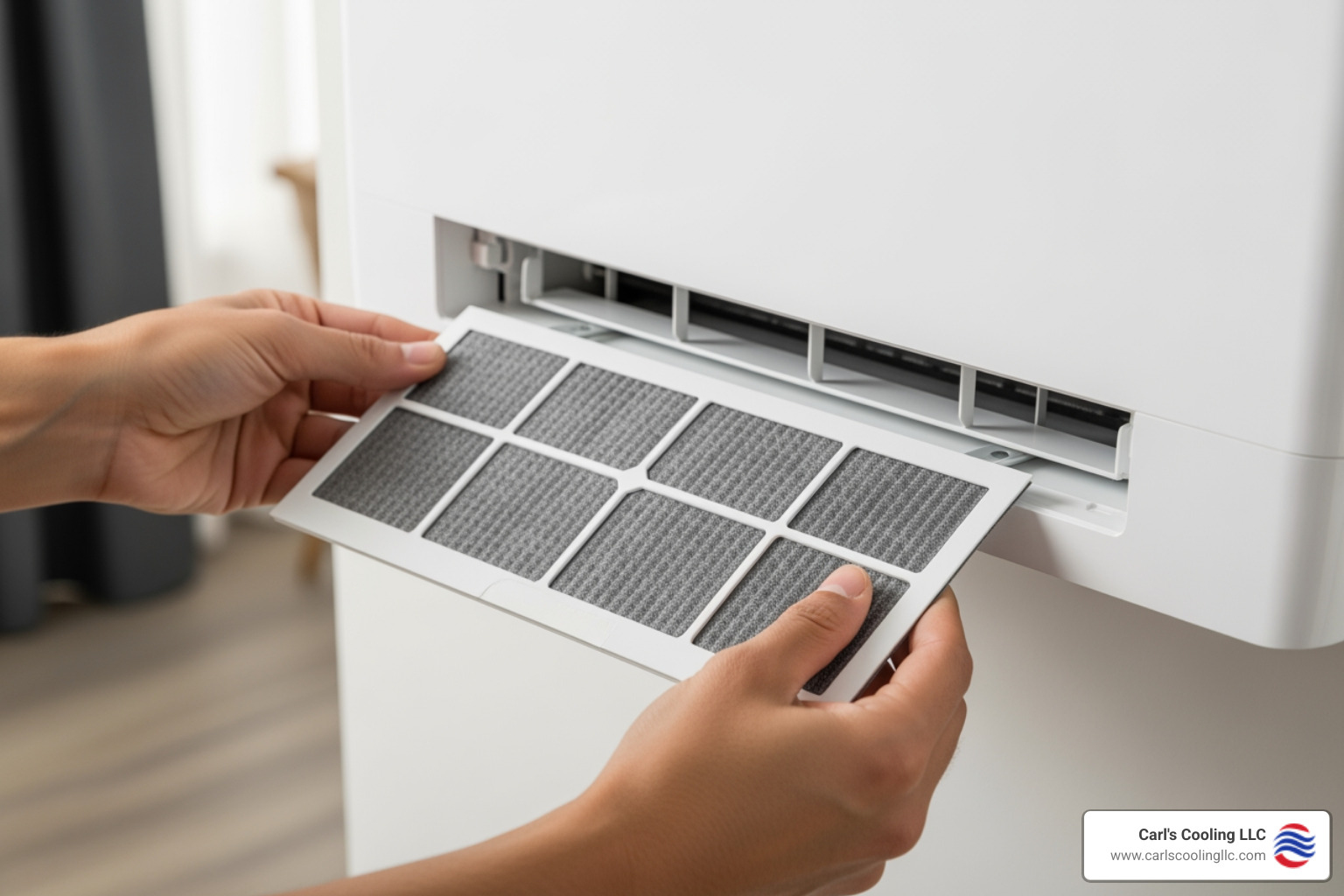
Start by turning off the power to your system—both at the thermostat and at the breaker. Safety always comes first! Next, open the front panel of your indoor unit (check your owner's manual if you're not sure how). You'll see one or two mesh filters that slide right out.
Now for the actual cleaning. For light dust buildup, a quick pass with your vacuum's soft brush attachment does the trick. But if your filters are looking grimy—especially common in our humid climate—it's time for a proper wash. Use lukewarm water (not exceeding 104°F) and a mild detergent, then rinse thoroughly to remove all soap residue.
Here's the most important part: let the filters dry completely before putting them back. We're talking bone-dry, not just damp. Set them in a shaded spot and give them time to air dry. Installing wet filters is an invitation for mold growth, and nobody wants that.
Once they're dry, slide them back into place, close the panel, and restore power. Some units have a filter cleaning reminder light—reset it according to your manual so you'll know when it's time for the next cleaning.
How often should you do this? Every 4-6 weeks is standard, but if you have pets, allergies, or live in a dustier area like near construction sites, bump it up to every 2-4 weeks. Regular filter cleaning can improve your system's efficiency by up to 15%, which means real savings on your energy bills. For more insights on maximizing your system's performance, check out The Benefits of Efficient Mini-Split HVAC Systems.
Cleaning the Indoor and Outdoor Units
Your mini split's filters aren't the only parts that benefit from a little TLC. Both the indoor and outdoor units need occasional cleaning to keep them looking good and working efficiently.
For your indoor unit, grab a soft, damp cloth once a month and gently wipe down the exterior cabinet. This simple habit prevents dust from building up and eventually getting sucked into the system. If you want to go the extra mile, use a small vacuum with a brush attachment to clean around the vents and edges. Just remember to power off the unit first!
Your outdoor condenser unit works incredibly hard, especially during our sweltering Texas summers. It's the workhorse that dissipates all that heat from your home, but it's also exposed to the elements. Over time, leaves, grass clippings, dirt, and other debris can accumulate around and inside the unit.
Start by powering off the unit at the breaker. Then take a walk around it and clear away any debris—leaves, grass, twigs, whatever's collected there. While you're at it, look at the surrounding area. Are there bushes or plants creeping too close? Trim them back to ensure at least two feet of clear space around all sides of the unit. This clearance isn't just about keeping things tidy—it's essential for proper airflow, which directly affects your system's cooling performance.
Next, tackle the condenser coils themselves. These are the metal fins on the outside of the unit, and they can get pretty grimy. Using a regular garden hose (skip the pressure washer—those fins are delicate), gently spray the coils from the outside in to wash away dirt and grime. The cleaner these coils are, the better your system can release heat, which means more efficient cooling for your home.
Let everything dry completely before turning the power back on. This quarterly cleaning routine keeps your system running at peak performance and helps you avoid efficiency losses that lead to higher energy bills. To learn more about why these systems are such a smart choice, explore our Ductless AC Benefits Ultimate Guide.
Inspecting the Condensate Drain Line
Here's something many homeowners don't think about until there's a problem: the condensate drain line. As your mini split cools your home, it pulls moisture out of the air—lots of it, especially in our humid Gulf Coast climate. That moisture has to go somewhere, and that's where the drain line comes in.
When this line gets clogged with algae, mold, or debris (which happens more often than you'd think in humid areas), water backs up and can leak from your indoor unit. We're talking potential water damage to your walls, floors, or furniture. Not fun.

The good news is that checking your drain line is simple and takes just a few minutes. The drain line is usually a PVC pipe or flexible hose running from your indoor unit to an outdoor drain. Take a peek at it monthly, especially during cooling season.
Look for signs of trouble: standing water in the drain pan (if you can see it), slow drainage, or any moisture around the indoor unit. If you spot a minor clog, you can often handle it yourself. Try using a wet/dry vacuum at the outdoor end of the drain line to suction out the blockage. A flexible brush can also help dislodge stubborn gunk.
Here's a preventive trick: pour a cup of distilled white vinegar down the drain line (from the indoor end, if you can access it) followed by some water. This helps discourage algae and mold growth before they become a problem. Do this every few months and you'll save yourself from bigger headaches down the road.
If you notice water pooling around your indoor unit, don't ignore it—that drain line needs attention right away. Keeping this line clear protects your home from water damage and keeps your system operating efficiently. For more local maintenance insights and professional support in your area, visit our Ductless AC Conroe TX page.
When to Call a Professional for Ductless Mini Split Maintenance
We're big believers in DIY maintenance—cleaning those filters and keeping your units tidy makes a real difference. But let's be honest: some things are best left to the pros. Knowing when to pick up the phone and call an expert can save you from system failures, keep everyone safe, and protect your warranty. Think of it this way: you wouldn't perform surgery on yourself, and you shouldn't tinker with complex HVAC components either.
Telltale Signs Your System Needs an Expert
Your mini split has a way of telling you when something's wrong. The trick is learning to listen. Ignoring these warning signs is like ignoring your car's check engine light—it rarely ends well. If you notice any of these red flags, it's time to call a licensed HVAC technician:
Unusual noises are often the first clue something's amiss. Your unit will hum quietly during normal operation—that's just the fan doing its job. But grinding, rattling, buzzing, clicking, or loud scraping? Those are not normal. A buzzing sound might mean a worn electrical capacitor or loose wiring, while grinding often points to a failing motor. If you hear these sounds, turn off your system right away and give us a call.
Reduced cooling or heating is another telltale sign. If your home isn't staying as comfortable as it used to, or if the airflow feels weaker than normal, something's not right. This could mean clogged coils, low refrigerant levels, or a component that's starting to fail.
Unpleasant odors shouldn't be ignored either. A persistent musty smell usually means mold or bacteria is growing inside your unit—especially common in our humid Texas climate. These microorganisms love to set up shop in drain pans and on coils. Even more concerning is a burning smell, which suggests an electrical issue that needs immediate attention.
Ice buildup on coils is a serious problem that requires professional diagnosis. Whether it's forming on your indoor unit's coils or the outdoor unit's refrigerant lines, ice means something's wrong—usually low refrigerant, dirty coils, or airflow problems. Turn off the system and let the professionals sort it out.
Spiking energy bills without any change in your usage habits? That's your wallet telling you something's wrong. When your mini split loses efficiency due to hidden problems, it works overtime to maintain comfort, and your electric bill reflects that extra effort.
Water leakage that persists even after you've cleared the drain line needs professional attention. While a clogged drain line can sometimes be a DIY fix, ongoing leaks might indicate a cracked drain pan or more complex condensation issues.
Error codes or blinking lights are your unit's way of crying for help. Modern mini splits are smart enough to diagnose themselves and alert you when something's wrong. Your owner's manual might explain what the codes mean, but fixing them almost always requires professional expertise.
The bottom line? Don't let small problems grow into big headaches. Early detection and professional intervention keep your system healthy and save you money in the long run. For more insights on catching problems early, check out our Ductless Mini Split Maintenance Tips.
What to Expect During a Professional Tune-Up
When you schedule ductless mini split maintenance with a professional, you're not just getting a quick once-over—you're investing in your system's future. Our technicians perform a comprehensive check-up designed to catch problems before they turn into expensive emergencies. Here's what happens during a proper professional tune-up:
First, we'll conduct a thorough inspection of both your indoor and outdoor units, looking for any visible signs of wear, damage, or developing issues. This visual inspection often reveals problems that aren't obvious to homeowners.
Checking refrigerant levels is one of the most critical tasks—and it's definitely not a DIY job. Only licensed professionals should handle refrigerants. Proper refrigerant levels are essential for efficient operation. Too little refrigerant forces your system to work harder, while too much can damage the compressor. We'll check the levels and inspect for any leaks that could compromise performance.
Inspecting electrical connections keeps your system safe and efficient. Over time, connections can loosen or corrode, creating safety hazards and performance issues. We'll examine all wiring, connections, and components like run capacitors to ensure everything's secure and functioning correctly.
While you handle basic filter cleaning at home, professionals bring specialized tools and solutions for deep cleaning internal components. We'll thoroughly clean your evaporator and condenser coils, blower fans, and drain pans, removing stubborn dirt, mold, and bacteria that affect both air quality and efficiency. This is especially important in our humid Texas climate, where biological growth happens quickly. We may also apply fungistats or bacteriostats to prevent future buildup.
Your condensate drain line gets more than just a quick check—we'll thoroughly flush the entire line to ensure it's completely clear and prevent those frustrating clogs that lead to water damage.
System performance testing ensures everything's working as it should. We'll test both heating and cooling functions, check temperature differentials, measure airflow, and evaluate overall operation. This tells us if your system is performing at its peak or if adjustments are needed.
Safety checks verify that all safety controls are working correctly, giving you peace of mind that your system is operating safely and efficiently.
Finally, you'll receive a detailed report on your system's condition, along with any recommendations for repairs or optimizations. We believe in transparency—you'll know exactly what's going on with your system and what, if anything, needs attention.
Professional ductless mini split maintenance isn't just about fixing problems—it's about preventing them in the first place. For expert service in your area, explore our Mini-Split Heat Pumps Tomball TX page to learn more about keeping your system in top shape.
Your Year-Round Maintenance Schedule
A consistent maintenance schedule is like a regular check-up for your mini split—it keeps everything running smoothly and helps prevent surprises. By combining simple monthly DIY checks with essential annual professional servicing, you can maximize your system's efficiency and extend its lifespan for years to come.
Monthly and Quarterly DIY Checks
Staying on top of routine tasks can make a big difference. Here’s a simple schedule to guide your DIY ductless mini split maintenance efforts:

| Frequency | Task | Notes The user wants me to act as an informational content writer, explaining complex topics simply.The article is on "ductless mini split maintenance" for Carl's Cooling LLC.I need to adhere to the provided introduction.The article needs to be around 2500 words, using all relevant research, stats, and insights.Tone: simple, clear, warm, occasional humor.Perspective: first person plural (we, us, our).Geographic constraint: Only information applicable to the specified Texas locations.Images: Use 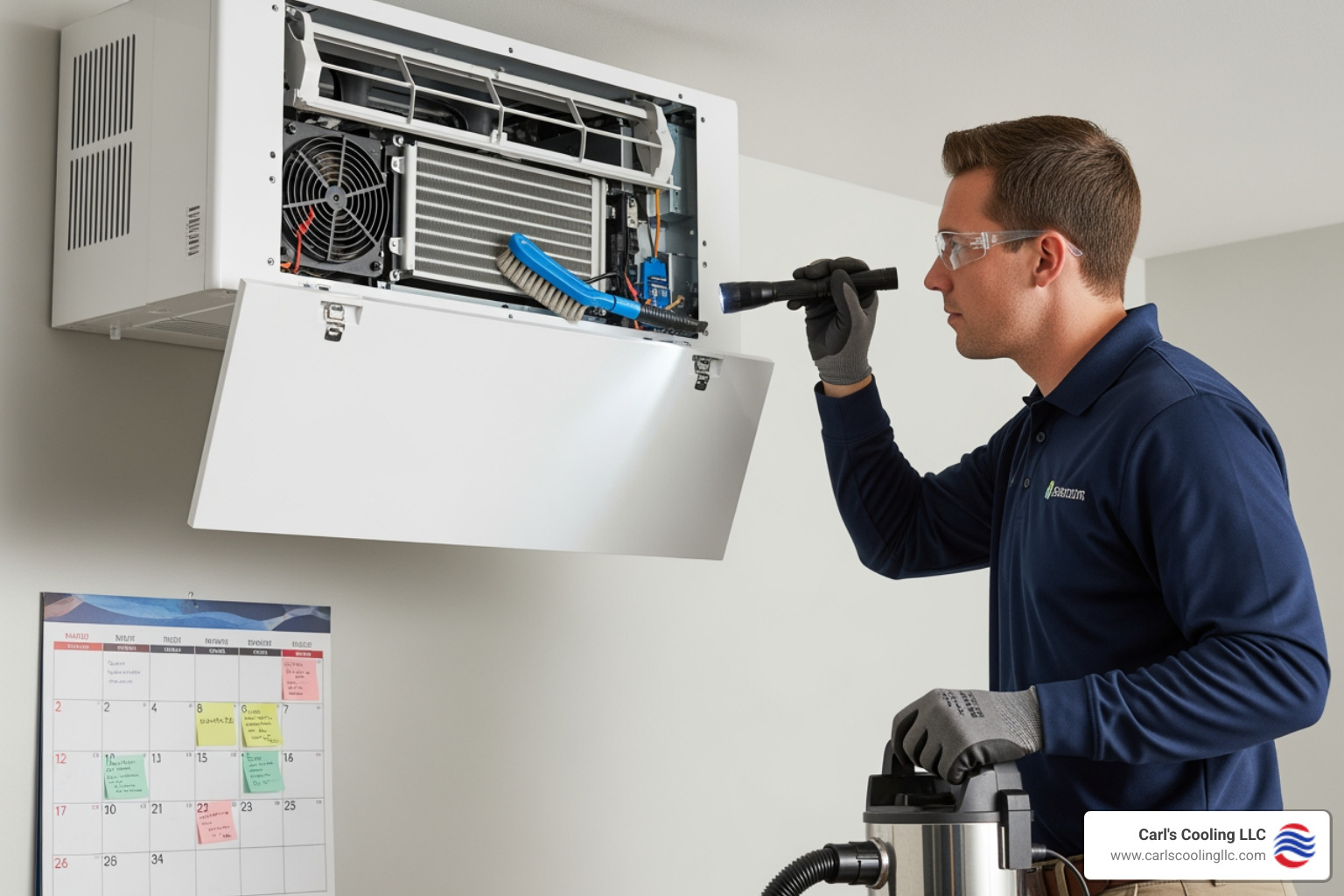.Links: Use exact internal and external MD links as provided.No pricing, no competitors, no career advice.
I will go section by section, elaborating on the points and weaving in the research.
Word count strategy:
- Intro (given): ~200 words.
- Section 1 (DIY Tasks): Aim for ~600-700 words.
- Filters: ~250 words
- Indoor/Outdoor: ~250 words
- Drain Line: ~150 words
- Section 2 (When to Call Pro): Aim for ~500-600 words.
- Telltale Signs: ~300 words
- What to Expect: ~250 words
- Section 3 (Schedule): Aim for ~300-400 words.
- Monthly/Quarterly: ~150 words
- Annual Pro: ~200 words
- Section 4 (Troubleshooting): Aim for ~500-600 words.
- Not Cooling/Heating: ~150 words
- Leaking Water: ~150 words
- Strange Noises: ~200 words
- Section 5 (FAQ): Aim for ~150-200 words.
- Conclusion (given): ~100 words.
Total estimated: ~200 + 650 + 550 + 350 + 500 + 175 + 100 = ~2525 words. This is a good target.
I will make sure to bold the keyword "ductless mini split maintenance" at least a few times, but not excessively.
Let's start generating the article.