
When the Fan Spins but the Air is Warm
Diagnosing a Heat Pump That Blows Warm Air While the Outdoor Fan is Spinning starts with a frustrating realization: your thermostat is calling for cooling, the outdoor fan is visibly moving, but your indoor vents are delivering nothing but warm air. If you are dealing with this right now, exploring professional HVAC services can help you pinpoint the exact cause quickly.
The visual cue of a spinning fan leads many homeowners to assume the entire outdoor unit is working perfectly, creating a false sense of security. In a standard residential split-system heat pump, this is a very common trap. The system is split into multiple distinct components that perform entirely different jobs. The fan and the compressor operate independently of one another, even though they share the same outdoor real estate.
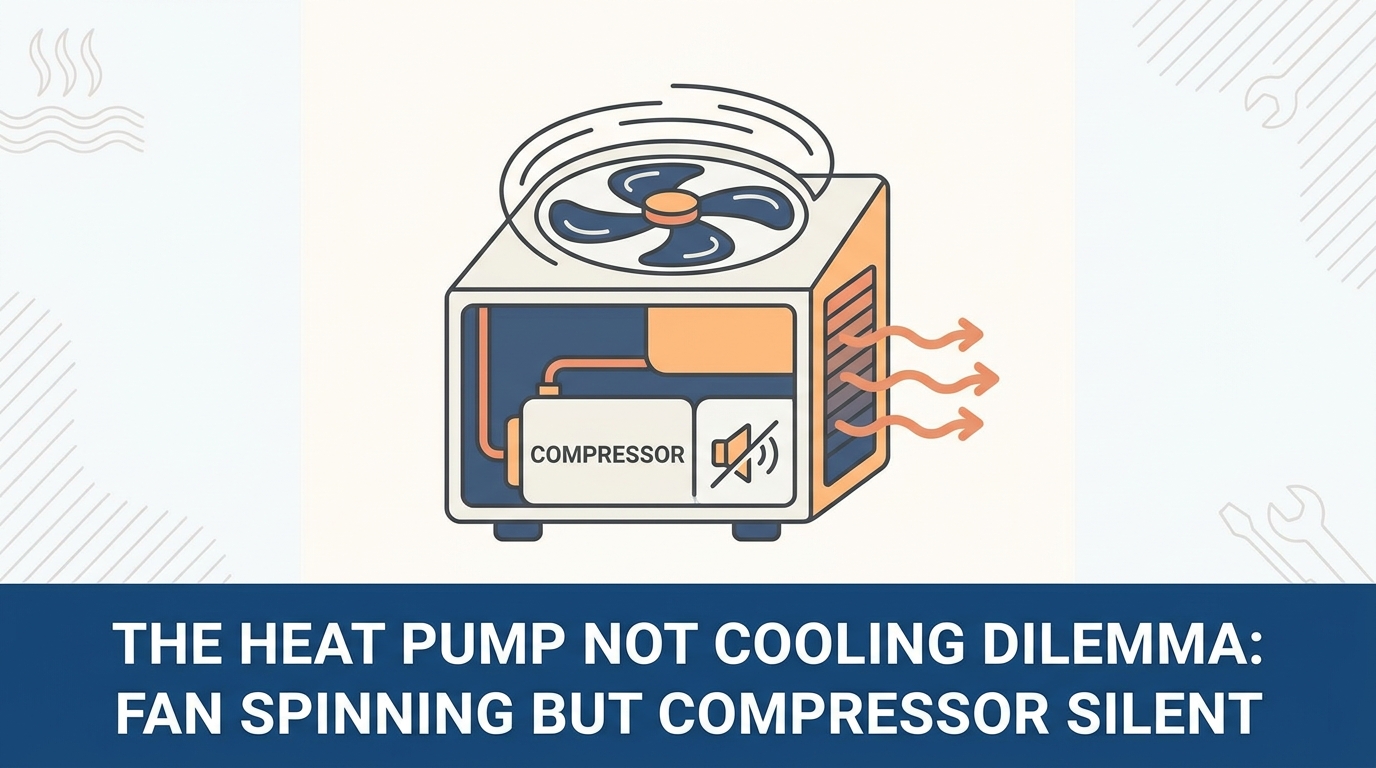
When a heat pump is blowing warm air indoors while the outdoor unit's fan continues to spin, it usually masks the fact that the compressor has completely failed to engage. The decision point you face right now is determining if this is a simple, highly fixable electrical failure, or a severe mechanical death of the compressor, before you call for professional diagnostics. Understanding the mechanics of what is happening outside your window is the first step to resolving the issue.
The Acoustic Difference: Listening to Your Outdoor Unit
Visual inspection is rarely enough when troubleshooting HVAC equipment; you also need to use your ears. A healthy standard residential split-system heat pump makes two very distinct sounds when it is operating correctly in cooling mode. First, you will hear the loud, rushing air created by the fan blades pushing upward. Second, beneath that rushing air, you should clearly hear a low, steady hum or mechanical vibration. That deep hum is the sound of the compressor actively working to pump refrigerant.
Two Motors, One Cabinet
The outdoor unit houses two completely separate electric motors that share a single metal cabinet but perform vastly different jobs. The fan motor exists solely to exhaust heat away from the condenser coils. The compressor, on the other hand, is the heart of the system; it pressurizes and circulates the chemical refrigerant through the copper lines. Because these are entirely separate mechanical entities, one can run perfectly while the other is completely stalled.
What to listen for: If you step outside and hear dead silence or a faint, struggling buzzing sound beneath the noise of the fan blades, your compressor is unpowered or mechanically locked. The fan is simply doing its job exhausting ambient air, but no cooling cycle is actually taking place. If you have already verified your indoor thermostat settings are correct, the issue lies mechanically within the outdoor cabinet. When you notice this specific acoustic disconnect, it is time to contact us for heat pump repairs so a certified technician can investigate the high-voltage electrical components safely.
The Dual Run Capacitor: The Split Brain of Your Heat Pump
What causes one motor to run flawlessly while the other sits entirely idle? The answer usually lies in a small, cylindrical, metal component known as the dual run capacitor. This critical electrical component acts as a temporary battery, storing and delivering the initial, massive jolt of electricity needed to start the motors, and then providing a continuous, even supply of power to keep them running smoothly without overheating.
HERM vs. FAN Circuits
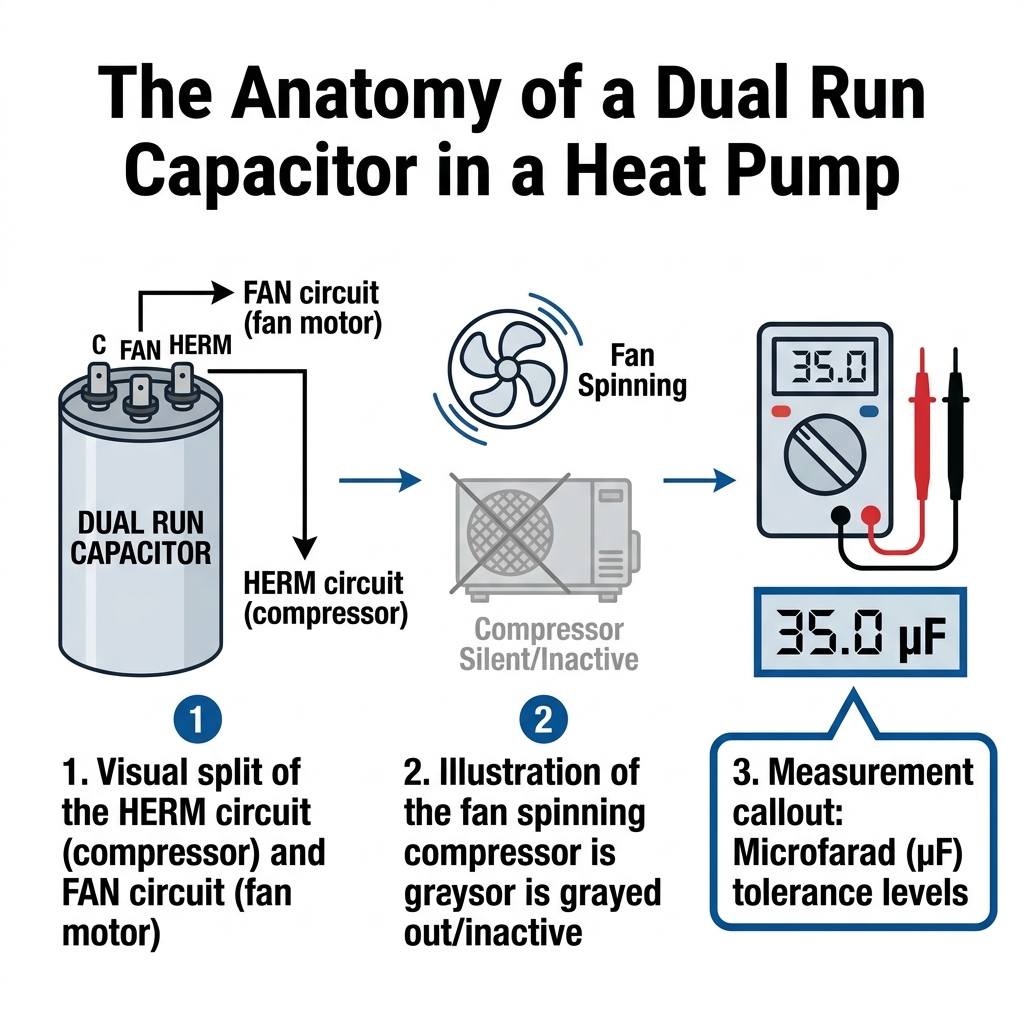
A dual run capacitor is essentially the split brain of your outdoor unit. It contains two completely separate electrical circuits housed within the same metal casing. One side is the HERM (hermetically sealed compressor) circuit, and the other side is the FAN circuit. The HERM circuit is dedicated entirely to the heavy lifting of starting and running the compressor. The FAN circuit is dedicated to the much lighter electrical load of keeping the fan motor spinning.
Because these circuits operate independently within the same standard residential split-system heat pump, the HERM side can completely fail, stopping the compressor in its tracks, while the FAN side continues to supply steady power to the fan blades. The compressor requires significantly more startup torque than the fan, making the HERM side far more susceptible to electrical fatigue and failure over time.
Why Intense Summer Heat Accelerates Electrical Failures
The problem of electrical fatigue does not happen in a vacuum; it is heavily influenced by the operating environment. In the Conroe, TX area, summer temperatures regularly exceeding 95 degrees drastically increase the electrical load and thermal stress on outdoor heat pump components, making capacitor failure a highly predictable seasonal issue.
Capacitors rely on an internal dielectric fluid to manage heat and store electrical charges effectively. Continuous operational loads during peak summer cooling seasons push these components to their absolute thermal limits. The intense ambient heat prevents the internal fluid from cooling down sufficiently between cycles. As this fluid breaks down and degrades chemically, the capacitor loses its ability to hold a charge.
This degradation results in a measurable capacitor microfarad (µF) drop, stripping the compressor of the startup torque it needs to function. The physical signs of a severely heat-damaged capacitor might include a bulging or "mushroomed" top, where the casing has physically expanded from internal pressure and boiling fluid. However, internal degradation and a significant loss of electrical capacity almost always happen long before any visible signs appear on the outside of the casing.
Professional Diagnostics: Measuring the Microfarad (µF) Drop
Guessing what is wrong with a complex electrical system is a dangerous and expensive game. Capacitors are rated in microfarads (µF), an exact scientific measurement that represents their capacity to store an electrical charge. When this rating drops below the manufacturer's specified tolerance (usually a strict variance of +/- 5%), the compressor motor simply cannot achieve the necessary startup torque to turn on.
Expert local diagnostics rely on exact microfarad (µF) readings rather than guesswork, preventing homeowners from facing unnecessary and costly full-compressor replacements. The diagnostic process is precise and objective:
- Isolating the power: The technician first ensures all high-voltage power to the outdoor unit is completely disconnected at the main breaker panel and the outdoor disconnect box.
- Discharging stored energy: Using specialized, insulated tools, the technician safely discharges any remaining lethal voltage stored inside the capacitor.
- Testing the HERM terminal: The technician uses a specialized multimeter to test the exact µF reading of the HERM terminal to see if it meets the manufacturer's specifications.
- Evaluating under load: Sometimes, a capacitor reads within tolerance when disconnected but fails immediately under the actual electrical load of starting the heavy compressor motor.
This objective, measurement-based approach stands in stark contrast to the "parts cannon" method of simply swapping out components and hoping for a fix. A confirmed capacitor microfarad (µF) drop tells the technician exactly what needs to happen next to restore your cooling safely.
The Hidden Dangers of DIY Electrical Troubleshooting
The internet is full of home improvement tutorials, but opening your outdoor heat pump cabinet is incredibly dangerous. Lethal voltage storage is the primary, immediate concern. Capacitors store massive amounts of high-voltage electricity, and they hold onto this charge even long after the power to the heat pump is completely disconnected at the main breaker. Safely discharging a dual run capacitor requires specialized insulated tools and rigorous electrical safety training.
Furthermore, improper installation carries severe risks for your expensive HVAC equipment. Selecting a replacement capacitor with the wrong microfarad rating, or wiring the HERM and FAN terminals incorrectly, can permanently destroy the compressor motor within seconds of turning the power back on. Overworking the electrical windings inside the compressor due to incorrect capacitance is a fast track to a total system failure.
If you suspect a capacitor microfarad (µF) drop is the reason your system is blowing warm air, you must understand that this is never a DIY maintenance task. It requires a licensed professional who understands the specific, intricate electrical demands of the equipment.
Electrical Failure vs. Refrigerant Leaks
A major misconception among homeowners is that "blowing warm air" automatically means the system is "out of freon" or refrigerant. This assumption leads to unnecessary panic about major, expensive system replacements or extensive leak searches when the actual fix might be quite simple.
Sudden vs. Gradual Cooling Loss
The timeline of the failure is a massive clue to the root cause. Sudden loss of cooling points directly to an electrical failure, like a bad capacitor or a failed contactor. Gradual loss of cooling points to a mechanical or sealed system failure, such as a refrigerant leak or severely dirty condenser coils.
| Diagnostic Symptom | Electrical Failure (e.g., Capacitor) | Sealed System Failure (e.g., Refrigerant Leak) |
|---|---|---|
| Timeline of Failure | Immediate, sudden loss of all cooling capacity. | Gradual decline in cooling performance over days or weeks. |
| Compressor Status | Completely silent, or humming/buzzing without starting. | Running constantly, struggling to keep up with thermostat demand. |
| Coil Condition | Normal appearance, simply not getting cold. | Often covered in ice buildup due to abnormal pressure drops. |
| Airflow Temperature | Ambient room temperature (warm air). | Slightly cool, but not cold enough to condition the room. |
Misdiagnosing the issue can send you down the wrong path entirely. Understanding the mechanics of a standard residential split-system heat pump helps you communicate better with your technician. For more insight into these specific symptoms, you can read more about why your heat pump is running but not cooling. Reiterate to yourself that confirming a capacitor microfarad (µF) drop is a straightforward, definitive process for a professional, whereas finding a refrigerant leak is an entirely different diagnostic path.
Frequently Asked Questions About Heat Pump Diagnostics
Will a heat pump fan run if the compressor is bad?
Yes, the outdoor fan will absolutely continue to run even if the compressor is bad or stalled. This happens because a standard residential split-system heat pump operates using two entirely separate electrical circuits and motors housed within the same outdoor unit. The fan motor is powered independently from the compressor, meaning a mechanical failure in the compressor does not stop the fan blades from spinning and exhausting air.
How do I know if my heat pump compressor is not running?
The most reliable way to tell without electrical tools is to listen closely to the outdoor unit. You should listen for the distinct, low, steady hum of the compressor operating beneath the rushing noise of the fan blades. If the unit sounds unusually quiet, or if you only hear the whoosh of the fan and nothing else, it is highly likely that the compressor is currently off, unpowered, or mechanically stalled.
Why is my heat pump blowing warm air when the fan is spinning?
When the fan is spinning but the compressor is off, the fan is simply moving unconditioned air around the outdoor cabinet. Without the compressor actively running to pressurize and circulate the refrigerant through the system, no heat transfer can occur between the indoor and outdoor coils. As a result, the indoor blower pushes room-temperature, warm air through your vents, creating the illusion that the system is heating when it is actually just failing to cool.
Can a bad thermostat cause the fan to run but not the compressor?
While it is technically possible for a damaged thermostat wire or a malfunctioning thermostat relay to send power to the fan and not the compressor, this is relatively rare. In the vast majority of cases, a failed dual run capacitor is a much more common mechanical culprit for this specific symptom. A technician will rule out the thermostat quickly before moving on to test the outdoor electrical components.
How long does a dual run capacitor usually last?
The lifespan of a dual run capacitor varies significantly based on your local climate, how often the system runs, and the manufacturing quality of the component itself. On average, they last between five and ten years under normal conditions. However, intense, continuous summer heat drastically shortens their operational life by breaking down the internal dielectric fluids much faster than in milder climates.
Restoring Your Comfort with Accurate Diagnostics
Seeing an outdoor fan spinning while the indoor vents blow warm air is undeniably frustrating, but it is a classic sign of an isolated electrical failure, not necessarily a completely dead system. Professional testing is the only way to know for sure what is happening inside the cabinet. Relying on an expert to confirm a capacitor microfarad (µF) drop safely ensures that you are treating the actual root cause of the problem.
Avoid the temptation to poke around high-voltage cabinets yourself, as the risks far outweigh any potential savings. By seeking expert diagnostics rather than attempting dangerous DIY repairs, you guarantee a clear explanation of the dual run capacitor's role, actionable next steps for repair, and a safe, effective path back to a comfortable home. Diagnosing a heat pump that blows warm air while the outdoor fan is spinning requires precision, safety, and a thorough understanding of split-system mechanics.