
Why HVAC Condition Affects Home Appraisals More Than Most Homeowners Realize
How HVAC condition affects home appraisals is one of the most overlooked factors when homeowners prepare to sell, refinance, or tap into their equity through a HELOC — and the financial stakes are very real.
Here is a quick summary of the key ways your HVAC system influences your home's appraised value:
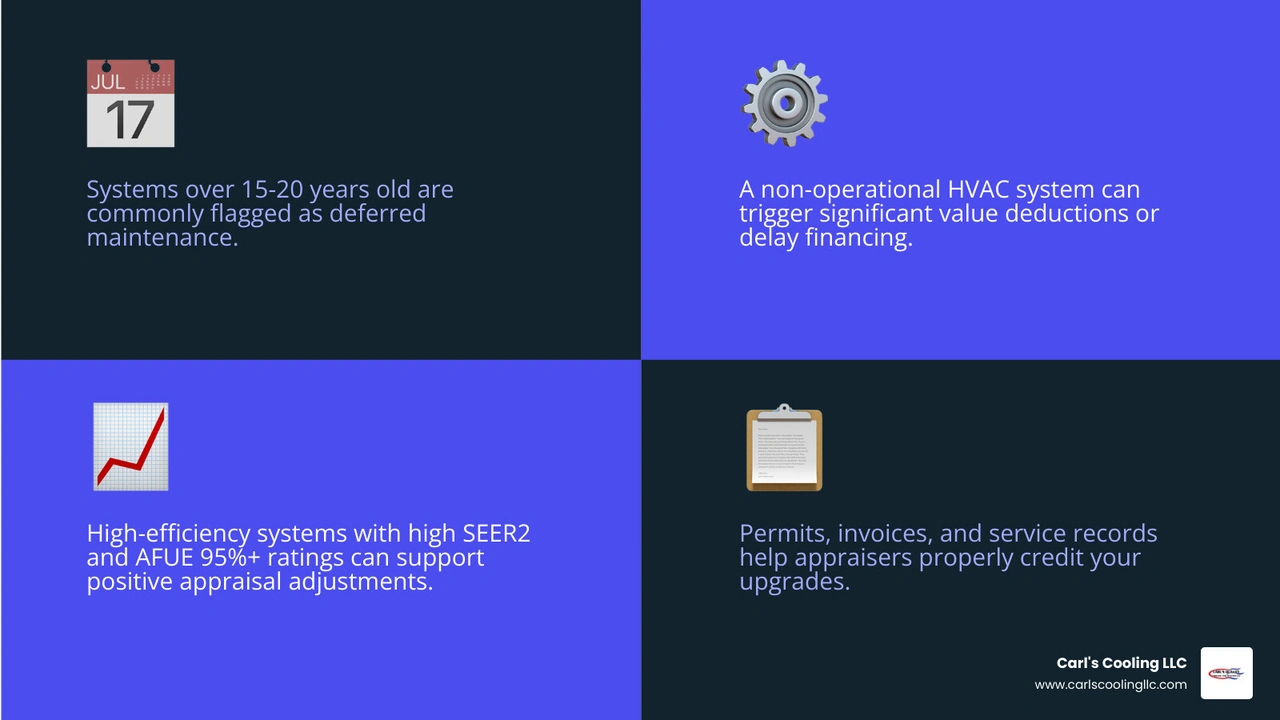
- System age - Units over 15-20 years old are commonly flagged as deferred maintenance
- Functionality - A non-operational system can trigger significant value deductions or delay financing
- Efficiency ratings - High-efficiency systems (high SEER2, AFUE 95%+) can support positive appraisal adjustments
- Visible condition - Rust, corrosion, neglect, or dirty equipment signals poor upkeep to appraisers
- Market expectations - Missing central air in a neighborhood where it is standard can result in a value penalty
- Documentation - Permits, invoices, and service records help appraisers properly credit your upgrades
Appraisers evaluate your heating and cooling system as part of your home's overall physical condition — right alongside the roof, foundation, and plumbing. A failing or aging system does not just raise red flags for buyers. It can directly reduce your appraised value by thousands of dollars, shrink your available equity, or complicate your loan approval.
The good news is that with the right preparation, documentation, and maintenance, your HVAC system can support — rather than hurt — your home's valuation.
How HVAC Condition Affects Home Appraisals
When an appraiser walks through your home in Conroe or The Woodlands, they aren't just looking at your granite countertops or hardwood floors. They are assessing the "bones" of the house. The HVAC system is a primary component of the property's "Physical Condition" category on the Uniform Residential Appraisal Report.
How appraisers evaluate HVAC systems during a home appraisal
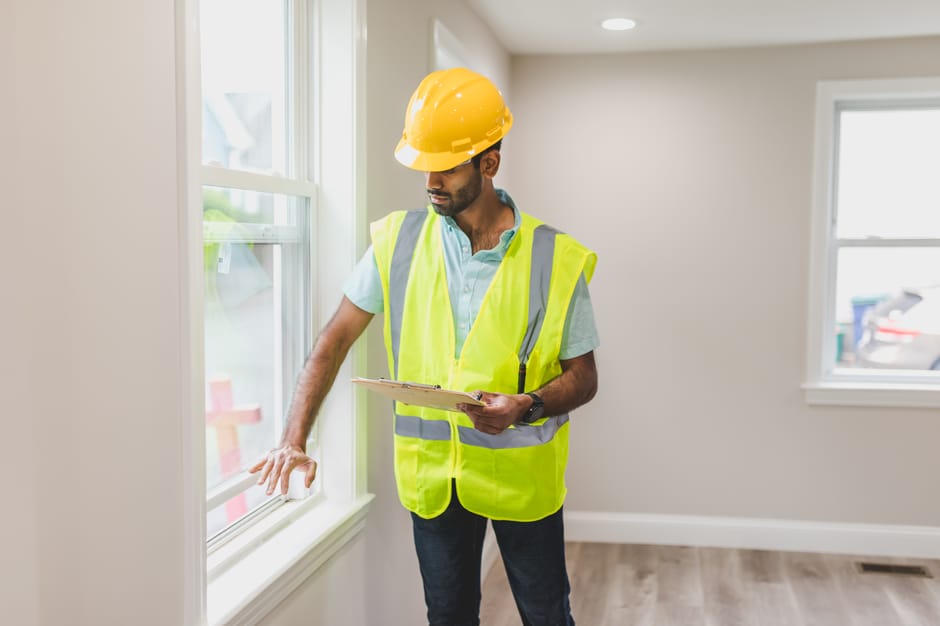
Unlike a specialized HVAC technician, an appraiser performs a visual and functional check rather than a deep mechanical teardown. However, their checklist is rigorous enough to catch major issues. Here is what we typically see them look for:
- Basic Operation: They will often turn on the heat and the AC via the thermostat to ensure the system responds and moves air.
- Visual Inspection: They check the indoor air handler and the outdoor condenser unit for signs of rust, corrosion, or physical damage.
- Manufacturer Labels: Appraisers look for the data plate to determine the tonnage, manufacture date, and efficiency ratings like SEER2 or AFUE.
- Safety and Health: They check for proper venting of gas furnaces and ensure there are no obvious leaks or electrical hazards.
- Remaining Useful Life: Based on the age and condition, the appraiser estimates how many more years the system will likely last.

How HVAC condition affects home appraisals for sales, refinances, and HELOCs
Whether you are selling a home in Spring or looking for a HELOC in Cypress, how hvac condition affects home appraisals remains consistent: it’s about risk and value.
In a home sale, a failing HVAC can be a deal-breaker. If the appraisal comes in low because of an old system, the lender may refuse to fund the buyer's loan unless the unit is replaced. For a refinance, a well-maintained system helps ensure you meet the value required to secure a better interest rate. When it comes to HELOC limits, your borrowing power is directly tied to equity. If an appraiser hits your home with a $5,000 to $10,000 "deferred maintenance" penalty due to a dying furnace, that is thousands of dollars in credit you can no longer access.
The HVAC Red Flags That Can Lower Appraised Value
Appraisers are trained to spot "functional obsolescence"—a fancy way of saying something is out of date or doesn't work as well as modern standards require.
The biggest HVAC issues appraisers notice right away
First impressions matter. If an appraiser sees an outdoor unit buried in weeds or an indoor closet covered in dust and water stains, they immediately suspect neglect. Specific red flags include:
- Visible Wear: Heavy rust on the cabinet or bent fins on the condenser.
- Blocked Access: If they can't get to the unit because of clutter, they may note it as "uninspectable," which can stall your loan.
- Strange Noises: Squealing belts or grinding compressors suggest imminent failure.
- Dirty Coils and Filters: These indicate that the system has been working harder than it should, likely shortening its lifespan.
How age, condition, and efficiency influence value
In our Texas climate—from Humble to Huntsville—the age of an AC unit is a major factor.
- Under 10 years: Generally viewed as an asset or neutral.
- 10–15 years: Appraisers start to look closer at service history.
- 15–20 years: This is the "danger zone." Most systems in our region face heavy workloads, and at 20 years, they are often considered at the end of their useful life.
- Efficiency: A high-efficiency system (SEER2 18+ or 95% AFUE) can justify a positive adjustment of $1,000 to $2,000 over a standard unit.
When missing cooling or outdated refrigerant becomes a major appraisal problem
In Greater Houston, central air is not a luxury; it's a requirement. If your home lacks central air while all the "comparables" in your neighborhood have it, you could face a value penalty of $5,000 to $8,000.
Furthermore, systems using R-22 refrigerant (Freon) are major red flags. Since R-22 has been phased out, these units are incredibly expensive to service. Appraisers know this and often treat R-22 systems as effectively obsolete, which can lead to lower valuations.
What Homeowners Should Show the Appraiser
You shouldn't leave the HVAC portion of the appraisal to chance. We recommend being proactive by providing a "Homeowner’s Value Package."
Documents that help prove HVAC upgrades and maintenance
Don't just tell the appraiser the system is "new." Prove it. Have a folder ready containing:
- Installation Invoices: Showing the date and the professional company that did the work.
- Permit Records: Proving the installation met local building codes in cities like Tomball or Magnolia.
- Warranty Information: Especially if it is transferable to a new owner.
- Efficiency Ratings: Labels or manuals showing SEER2, AFUE, or ENERGY STAR certification.
- Service Logs: Evidence of twice-yearly maintenance.
For more details on what a professional looks for, see our Complete HVAC System Inspection Guide.
How to prepare the system before appraisal day
A little "curb appeal" for your HVAC goes a long way.
- Change the Filter: A clean, white filter shows you care about the system's health.
- Clear the Area: Remove weeds, leaves, and trash from around the outdoor condenser.
- Clean the Cabinet: Wipe down the indoor unit to remove dust and cobwebs.
- Set the Stage: Ensure the house is at a comfortable temperature when the appraiser arrives to prove the system is capable of doing its job.
Why service history can matter more than age alone
A well-documented, 12-year-old system that has been serviced every six months often receives a better condition rating than an 8-year-old unit with no service history and a clogged coil. Regular maintenance builds "appraiser confidence," signaling that the home has been meticulously cared for. Learn more about Extending Your HVAC System Lifespan to keep your equity high.
When to Repair, Service, or Replace Before the Appraisal
Deciding whether to sink money into an old unit before an appraisal is a strategic choice.
When should homeowners consider replacing their HVAC system before an appraisal?
You should consider a full replacement if:
- The system is over 20 years old.
- It uses R-22 refrigerant and needs a major repair.
- There are safety issues, such as a cracked heat exchanger.
- The home lacks central air in a neighborhood where it's standard.
| Action | When to Choose | Appraisal Impact |
|---|---|---|
| Service | System is healthy but needs a cleaning. | Improves "Condition Rating." |
| Repair | Minor part failure (capacitor, fan motor). | Prevents a "Non-Functional" flag. |
| Replace | 15+ years old, R-22, or frequent breakdowns. | Adds 5-7% to home value; removes penalties. |
Upgrades that tend to support stronger appraisals
If you decide to upgrade, some choices offer a better Return on Investment (ROI) than others. High-efficiency heat pumps and furnaces can recoup 40-70% of their cost in added appraised value. Adding a smart thermostat is a low-cost way to increase the "marketability" of the home, signaling to both the appraiser and future buyers that the home is modern.
Check out our guide on How to Decide Between Repair and Replacement and see How a New HVAC System Increases Home Value for more insight.
Why proper installation and sizing matter for valuation
An oversized or poorly installed system is a liability. It leads to short-cycling, high humidity, and uneven temperatures—all things an appraiser might notice. Professional installation ensures the system operates at peak efficiency, which supports the highest possible valuation. We dive deeper into this in our article on The Benefits of Proper HVAC Sizing and Installation.
Regional Factors and Property-Specific Considerations
In our service areas—stretching from the piney woods of Montgomery to the suburbs of North Houston—the climate dictates the appraisal impact.
Where HVAC has the biggest appraisal impact
In the Texas heat, an AC failure is considered a habitability issue. Appraisers in hot, humid climates place a much higher weight on the HVAC system than those in temperate regions. If your system can't keep the home below 75 degrees on a 100-degree August day, it will likely be noted as "inadequate," leading to a significant value deduction.
How system type changes the appraisal conversation
- Central Split Systems: The gold standard for most single-family homes in our area.
- Heat Pumps: Increasingly popular for their efficiency and often rewarded in modern appraisals.
- Ductless Mini-Splits: Excellent for adding value to converted garages or "bonus rooms" that weren't previously conditioned, potentially increasing your home's total livable square footage.
Frequently Asked Questions About How HVAC Condition Affects Home Appraisals
Will a new HVAC system increase my HELOC limit?
While a new HVAC won't "skyrocket" your limit on its own, it acts as a vital safeguard. By preventing a $5,000–$10,000 deduction for "deferred maintenance," you ensure your appraised equity remains as high as possible, giving you the maximum borrowing power.
Is getting HVAC serviced before an appraisal worth it?
Absolutely. A clean unit with a fresh service sticker from us sends a powerful message. It shows the appraiser that you are a responsible homeowner, which can lead to a higher overall "Condition Rating" for the entire property.
How old does an HVAC system need to be before it hurts an appraisal?
Generally, once a system hits the 15–20 year mark, appraisers start viewing it as a liability rather than an asset. At this age, they assume a buyer will have to replace it soon and may adjust the value downward to account for that upcoming expense.
Conclusion
Understanding how hvac condition affects home appraisals is essential for protecting your home equity. Whether you are in Conroe, Willis, or The Woodlands, your heating and cooling system is a major factor in your home's financial health. By keeping your system well-maintained, documenting your upgrades, and addressing red flags before the appraiser arrives, you can ensure a smoother transaction and a higher valuation.
If you're preparing for an appraisal and want to ensure your system is in top shape, we are here to help. From professional maintenance to high-efficiency upgrades, our team serves the entire Montgomery County area with expert care.