

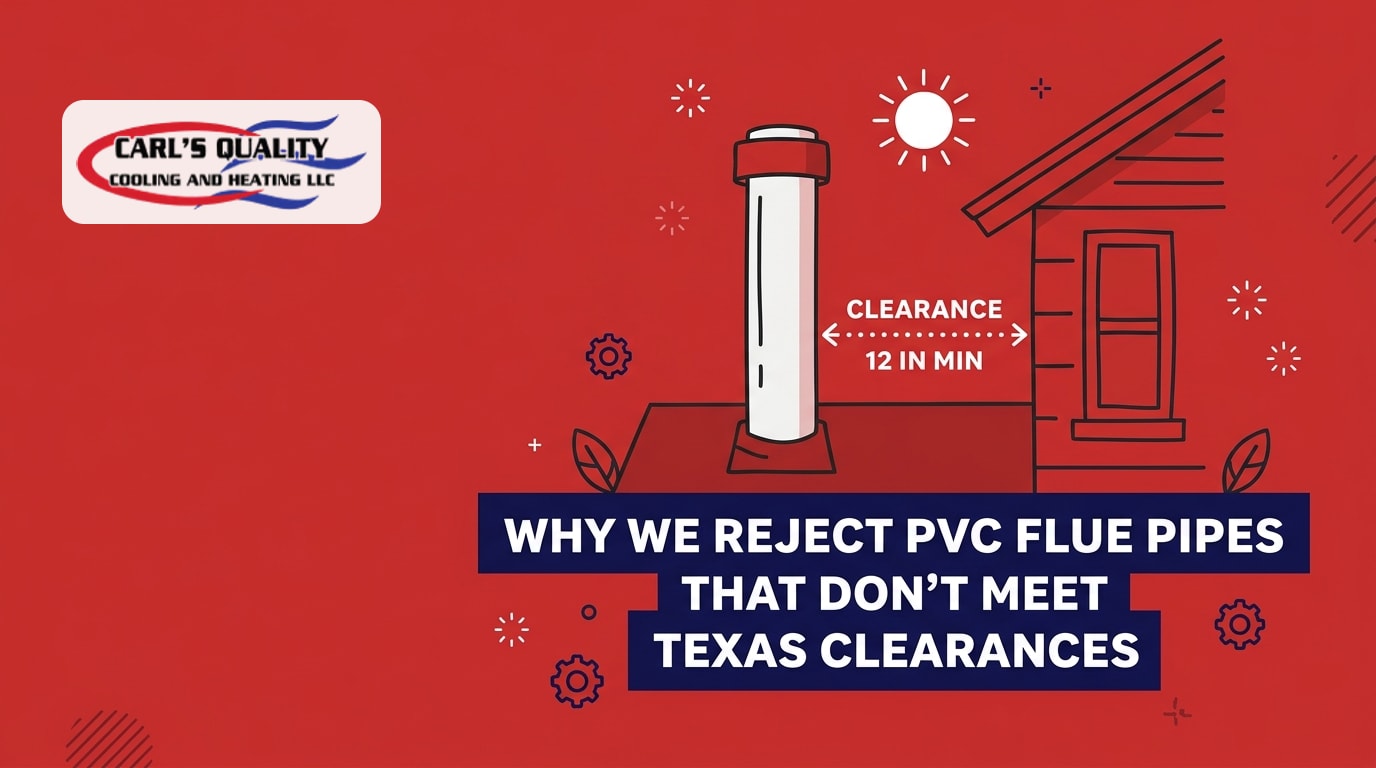

The Reality of Carbon Monoxide Risks in Improperly Vented Furnaces
More than 400 people in the United States die every year from accidental carbon monoxide poisoning, and thousands more are hospitalized. Often, these tragedies trace back to improperly vented heating appliances. Understanding the strict clearance requirements for furnace exhaust is not just about passing a municipal inspection; it is a matter of life and death. A typical pattern we see in many Conroe, TX area homes involves undersized or improperly routed PVC exhaust pipes that fail to meet strict Texas safety clearances.
When an HVAC technician inspects a furnace and discovers that the exhaust venting is dangerously close to a window, improperly pitched, or degrading, they face a critical decision point. They must make the tough call to reject or red-tag the system until the unsafe venting is corrected. This is never done to cause frustration; it is an absolute requirement to protect the household from toxic gas buildup. If you suspect your venting is compromised, scheduling professional heating services is the safest next step to ensure your home is ready for the colder months.
How Texas Weather Patterns Stress Dormant Heating Systems
In Southeast Texas, heating systems live a very different life than those in northern climates. For most of the year, furnaces remain completely dormant. We experience long, hot summers and relatively mild autumns, meaning your heating equipment sits idle in the attic or closet for months on end. However, this mild climate can create a false sense of security, especially when a sudden, severe Texas cold snap arrives.
Mild Winters Mask Underlying Venting Issues
Because heating cycles are short and infrequent during mild weather, homeowners may not notice underlying venting problems. A furnace that only runs for ten minutes at a time might not produce enough exhaust to reveal a backdraft issue or a leaking pipe joint. Over time, degraded PVC, sagging pipes, or improperly pitched exhaust lines can silently fail. During November pre-winter tune-ups, technicians frequently uncover these hidden issues before they escalate into dangerous situations.
The Danger of Maximum Capacity Operation
When a severe freeze hits Conroe, dormant furnaces are suddenly forced to run at maximum capacity, sometimes operating continuously for days. This continuous running produces significantly higher volumes of exhaust gases and acidic condensation. If the PVC exhaust pipes are undersized, poorly routed, or blocked by debris, they simply cannot handle the peak exhaust loads. The resulting backpressure forces toxic carbon monoxide back into the living space. Properly cleared and sized venting is the only way to ensure the system can handle the extreme stress of a sudden winter storm.
Why High-Efficiency Furnaces Rely on PVC (And Why Precision Matters)
Most modern homes are equipped with high-efficiency condensing furnaces, boasting AFUE (Annual Fuel Utilization Efficiency) ratings of 90% or higher. These advanced systems operate differently than older models, which fundamentally changes how they must be vented. While traditional furnaces require metal flues to handle scorching hot exhaust, high-efficiency models rely on PVC piping. However, a common misconception among homeowners in Conroe, TX area homes is that because the exhaust is cooler, the venting rules are less strict. The reality is exactly the opposite.
The Science of Condensing Furnaces
High-efficiency furnaces utilize a secondary heat exchanger to extract additional heat from the combustion gases before they leave the home. This process significantly lowers the temperature of the exhaust gases, which is why PVC pipe can be safely used without immediately melting. However, this process also creates highly acidic condensation. The exhaust must be properly drained and vented to prevent this corrosive moisture from eating away at system components or leaking into the home.
• Standard Efficiency — Typical AFUE Rating: 80% — Exhaust Material: Metal Flue (B-Vent) — Exhaust Characteristics: High heat, dry exhaust, natural draft
• High-Efficiency (Condensing) — Typical AFUE Rating: 90% - 98% — Exhaust Material: PVC, CPVC, or ABS — Exhaust Characteristics: Lower heat, highly acidic condensation, forced draft
Why PVC Can Still Melt or Degrade
Just because condensing furnace exhaust is cooler does not mean it is harmless. The gases are still toxic, and if the PVC pipe is installed without the required clearances to combustibles, heat transfer can still cause the material to break down over time. Furthermore, using the wrong schedule of PVC (such as cellular core instead of solid wall) or failing to properly prime and glue the joints leads to catastrophic leaks. Precision in installation is non-negotiable to ensure the pipe remains structurally sound under pressure.
The Critical Role of Texas Clearance Codes in Preventing Backdrafts
Building codes are not arbitrary suggestions; they are written based on years of forensic engineering and safety data. In Texas, the International Residential Code (IRC) Chapter 24, along with local municipal guidelines, dictates exactly how and where furnace exhaust can terminate on the exterior of a home. During November pre-winter tune-ups, technicians meticulously verify these clearances because failing to adhere to them creates a direct pathway for toxic gases to re-enter the house.
Distance from Windows, Doors, and Vents
One of the most critical clearance requirements involves the distance between the exhaust termination and any operable openings in the home. Exhaust pipes must be placed far enough away from windows, doors, and fresh air intake vents to stop toxic drafts. If a PVC pipe terminates too close to a bedroom window, standard wind patterns can easily catch the exhaust plume and force it right back inside the house. Technicians must enforce these minimum distances to ensure wind currents carry the gases safely away from the property.
Clearance to Grade and Gas Meters
Another major point of inspection is the clearance to grade (ground level) and nearby utilities. Pipes must terminate high enough above ground level to avoid blockage from blowing debris, landscaping overgrowth, or rare snow accumulation. A blocked pipe will immediately cause a furnace to shut down or, worse, backdraft into the home. Additionally, strict distance requirements exist between exhaust vents and gas meter regulators to prevent corrosive exhaust moisture from damaging the sensitive components of the gas meter.

Carbon Monoxide: The Silent Threat of Compromised Exhaust Pipes
The primary reason HVAC professionals are so uncompromising about exhaust clearances is the threat of carbon monoxide (CO). Carbon monoxide is completely colorless, odorless, and tasteless, making it impossible to detect without specialized equipment or a working CO alarm. When a PVC exhaust pipe is undersized, poorly pitched, or terminates too close to a structural overhang, the exhaust gases cannot escape freely.
This restriction creates backpressure. Instead of being pushed safely outdoors, the exhaust is forced backward through the furnace cabinet and circulated through the home's ductwork. As carbon monoxide levels rise inside the living space, occupants may begin to experience headaches, dizziness, nausea, and fatigue. Because these early warning signs are so generic, many families fail to realize they are in danger until it is too late. Recognizing the symptoms homeowners often mistake for the flu is an important step in protecting your household, but preventing the exposure entirely through code-compliant venting in Conroe, TX area homes is the ultimate goal.
Common Exhaust Venting Violations We Find in the Field
When professionals conduct November pre-winter tune-ups, they follow a strict checklist to verify the integrity of the heating system. Unfortunately, it is common to find venting setups that were installed hastily or by untrained individuals. These violations require immediate correction to restore the safety of the system.
• Undersized flue pipes: High-efficiency furnaces require a specific diameter of PVC pipe based on the BTU rating of the unit and the total length of the pipe run. Pipes that are too narrow restrict airflow, causing the furnace to overheat and potentially backdraft.
• Improper pitch and slope: Because condensing furnaces produce acidic water, the horizontal runs of the PVC pipe must be pitched slightly back toward the furnace so the water can drain properly. A pipe that sags or slopes the wrong way will pool with water, eventually blocking the exhaust completely.
• Unapproved materials: Standard plumbing PVC is not always rated for the temperatures and corrosive nature of furnace exhaust. Technicians frequently find unapproved cellular core PVC or ABS piping that has degraded over time.
• Unglued or failing joints: Every joint in a PVC exhaust system must be properly primed and cemented. Dry-fit joints or those glued with incorrect adhesives will inevitably leak toxic gases directly into the attic or utility closet.
• Termination too close to windows: Exhaust pipes exiting the side of the house must maintain strict radial distances from any operable window or door to prevent gases from drifting back inside.
Catching these violations early is the primary benefit of enrolling in an annual heating maintenance plan, ensuring your system is thoroughly vetted before the freezing weather arrives.
Our Uncompromising Stance on Code Compliance and Safety
Delivering tough news to a homeowner is never the highlight of a technician's day. Telling a family that their furnace cannot be safely operated until the exhaust venting is completely rebuilt is a difficult conversation, but it is an ethical responsibility. Working with a veteran-owned company means you are getting the same level of discipline, strict adherence to protocols, and accountability that military service demands. We refuse to cut corners because the community's safety is on the line.
Red-tagging a system is never done lightly. It is legally and morally required when building codes are violated in ways that threaten human life. A quick, cheap fix that bypasses safety clearances might get the heat back on temporarily, but it puts the entire household at catastrophic risk. We prioritize long-term safety and community well-being over temporary comfort. Ensuring that your home's air is free from exhaust contamination is a core part of comprehensive indoor air quality services, and it starts with uncompromising standards for every single Conroe, TX area home we service.
Frequently Asked Questions About Furnace Exhaust Clearances
Why did my HVAC technician reject my furnace exhaust venting?
Your technician likely rejected the venting because it violated critical safety codes that prevent carbon monoxide from entering your home. Common reasons include undersized pipes, improper slope that traps acidic condensation, or the pipe terminating too close to a window or door. During November pre-winter tune-ups, professionals must red-tag unsafe systems to protect your family from toxic gas exposure. It is a strict safety measure, not a cosmetic judgment.
What happens if furnace exhaust is too close to a window?
If an exhaust pipe terminates too close to an operable window, normal wind patterns can blow the toxic exhaust gases right back into the house. This creates a severe carbon monoxide hazard for anyone inside the room. Building codes mandate specific clearance distances to ensure the exhaust plume has enough space to safely dissipate into the atmosphere. A professional must reroute the pipe if it violates these minimum distances.
Why is carbon monoxide a risk with improper PVC clearances?
Improper clearances can cause the PVC pipe to restrict airflow or become blocked by outside debris, forcing the exhaust gases backward into the furnace cabinet. Because carbon monoxide is colorless and odorless, this backdraft can fill the home with toxic gas without anyone noticing. Proper clearances ensure that the exhaust flows freely outdoors, eliminating the backpressure that causes CO leaks.
How far should a furnace exhaust be from a window?
The exact required distance depends on local municipal codes and the specific manufacturer guidelines of your furnace model, but it is typically several feet away from any operable opening. These codes are designed to prevent wind from pushing exhaust back indoors. Because these measurements vary by equipment size and local jurisdiction, a licensed HVAC professional must verify the correct distance for your specific property.
Can furnace exhaust pipe touch wood?
Even though high-efficiency furnaces use PVC pipes because the exhaust is cooler than older models, the pipes still carry heat and must maintain a safe clearance from combustible materials like wood framing. Direct contact can cause the PVC to degrade over time or transfer heat in a way that violates fire safety codes. Professional installers use specialized hangers and brackets to ensure the pipe remains properly supported without resting directly on combustible surfaces.
Why does my high efficiency furnace use a PVC exhaust pipe?
High-efficiency condensing furnaces extract so much heat from the combustion process that the resulting exhaust gases are significantly cooler than those from a standard furnace. This cooler temperature allows for the use of durable PVC piping instead of traditional metal flues. However, this cooler exhaust also produces highly acidic condensation, making corrosion-resistant PVC the ideal material for safely venting the system.
What is the local code for furnace exhaust in Texas?
Texas generally follows the International Residential Code (IRC) Chapter 24 for fuel gas appliances, supplemented by specific municipal amendments. These codes dictate pipe sizing, slope requirements, approved materials, and precise termination clearances from doors, windows, and gas meters. Because local jurisdictions can add stricter requirements, it is essential to have a licensed professional verify that your system meets all current local safety standards.
Ensuring Your Heating System is Safe for the Winter Ahead
Code-compliant PVC venting is the only way to guarantee a safe, reliable winter for your household. The rules governing clearances, pipe sizing, and termination zones exist for one reason: to protect you and your family from the invisible, life-threatening dangers of carbon monoxide. When a system is red-tagged, it is a necessary intervention to correct a critical safety failure.
As the colder weather approaches, now is the time to prioritize professional assessments. We strongly encourage homeowners in Conroe, TX area homes to schedule a comprehensive inspection before the freezing weather hits. Do not wait for a sudden cold snap to test the limits of your dormant heating equipment. Schedule your tune-up today to verify your exhaust clearances and enjoy the peace of mind that comes with a rigorously inspected, code-compliant heating system.

