
Is It Normal for My Heater to Smell Like Burning Dust?
"Why does my heater smell like burning?" As the seasons shift, this is among the most common homeowner questions answered by our technicians at Carl's Quality Cooling and Heating LLC, especially when that sudden, alarming odor fills the house. You finally switch your thermostat over to "heat" on a chilly autumn evening, and within minutes, a distinct, dusty burning scent begins circulating through your vents. For many, the immediate reaction is panic. You might rush to check the vents, stare at the furnace cabinet, or even consider calling the Conroe fire department.
The immediate concern is entirely understandable. Any unusual smell coming from a major household appliance warrants attention. However, the critical decision point for anyone experiencing this is knowing whether you are dealing with normal seasonal dust burn-off or a serious mechanical hazard that requires an emergency shutdown.
The short answer is that in most Conroe area homes we service, a brief burning odor during the initial startup is a standard seasonal occurrence rather than an emergency. Your heating system has been sitting completely dormant for months. When those internal components finally heat up, they interact with everything that has settled on them over the summer. Whether you recently relied on our air conditioning services to keep your house cool through August or you are just now prepping for the fall weather, understanding why this odor happens is the first step in safely operating your system.
The Culprit Behind the Odor: Summer Humidity and Idle Heat Exchangers
To understand why your heater smells like a dusty campfire, you have to look at what happens inside the equipment during the off-season. The primary component responsible for warming the air in a gas furnace is the heat exchanger. In an electric heat pump or air handler, it is the electric heating strips. Both of these components reach incredibly high temperatures to effectively warm the air blowing past them.
The Role of Regional Climate
During long Southeast Texas summers, HVAC systems sit entirely idle in heating mode. In our years of inspecting equipment throughout Montgomery County, our team typically sees that while the air conditioner works tirelessly to remove heat and moisture from the home, the heating components remain cold and unused in the dark cabinet. Conroe's long, humid summers create a uniquely sticky environment inside that idle cabinet. High indoor humidity and constant airflow mean that airborne particles—pet dander, dead skin cells, pollen, and everyday household dust—are constantly circulating.
Sticky Dust Accumulation
Because of the ambient moisture in the air, these airborne particles cling tightly to the cold heat exchanger over the summer months. This creates a much thicker, stickier layer of debris than you would find in arid, dry climates. The dust effectively bakes onto the metal surfaces.
The Fall Startup Reaction
When the heat finally kicks on during the first October cold front, those internal components rapidly heat up to hundreds of degrees. The accumulated layer of sticky summer dust cannot withstand the sudden temperature spike. It rapidly vaporizes and burns off the metal surfaces. The blower fan then pushes that vaporized dust directly into your ductwork and out through your vents, resulting in the distinct, dusty burning odor that alarms so many residents.
How Long Should the Heating Dust Smell Last?
Knowing that the smell is likely just dust is helpful, but you still need clear, exact timelines to ensure your system is operating safely. A pattern we see often is that homeowners either turn the system off too quickly before the dust clears, or they leave it running far too long when there is an actual issue. Providing a clear timeline helps calm anxiety and gives you a specific window to monitor the situation.
1. Prepare for the Initial Cycle: Before turning the heater on for the very first time this season, open a few windows to ensure the home is well-ventilated. This allows the vaporized dust to escape rather than settling into your carpets and furniture.
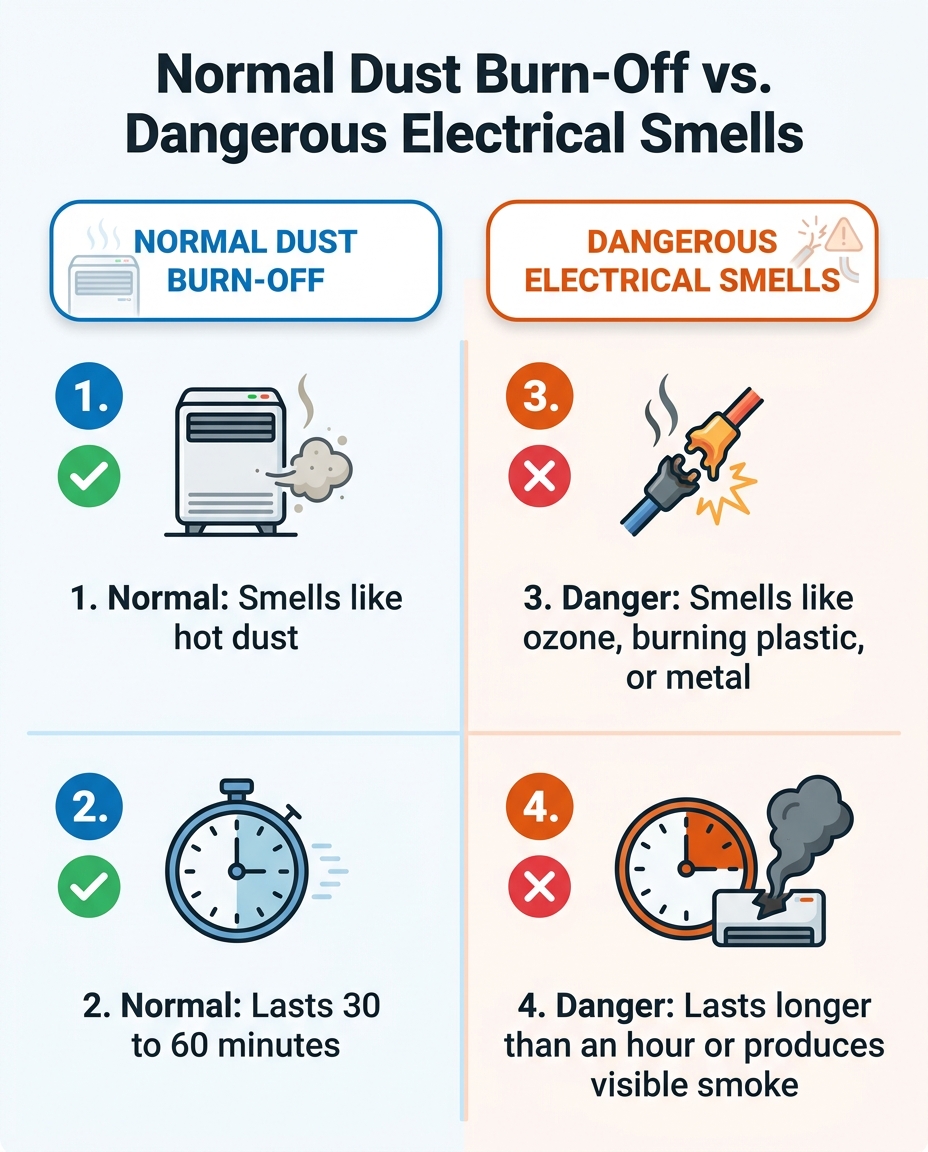
2. Monitor the 30 to 60-Minute Window: Homeowners should monitor the scent for a specific 30 to 60 minute duration for normal burn-off. During the first 15 minutes, the smell will likely be at its strongest as the bulk of the accumulated dust vaporizes.
3. Observe the Dissipation: By the 30-minute mark, the odor should be noticeably fading. The air blowing from the vents should start smelling like normal, warm air. By the 60-minute mark, the smell should be completely gone, or so faint that you have to stand directly under a vent to detect it.
4. Evaluate the Results: If the smell completely dissipates within this timeframe, the system is operating normally, and the heat exchanger is now clean. You can close your windows and enjoy the warmth. If the smell persists beyond an hour, or if it grows stronger instead of weaker, you must abort the test and turn the system off at the thermostat.
Warning Signs: When a Burning Odor Indicates Danger
While dust burn-off is a harmless nuisance, there are other types of burning odors that indicate a severe mechanical or electrical failure. It is critical to differentiate between harmless dust and dangerous electrical smells without putting yourself in harm's way. If you notice any of the dangerous odors listed below, do not wait out the standard 30 to 60 minute duration for normal burn-off. Turn off the system at the thermostat immediately.
• Warm, dusty, slightly musty smell — Likely Source: Normal dust burning off the heat exchanger or heating strips. — Required Action: Monitor for 30 to 60 minutes. Ensure proper home ventilation.
• Sharp, acrid, or "fishy" ozone smell — Likely Source: Overheating blower motor, failing capacitor, or electrical arcing. — Required Action: Turn off immediately. Call for professional inspection.
• Melting plastic or burning rubber — Likely Source: Failing wire insulation, melted safety switches, or foreign objects in the ductwork. — Required Action: Turn off immediately. This is a fire hazard requiring urgent repair.
• Visible smoke coming from vents — Likely Source: Active smoldering inside the cabinet or severe mechanical failure. — Required Action: Turn off immediately. Evacuate if necessary and contact emergency services.
An electrical issue often produces a sharp, chemical scent that irritates the nose and throat, which is vastly different from the smell of hot household dust. Never ignore a smell that resembles burning plastic or metal. These odors mean a component is actively failing, and running the system further will only cause more extensive damage.

Safe Troubleshooting Steps for Homeowners
If the burning smell persists, or if you simply want to ensure your system is running as safely as possible, there are a few non-technical steps you can take. As a veteran-owned company, the team at Carl's Quality Cooling and Heating LLC believes in providing honest, no-nonsense advice. We want to give you calm, objective troubleshooting steps rather than using alarmist sales tactics to force an unnecessary service call. Safety in Conroe area homes always comes first, which means knowing what you can check yourself and what requires a licensed professional.
Check and Replace Clogged Air Filters
A severely clogged air filter restricts airflow across the heat exchanger. When airflow is restricted, the internal components cannot shed their heat fast enough, leading to overheating. This overheating can produce a strong burning odor as the system strains to push air through the dirt barrier. Always start your troubleshooting by checking the filter and replacing it if it is gray, opaque, or coated in debris.
Verify Vent Clearances
Walk through your home and verify that all supply and return vents are open and unobstructed. Sometimes, furniture is moved during the summer, inadvertently blocking a return vent. Blocked vents cause the same overheating issues as a clogged filter, forcing the system to work harder and run hotter than designed.
Monitor the Thermostat
Modern heating systems are equipped with internal safety switches designed to shut the equipment down if it gets too hot. If you are testing your heater and suddenly need to figure out what to do if your thermostat screen goes blank, it may indicate that a high-limit safety switch has tripped, cutting power to prevent a fire. If this happens, do not attempt to bypass the switch or force the system back on.
Never Open the Internal Cabinet
You should never attempt to open the internal heating cabinet or inspect the high-voltage wiring yourself. Gas furnaces and high-voltage electric heaters carry severe risks of shock, fire, and carbon monoxide exposure if handled improperly. If the simple filter and vent checks do not resolve the odor, it is time to bring in an expert.
Minimizing Future Fall Startup Smells
While the initial dust burn-off during the first October cold front is normal, you do not have to simply accept a smelly house every autumn. There are proactive steps you can take throughout the year to minimize the amount of dust that settles inside your equipment, bridging the gap between basic maintenance and comprehensive indoor air quality solutions. A pattern our technicians see often during pre-winter inspections is that homes with upgraded filtration experience far less of this initial burning odor.
• Consistent Summer Filter Changes: Regular filter changes throughout the long cooling season reduce the total volume of airborne dust circulating through the cabinet. Less dust in the air means less dust sticking to the idle heat exchanger.
• Upgrading Indoor Air Quality Systems: Standard 1-inch fiberglass filters only catch large particles. Upgrading to a thicker pleated filter, a media cabinet, or an active air purifier captures microscopic particles before they can stick to internal components.
• Scheduling Pre-Season Inspections: Having a professional inspect the system before the first cold snap ensures the cabinet is clean and safe. A technician can safely remove heavy dust buildup before the heat is ever turned on.
• Committing to Routine Maintenance: Enrolling in routine HVAC maintenance ensures that potential electrical issues—like fraying wires or failing blower motors—are caught before they become winter emergencies that cause dangerous burning plastic odors.
Frequently Asked Questions About Fall Heating Odors
When the October temperatures finally drop, our dispatchers at Carl's Quality Cooling and Heating LLC field dozens of calls from homeowners asking variations of the same vital questions. To help you navigate the seasonal transition safely, here are direct answers to the most common queries regarding heater smells.
Why does my heater smell like burning when I first turn it on?
It is typically the harmless burn-off of dust that settled on the heat exchanger during the summer. Because the heating components sit idle and cold for months, airborne particles accumulate on them. When the system is activated and those components rapidly heat up, the sudden temperature spike vaporizes the dust layer, pushing a temporary burning scent through the ductwork.
How long should a heater smell like burning dust?
Normal dust burn-off usually lasts 30 to 60 minutes during the first heating cycle of the season. The smell will be most intense during the first 15 minutes and should steadily dissipate after that. If you ensure the home is well-ventilated during this initial cycle, the odor will clear out even faster. If the smell lasts longer than an hour, it warrants investigation.
Is it dangerous if my furnace smells like it's burning?
Dust burn-off is harmless, but sharp electrical or melting plastic smells indicate a dangerous mechanical issue. If the odor smells like a dusty radiator, it is likely safe. However, if the smell causes your eyes to water, resembles burning rubber, or is accompanied by soot or smoke, it is highly dangerous. You should turn the system off immediately to prevent fire hazards.
What does an electrical fire smell like in a heater?
An electrical issue often produces a sharp, fishy, or acrid ozone smell, distinct from dusty or musty odors. You might also notice the distinct smell of melting plastic, which occurs when the insulation around high-voltage wiring begins to break down due to excessive heat or friction. These chemical smells are clear indicators of a failing motor, a bad capacitor, or a short circuit.
When should I call a professional for a furnace smell?
You should call a professional if the smell lasts longer than an hour, resembles melting plastic, or is accompanied by visible smoke. Additionally, if the smell goes away but returns every time the heater cycles on days or weeks later, it indicates an ongoing issue—such as a failing blower motor or a severely restricted airflow problem—that requires expert diagnosis.
Get Expert Answers for Your Heating Concerns
Knowing what to expect during the first heating startup of the year brings incredible peace of mind. For most Conroe area homes, that brief dusty odor is simply a sign that the seasons are changing and your system is clearing its throat for the winter workload. However, we know that dealing with strange odors from a high-powered appliance can be stressful, and having clear, non-technical guidelines is vital for your family's safety.
If you have waited out the standard burn-off window and the smell persists, or if you simply want to ensure your air is as clean as possible before winter sets in, professional support is the safest route. We encourage you to explore indoor air quality solutions to keep dust out of your system year-round, or schedule a thorough inspection to guarantee your heater operates safely all season long.