
Why Is My AC Running If the Thermostat Is Dead?
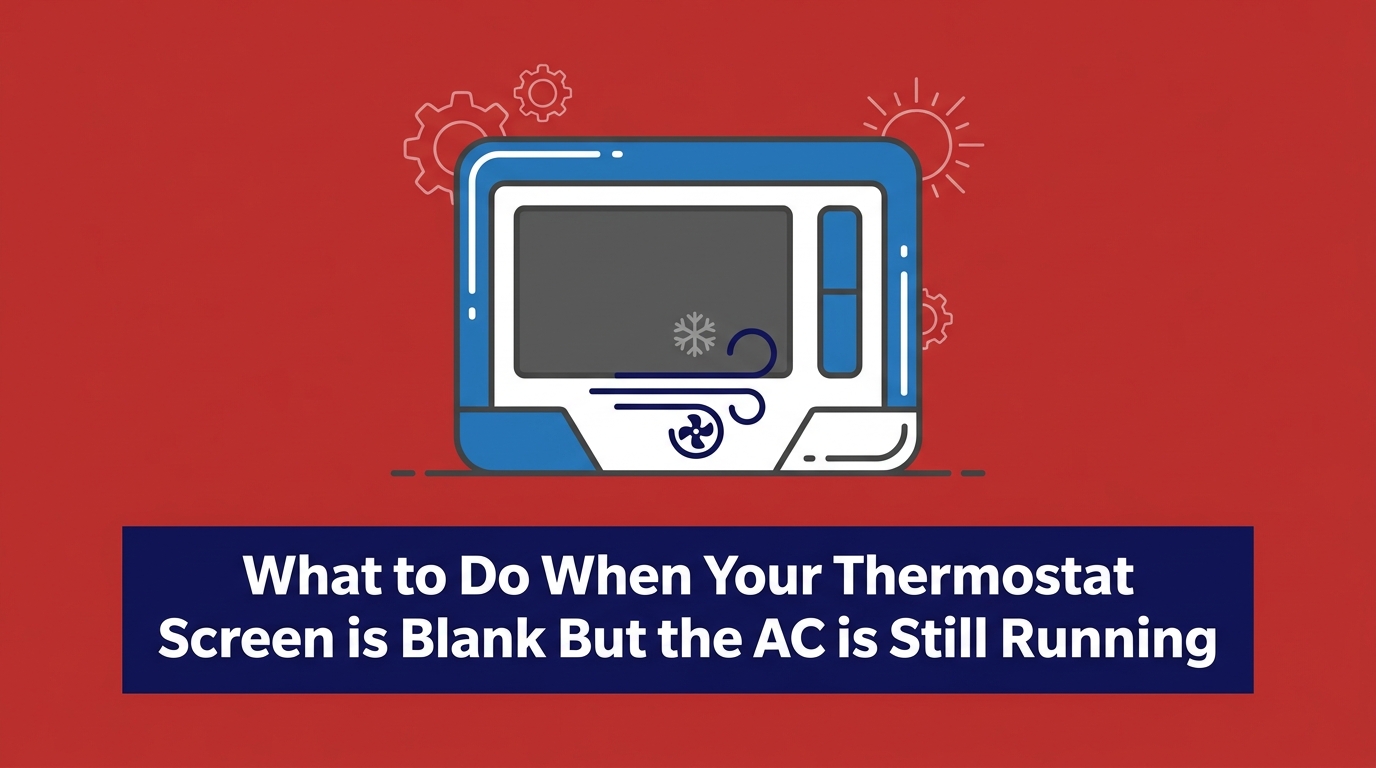
Are you staring at a completely lifeless wall control while your outdoor unit roars on? Knowing exactly what to do when your thermostat screen is blank but the ac is still running is a critical moment for any homeowner. It is incredibly confusing to see the digital interface completely dead while the condenser fan spins at full speed outside. This "zombie AC" scenario is a mechanical bypass issue, meaning the system is stuck in a continuous cooling loop that ignores the indoor controls. If you are experiencing this during the late-summer heat, you need to take immediate action to stop the system before it causes severe mechanical damage.
If you need immediate help, reaching out for professional HVAC services or specialized air conditioning repair services is the safest way to restore control.
To understand why this happens, it helps to think of your HVAC system in two parts: the brain and the muscle. The thermostat is the brain, sending low-voltage signals to the control board to tell the system when to turn on and off. The outdoor condenser is the muscle, using high voltage to compress refrigerant and cool your home. When the thermostat screen goes blank, the brain has lost power. However, if the muscle is already engaged and a mechanical component gets stuck in the "on" position, the outdoor unit will simply continue to run without any intelligent guidance.
The dangers of a runaway system: A system operating without a thermostat to regulate it will not cycle off when the house reaches a comfortable temperature. This results in immense energy waste, unprecedented utility spikes, and a high risk of freezing the indoor evaporator coil. Once the coil freezes, liquid refrigerant can flow backward into the compressor, potentially destroying the most critical component of your entire system. This is why a dead thermostat paired with a running condenser is not an issue you can ignore for a few days.
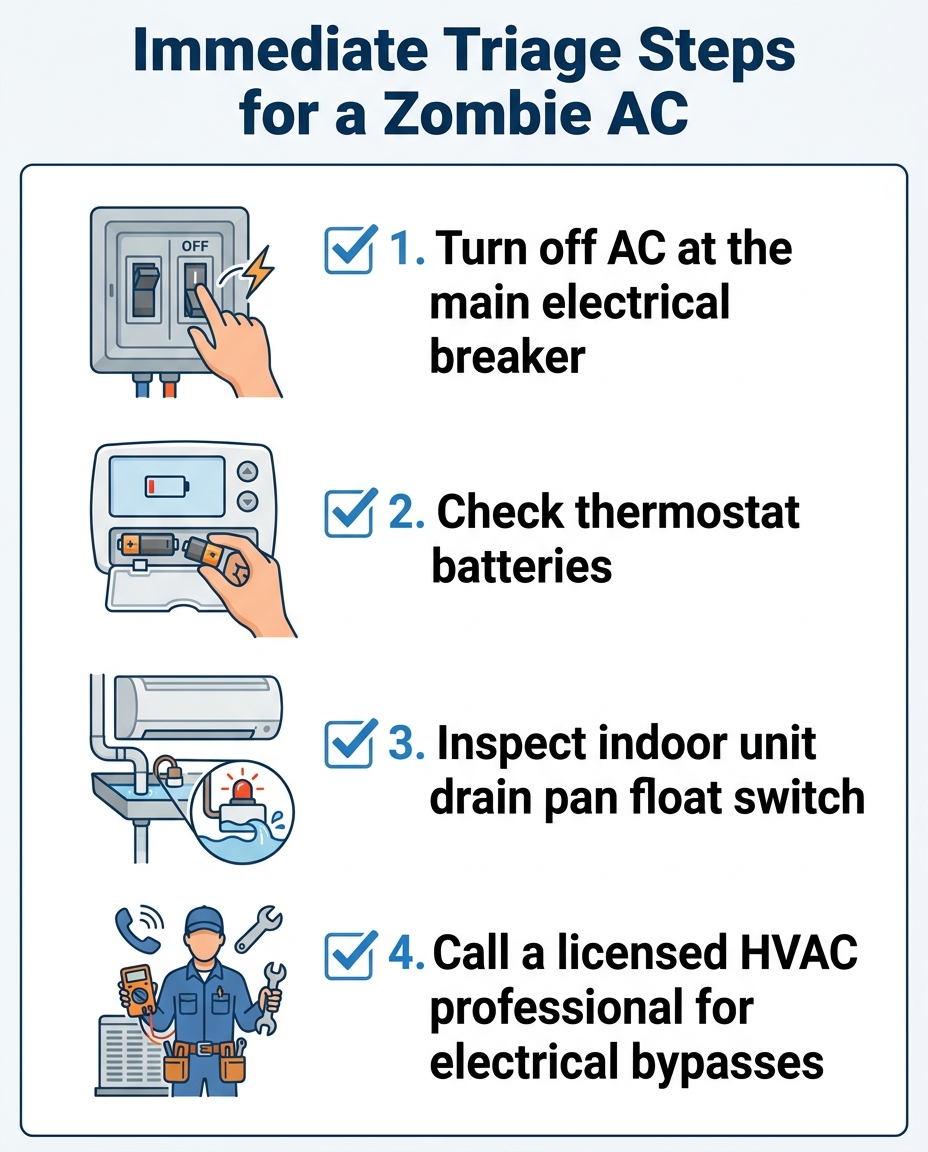
Immediate Triage: How to Safely Stop a "Zombie AC"
When you realize your system is running completely unregulated, your first priority is to force it to shut down. During late summer in Conroe, an unregulated AC running continuously will cause severe indoor overcooling and unprecedented utility spikes, not to mention the massive strain it puts on aging equipment. Because the thermostat is unresponsive, you cannot simply switch the system to "off." You must intervene at the power source.
One homeowner called the night before with a runaway system that wouldn't respond to any indoor controls. After being instructed to cut the power safely at the breaker, technicians arrived the day after the call and fixed the underlying electrical problem in a timely manner. Cutting the power is the only way to secure the equipment while you wait for a professional assessment.
Step-by-Step Triage Instructions
1. Locate your main electrical panel: Find your home's breaker box, which is typically located in the garage, on an exterior wall, or in a utility room.
2. Flip the dedicated AC breaker to the "off" position: Look for the double-pole breaker labeled "AC," "Condenser," or "HVAC." Switch it completely to the off position. You should immediately hear the outdoor unit power down.
3. Turn off the indoor furnace/air handler breaker: To be completely safe and stop the indoor blower motor from running, locate the breaker for the indoor unit and switch it off as well.
4. Check the indoor unit for water: While the power is off, safely inspect the area around your indoor unit (often in the attic or a closet). Look for overflowing water in the drain pan, which is a common trigger for safety switches that kill power to the thermostat.
5. Leave the system off: Do not attempt to turn the breaker back on to "see if it fixed itself." A stuck contactor or shorted wire requires physical repair. Leaving the power off protects the system from further damage.
The freezing hazard: If you allow a zombie AC to run continuously in August or late summer, the system will eventually overcool the indoor air. Air conditioners are designed to cycle on and off to allow condensation to drain. Without these off-cycles, the temperature of the indoor evaporator coil drops below freezing. The ambient moisture in the air will turn to ice on the coil, eventually encasing the entire unit in a solid block of ice. By forcing the system off at the breaker, you prevent this catastrophic freezing cycle.

The Mechanical Bypass: What Causes the Disconnect?
Once the immediate danger is neutralized by shutting off the breaker, the next logical question is how this disconnect happened in the first place. How does a system bypass its own control center? The answer almost always lies in a mechanical failure involving the high-voltage relay outside, or a low-voltage electrical short inside. Understanding these components helps demystify the situation and explains why why your thermostat screen went blank during a Texas thunderstorm or after weeks of heavy summer usage.
Stuck Outdoor Contactors
The most common culprit for a condenser that won't shut off is a stuck outdoor contactor. The contactor is a heavy-duty electrical relay located inside the outdoor unit. When your thermostat calls for cooling, it sends a low-voltage signal to the contactor. The contactor's magnetic coil energizes, pulling down a set of metal contacts. This closes the high-voltage circuit, sending massive amounts of electricity to the compressor and fan motor.
Why they fail: Contactors handle immense electrical loads. Every time they snap shut, a small electrical arc occurs. Over months of continuous heavy summer use, this arcing causes the metal contacts to become pitted and scorched. Eventually, the heat and electrical arcing can cause the metal contacts to literally weld themselves together. When the contacts are fused shut, the high-voltage circuit remains permanently closed. The AC condenser will run independently of the thermostat's commands, even if the thermostat is completely dead or removed from the wall.
Shorted Control Wiring and Blown Fuses
Another frequent cause of this disconnect involves the low-voltage control wiring and the indoor control board. The thermostat communicates with the indoor control board using a bundle of thin, low-voltage wires. If the insulation on these wires becomes damaged—perhaps chewed by a pest, rubbed raw against a metal casing, or melted by a power surge—the wires can short out.
A short in the control wiring can trick the system into receiving a continuous, uninterrupted cooling call. Furthermore, when a short occurs, it often causes the protective 3-amp or 5-amp automotive-style blade fuse on the indoor control board to blow.
The result: When that small blade fuse blows, it instantly kills all power to the thermostat, causing the screen to go completely blank. However, if the short already triggered the outdoor unit to turn on, or if the contactor is simultaneously stuck, the outdoor unit will continue to run while the indoor interface remains lifeless.
• Screen is blank, outdoor unit is running continuously — Likely Cause: Stuck contactor + blown indoor fuse — What to Expect: System ignores all inputs; breaker must be shut off.
• Screen is blank, nothing is running — Likely Cause: Tripped float switch or dead batteries — What to Expect: System shuts down to prevent water damage or simply lost wall power.
• Screen is on, but system won't stop cooling — Likely Cause: Shorted thermostat wire — What to Expect: Thermostat is bypassed; system receives a constant "cool" command.
During a routine maintenance visit, a knowledgeable technician worked on a customer's system, identifying worn electrical components before they could fail, and fixed everything up like new. This proactive approach is the best defense against sudden mechanical bypasses, as it ensures the technician recommends twice a year check-ups to catch these exact electrical vulnerabilities.
Troubleshooting Basics vs. When to Call an Expert
When faced with a blank thermostat and a running AC, it is vital to establish clear safety boundaries between what a homeowner can safely check and what requires a licensed professional. Working with a veteran-owned company like Carl's Quality Cooling and Heating LLC means you get military-level precision and a strict adherence to safety protocols when dealing with complex electrical HVAC failures. High-voltage electricity is unforgiving, and guessing can lead to severe injury or further equipment damage.
What Homeowners Can Safely Check
• Swap the thermostat batteries: If your thermostat relies on batteries rather than hardwired power from the control board, a dead battery will cause a blank screen. Carefully pull the thermostat faceplate off the wall and replace the AA or AAA batteries. If the screen lights up but the system still won't shut off, you have a mechanical bypass.
• Inspect the indoor drain pan float switch: Locate your indoor air handler (usually in the attic or a dedicated closet). Look for a small PVC pipe extending from the drain pan with a wired switch attached to it. This is the float switch. If the primary drain line clogs, water backs up into the pan and lifts the float. To prevent a catastrophic ceiling leak, this switch interrupts the low-voltage circuit, instantly killing power to the thermostat screen. If you see standing water in the pan, a clogged drain is likely the root of the blank screen.
• Check the main breaker: As discussed in the triage section, knowing how to safely operate your home's electrical panel is a crucial homeowner skill.
What Requires a Licensed Professional
Replacing a stuck contactor or tracing shorted high-voltage wiring is strictly for licensed professionals. Do not attempt to open the outdoor condenser panel to inspect the contactor yourself. The capacitors inside the unit store lethal amounts of energy, even after the breaker is turned off.
Similarly, do not attempt to open the indoor air handler to bypass a blown 3-amp or 5-amp fuse. Fuses blow for a reason—they are sacrificing themselves to protect the expensive control board from an electrical short. If you replace the fuse without finding and fixing the short, the new fuse will simply blow again immediately, or worse, you could fry the entire control board. When the issue goes beyond a simple battery swap or a tripped drain switch, it is time to reach out to local experts who service Montgomery County service areas to handle the electrical diagnostics safely.
Preventing Runaway AC Issues with Proactive Care
Transitioning from emergency triage to long-term prevention is the best way to protect your home and your wallet. The truth is, contactors and control board fuses rarely fail without warning. The wear and tear that leads to a "zombie AC" scenario builds up gradually over the cooling season.
The value of proactive inspections: During a comprehensive tune-up, technicians do much more than just change filters and wash coils. They perform a deep dive into the system's electrical health. A licensed professional will visually inspect the outdoor contactor for signs of pitting, scorching, or excessive wear on the metal contacts. They will use a multimeter to check the voltage drops across the relay, ensuring it is opening and closing with crisp precision.
Technicians also inspect the low-voltage wiring for signs of chafing, pest damage, or loose connections at the control board terminals. By tightening loose wires and replacing a heavily pitted contactor before it completely fuses shut, you eliminate the risk of the system bypassing the thermostat entirely.
Consistent scheduling is key: Sudden, mid-summer runaway cooling scenarios are highly preventable. Enrolling in a routine HVAC maintenance plan ensures that your system's electrical communication remains intact year after year. Catching a $50 worn part during a scheduled visit is always preferable to dealing with a frozen evaporator coil and an emergency electrical shutdown in the middle of a heatwave.
Frequently Asked Questions About Blank Thermostats and Running ACs
How do I turn off my AC if the thermostat is dead?
Locate your home's main electrical panel and find the dedicated double-pole breaker for the air conditioner. Flip this breaker completely to the "off" position to cut power to the outdoor condenser. You should also turn off the breaker for the indoor furnace or air handler to stop the blower motor. Leave both breakers off until a licensed technician can assess the system, as forcing it off at the panel is the only safe way to stop a runaway unit.
Why is my AC running when the thermostat screen is blank?
The outdoor unit is receiving power directly, completely bypassing the thermostat's commands. This is usually caused by a stuck outdoor contactor (where the high-voltage relay has welded shut) or a shorted low-voltage control wire. The blank screen indicates that the indoor control board has lost power, often due to a blown protective fuse triggered by the same electrical short.
Can a bad thermostat cause the AC to run constantly?
Yes, a malfunctioning thermostat can send a continuous, uninterrupted cooling signal to the system if its internal relays fail. However, if the screen is completely dead and unresponsive while the AC runs, the issue is more likely a mechanical electrical failure at the control board or the outdoor contactor, rather than just a glitch in the wall unit itself.
Where is the fuse for the thermostat?
It is typically located directly on the indoor HVAC control board, which is housed inside your furnace or air handler cabinet. It is usually a small 3-amp or 5-amp automotive-style blade fuse, often purple or orange in color. Keep in mind that replacing a blown fuse without locating the underlying electrical short will just cause the new fuse to blow immediately.
Will a tripped float switch cause the thermostat to go blank?
Yes, a tripped float switch is designed to interrupt the low-voltage circuit to the thermostat. If your primary condensate drain line clogs, water backs up in the drain pan and lifts the float switch. This safety mechanism intentionally kills power to the thermostat screen to shut the system down and prevent catastrophic water damage to your ceiling or floors.
Secure Your System and Restore Climate Control
Dealing with a runaway HVAC system can be incredibly stressful, especially when the digital interface you rely on is completely unresponsive. The most critical step you can take when your thermostat screen is blank but the AC is still running is to protect the equipment by shutting off the main electrical breaker. Preventing the system from running continuously saves you from massive energy waste and protects the evaporator coil from freezing solid.
While a "zombie AC" is alarming, you can rest assured that it is a solvable electrical issue. Whether the culprit is a fused outdoor contactor, a shorted low-voltage wire, or a blown control board fuse, professional diagnostics will pinpoint the exact point of failure. If you are dealing with this frustrating disconnect in Conroe TX or the surrounding areas, do not hesitate to contact local experts for air conditioning repair services. A licensed technician will trace the short, replace the damaged components, and restore safe, reliable climate control to your home.