
Facing the First Fall Chill: Why Your Heat Pump Won't Switch Modes
The first real cold front of the year has finally pushed through, but instead of the cozy warmth you expected, your vents are blasting chilly air. If you are looking for reliable home maintenance tips and troubleshooting, you are not alone in this frustrating experience. At Carl's Quality Cooling and Heating LLC, our team sees this exact scenario play out every October across Conroe. The fall heating-startup is notorious for revealing hidden HVAC problems. You flip the thermostat, hear the system kick on, and wait for the warm air to flow. When it doesn't arrive—or when it is accompanied by strange, alarming odors—panic often sets in.
To get your system back on track, you might need professional heating services to diagnose the root cause.
During this initial fall startup, homeowners face a critical decision point. Is it safe to let the system run and hope the strange smells or lack of heat "work themselves out," or is a professional inspection necessary to prevent a total winter breakdown? Ignoring a system that refuses to switch modes can lead to severe compressor damage. In this guide, we will walk through exactly why your heat pump might be trapped in cooling mode, how to decipher those concerning startup smells, and which safe troubleshooting steps you can take before calling in an expert.
The Hidden Toll of a Grueling Summer on Your HVAC System
To understand why your heat pump is struggling to provide warmth, you have to look at what it endured over the past several months. In our years of servicing Conroe and Montgomery County, we know firsthand that the summer climate is relentless. High heat and heavy humidity force your cooling system to run at maximum capacity for hours on end, day after day.
Unlike a traditional furnace and standalone air conditioner pairing, a heat pump does not get a seasonal break. It works year-round, pulling double duty. By the time the weather finally cools down, the internal components have already logged thousands of hours of intense runtime. This continuous strain degrades electrical contacts, weakens capacitors, and stresses mechanical valves.
The problem: The system is exhausted. A pattern we see often is that components that were barely holding on during the final hot weeks fail precisely at the moment they are asked to reverse their function for the winter. The cause: Months of continuous thermal and electrical stress compromise the integrity of the heat pump's moving parts. The solution: Recognizing the signs of wear early prevents a minor component failure from destroying the compressor.
If you noticed your heat pump struggling during 100-degree days, that was likely a warning sign that the system's electrical or mechanical health was deteriorating. By the time the October heating-startup arrives, those weakened parts simply cannot handle the surge required to switch operational modes.
Understanding the Reversing Valve: The Heart of the Heat Pump
The defining feature of a heat pump is its ability to both cool and heat your home. The component that makes this magic possible is called the reversing valve. This heavy-duty, four-way mechanical valve sits on the outdoor unit's refrigerant line. Its sole job is to change the direction of the refrigerant flow. In the summer, it directs heat out of your house. In the winter, it reverses the process, extracting ambient heat from the outdoor air and pumping it inside.
The reversing valve is controlled by a small electrical component called a solenoid coil. When you switch your thermostat to heat, it sends a voltage signal to the solenoid, which magnetizes and shifts a slider inside the valve. In our experience, after a long, grueling cooling season, this slider can become physically stuck in the cooling position. Sometimes, the internal mechanical parts are jammed by debris or wear. Other times, the solenoid coil itself has burned out and fails to shift the valve.
Because the reversing valve is directly integrated into the pressurized refrigerant lines, diagnosing and replacing it requires a licensed professional. This is not a component you can tap with a hammer or pry open. Handling refrigerant safely and legally requires specialized training and EPA certification.
Signs Your Reversing Valve is Stuck
How do you know if the reversing valve is the culprit behind your chilly house? Look for these distinct symptoms during your October heating-startup:
• Contradictory airflow: Your thermostat clearly indicates it is in "Heat" mode, and the room temperature is dropping, but the vents continuously blow cold air.
• Unusual clicking sounds: You may hear repeated clicking from the outdoor unit as the solenoid attempts to engage, but the mode never actually changes.
• Inappropriate frosting: You notice frost or heavy ice buildup on the outdoor coils during relatively mild fall weather, indicating the refrigerant flow is restricted or operating in the wrong cycle.
• Sluggish transitions: The system takes an unusually long time to switch from cooling to heating, or it gets stuck halfway, resulting in lukewarm air and a struggling compressor.
Sensory Troubleshooting: Deciphering Fall Startup Smells
One of the most frequent calls we get at our dispatch center during the fall transition is about a sudden, alarming odor coming from the vents. The problem: You turn on the heat, and within minutes, a strong burning smell fills the house. The cause: The source of the smell dictates whether you have a normal seasonal occurrence or a dangerous electrical issue. The solution: Use your senses to categorize the odor, allowing you to react appropriately without unnecessary panic.
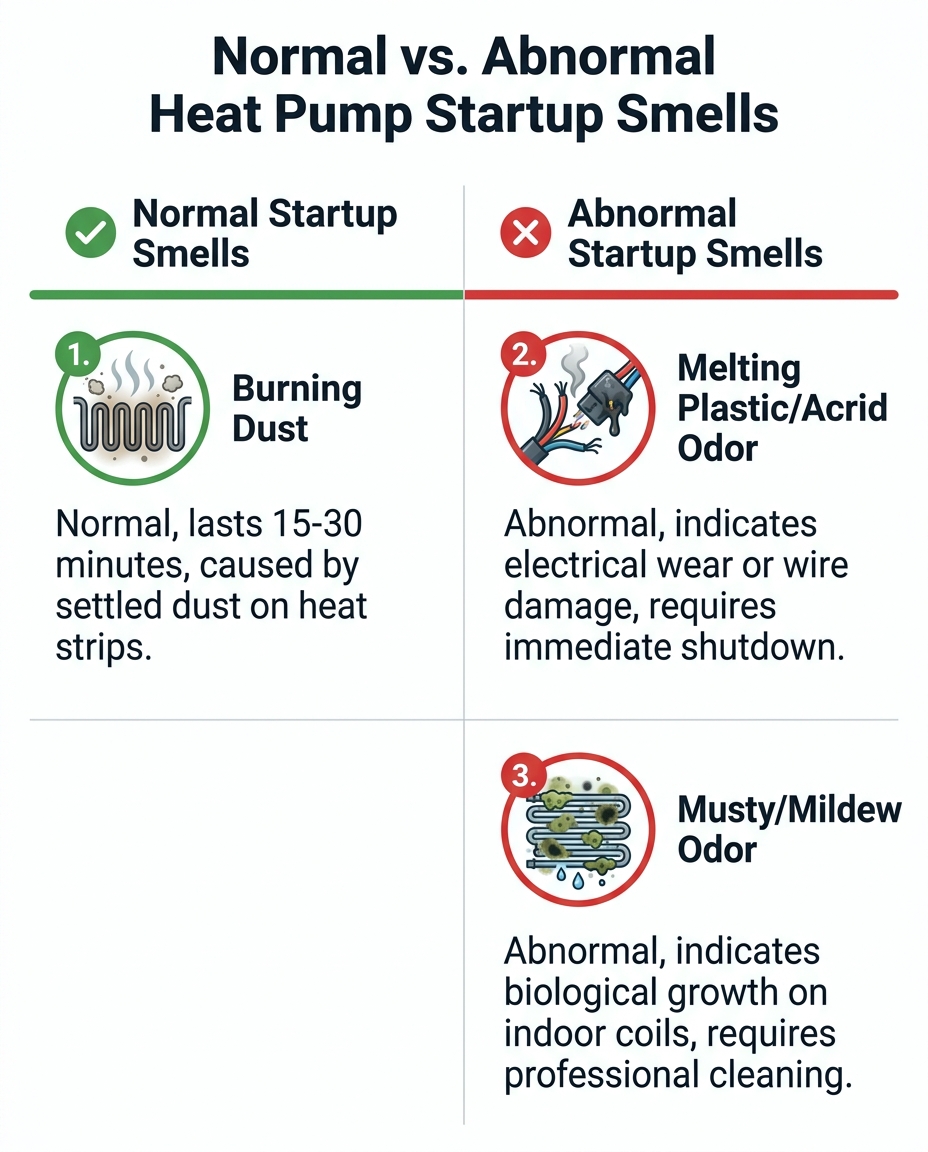
It is incredibly common to search "heater smells like burning dust first time" during the fall. Over the long summer months, dust, pet dander, and microscopic debris naturally settle onto the dormant heat strips and internal heat exchangers. When you finally turn the heating cycle on, these components heat up rapidly, incinerating that layer of settled dust. This produces a distinct, slightly smoky odor that generally dissipates within 15 to 30 minutes of operation. This is a completely normal part of the seasonal transition.
However, not all smells are harmless. You must contrast the normal dust burn-off with the sharp, acrid odor of melting plastic, burning rubber, or scorching wires. If you smell an electrical fire, or if the burning dust smell persists for hours without fading, you are likely dealing with severe electrical wear. A failing blower motor, a melting wire harness, or a stuck relay can produce these toxic smells. If you detect a chemical or electrical burning odor—especially if it is accompanied by sparking or buzzing sounds—shut the system down immediately at the thermostat and call a professional.

Electrical Wear: Capacitors, Relays, and Wiring
Beyond the mechanical reversing valve, our technicians typically find that the electrical components of your heat pump are highly vulnerable during the seasonal transition. In Conroe and Montgomery County, the heavy electrical load required to survive the summer degrades critical parts like capacitors and contactor relays.
A capacitor acts like a large battery, storing energy to give the compressor and fan motors the massive jolt of electricity they need to start up. Over months of intense heat and continuous cycling, the chemical fluid inside a capacitor breaks down. A weakened capacitor might have had just enough power left to keep the cooling cycle limping along in September. But when tasked with the heavy startup surge of the initial heating cycle, it fails completely. The system will try to start, hum loudly, and then shut down.
Similarly, contactor relays—the mechanical switches that allow high-voltage electricity to flow to the compressor—can become pitted and scarred from thousands of summer cycles. If a contactor gets stuck open, the heat pump won't turn on. If it gets stuck closed, the outdoor unit might run continuously, even when the thermostat is satisfied.
Months of system vibration can also lead to frayed wiring or loose electrical connections. These loose connections create electrical resistance, which generates immense heat and leads to melted wires or tripped breakers. Because heat pumps operate on high-voltage 240V circuits, DIY electrical repairs pose a severe risk of shock or fire. Homeowners should never attempt to open electrical panels, bypass relays, or replace capacitors themselves.
Safe, Basic Checks Before Calling a Professional
While you should never attempt electrical or refrigerant repairs, there are several safe, non-technical troubleshooting steps you can take if your October heating-startup fails. Sometimes, the issue is simply a matter of airflow or settings. Before you call us for air conditioning cooling solutions or heating repairs, we recommend running through this basic checklist:
1. Check your thermostat settings carefully: It sounds obvious, but ensure the system is actually switched to "Heat" and not "Cool" or "Off." Additionally, verify that the fan setting is on "Auto" rather than "On." If the fan is set to "On," it will blow air continuously, even when the heating cycle is resting, which can feel like cold air coming from the vents.
2. Inspect and replace the air filter: A clogged filter from heavy summer use severely restricts airflow. Heat pumps require precise airflow to operate. If the filter is choked with dust and pollen, the system can overheat and go into a safety lockout, preventing it from producing warm air.
3. Verify the circuit breakers: The intense electrical demand of a startup surge can occasionally trip a breaker in your main electrical panel. Check the panel to see if the dedicated HVAC breaker has moved to the middle, tripped position. Firmly switch it to "Off" and then back to "On." If it trips again immediately, do not reset it; you have a short circuit that requires a professional.
4. Clear outdoor debris: Ensure the outdoor unit is free of fall leaves, overgrown branches, and yard debris. The heat pump needs at least two feet of clear space around it to pull in ambient air. Blocked airflow severely cripples the heating process.
Why Honest Diagnostics Matter for Heat Pump Repairs
When a heat pump fails to switch modes during the October heating-startup, it is easy to assume the worst. Many homeowners fear they are facing a massive replacement bill. However, a startup failure does not automatically mean the entire system is dead. This is where honest diagnostics make all the difference.
At Carl's Quality Cooling and Heating LLC, our commitment to honest diagnostics means we focus on reliable, targeted repairs rather than pushing unnecessary system replacements. We've built our reputation in Conroe on this approach. If your system is blowing cold air, it might just need a new solenoid coil or a fresh capacitor—repairs that are highly cost-effective and restore full functionality quickly. A thorough technician will test the electrical draw, check the reversing valve slider, and measure refrigerant pressures before making any recommendations.
In cases where the compressor has failed or the system is decades old, a replacement might be the most logical step. If that happens, it is worth noting that federal tax credits may apply to qualifying heat pump installations, helping to offset the investment of upgrading to high-efficiency equipment. However, repair should always be explored and ruled out first.
To avoid these stressful surprises in the future, investing in a routine HVAC maintenance plan is highly recommended. A pre-season tune-up catches a failing capacitor, a sticking reversing valve, or a dirty sensor long before the first cold snap arrives, giving you uninterrupted comfort.
Frequently Asked Questions About Fall Heat Pump Issues
Why does my heater smell like burning dust the first time I turn it on?
This is a normal occurrence caused by dust settling on the internal heat strips over the summer. When the heater activates for the first time, the high temperatures incinerate the dust, creating a temporary burning smell. The odor is harmless and should dissipate entirely within 15 to 30 minutes of continuous operation. If the smell persists for hours, shut the system down and have it inspected.
Why is my heat pump stuck in cooling mode?
The most common culprit is a stuck or failing reversing valve. This component physically shifts to reverse the flow of refrigerant for heating. If the internal slider jams due to mechanical wear, or if the electrical solenoid controlling it burns out, the system will remain trapped in the cooling cycle regardless of your thermostat settings.
How do I know if my heat pump reversing valve is bad?
You will typically notice that the thermostat is set to heat, yet the vents continuously blow cold air. You might also hear a repetitive clicking noise from the outdoor unit as the system tries and fails to engage the valve. Additionally, inappropriate frost or ice buildup on the outdoor coils during mild weather is a strong indicator of a reversing valve issue.
Why is my heat pump running but not changing temperature?
This often points to a severe airflow restriction, a refrigerant leak, or a failing compressor. If the air filter is completely clogged, the system cannot distribute the conditioned air into your home. Alternatively, if the system is low on refrigerant, it lacks the chemical medium needed to transfer heat, resulting in endless running with no temperature change.
Can a dirty air filter stop my heat pump from switching to heat?
Yes, a severely dirty air filter can cause the system to malfunction. Poor airflow causes the internal components to overheat rapidly. Modern heat pumps are equipped with safety limit switches that will shut down the heating cycle to prevent a fire or permanent equipment damage if they detect this kind of overheating.
Is it safe to run my heat pump if it smells like burning plastic?
No, it is never safe to run your system if you smell burning plastic, melting rubber, or an acrid electrical odor. Unlike the temporary burning dust smell, an electrical odor indicates serious component failure, such as melting wire insulation or a burning blower motor. Shut the system off immediately at the thermostat and call a professional to prevent a potential fire hazard.
Ensure a Warm, Safe Winter with a Professional Inspection
Transitioning your home into the colder months shouldn't be a source of stress. Whether you are dealing with a stubborn reversing valve that refuses to switch modes, or you are trying to determine if that initial October heating-startup smell is normal dust or a dangerous electrical issue, clarity is key. Understanding the difference between a harmless seasonal quirk and a mechanical failure empowers you to protect your home and your equipment.
Having a clear explanation of your system's status brings invaluable peace of mind. You don't have to guess if your equipment will survive the next cold front. If you are looking for reliable home maintenance tips and troubleshooting, our team is here to help. Take the guesswork out of your fall transition and schedule a heat pump repair or professional diagnostic today to ensure a warm, safe winter for your family.