



Is Your Heat Pump Ready for the First November Cold Snap?
When you are looking for local service expertise and area tips to prepare your home for the changing seasons, the most urgent question to ask is: is your heat pump actually ready to keep you warm, or are you just hoping it works when the temperature finally drops? At Carl's Quality Cooling and Heating LLC, our team typically sees a common scenario: homeowners switch their thermostat from cooling to heating for the very first time in late fall, only to find that the system blows lukewarm or completely cold air. Because a heat pump handles both your summer cooling and your winter heating, it never truly gets an off-season.
For comprehensive support, explore our Heating Services or Schedule HVAC Service today.
During the unpredictable November pre-winter transition, temperatures can swing wildly from a comfortable afternoon to a freezing night. If your system has been sitting idle in heating mode for months, turning it on during an active cold snap is a risky gamble. Waiting until the house is already freezing to test your equipment forces you into an emergency situation where repair schedules are booked solid. Proactively verifying your system's readiness on a mild fall day gives you the buffer you need to address any lingering summer wear and tear before the weather turns severe.
The Hidden Risks of the Seasonal Transition
Many homeowners assume that because their system kept the house cool in September, it will automatically keep the house warm in November. This is a dangerous misconception. The mechanical process of heating requires the system to physically reverse its flow of refrigerant. Components that have been locked into a single operational state for the better part of a year often struggle to make that switch. By understanding what happens inside your unit during this transition, you can catch early warning signs and avoid a freezing night without heat.
The Summer Wear Paradox: Why Heat Pumps Struggle in Fall
There is a unique "idle versus overworked" paradox that affects heat pumps, particularly in our demanding southern climate. For roughly eight straight months, your system runs almost continuously to combat extreme heat. The compressor, the blower motor, and the electrical contacts are pushed to their absolute limits. However, the specific components responsible for the heating cycle remain completely idle during this massive workload.
As our technicians often discuss when troubleshooting a Heat Pump Not Cooling Enough on 100-Degree Days, the sheer volume of work required to cool a home places immense stress on the system's moving parts. By the time fall arrives in Conroe and the greater Southeast Texas area, we find that most heat pumps are exhausted. The paradox occurs when you ask this overworked machine to perform a brand-new mechanical function that it hasn't executed since last winter.
How Continuous Cooling Stresses the System
During the long summer, vibrations, thermal expansion, and constant electrical cycling take a toll on the unit. Parts that functioned perfectly during the summer can seize up, shift out of alignment, or fail entirely when asked to switch modes.
• Thermal fatigue: The constant expansion and contraction of metal components during the heat of the day and the cooler nights can weaken mechanical connections.
• Vibration wear: Thousands of hours of run time cause minor vibrations that can slowly loosen electrical terminals and mounting brackets.
• Lubricant settling: When the heating-specific valves and mechanisms sit unused, the internal lubricants can settle, causing the parts to stick when finally activated.
This heavy summer wear connects directly to fall heating failures. A system that is limping across the finish line of summer is highly likely to stumble when forced to reverse its operation for the winter.
The Impact of High Humidity on Outdoor Components
Beyond the sheer heat, the environmental conditions of the region play a massive role in system degradation. With Conroe's prolonged high-humidity summers, the outdoor condenser unit is constantly bathed in heavy moisture. This relentless exposure to airborne water vapor accelerates wear on the sensitive electrical components housed outside.
In our years of servicing local HVAC units, we've found this is a key reason why routine Air Conditioning Services are vital for removing organic buildup and checking for early signs of corrosion. The two components most vulnerable to this high-humidity environment are the contactors and the capacitors.
How Moisture Degrades Electrical Parts
When moisture infiltrates the outdoor electrical panel, it begins a slow process of oxidation and corrosion. Because these components are responsible for sending the high-voltage signals required to switch the system into heating mode, any degradation can lead to an immediate failure.
• Contactor — Function in the System: Acts as the physical switch that allows high voltage to reach the compressor. — Impact of High Humidity: Moisture causes pitting and rust on the metal contact points, preventing a clean connection. — Common Fall Symptom: The thermostat clicks on, but the outdoor unit remains completely silent and fails to start.
• Capacitor — Function in the System: Stores energy to provide a massive jolt of electricity to start the motors. — Impact of High Humidity: Rust weakens the outer casing and terminals, leading to electrical resistance and eventual failure. — Common Fall Symptom: The outdoor fan hums or struggles to spin, and the system fails to produce any conditioned air.
• Control Board — Function in the System: The brain of the outdoor unit that manages the defrost cycle and mode switching. — Impact of High Humidity: Condensation can cause microscopic shorts across the printed circuit pathways. — Common Fall Symptom: Erratic behavior, such as the system getting stuck in defrost mode or ignoring thermostat signals.
Late fall is the most common time our crews discover these specific failures in Conroe and the greater Southeast Texas area. The components may have had just enough integrity to keep the cooling cycle running, but the surge of power required to activate the reversing solenoid and switch to heating is often the final straw that breaks a corroded electrical part.
Understanding the Reversing Valve: When Your System Won't Switch Modes
If your heat pump is running but blowing warm air when you want cool, or cold air when you want heat, the primary suspect is almost always the reversing valve. This critical component is the defining feature of a heat pump. It is a four-way valve that physically shifts to reverse the flow of refrigerant through the system. When it points one way, the indoor coil gets cold (summer mode). When it points the other way, the indoor coil gets hot (winter mode).
The Mechanics of a Stuck Valve
The Problem: You turn your thermostat to "Heat" during the November pre-winter transition, but cold air blasts from the vents. The outdoor unit is running, the indoor fan is blowing, but the temperature is moving in the wrong direction.
The Cause: The reversing valve is controlled by an electrical solenoid. A pattern we see often is that after sitting in the cooling position for eight months, the internal slide mechanism becomes physically stuck. This can happen due to a failed solenoid coil (an electrical issue), physical debris inside the refrigerant line jamming the slider, or simply a lack of lubrication from months of inactivity.
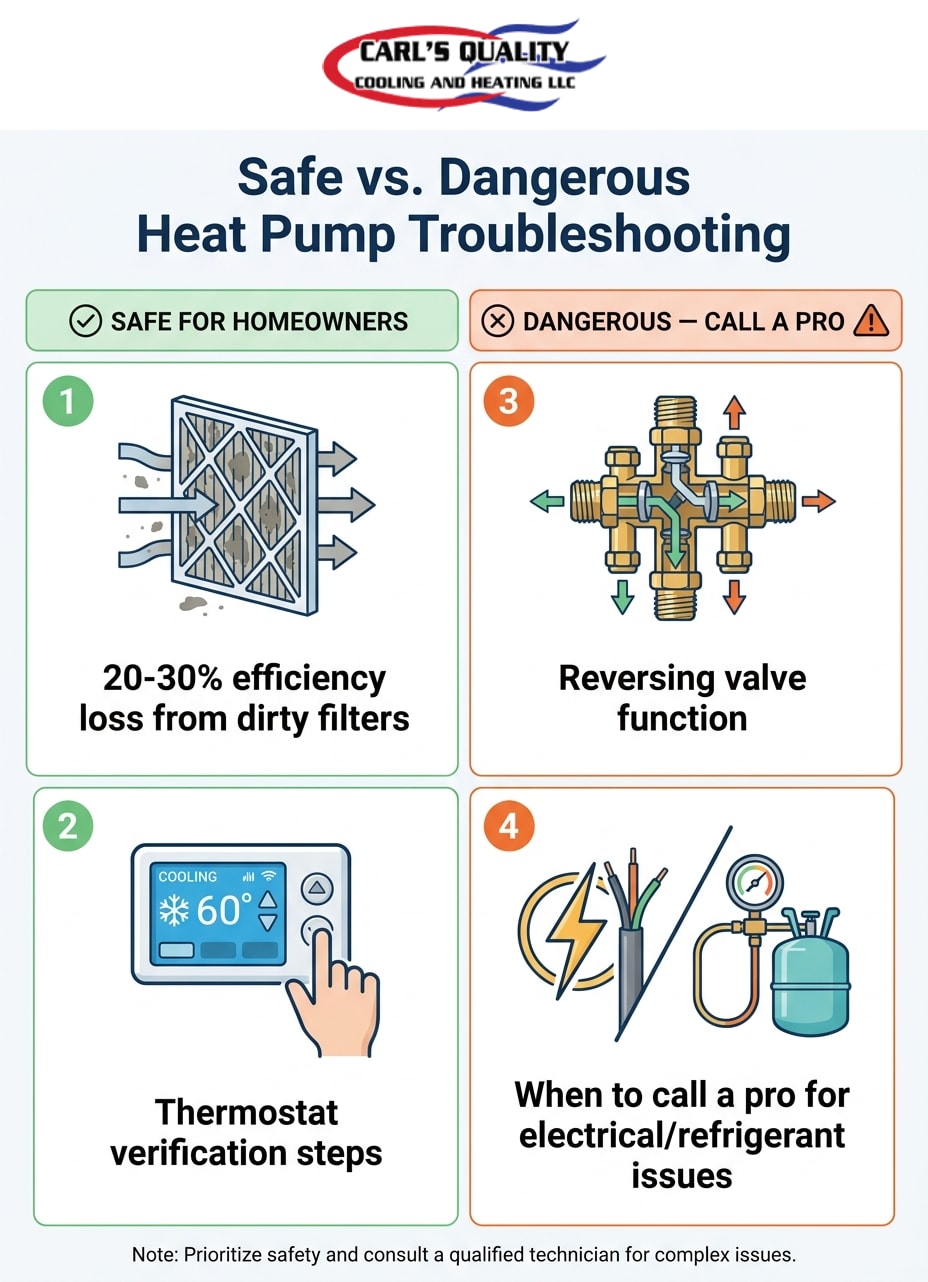
The Solution: A stuck reversing valve is not a homeowner fix. Because it is brazed directly into the pressurized refrigerant lines, replacing it requires recovering the refrigerant, cutting out the old valve with a torch, welding a new one in place, and pulling a deep vacuum on the system. This requires specialized tools, EPA certification, and professional diagnostics to confirm whether the issue is just a bad electrical solenoid or a completely failed mechanical valve.
Safe Heat Pump Checks Before the First November Cold Snap
While internal electrical and refrigerant repairs are strictly for professionals, our dispatch team at Carl's Quality Cooling and Heating LLC always recommends several safe, highly effective troubleshooting steps you can take before calling for help. Performing these checks during the November pre-winter transition can save you time and prevent unnecessary service visits.
1. Verify the thermostat settings: It sounds incredibly simple, but always confirm that the thermostat is explicitly set to "Heat" and that the set temperature is at least three degrees above the current room temperature. Sometimes, programmable thermostats revert to a default schedule that conflicts with your manual inputs.
2. Check and replace dirty air filters: A clogged air filter is the number one cause of poor airflow and system freezing. A dirty filter forces the blower motor to work harder and reduces the system's efficiency by up to 20-30%. If the system cannot move air across the indoor coil, it cannot heat your home. Replace the filter with a fresh one before testing the heat.
3. Inspect the electrical panel for tripped breakers: Heat pumps typically have two breakers in your main electrical panel—one for the outdoor compressor and one for the indoor air handler and auxiliary heat strips. If either breaker has tripped, the system will not function correctly. Reset a tripped breaker once; if it trips again immediately, leave it off and call a professional.
4. Ensure the outdoor condenser unit is clear: Fall brings falling leaves and high winds. Walk outside and inspect the condenser. Ensure there are no leaves, branches, or tall weeds blocking the side vents. The heat pump needs to pull massive amounts of air through these fins to absorb ambient heat from the outside air.
When to Call a Professional: Avoiding Dangerous DIY Repairs
There is a distinct line between proactive homeowner maintenance and dangerous DIY repairs. Heat pumps operate on high-voltage electricity (typically 240 volts) and contain pressurized chemical refrigerants. Crossing the line into professional territory without the right training puts your safety, your property, and your system's warranty at serious risk.
Working with a veteran-owned company like Carl's Quality Cooling and Heating LLC means you're getting the same level of discipline and accountability that military service demands. That translates directly into honest diagnostics. A trustworthy technician will tell you exactly what is failing without inventing unnecessary repairs. If the issue is simply a loose wire or a bad capacitor, that is exactly what will be fixed.
The Risks of Handling Refrigerant and High Voltage
Never attempt to open the access panel on the outdoor unit or the indoor air handler to bypass safety switches or "jump" electrical connections. The capacitors inside the outdoor unit store enough lethal energy to cause severe injury, even when the main power is turned off at the breaker. Furthermore, handling refrigerants is strictly regulated by federal law. Venting refrigerant into the atmosphere is illegal, and improper handling can cause severe frostbite or permanently contaminate the internal compressor oils.
The best way to avoid emergency breakdowns is to stay ahead of the wear and tear. Enrolling in a proactive HVAC Maintenance Plan ensures that a licensed professional inspects your reversing valve, tests your electrical components, and verifies your refrigerant charge long before the first freeze hits Conroe and the greater Southeast Texas area.
Frequently Asked Questions About Heat Pump Troubleshooting
Why is my heat pump running but not changing temperature?
This symptom often points directly to a stuck reversing valve that is failing to shift the system from cooling to heating. It can also be caused by a severe refrigerant leak that prevents the system from absorbing or releasing heat, or a failing compressor that is running without actually pumping refrigerant. Because these are all sealed-system or high-voltage issues, this requires a professional technician to properly diagnose and repair.
How do you fix a heat pump that is not cooling or heating?
Start with the safest checks first: verify your thermostat is set to the correct mode, replace any dirty air filters to ensure proper airflow, and check your main electrical panel for tripped breakers. If these basic checks fail to restore operation, do not attempt further disassembly of the unit. You must contact a licensed HVAC professional for internal mechanical or electrical repairs, as heat pumps require specialized diagnostic tools.
What is the most common problem with a heat pump?
In our experience, airflow restriction due to dirty, neglected air filters is the most frequent preventable issue, leading to frozen coils and overheating motors. Beyond filters, electrical component failure—like blown capacitors or pitted contactors—is highly common after heavy seasonal use in extreme climates. Refrigerant leaks also frequently cause noticeable performance drops, making the system run constantly without reaching the desired temperature.
How do I know if my reversing valve is stuck?
The most obvious sign of a stuck reversing valve is that the system will blow warm air when set to cool, or cool air when set to heat. You may also hear a distinct clicking sound at the outdoor unit when the thermostat calls for a mode change, but without any actual change in the air temperature coming from your vents. Only a technician with specialized temperature and pressure gauges can definitively confirm a stuck valve.
Can high humidity affect my heat pump's ability to switch modes?
Yes, excessive moisture in the air accelerates corrosion and rust on the outdoor electrical contacts and solenoid wiring. Over time, these corroded components may fail to send the proper electrical signals required to engage the reversing valve and switch modes. Regular professional maintenance helps prevent these moisture-related electrical failures by keeping components clean and protected.
Secure Your Home's Comfort Before Winter Arrives
When you prioritize local service expertise and area tips, you empower yourself to make smart, proactive decisions about your home's comfort. The transition from intense summer cooling to winter heating places a unique burden on your heat pump. By recognizing the early warning signs of a stuck reversing valve, degraded electrical components, and airflow restrictions, you can act before a minor issue becomes a major breakdown.
Do not wait for the first freezing night during the November pre-winter transition to find out if your system is ready. Performing safe, basic checks on your thermostat and filters is a great start, but professional help remains the safest, most reliable choice for internal diagnostics. Take control of your home's climate and schedule a thorough inspection with Carl's Quality Cooling and Heating LLC before the weather turns severe, ensuring your family stays warm and comfortable all winter long.

