


The Frustration of the First Fall Furnace Test
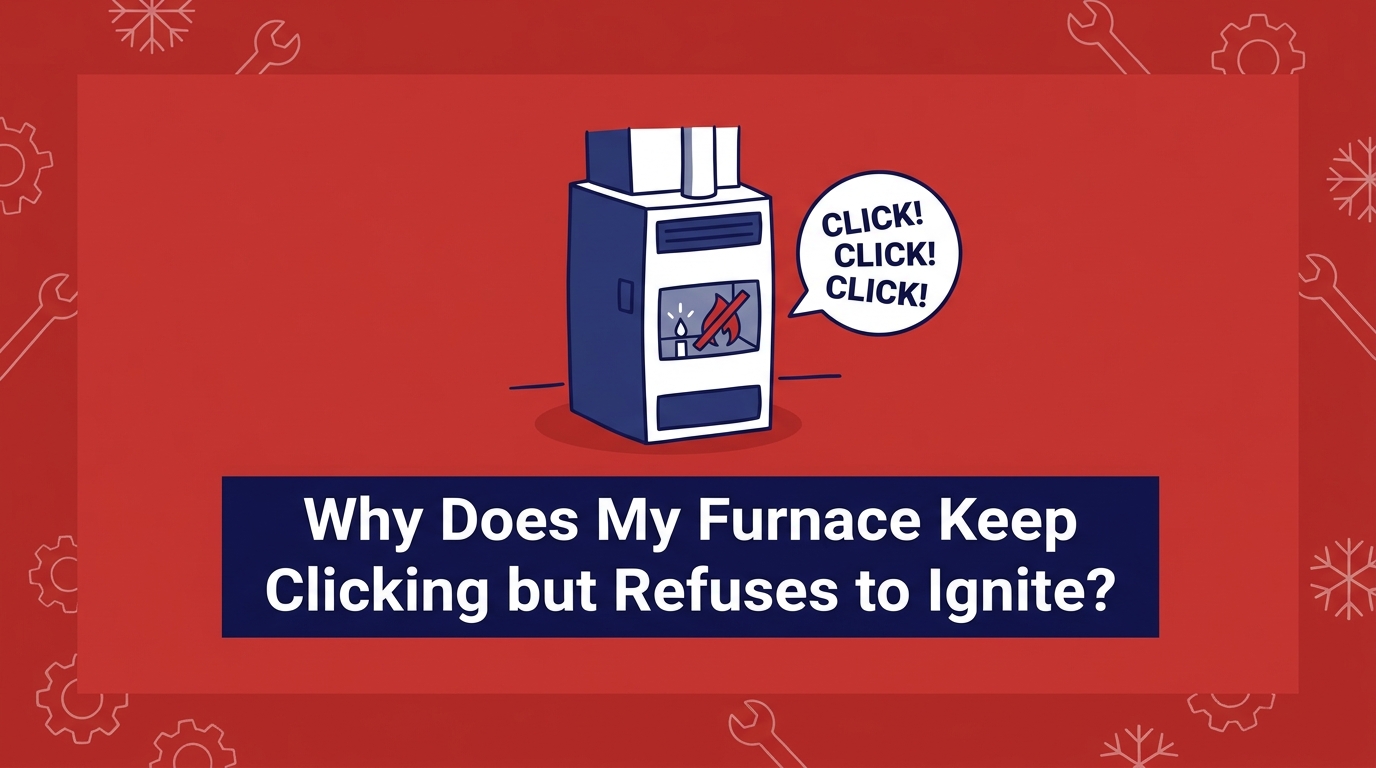
September in Conroe TX brings the first hints of cooler weather, prompting many homeowners to test their heating systems before the real chill sets in. At Carl's Quality Cooling and Heating LLC, our team typically receives a surge of calls this time of year from homeowners turning on their thermostats for the first time and immediately wondering, "Why does my furnace keep clicking but refuses to ignite?" If you are experiencing this, you are dealing with one of the most common early fall HVAC issues. You turn up the heat, the system whirs to life, and then you hear a repetitive, rapid clicking noise—followed by silence and cold air. This classic click-click-click scenario is highly frustrating and often causes immediate anxiety about potential gas leaks or catastrophic mechanical breakdowns.
The good news is that this clicking sound is actually a sign that your system's built-in safety features are doing exactly what they were designed to do. When a heating cycle begins, the equipment must verify that fuel is burning safely. If it cannot confirm a safe flame, it aborts the startup process to protect your home. The core decision point during a September pre-heating season startup is determining whether this clicking is the result of simple seasonal dust buildup or a more complex mechanical failure that requires professional intervention.
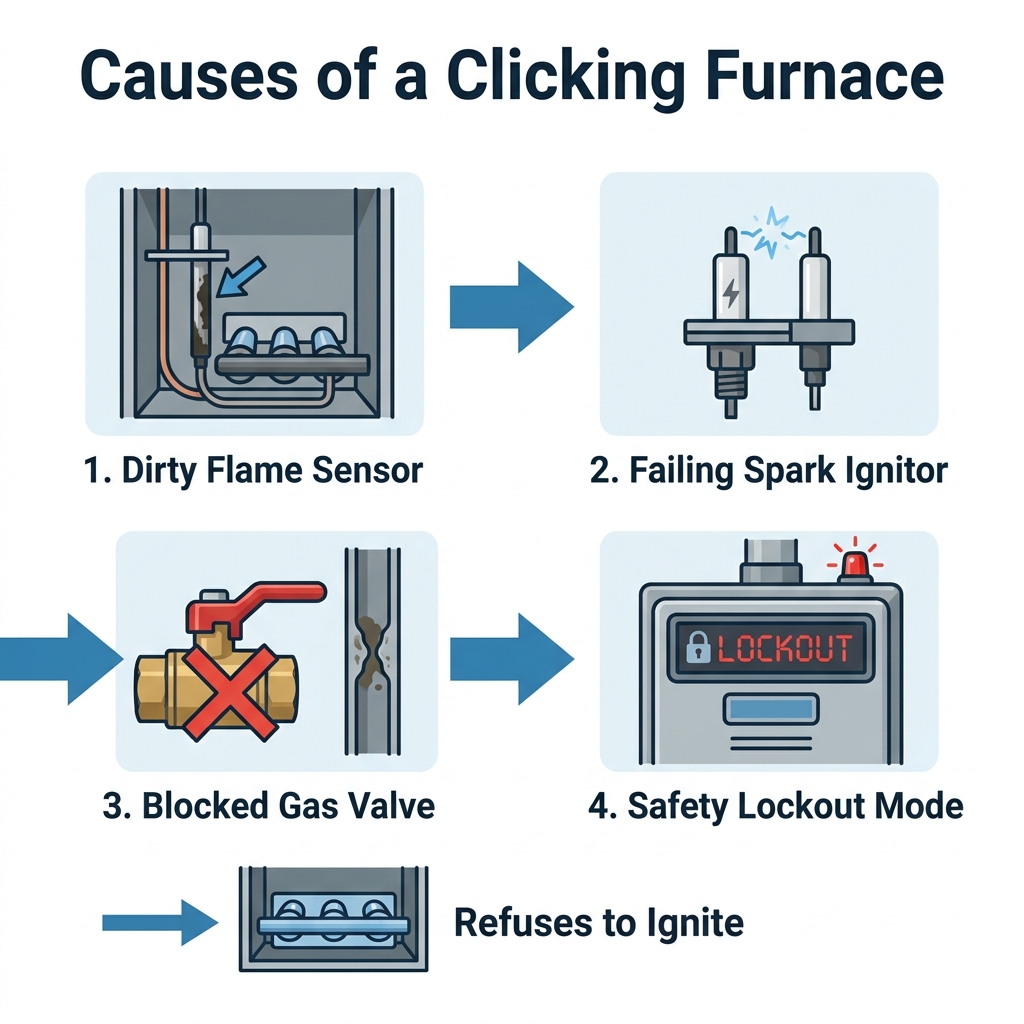
Before diving into the mechanical details, here are the four main causes of a clicking furnace that fails to start:
• Dirty Flame Sensor: Dust and oxidation block the sensor from detecting a flame.
• Failing Spark Ignitor: The component is too weak or degraded to create a sufficient spark.
• Blocked Gas Valve: Fuel is prevented from reaching the combustion chamber.
• Safety Lockout Mode: The system has shut itself down after multiple failed attempts.
Resolving these ignition failures safely requires specialized knowledge. Attempting to bypass safety switches or handle gas components without training is incredibly dangerous, which is why securing comprehensive HVAC services from our experienced technicians is the best course of action for a stubborn heating system.

Understanding Your Furnace's Sequence of Operations
To understand why your heating equipment is stuck in a repetitive clicking loop, it helps to understand the exact mechanical steps the system takes to produce heat. Modern heating systems do not just turn on all at once; they follow a strict, automated sequence of operations. If any single step in this sequence fails, the entire process halts. The clicking noise you hear happens at a very specific point in this sequence.
The 4-Step Startup Sequence
1. The Call for Heat: Your thermostat senses that the room temperature has dropped below your set point and sends a signal to the control board. The first component to activate is the draft inducer motor. This fan clears out any residual combustion gases from the heat exchanger and ensures there is proper airflow for a safe burn.
2. The Ignition Phase: Once the system confirms proper airflow, the control board sends voltage to the spark ignitor. The ignitor begins to generate a rapid electrical spark to light the incoming fuel. This is where the clicking sound usually originates.
3. The Fuel Delivery: As the ignitor sparks, the gas valve opens to supply fuel to the burners. You might hear a faint "clunk" or a single, distinct click as the valve solenoids open.
4. The Flame Verification: Once the fuel is lit, the flame sensor must verify that a steady, safe flame is present. It does this by sending a microamp electrical signal through the flame itself.
If the flame sensor does not detect a flame within a few seconds, the control board immediately shuts the gas valve to prevent unburned fuel from filling your home. After a brief pause, the system will try again—triggering the draft inducer, sparking the ignitor (click-click-click), opening the valve, and failing once more. This repetitive cycle is the hallmark of an ignition failure and requires professional heating services to correct safely.
Culprit #1: A Dirty Flame Sensor After Summer Dormancy
In our experience serving Conroe TX, we've found that the most highly probable cause of early-season ignition failure is a dirty flame sensor. Here in Texas, mild winters are followed by incredibly long, humid summers. This climate reality means that heating equipment sits completely idle from roughly March to October. During these long months of dormancy, dust, dirt, and microscopic moisture particles settle on the internal components.
The flame sensor is a delicate, rod-like safety device positioned directly in the path of the burner flame. It relies on a process called flame rectification. Because fire conducts a small amount of electricity, the sensor sends a tiny microamp current through the flame to the grounded metal of the burner assembly. If the current flows, the system knows a fire is safely burning. However, when the sensor is coated in a layer of summer dust or carbon oxidation, it acts as an insulator. The microamp signal cannot pass through the soot.
When this happens, the burners may actually ignite for two to three seconds. You will hear the click-click-click of the ignitor, a brief whoosh of flames, and then an immediate shutdown. The system thinks the fire failed to light, so it cuts the fuel supply to keep you safe.
• Normal Operation — Flame Sensor Condition: Clean, bare metal rod — Resulting Action: Microamp signal passes through the flame; burners stay on.
• Ignition Failure — Flame Sensor Condition: Coated in dust, soot, or oxidation — Resulting Action: Signal is blocked; control board shuts off the gas valve within 3 seconds.
• Repetitive Cycling — Flame Sensor Condition: Persistently dirty sensor — Resulting Action: System retries the sequence multiple times, causing repeated clicking.
The Professional Solution: While it might sound like a simple cleaning job, the flame sensor is incredibly fragile. Using the wrong abrasive material (like heavy sandpaper) can leave deep scratches that attract even more carbon buildup, ruining the sensor permanently. Our licensed technicians use specialized cleaning materials and microamp meters to restore the sensor to factory specifications safely.
Culprit #2: A Failing Spark Ignitor
If your system is producing a rapid clicking sound but you never hear the "whoosh" of flames at all, the issue likely lies with the spark ignitor itself. While some systems use a hot surface ignitor that glows bright orange, many units utilize a direct spark ignition system. These systems use high voltage to create an electrical arc—very similar to a spark plug in a car engine. The rapid snapping of this electrical arc is the classic click-click-click scenario you hear through the vents.
How Wear and Tear Impacts the Ignitor
Spark ignitors endure extreme conditions. They are subjected to rapid temperature changes and high electrical voltage every time the system cycles on. Over years of use, the ceramic base of the ignitor can develop microscopic cracks, or the metal electrodes can degrade and widen the gap the spark must jump across.
• Weak Spark: If the electrodes degrade, the spark may become too weak to ignite the fuel mixture reliably.
• Misdirected Spark: A cracked ceramic insulator can cause the electrical current to arc to the wrong part of the metal chassis, missing the fuel stream entirely.
• Total Failure: The component may eventually burn out, attempting to draw power but failing to produce any spark at all.
It is important to understand that a failing ignitor is a standard wear-and-tear replacement. It is not a sign that your entire heating system is falling apart. However, because these components deal with high voltage and govern the safe ignition of combustible fuel, they should never be handled as a DIY project. Understanding why gas furnace ignitors fail over time helps homeowners recognize that professional replacement is a straightforward, routine repair.
Culprit #3: Blocked Gas Valves and Safety Lockouts
Sometimes the clicking noise has nothing to do with the spark or the sensor, and everything to do with the fuel supply. If the ignitor is sparking perfectly but there is no fuel to burn, the system will never start. This scenario introduces the third major culprit: gas valve issues and the resulting safety lockouts.
The Problem: You hear the rapid clicking of the spark ignitor, but there is no smell of fuel and no brief burst of flames. After a few minutes of trying, the system goes completely silent and refuses to respond to the thermostat.
The Cause: The gas valve is an electromechanical device responsible for opening and closing the fuel line. If the valve's internal solenoids fail, or if the control board fails to send the correct voltage to open the valve, fuel is physically blocked from entering the combustion chamber. Furthermore, modern heating systems are programmed with strict safety protocols. If the system attempts to ignite three or four times and fails, the control board will initiate a "hard lockout." This means the system shuts down entirely and will not attempt to start again for several hours—or until a professional resets it—to prevent raw fuel from pooling inside the equipment.
The Solution: The clicking sound is actually a reassuring sign that your system's safety lockouts are working properly. It is preventing a dangerous situation. However, anything involving the gas valve requires a licensed professional immediately. Gas pressures must be measured with specialized manometers, and faulty valves must be replaced and tested for leaks by a certified technician. Never attempt to tap, force, or adjust a gas valve on your own.
Honest Diagnostics: Why You Likely Don't Need a Full Replacement
When a heating system refuses to start on a chilly September pre-heating season startup, it is easy to assume the worst. The repetitive clicking, followed by a total shutdown, often leads homeowners to fear that the entire unit is dead and requires an expensive replacement. Unfortunately, some aggressive sales tactics in the industry prey on this exact fear, using a simple startup failure as an excuse to push a brand-new system.
As a veteran-owned and operated team at Carl's Quality Cooling and Heating LLC, we bring the same level of discipline, integrity, and straightforward communication to our diagnostics that military service demands. We prioritize honest, component-level troubleshooting over unnecessary replacements. A pattern we see often during early fall tune-ups is that the vast majority of clicking issues are resolved with a simple, honest fix—like cleaning a dirty flame sensor or swapping out a degraded spark ignitor.
Accurate diagnostics involve testing the microamp draw of the sensor, verifying the voltage at the control board, and checking the gas pressure at the manifold. By pinpointing the exact component that failed in the sequence of operations, a skilled technician can restore your system's reliability without suggesting an overhaul you do not need. Trustworthy service is about solving the actual problem, not selling you a solution to a problem you don't have.
Preventative Steps: Avoiding the Early Fall Furnace Failure
The best way to handle a clicking furnace is to prevent the issue before the cold weather arrives. Proactive maintenance catches minor wear and tear before it escalates into a complete ignition failure. For example, our team recently worked with a local homeowner who reached out after purchasing a house post-Harvey. They were dealing with a significant temperature differential between the floors of their home. We designed and installed a completely new, quiet, and highly efficient HVAC system to resolve the airflow and temperature issues. But whether you have a brand-new, high-efficiency setup or a reliable older unit, protecting that investment requires routine care.
Homeowner Maintenance Checklist
While ignition components require a licensed professional, there are safe, vital steps you should take to keep your system running smoothly:
• Replace Dirty Air Filters: A clogged filter restricts airflow. This forces the blower motor to work harder and can cause the heat exchanger to overheat, tripping safety limit switches that shut the system down. Check your filter monthly.
• Verify Thermostat Settings: Ensure your thermostat is set to "Heat" and that the fan is set to "Auto." Sometimes, a weak battery in the thermostat can cause erratic signals to the control board.
• Keep Vents Clear: Ensure all supply and return vents are open and unobstructed by furniture or rugs to maintain proper static pressure in the ductwork.
Beyond these homeowner checks, twice-yearly professional check-ups are essential. During a fall tune-up, our technicians will clean the dust off the flame sensor, test the electrical resistance of the spark ignitor, and verify that the gas valve is operating safely. Catching an oxidized sensor or a weak ignitor in September prevents an emergency service call in December. To ensure your system is always ready for the changing seasons, we highly recommend enrolling in a preventative maintenance plan.
Frequently Asked Questions
Is it dangerous if my furnace keeps clicking?
The clicking sound itself is not inherently dangerous; in fact, it indicates that your system's safety features are working. The noise is usually the spark ignitor trying to light the fuel, or the gas valve opening and closing. When the system fails to verify a safe flame, it shuts off the fuel supply automatically to prevent gas buildup. However, because the root cause involves gas and high voltage, the underlying issue should be evaluated by a professional to ensure continued safety.
Why won't my gas furnace ignite?
Your system will not ignite if any step in its automated sequence of operations is interrupted. The most frequent causes we see are a dirty flame sensor that cannot detect the fire, a faulty spark ignitor that cannot generate enough heat to light the fuel, or a blocked gas valve that restricts the fuel supply. Additionally, if the draft inducer motor fails to clear combustion gases, the pressure switch will prevent the ignition sequence from even starting.
What does a bad flame sensor sound like?
A bad or dirty flame sensor typically results in a very specific sequence of sounds. You will hear the inducer motor turn on, followed by the rapid clicking of the ignitor, and then the "whoosh" of the burners lighting. However, because the sensor cannot detect the flame, the burners will abruptly shut off after just two to three seconds. This short-cycling sequence will repeat a few times before the system goes into a safety lockout.
Can a dirty filter cause a furnace to click?
Yes, a severely dirty air filter can indirectly cause clicking and ignition failures. A clogged filter severely restricts airflow, which traps heat inside the equipment. This causes the internal temperature to rise rapidly, tripping the high-limit safety switch. When this switch trips repeatedly, it can disrupt the ignition sequence and cause the control board to initiate a safety lockout, preventing the system from starting until the airflow issue is resolved.
Why does my furnace click 3 times and shut off?
If your system clicks a few times and shuts down, it is likely entering a hard lockout mode due to repeated ignition failures. Modern control boards are programmed to attempt ignition usually three or four times. If the flame sensor does not detect a steady flame after these attempts—whether due to a weak spark, lack of fuel, or a dirty sensor—the board shuts down the entire system for safety. It will remain locked out until a professional diagnoses the fault and resets the board.
How do I know if the gas valve is bad?
Diagnosing a bad gas valve requires specialized tools and should only be done by a licensed technician. Symptoms include the ignitor sparking normally but no fuel igniting, or the system failing to produce any heat despite the thermostat calling for it. A technician will use a multimeter to check if the valve is receiving the correct voltage from the control board and a manometer to ensure the gas pressure is within safe operating limits.
Hearing a repetitive clicking sound instead of warm air during your first fall startup is undeniably frustrating. However, by understanding that this is often a simple sensor issue or a standard component wear-and-tear problem, you can avoid unnecessary panic. Relying on honest, professional diagnostics ensures your system is repaired safely and accurately. If your heating equipment is struggling to start, reach out to our trusted, veteran-owned team at Carl's Quality Cooling and Heating LLC to get your home comfortable and secure for the season ahead.


