
The Myth of Year-Round Texas Humidity
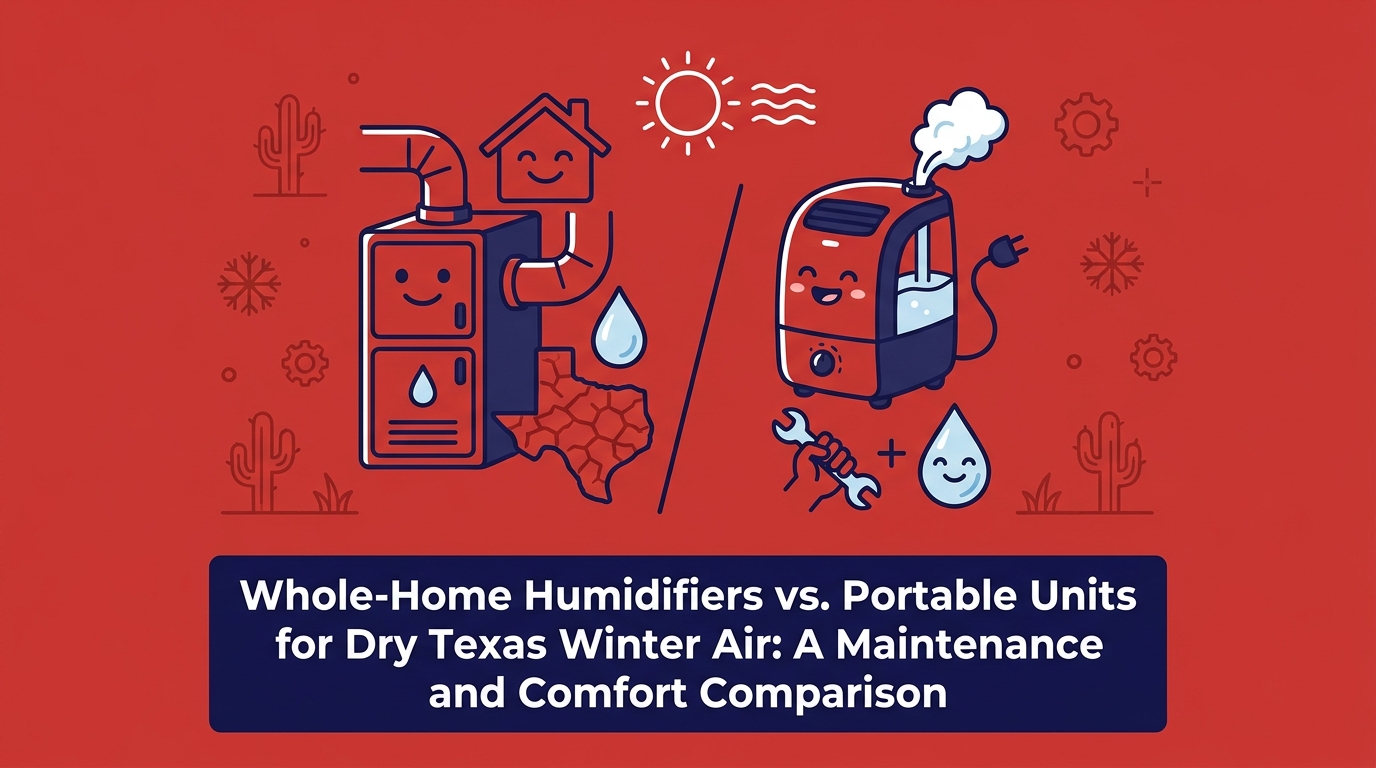
At Carl's Quality Cooling and Heating LLC, a common misconception we encounter is that living near the Gulf Coast means you never have to worry about dry indoor environments. But when it comes to choosing between Whole-Home Humidifiers vs. Portable Units for Dry Texas Winter Air, our team knows that myth quickly falls apart. Many homeowners assume the natural outdoor moisture of the Conroe region will automatically keep their indoor environment comfortable all winter long. However, once your furnace kicks on, that ambient summer humidity vanishes, leaving your living spaces feeling like a desert. The concrete problem you face is preparing your home for the dry winter heating season without taking on the daily, exhausting chore of managing standalone humidifiers in every single bedroom.
You are at a critical decision point: deciding whether to install a whole-home bypass humidifier tied directly to your ductwork or relying on high-maintenance portable units to get you through the colder months. During the September pre-heating season, taking proactive steps is the best way to protect your family's respiratory health and your home's interior. Investing in comprehensive indoor air quality services and scheduling professional heating services with our technicians before the cold sets in ensures your home remains a comfortable, balanced refuge rather than a dry, irritating environment when the temperatures finally drop.
The Texas Winter Air Paradox: Why Furnaces Dry Out Your Home
The climate contrast: To understand why Conroe, TX area homes suffer from poor indoor air quality in the winter, our technicians often have to explain the physics of heating. We experience naturally humid, heavy air throughout the summer months. But when winter arrives, a severe indoor humidity drop occurs. This is the Texas winter air paradox: it might still feel relatively damp outside on a chilly January morning, but the air inside your house is being systematically stripped of its moisture.
The Environmental Protection Agency (EPA) recommends maintaining indoor relative humidity between 30 and 50 percent for optimal respiratory health and comfort. Unfortunately, standard winter heating systems—both gas furnaces and heat pumps—can drastically reduce indoor moisture levels, sometimes dropping the relative humidity well below 20 percent. This creates an environment drier than the Mojave Desert right inside your living room.
Consider the impact of overnight heating. Just last winter, our repair team responded quickly to a local homeowner whose heater failed at 10 PM on a freezing night. Our technicians diagnosed the issue and got the heater operational within an hour. While restoring the heat is always our immediate priority in an emergency, running a repaired furnace continuously through the night introduces a secondary challenge. The constant cycling of the heater pulls in cold air, warms it up, and distributes it, which rapidly accelerates the drying effect throughout the house. This overnight operation exacerbates dry air symptoms like severe static electricity, cracked dry skin, waking up with a sore throat, and irritated sinuses.
How Heating Cycles Impact Indoor Moisture
The physics of warm air: Cold air inherently holds less moisture than warm air. When your furnace pulls in 40-degree air from outside (or from drafty areas) and heats it to 72 degrees, the volume of the air expands, but the total amount of water vapor remains exactly the same. Because the warmer air *could* hold much more water, the *relative* humidity plummets.
The compounding effect: As we frequently remind our customers, this isn't a one-time event. Every time your thermostat triggers a heating cycle, the system is actively removing moisture from your living space. Continuous overnight heating compounds this effect, meaning you wake up in the morning feeling dehydrated and uncomfortable. Despite the humid summers we are famous for, dedicated moisture management is an absolute requirement for winter comfort.
The Hidden Labor of Portable Humidifiers
When faced with dry air, we see many homeowners instinctively run to the big box store and purchase a few standalone room humidifiers. While these units provide localized relief, they introduce a significant daily maintenance burden that quickly becomes a part-time job. In our experience, the hidden labor of portable units is one of the primary reasons local families eventually ask us for permanent, integrated solutions.
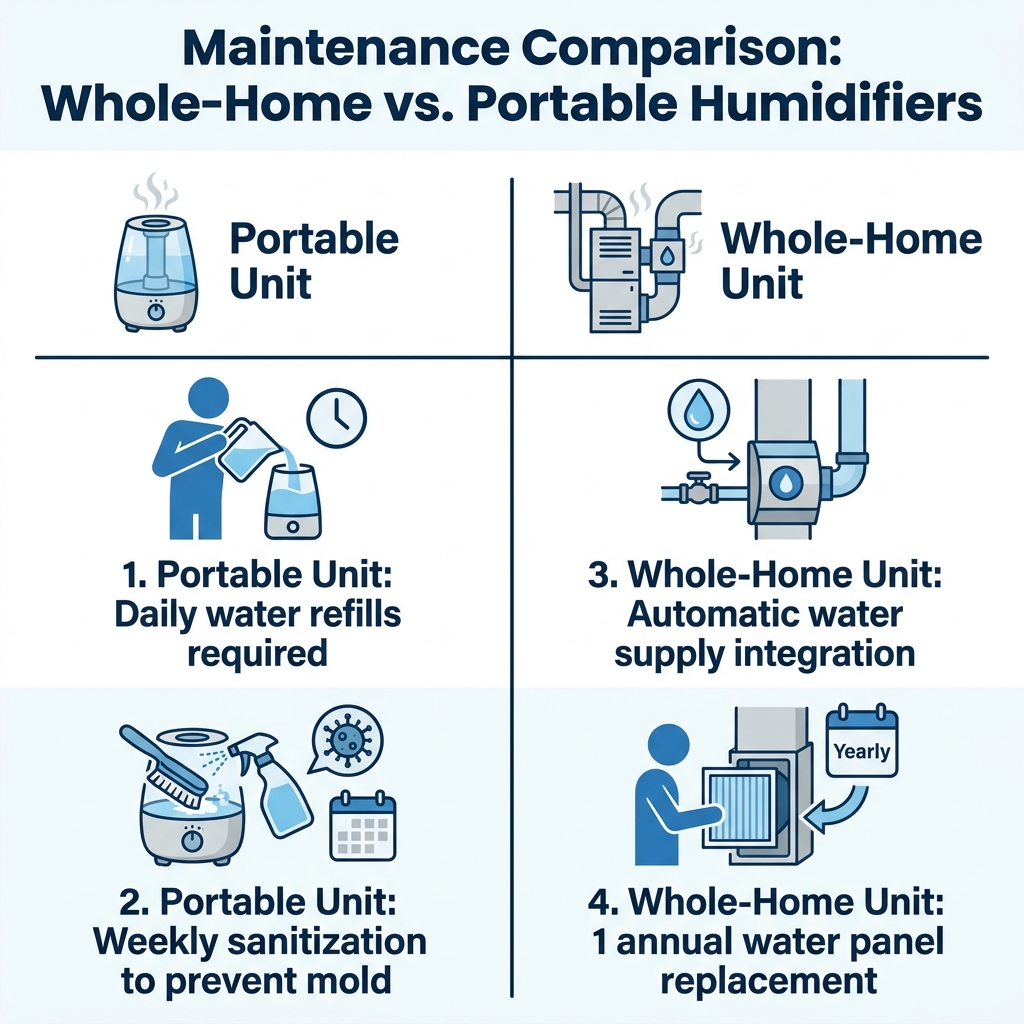
The daily grind: The most immediate drawback is the constant need for daily water tank refills. If you have three bedrooms running portable units, that means making three trips to the sink or bathtub every single night, carrying heavy, sloshing plastic tanks. Over a three-month heating season, that adds up to hundreds of trips just to maintain basic comfort in a few isolated rooms.
Daily and Weekly Maintenance Chores
Beyond the physical effort of carrying water, portable units present serious hygiene risks if not maintained with rigorous discipline. The Consumer Product Safety Commission (CPSC) frequently issues warnings regarding the aerosolization of mold and bacteria from improperly cleaned standalone tanks. Because these units hold stagnant water in a warm room, they are perfect breeding grounds for microbial growth.
To operate a portable unit safely, you must commit to a strict maintenance checklist:
• Daily water replacement: Emptying any remaining stagnant water, rinsing the tank, and refilling it with fresh water every single day.
• Weekly sanitization: Disassembling the unit and soaking the base and tank in a vinegar or bleach solution to kill off bacterial colonies and remove hard water scale.
• Filter monitoring: Checking the wicking filters weekly for discoloration, mold spots, or mineral crust buildup.
• Ongoing expenses: Purchasing gallons of distilled water (to prevent white mineral dust from coating your furniture) or buying expensive replacement wicks and demineralization cartridges every few weeks.
Managing multiple units across different bedrooms multiplies this workload, turning a simple desire for comfortable air into an exhausting weekend chore.

How Whole-Home Bypass Humidifiers Deliver Set-and-Forget Comfort
If the daily grind of portable units sounds unappealing, our team highly recommends a bypass humidifier as a permanent, elegant solution. A whole-home bypass humidifier connects directly to your home's existing plumbing and HVAC ductwork to distribute moisture evenly across every square foot of your living space. Instead of treating one room at a time, this system treats the air as it circulates through your furnace.
Automated comfort: The greatest advantage of a whole-home system is its automated, thermostat-controlled operation. Much like you set your desired temperature, you can set your desired humidity level on a humidistat. When the system detects that the air is too dry, it automatically opens a solenoid valve, allowing a metered amount of water to flow over a specialized water panel. The warm air from your furnace absorbs this moisture and delivers it evenly through your vents.
This completely eliminates the manual monitoring and daily water tank refills required for portable units. Maintenance is typically reduced to a single annual water panel change, which can easily be handled by one of our technicians during a routine HVAC maintenance plan visit in the fall.
Seamless Ductwork Integration
How moisture is introduced: A bypass humidifier relies on the pressure differential between your supply and return ducts. It uses a bypass duct to route a portion of the warm, heated air from the supply side, pass it through the moistened water panel, and return it to the system to be distributed. This creates a highly efficient evaporation process that doesn't rely on stagnant reservoirs of water.
Because the unit is plumbed directly into a drain line, excess water flows away immediately. The elimination of stagnant water reservoirs means there is no place for mold or bacteria to breed, making it a vastly safer option for your family's health. However, because this setup involves tapping into your home's plumbing, altering sheet metal ductwork, and wiring into the furnace's control board, installation requires a licensed professional—like the certified experts at Carl's Quality Cooling and Heating LLC—to ensure safe, leak-free integration.
Hygiene and Health: System-Integrated vs. Standalone Solutions
When evaluating the health benefits of humidification, our IAQ specialists emphasize that the method of delivery matters just as much as the moisture itself. Standalone units often struggle with localized over-humidification. If you leave a portable unit running on high in a closed bedroom, the air immediately surrounding the unit can become saturated. This leads to condensation on windows, damp spots on carpets, and eventually, mold growth on walls and windowsills.
In contrast, whole-home systems maintain a consistent, safe humidity level throughout the entire living space without creating dangerous cold spots or damp zones. The moisture is introduced as a vapor into the moving airstream, ensuring it is perfectly absorbed and distributed.
We see a similar dynamic when comparing whole-home air scrubbers to standalone purifiers. Just as a whole-home air scrubber purifies the air in every room simultaneously, a bypass humidifier ensures every corner of your house receives the exact right amount of moisture, emphasizing the superiority of integrated home health solutions over piecemeal fixes.
• Moisture Distribution — Whole-Home Bypass Humidifier: Even, whole-house coverage via ductwork — Portable Standalone Unit: Uneven, localized to a single room
• Maintenance Frequency — Whole-Home Bypass Humidifier: Once per year (water panel replacement) — Portable Standalone Unit: Daily refills, weekly deep cleaning
• Hygiene Risks — Whole-Home Bypass Humidifier: Very low (no stagnant water reservoirs) — Portable Standalone Unit: High (risk of aerosolized mold/bacteria)
• Home Protection — Whole-Home Bypass Humidifier: Protects all hardwood floors and furniture — Portable Standalone Unit: Only protects items in the immediate vicinity
• Control Method — Whole-Home Bypass Humidifier: Automated via wall-mounted humidistat — Portable Standalone Unit: Manual adjustment and constant monitoring
Protecting your investment: Beyond respiratory health, balanced humidity protects the physical structure of your home. Hardwood floors, expensive wooden furniture, antique doors, and musical instruments are highly susceptible to winter cracking and splintering when the air becomes too dry. A whole-home system preserves these investments by preventing the wild humidity swings that cause wood to expand and contract aggressively.
Timing Your Upgrade: Pre-Season Preparation
The secret to a comfortable winter is proactive preparation. The September pre-heating season is the optimal window to evaluate and upgrade your indoor air quality systems. Waiting until the first major freeze hits means you will be competing with hundreds of other homeowners for emergency service appointments, forcing you to endure weeks of dry, uncomfortable air while you wait for an installation slot.
Beat the cold snap: Having the system installed, plumbed, and tested before the first major cold snap forces your furnace to run continuously ensures a seamless transition into winter. You want your humidification system ready to deploy the very first time your thermostat calls for heat. Furthermore, installing qualifying high-efficiency IAQ and HVAC equipment may make you eligible for generic utility incentives or rebates, so it's always worth checking with your local provider.
Working with our veteran-owned, family-run team at Carl's Quality Cooling and Heating LLC means you are partnering with a business that prioritizes practical, low-maintenance solutions for local families, rather than high-effort temporary fixes. We understand the value of investing in long-term home health solutions. A professionally installed bypass humidifier provides the ultimate peace of mind—knowing that your family's comfort is automated, safe, and completely hands-off for the entire winter season.
The choice between Whole-Home Humidifiers vs. Portable Units for Dry Texas Winter Air ultimately comes down to how you value your time and health. By upgrading now, you can reclaim your evenings from the chore of refilling water tanks and enjoy a perfectly balanced home environment all season long.
Frequently Asked Questions
Are whole house humidifiers worth the investment in Texas?
Yes, our team finds they are highly valuable during the winter months. While Texas has humid summers, winter heating systems drastically strip moisture from the air, dropping indoor humidity to uncomfortable levels. A whole-house humidifier prevents dry skin, respiratory irritation, and damage to hardwood floors, making it a worthwhile long-term investment for winter comfort.
Can you use a portable humidifier instead of a whole house humidifier effectively?
Portable humidifiers can be effective for a single, closed-off room, but they cannot manage a whole house. To treat an entire home, you would need to purchase, run, and maintain multiple units simultaneously. This requires significant daily labor and creates inconsistent humidity zones throughout the house, whereas a whole-home system provides even, automated coverage.
How much maintenance does a whole house humidifier need compared to portable units?
Whole-house humidifiers require very little maintenance, typically needing just one water panel replacement per year, which we can handle during a standard tune-up. In stark contrast, portable units require daily water tank refills and thorough weekly sanitization with bleach or vinegar to prevent mold and bacterial growth in their stagnant water reservoirs.
Do humidifiers cause mold in the house?
Humidifiers only cause mold if they are improperly maintained or if humidity levels are pushed too high. Portable units are notorious for causing localized mold on nearby walls or windowsills due to over-saturation. Whole-home bypass humidifiers are controlled by a humidistat to maintain safe levels (30-50%) and do not hold stagnant water, drastically reducing any mold risk.
Is a whole-house humidifier better than a portable unit for large homes?
Absolutely. A whole-house humidifier utilizes your existing HVAC ductwork to distribute moisture evenly across every square foot of a large home. Attempting to humidify a large home with portable units would require half a dozen machines, leading to an unmanageable daily chore of refilling and cleaning tanks.
How often do you clean a whole-home humidifier vs a portable unit?
We generally recommend a single professional cleaning and panel change annually for a whole-home bypass humidifier, usually done during your fall HVAC tune-up. A portable unit must be rinsed daily and deeply sanitized weekly to ensure it doesn't spray harmful bacteria or mold spores into your breathable air.
Make the Switch Before Winter Arrives
Dealing with dry winter air shouldn't require a daily chore list. Choosing between Whole-Home Humidifiers vs. Portable Units for Dry Texas Winter Air is ultimately about choosing lasting comfort over constant maintenance. A clear, pragmatic comparison shows that the low-maintenance, whole-house comfort of a bypass humidifier is the superior choice. Reach out to Carl's Quality Cooling and Heating LLC today to schedule your pre-season installation and enjoy a perfectly balanced home all winter long.