


The Hidden Culprit Behind Sudden Heating Failures
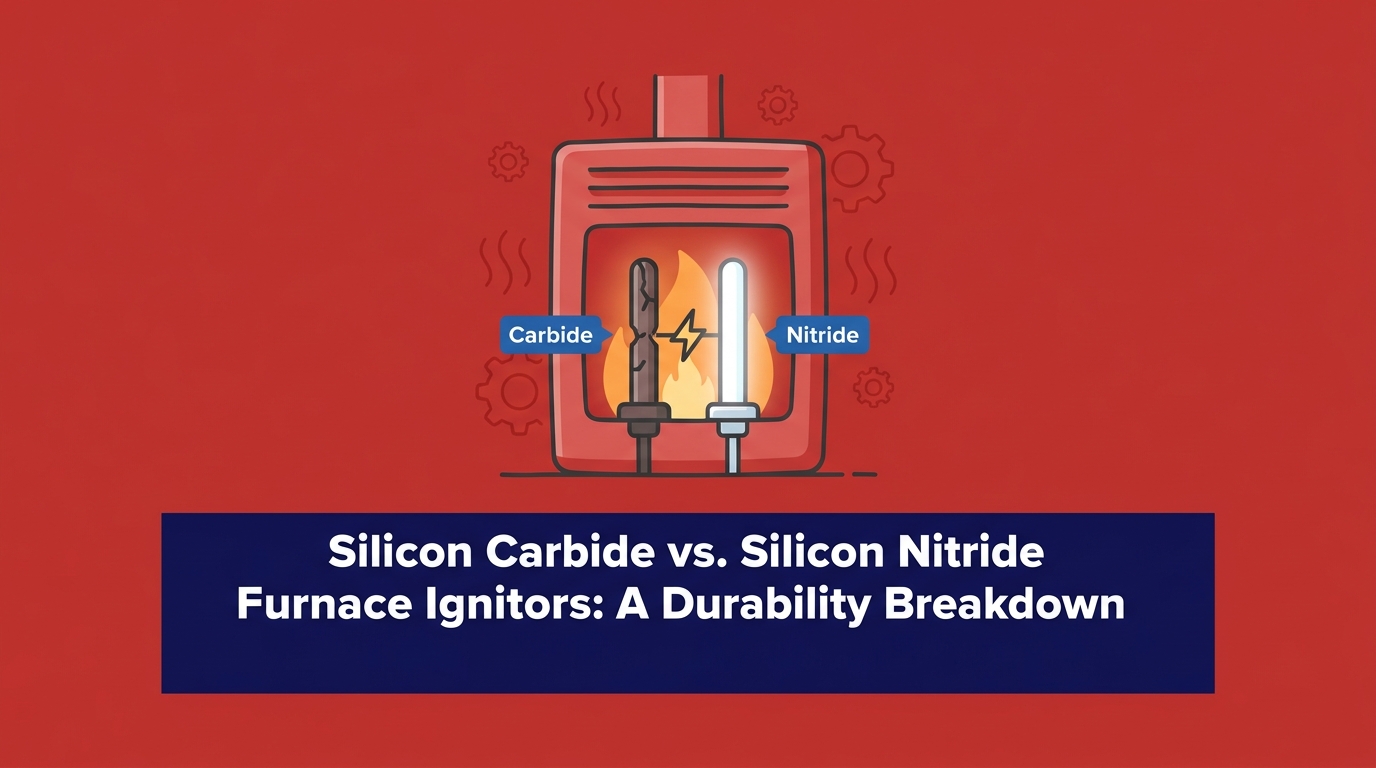
Have you ever turned on your thermostat during the first real chill of autumn, only to feel nothing but cold air blowing from your vents? When your system fails to produce heat, understanding silicon carbide vs. silicon nitride furnace ignitors: a durability breakdown is exactly what you need to make an informed repair decision. Most homeowners assume a complete system breakdown has occurred, but the reality is often much smaller. In our years of preparing Conroe homes for the winter, our team at Carl's Quality Cooling and Heating LLC frequently finds that the most common culprit is a failed furnace ignitor that has simply cracked after sitting idle through the long Texas summer.
For professional HVAC services, upgrading a failing component during the early fall pre-heating season is the smartest way to prevent sudden mid-winter emergencies. When an older ignitor fails, you face a core decision: replace the broken part with the same standard, fragile component, or invest in a highly durable material upgrade that ensures reliable ignition for years to come.
The Role of the Hot Surface Ignitor
Before diving into material differences, it helps to know what this component actually does. Modern gas furnaces do not use a standing pilot light that burns 24/7. Instead, they use an electronic hot surface ignitor (HSI). When your thermostat calls for heat, electricity flows into this small component, causing it to glow bright orange or white-hot—often reaching temperatures over 2,000 degrees Fahrenheit in a matter of seconds. Once it reaches the correct temperature, the gas valve opens, the gas hits the glowing ignitor, and the burners ignite.
Because this part must heat up and cool down rapidly every single time your furnace cycles on and off, it is subjected to immense physical stress. Over time, that stress takes a toll on the physical structure of the component.
Why Ignitors Crack: The Physics of Thermal Shock
To understand why furnace parts fail, you have to look at the intense physical forces at play inside your heating system. Every time your furnace cycles on, the ignitor undergoes rapid thermal expansion. As the material heats up to glowing temperatures, its molecules vibrate and expand. When the heating cycle ends, the component cools down and contracts. This endless cycle of expanding and contracting creates microscopic vulnerabilities in the material.
During long idle periods—like a hot, humid summer—these microscopic vulnerabilities can set in permanently. Dust, moisture, and lack of use allow the material to become brittle. When you finally turn the heat on, the sudden demand forces the cold component to heat up instantly. This creates a phenomenon known as "thermal shock."
The Impact of Unpredictable Weather
With Conroe's mild but highly unpredictable winters, heating systems are often forced into sudden, intense heating cycles. A week of warm weather can be immediately followed by a freezing night, demanding immediate performance from an idle furnace. This exact pattern causes severe thermal shock to older, brittle parts.
We recently helped a local homeowner who experienced the fallout of this exact type of sudden component failure when their heater stopped working at 10:00 at night during a winter freeze. Our technicians worked around the clock to diagnose the issue, ultimately getting the heater operational within the hour. By understanding the physics of thermal shock, you can take steps to prevent these late-night failures.
If you suspect your system is struggling with thermal stress, reaching out for professional furnace repair and heating services before the weather turns severe is the best way to protect your home.
Silicon Carbide: The Vulnerabilities of Standard Ignitors
For decades, the historical standard for hot surface ignitors has been silicon carbide (SiC). This material is highly conductive and heats up very quickly, making it effective for igniting natural gas. However, silicon carbide has a major structural flaw: it is exceptionally brittle. In terms of physical texture and fragility, it is very similar to glass or delicate ceramic.
Because it is so brittle, silicon carbide is highly prone to the micro-cracking caused by rapid thermal expansion. As the material ages, the microscopic fissures grow until the electrical current can no longer pass through the component. Once the circuit is broken, the ignitor will not glow, and the furnace will blow cold air.
The Danger of Contamination
Beyond its natural fragility, silicon carbide is incredibly sensitive to external contaminants. The surface of a SiC ignitor is porous. If a technician or a homeowner accidentally touches the gray heating element with their bare hands during installation, the natural oils from human skin transfer to the material.
When the ignitor heats up, those skin oils carbonize and create an insulated "hot spot" on the component. This uneven heating causes the brittle material to fracture and fail prematurely. While silicon carbide is functional and remains a standard baseline component in many builder-grade systems, it represents a part with a statistically shorter lifespan. Understanding why gas furnace ignitors fail over time usually points directly back to the fragile nature of silicon carbide.
Silicon Nitride: Engineered for High-Stress Durability
As engineering evolved, the HVAC industry developed a superior, modern alternative: silicon nitride (Si3N4). Originally utilized in high-stress aerospace applications and heavy-duty engine bearings, silicon nitride is designed specifically to withstand intense thermal cycling and extreme mechanical stress.
Unlike its brittle predecessor, silicon nitride is structurally robust. It does not suffer from the same severe micro-cracking when exposed to thermal shock. When a cold silicon nitride ignitor is rapidly heated to over 2,000 degrees, the material expands uniformly without fracturing. This makes it highly reliable during sudden winter cold snaps.
Superior Electrical and Physical Tolerance
Silicon nitride handles voltage spikes significantly better than traditional materials. Electrical fluctuations from the grid can easily fry a fragile silicon carbide component, but silicon nitride absorbs and manages these variations with ease. Furthermore, the material is much more forgiving of minor handling variations. While our professionals still take care to keep the component clean, silicon nitride is far less likely to shatter or develop hot spots from microscopic contaminants.
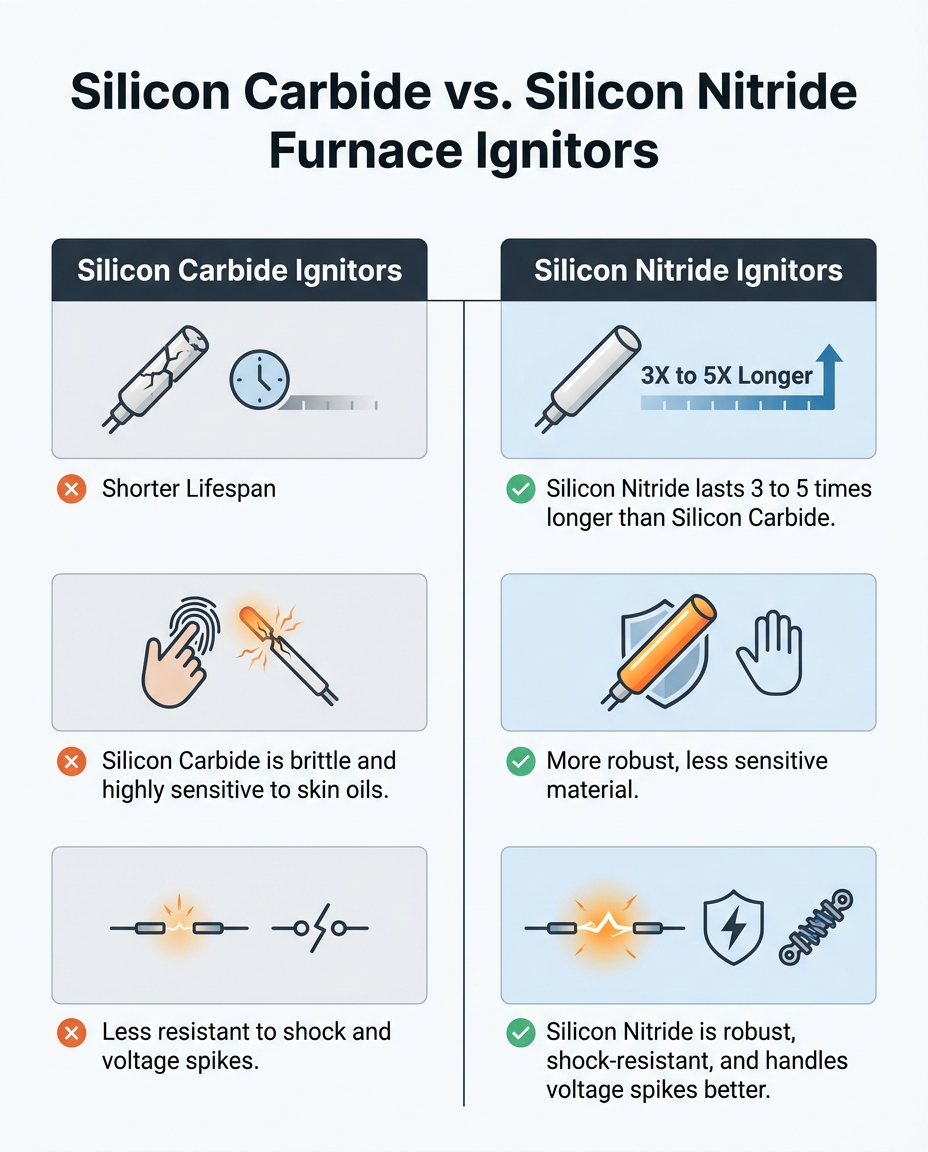
Because of these advanced properties, silicon nitride components are built to last 3 to 5 times longer than traditional standard ignitors. Today, our licensed technicians frequently utilize silicon nitride universal upgrade kits when replacing failed older units, ensuring the new part outlasts the remaining lifespan of the furnace itself.
Comparing Durability: Silicon Carbide vs. Silicon Nitride
When weighing a repair decision, seeing the differences side-by-side helps clarify why an upgrade is often the smartest long-term choice. The table below breaks down the core differences between the two materials across four critical categories.
• Average Lifespan — Silicon Carbide (Standard): Standard longevity; prone to degrading after a few heavy heating seasons. — Silicon Nitride (Upgrade): Exceptional longevity; lasts 3 to 5 times longer than standard materials.
• Physical Durability — Silicon Carbide (Standard): Highly brittle and glass-like; easily shatters if bumped or dropped. — Silicon Nitride (Upgrade): Structurally robust; highly resistant to physical shock and vibration.
• Handling Sensitivity — Silicon Carbide (Standard): Extreme sensitivity; human skin oils cause hot spots and premature failure. — Silicon Nitride (Upgrade): Forgiving surface; less prone to failure from minor installation variations.
• Voltage Tolerance — Silicon Carbide (Standard): Low tolerance; easily burns out during minor electrical grid fluctuations. — Silicon Nitride (Upgrade): High tolerance; engineered to manage voltage spikes without fracturing.

Strategic Upgrades During Pre-Season Maintenance
The best time to address an aging ignitor is long before a sudden failure occurs. Proactive homeowners know that waiting for a breakdown usually guarantees it will happen on the coldest night of the year. During a comprehensive fall tune-up, our technicians actively test your current ignitor to determine its health.
Using a specialized multimeter, our licensed professionals measure the electrical resistance (measured in Ohms) of the ignitor. If the resistance reading is too high, it indicates that microscopic cracks have already formed inside the material, and the part is on the verge of failure. Identifying this early allows you to make a strategic choice: swapping a questionable part now prevents a midnight emergency later.
The Value of Thorough Diagnostics
Accurate troubleshooting is the foundation of a reliable home. Just as our team thoroughly diagnoses a Freon line leak in an air conditioner and completes the job in a timely manner to restore cooling, that same level of precise diagnostics is applied to your furnace during a tune-up. Finding a weak ignitor early is a hallmark of excellent service.
Enrolling in a preventative HVAC maintenance plan ensures these checks happen automatically every year.
A strict safety warning: Any internal furnace component replacement requires a licensed professional. Because furnaces involve high-voltage electricity and combustible natural gas, testing and replacing an ignitor is never a DIY project. Universal upgrade kits require precise wiring adaptations and specific mounting brackets to ensure safe operation.
Investing in Mission-Critical Heating Reliability
When it comes to home comfort, cheap, temporary fixes almost always cost more in the long run. Opting for a baseline part might seem efficient in the moment, but when that brittle component fails during peak winter demand, you are left paying for emergency dispatch fees and dealing with a freezing house.
Because we are a veteran-owned company, working with Carl's Quality Cooling and Heating LLC means you benefit from our deep commitment to discipline, accountability, and mission-critical reliability. Upgrading to a silicon nitride ignitor perfectly aligns with this ethos. It is about doing the job right the first time, using the best available materials, and ensuring zero downtime when temperatures drop.
Our professional guidance can help you navigate these choices and make the right long-term investments in your HVAC system. If you are considering a broader system overhaul to improve reliability, exploring heating system financing options can make premium upgrades highly accessible.
Common Questions About Furnace Ignitor Upgrades
Can I upgrade my furnace ignitor to silicon nitride?
Yes, in most cases, an upgrade is entirely possible. Licensed technicians use universal upgrade kits designed specifically to adapt the new, durable material to existing furnace models safely. These kits include specialized brackets and ceramic wire connectors that allow the advanced silicon nitride component to integrate seamlessly with your older control board.
Why did my silicon carbide ignitor crack?
Micro-cracking occurs primarily due to rapid thermal expansion, commonly known as thermal shock. Every time the furnace cycles on, the brittle material expands and contracts, eventually causing fissures. Additionally, contaminants like skin oils from improper handling can create insulated hot spots that cause the delicate material to fracture under stress.
Which furnace ignitor lasts longer?
Silicon nitride lasts significantly longer than traditional materials. Because it is engineered to be physically robust and highly resistant to thermal shock, a silicon nitride ignitor typically outlasts a standard silicon carbide part by 3 to 5 times. It is the clear winner for long-term durability.
How long does a silicon nitride ignitor last?
Under normal operating conditions, a silicon nitride ignitor can easily last 7 to 10 years, and often much longer. Its exact lifespan depends on proper installation by a professional, the overall health of the furnace, and keeping up with regular system maintenance to ensure proper airflow and voltage regulation.
Is replacing an ignitor a DIY project?
No, replacing an ignitor is never a safe DIY project. Furnaces involve dangerous combinations of high-voltage electricity and combustible natural gas. Ignitors must be handled with extreme precision to avoid contamination, and they must be wired and mounted correctly by a licensed HVAC professional to prevent fire hazards or gas leaks.
Secure Your Winter Comfort with a Durable Ignitor Upgrade
Understanding the intricacies of silicon carbide vs. silicon nitride furnace ignitors: a durability breakdown empowers you to make smarter decisions for your home. Silicon nitride's exceptional durability, resistance to thermal shock, and ability to handle voltage spikes make it the superior choice for preventing unexpected cold-weather failures.
Taking action during the early fall pre-heating season ensures your system is ready before the real cold arrives. Upgrading a weak or aging component provides the confidence and peace of mind you need to get through the winter without a sudden breakdown. Reach out to our local heating experts today to schedule a comprehensive inspection and secure your home's comfort for the season ahead.


