
Why a Failing Furnace Ignitor Forces a Critical Safety Decision
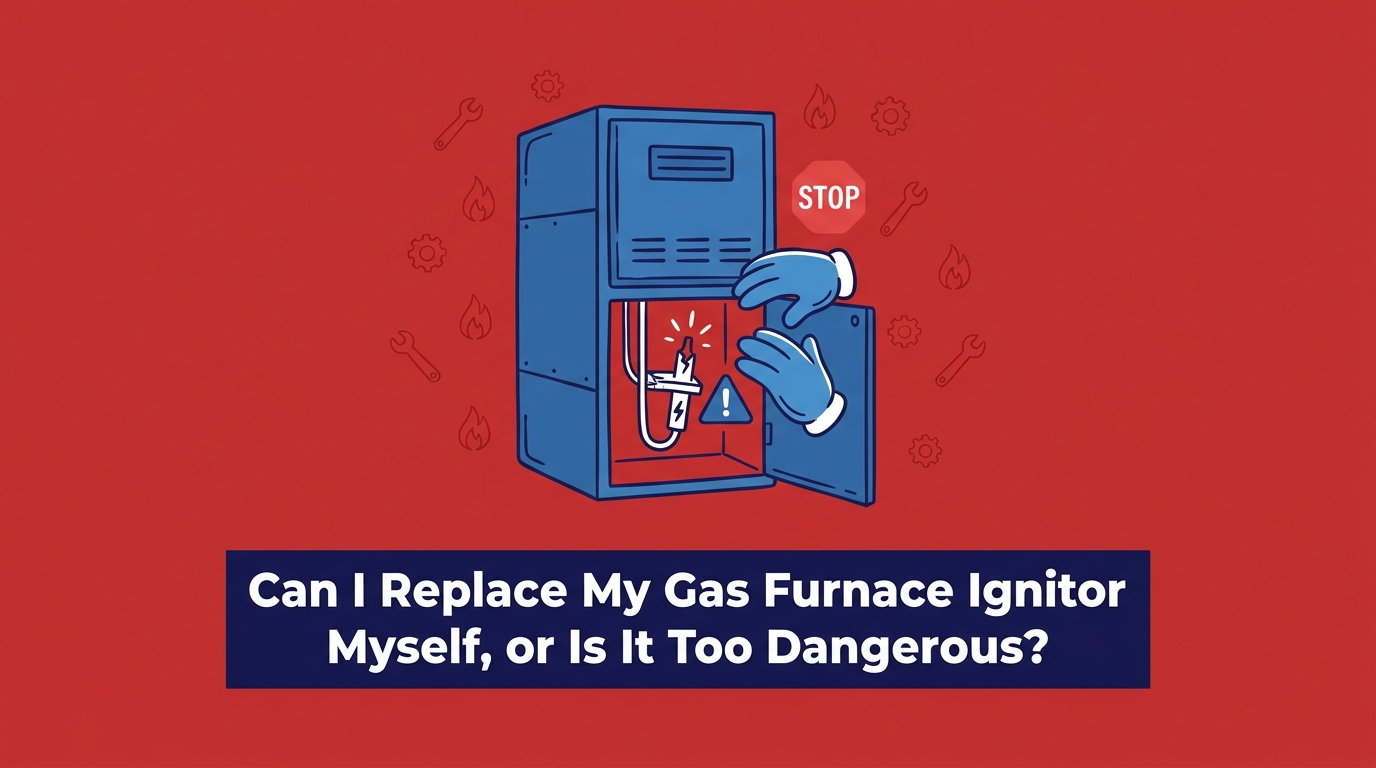
When your heating system refuses to turn on during the early September pre-heating season, you might naturally wonder: Can I Replace My Gas Furnace Ignitor Myself, or Is It Too Dangerous? It is incredibly frustrating when the first chilly nights arrive, your thermostat clicks, and the furnace simply blows cold air. Your immediate instinct might be to look up the part online, order a replacement, and try to swap it out yourself to save time.
The short answer is no. Replacing a gas furnace ignitor is highly dangerous because it involves working directly inside the combustion chamber, near active gas lines, and handling incredibly fragile components. At Carl's Quality Cooling and Heating LLC, our technicians see firsthand how quickly DIY attempts can turn into hazardous situations. While some home maintenance tasks are perfectly fine for a weekend project, opening up the internal ignition system crosses a critical threshold into dangerous territory. When it comes to the internal workings of your heating equipment, relying on professional heating services is the only way to ensure your Conroe home remains safe.
To understand why this specific component is strictly off-limits for DIY repair, you have to look at how modern furnaces ignite gas. The process requires precise timing, delicate sensors, and materials that can easily shatter or fail if handled incorrectly. A simple mistake during an attempted repair does not just mean the furnace will not work—it can lead to serious safety hazards, including gas leaks and carbon monoxide exposure.
Understanding the Extreme Fragility of Your Furnace's Ignition System
Modern heating systems rely on silicon carbide hot surface ignitors to safely light the gas in the combustion chamber. Unlike older systems that used a continuously burning pilot light, a hot surface ignitor acts more like the glowing element in a toaster. When the thermostat calls for heat, an electrical current passes through the ignitor, causing it to glow bright orange and reach extreme temperatures before the gas valve opens.
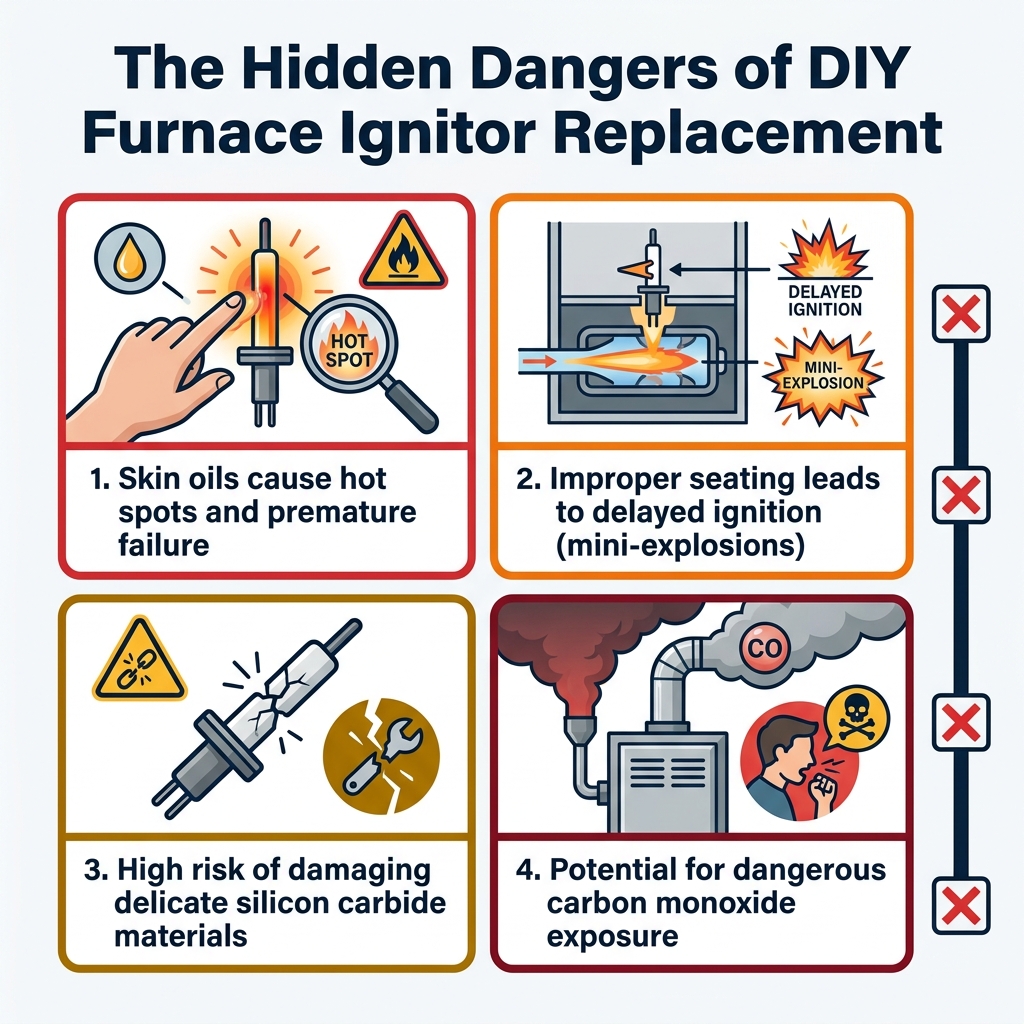
The danger lies in the material itself. Silicon carbide is engineered to withstand intense thermal stress, but it is incredibly brittle when subjected to physical impact. This extreme fragility is a primary reason why gas furnace ignitors fail over time, and why they are so difficult to install correctly.
Why these components are so vulnerable during handling:
• Microscopic fractures: The slightest bump against the metal furnace housing while maneuvering the part into place can create invisible hairline cracks in the silicon carbide.
• Thermal shock vulnerability: If the material is compromised by a microscopic fracture, the sudden surge of electricity and intense heat during its first test cycle will cause it to shatter instantly.
• Precise alignment requirements: The ignitor must sit at the exact right distance from the gas burners. If it is installed even slightly off-center, it will fail to light the gas efficiently, leading to immediate safety lockouts.
Our licensed technicians at Carl's Quality Cooling and Heating LLC spend years learning how to navigate the cramped, sharp-edged interior of a furnace cabinet without bumping these delicate elements. Attempting to maneuver a brittle piece of silicon carbide into a tight bracket without the proper tools or experience almost guarantees the part will break before the furnace ever turns on.
The Hidden Hazard: How Simple Skin Oils Destroy Ignitors
Even if you manage to avoid bumping the ignitor against the furnace housing, there is a hidden chemical hazard that ruins countless DIY repair attempts. The very act of touching the heating element with your bare hands is enough to destroy it.
The Problem: Human skin naturally produces oils and sweat. When you touch a silicon carbide hot surface ignitor, a microscopic layer of that oil transfers onto the porous surface of the component. Because the ignitor is often small and difficult to grip, it is incredibly common for an untrained person to grab it directly by the heating element rather than the ceramic base.
The Cause: When the furnace turns on, the ignitor rapidly heats up to hundreds of degrees. The oils left behind by your fingers do not simply burn off safely. Instead, they create an uneven "hot spot" on the surface of the silicon carbide. This localized area heats up faster and gets much hotter than the rest of the material, disrupting the uniform distribution of thermal energy.
The Solution: The only way to prevent this is through strict, professional handling procedures. In our experience working on heating systems across the Conroe area, the timeline of failure for a contaminated ignitor is notoriously deceptive. The furnace might actually turn on and work perfectly for the first test run. However, hours or days later, the stress of that hot spot causes the component to burn out or snap completely, leaving you without heat once again. Our professionals wear specific protective gear, such as clean latex or nitrile gloves, and are trained to handle the component exclusively by its ceramic base to prevent premature failure.
Combustion Chamber Dangers: Gas Leaks and Delayed Ignition
The fragility of the ignitor is only half of the equation. The environment where the ignitor lives—the combustion chamber—presents severe safety risks. Any time you remove the access panel and reach into the area where natural gas mixes with an ignition source, you are dealing with explosive potential.
Because Carl's Quality Cooling and Heating LLC is a veteran-owned company, our team brings a military-grade commitment to doing things "by the book." In the HVAC industry, safety checklists are not just suggestions; they are mandatory procedures designed to prevent catastrophic failures. When a homeowner attempts to navigate the combustion chamber without this rigorous training, the risks multiply rapidly.
The dangers of improperly seated ignitors:
1. Disturbing the Gas Valve: The ignitor is located immediately adjacent to the gas burners and the main gas valve. Reaching in with tools can easily bump or loosen a gas fitting, creating a slow, undetectable gas leak inside the cabinet.
2. Delayed Ignition: If the ignitor is installed improperly and sits too far from the burner, it will not light the gas immediately when the valve opens. Instead, gas pools inside the combustion chamber. When the gas finally reaches the heat source, it ignites all at once. This creates a "mini-explosion" known as delayed ignition, which can blow out the flames, damage the heat exchanger, and create a serious fire hazard.
3. Sensor Misalignment: Modern furnaces use flame sensors to verify that the gas has ignited. If your DIY repair bumps this sensor out of alignment, the furnace will continuously shut down, leaving you exactly where you started.
The Risk of Carbon Monoxide Exposure
Perhaps the most severe risk of tinkering inside the combustion chamber is the potential for carbon monoxide (CO) exposure. The combustion process creates exhaust gases that must be safely vented out of your home. If a delayed ignition event cracks the heat exchanger, or if you accidentally compromise the seals around the burner compartment while trying to force a part into place, those dangerous exhaust gases can leak directly into your home's air supply. Carbon monoxide is odorless, colorless, and deadly, making amateur repairs in this area a risk no homeowner should take.

Safe Fall Preparation vs. Hazardous DIY Repairs
It is entirely understandable to want to be proactive about your home's heating system during the September pre-heating season. Preparing your home before the cold weather hits is smart homeownership. However, it is vital to draw a clear line between safe maintenance tasks and hazardous repairs.
We frequently see the benefits of early fall prep. For example, during a recent pre-heating season tune-up here in Conroe, our routine diagnostics caught a micro-fractured ignitor before it completely failed. By allowing a professional to handle the internal diagnostics, the problem was solved before it escalated into an expensive issue or a dangerous midnight breakdown. This is the value of professional oversight.
Here is a clear breakdown of what you can safely handle yourself, versus what must be left to a licensed technician:
• Replacing dirty air filters monthly — Hazardous Tasks (Requires a Pro): Removing the internal combustion access panel
• Ensuring all supply and return vents are unblocked — Hazardous Tasks (Requires a Pro): Handling, testing, or replacing the ignitor
• Testing the thermostat to ensure it communicates — Hazardous Tasks (Requires a Pro): Adjusting or inspecting the gas valve and burners
• Clearing debris away from outdoor heat pump units — Hazardous Tasks (Requires a Pro): Cleaning or realigning the delicate flame sensor
• Checking carbon monoxide detector batteries — Hazardous Tasks (Requires a Pro): Inspecting the heat exchanger for dangerous cracks
Rather than risking a dangerous repair, the most proactive step you can take is enrolling in a routine HVAC maintenance plan. Professional check-ups catch ignitor wear, test safety sensors, and verify gas pressure long before a component fails and leaves you in the cold.
The Real Cost of a Botched Repair During a Sudden Cold Snap
The consequences of a failed DIY attempt often reveal themselves at the absolute worst possible time. Conroe is known for having mild winters that are abruptly interrupted by sudden, sharp cold snaps. When the temperature drops drastically overnight, reliable, immediate heat becomes critical.
If you attempt to replace your ignitor yourself and accidentally contaminate the silicon carbide with skin oils, the furnace might work for a day or two. But when that sudden cold snap hits and the system is forced to run continuously, that compromised ignitor will burn out. Suddenly, you are left with a freezing house in the middle of the night.
Our emergency dispatch team sees how critical timing can be. In one recent instance, a Conroe customer's heater stopped working late at night during a winter freeze after a botched DIY fix. Our technicians were dispatched and worked around the clock to undo the damage, install the proper components safely, and get the heater running securely within the hour. When you rely on emergency professional service rather than a DIY patch, you get a comprehensive solution.
An emergency call for a failed DIY repair often takes longer to fix because the technician must first undo the damage caused during the attempt, verify that no gas leaks were created, and then properly install the correct part. The peace of mind that comes from knowing a licensed technician verified your system's safety from the start is invaluable. Professional diagnosis ensures the root cause of the ignition failure is resolved, rather than just temporarily patching a symptom.
Frequently Asked Questions About Furnace Ignitor Safety
When dealing with ignition failures, homeowners often have specific questions about what is safe and what is not. Here are direct answers to the most common queries regarding furnace ignitors.
Can you replace a furnace ignitor yourself?
No, it is highly recommended that you do not attempt to replace a furnace ignitor yourself due to severe safety risks. The process requires opening the combustion chamber and working directly next to the gas supply. Without professional training, you risk creating undetectable gas leaks, damaging the highly fragile silicon carbide component, or compromising the system's safety sensors.
What happens if you touch a furnace ignitor?
Touching the heating element of a furnace ignitor leaves behind microscopic oils from your skin that will ruin the part. When the ignitor heats up to extreme temperatures, those oils create a localized hot spot on the surface of the material. This uneven heating causes the brittle silicon carbide to shatter or burn out prematurely, often within hours of installation.
How do you know if your furnace ignitor is bad?
The most common sign of a bad ignitor is a furnace that clicks on and blows cold air, but never actually produces heat. You can often confirm this by looking through the small sight glass on your furnace door; if the thermostat calls for heat but you do not see a bright orange glow inside the cabinet, the ignitor has likely failed.
Is it safe to bypass a furnace ignitor?
Absolutely not; bypassing a furnace ignitor is incredibly dangerous and can lead to immediate catastrophic failure. The ignition system is tied directly to the gas valve and safety sensors. Attempting to bypass these mechanisms can result in uncontrolled gas flow into your home, creating a severe risk of explosion and fire.
Why is my furnace not igniting?
A furnace may fail to ignite due to a cracked ignitor, a dirty flame sensor, or a disruption in the gas supply. Because the symptoms for all of these issues look identical (the system clicks but produces no heat), it requires professional diagnostic tools to pinpoint the exact failure without putting the home at risk.
Will a furnace run without a working ignitor?
No, modern furnaces are equipped with strict safety lockouts that prevent the system from running if the ignitor fails. If the ignitor does not glow and light the gas within a few seconds, the flame sensor will detect the failure and immediately shut down the gas valve to prevent a dangerous buildup of natural gas inside your home.
Ensure Your Home's Safety with Professional Heating Diagnostics
The risks associated with handling fragile silicon carbide components and working near active gas lines far outweigh any perceived benefits of a DIY repair. During the September pre-heating season, your priority should be ensuring your system is safe, reliable, and ready to handle the sudden temperature drops ahead. Attempting to swap an ignitor yourself exposes your home to delayed ignition risks, carbon monoxide hazards, and premature part failure.
You do not have to navigate these technical hazards alone. A licensed professional has the exact tools, protective gear, and training required to safely diagnose your heating system, replace delicate components without damaging them, and verify that your combustion chamber is sealed and secure. If your furnace is struggling to start, the safest next step is to contact our licensed HVAC technicians to schedule a comprehensive inspection today.