
The Frustrating Reality of a Furnace That Starts Then Instantly Stops
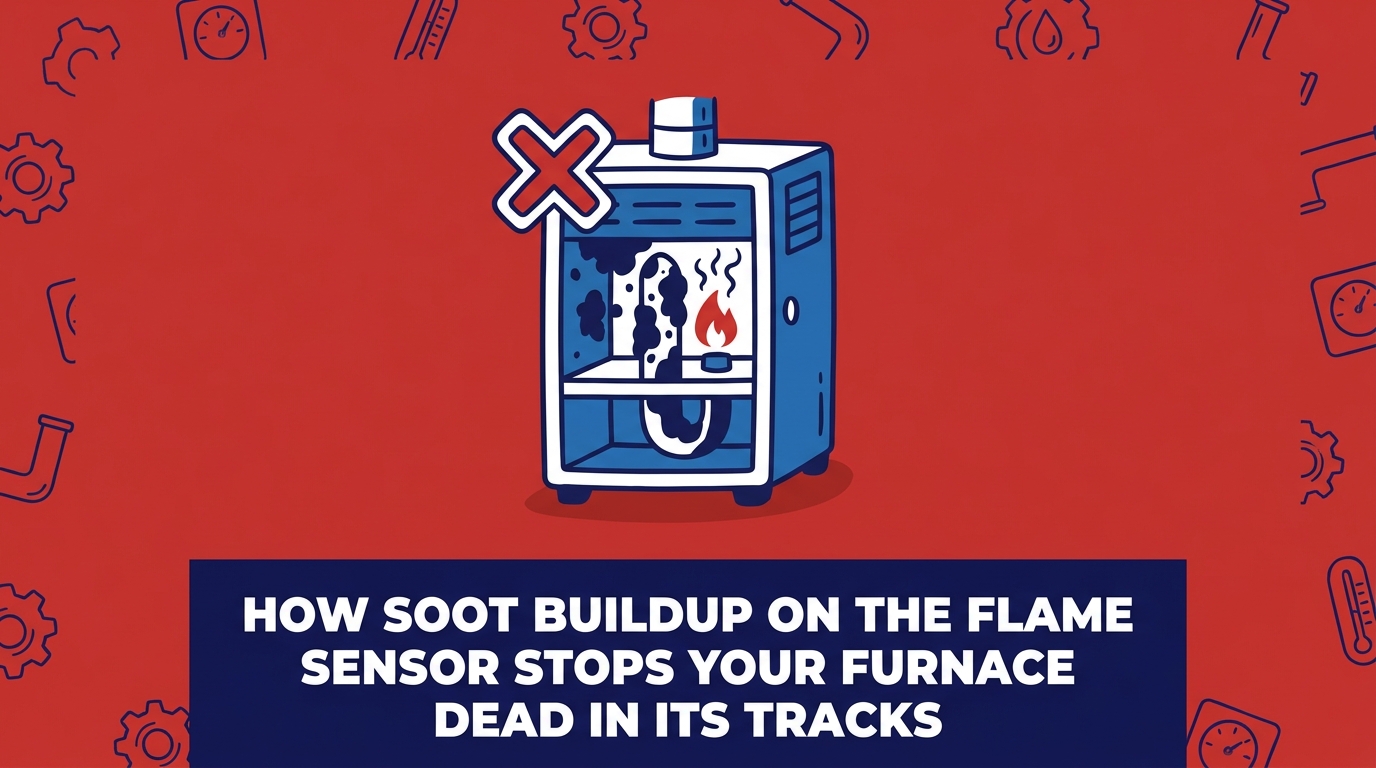
When your heating system fires up only to shut down three seconds later, you are experiencing exactly how soot buildup on the flame sensor stops your furnace dead in its tracks. It is one of the most frustrating experiences for a homeowner: the thermostat clicks, the inducer motor whirs to life, the burners ignite with a reassuring glow, and then—almost immediately—everything goes dark and silent. You are left in a cold house, wondering if your entire heating system just suffered a catastrophic failure. In most cases, the culprit is not a broken motor or a failed gas valve, but a microscopic layer of dirt interrupting a highly sensitive safety mechanism. Understanding how this small component dictates the operation of your entire heating system is the first step toward restoring your home's warmth and reliability.
For professional HVAC services that get to the root of the problem, our team is ready to help restore your system safely and efficiently.
This rapid start-and-stop behavior is known in the HVAC industry as short-cycling, and it is a protective measure built into your furnace's control board. The system is intentionally shutting itself down to protect your home from unburned gas. The flame sensor acts as the ultimate gatekeeper in this process, relying on a delicate micro-amp current to verify that a fire is actually burning. When this signal is blocked, the system panics and cuts the fuel supply.
Common signs that your sensor is triggering a safety shutdown include:
• The three-second rule: The burners light successfully but extinguish almost exactly three to four seconds later.
• Repetitive clicking: The furnace attempts to ignite three or four times in a row before locking itself out completely.
• Blower motor running cold: The main fan may continue to run to clear the heat exchanger, blowing unheated air through your vents.
• Error codes: The control board often flashes a specific sequence of LED lights indicating an ignition failure or a loss of flame signal.
Because the root cause is often microscopic, interrupting the delicate electrical signal required to keep the gas valve open, professional diagnostics are the only safe way to address this specific failure point. Guessing at the problem can lead to unnecessary parts replacement or, worse, compromised safety features.
Anatomy of the Flame Sensor and Its Electrical Lifeline
To understand why a tiny bit of soot causes such a massive disruption, you have to look at the exact physics of how a flame sensor operates. A common misconception is that this component measures the heat of the fire, much like a thermometer. In reality, it does not measure temperature at all. Instead, it relies on a scientific principle called flame rectification to detect the physical presence of the fire.
When natural gas burns, the resulting flame contains ionized gases. These ionized gases are capable of conducting electricity. The flame sensor is essentially a stainless steel rod that sits directly in the path of the burners. The furnace control board sends an alternating current (AC) voltage to this rod. When the burners ignite, the flame envelops the rod, and the ionized gases act as a bridge, allowing the electricity to flow through the fire to the metal chassis of the furnace, which serves as the ground.
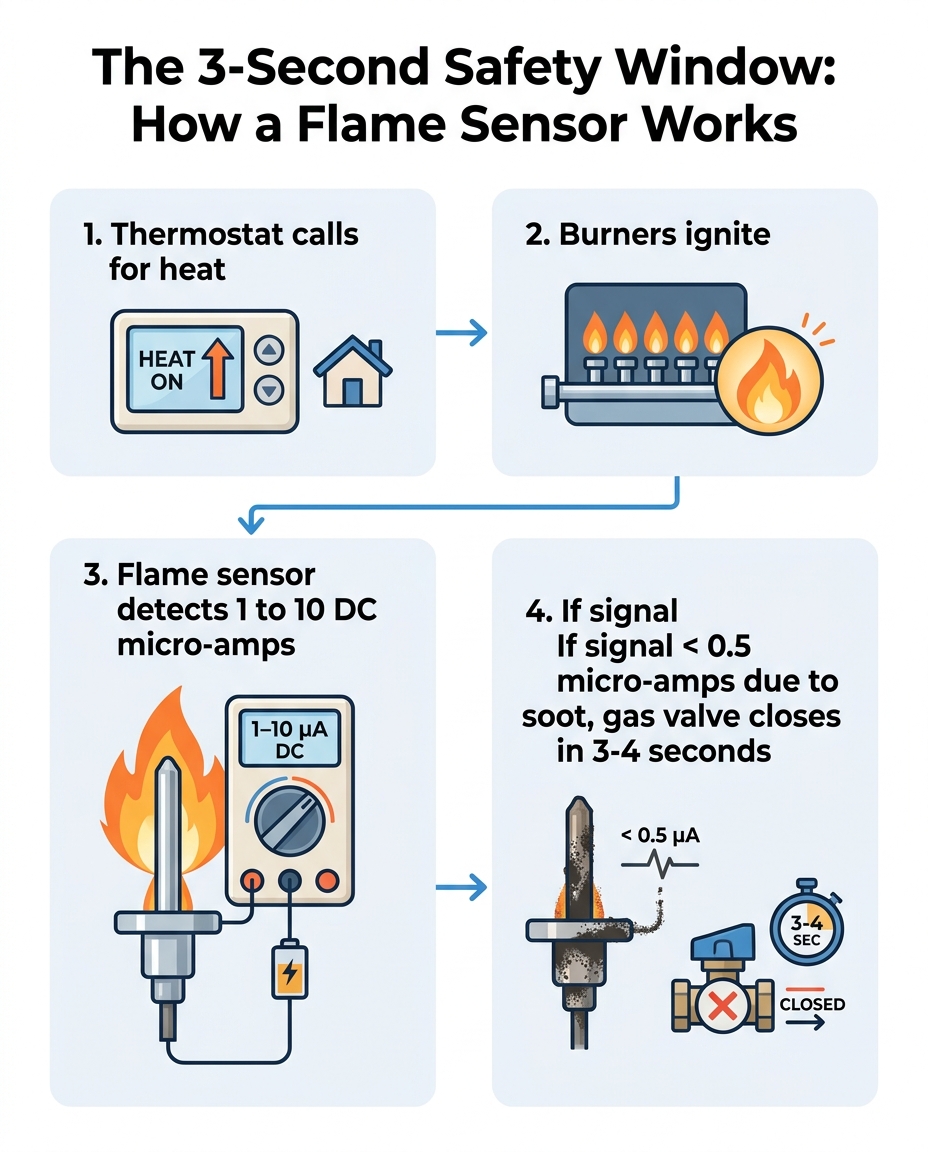
As the electricity passes through the flame, it is converted from alternating current to a tiny direct current (DC). This is where the extreme sensitivity of the system becomes apparent. The sensor relies on a tiny electrical current, typically measuring between 1 and 10 DC micro-amps. To put that into perspective, a standard household lightbulb uses millions of micro-amps. If you want to dive deeper into the surrounding components, understanding the anatomy of a gas furnace ignitor and why they fail provides great context for the entire ignition sequence.
If the control board reads a micro-amp current that drops below 0.5 to 1 micro-amp, it triggers an immediate safety shutdown. The system is designed to be completely unforgiving of weak signals to prevent raw gas from flooding your combustion chamber.
The 3-Second Safety Window
The entire ignition process is a carefully orchestrated sequence of events that happens in a matter of seconds. When your thermostat calls for heat, the inducer motor clears the exhaust flue, the pressure switch verifies proper draft, and the ignitor begins to glow. Only then does the gas valve open.
Once the gas valve opens and the burners ignite, the 3-second safety window begins. The control board gives the flame sensor exactly three to four seconds to detect that 1 to 10 DC micro-amp current. If the signal is weak, fluctuating, or completely absent, the board immediately cuts power to the gas valve. This rapid response is why the system is designed to be highly sensitive; it is a non-negotiable safety feature designed to protect your home from explosive gas buildup.

Why Eight Months of Dormancy Creates the Perfect Storm for Soot
The primary reason flame sensors fail is directly tied to local climate patterns. In regions with mild winters like Conroe, heating systems operate on a very different schedule than they do in northern states. Here, a furnace often sits completely dormant from March through October. Those eight months of inactivity create the perfect environment for a specific type of debris accumulation.
During the long spring and summer months, your HVAC system's blower is still circulating air for your air conditioning. Even with good filtration, microscopic particles bypass the filter and settle inside the furnace cabinet. Heavy layers of household dust, pet dander, volatile organic compounds (VOCs), cooking oils, and airborne particles settle directly onto the cold, inactive flame sensor rod. If you are struggling with excessive dust during these months, exploring indoor air quality solutions can help reduce the particulate load in your home.
The real problem occurs during the September pre-heating season, the very first time the thermostat calls for heat. When the burners ignite, the flames instantly hit that sensor rod, which is now coated in eight months' worth of settled debris. The intense heat causes a chemical transformation: the thick dust layer instantly burns and bakes into a hard carbon soot.
• Spring & Summer — System Status: Furnace Dormant — Impact on the Flame Sensor: Airborne dust, pet dander, and humidity settle on the cold metal rod.
• Early Fall — System Status: First Ignition — Impact on the Flame Sensor: The accumulated dust instantly incinerates, baking into a hard carbon shell.
• Winter — System Status: Active Heating — Impact on the Flame Sensor: The baked-on soot acts as an insulator, blocking the micro-amp signal and causing shutdowns.
It is important to clarify that this soot buildup is not a manufacturing defect or a sign that your furnace is broken. It is a natural consequence of the local climate's long off-seasons. The longer the furnace sits unused, the thicker the dust layer becomes, and the more severe the carbon baking process will be upon that first ignition.
The Insulating Effect: How Microscopic Carbon Shuts Down Your System
Once that dust has transformed into baked-on soot, the physical properties of the sensor rod change dramatically. To understand the core mechanism of the failure, we have to look at how carbon interacts with electricity. Carbon soot acts as a highly effective electrical insulator. It creates a barrier between the conductive metal of the sensor rod and the ionized gases of the flame.
One local homeowner experienced this abrupt failure firsthand during a sudden winter cold snap. Their heater stopped running late at night, leaving the house freezing as temperatures dropped. Our technicians worked around the clock and had the heater running again within an hour, tracing the root cause back to a disrupted safety sequence caused by an insulated sensor. It happens incredibly fast, and often at the worst possible times.
Because the furnace relies on a micro-amp current, it does not take a thick, crusty layer of soot to cause a problem. Even a microscopic, nearly invisible film of baked-on carbon is enough to block the ultra-sensitive 1 to 10 DC micro-amp signal. The electricity simply cannot push through the soot barrier to complete the circuit back to the control board.
When this insulating effect occurs, it leads to the furnace control board "thinking" there is no flame. The burners are roaring, the heat is generating, but the board's electrical reading stays at zero micro-amps. Following its strict safety programming, the board assumes the gas has failed to ignite and immediately shuts the valve to prevent raw gas from filling your home. If your system is stuck in this cycle, professional furnace and heating services are required to safely restore the electrical pathway.
The Dangers of DIY Cleaning and Why Precision Matters
When homeowners research a furnace that starts and stops, they inevitably find internet forums and video tutorials suggesting they clean the flame sensor themselves. The most common advice is to remove the rod and scrub it with emery cloth, sandpaper, or steel wool. This is highly destructive advice that often leads to permanent component failure.
Working with a veteran-owned company means you are getting the same level of discipline and accountability that military service demands. We believe in prioritizing precision, safety, and honest diagnostics over quick, risky fixes. True professionals understand that dealing with gas appliances requires specialized tools and a strict adherence to safety protocols.
Here is why abrasive DIY cleaning is so dangerous to your system:
• Microscopic scratches: Sandpaper and steel wool carve deep, microscopic grooves into the smooth stainless steel of the sensor rod.
• Accelerated soot buildup: Those tiny scratches drastically increase the surface area of the rod. This provides more texture for dust and carbon to cling to, meaning the sensor will fail much faster the next time.
• Silica contamination: Emery cloth and sandpaper leave behind silica dust. When heated by the furnace flames, silica melts into a hard glass-like coating that permanently insulates the rod, ruining it completely.
• Porcelain damage: The metal rod is housed in a delicate porcelain insulator. Twisting or forcing the rod during DIY removal often cracks this porcelain, causing the electrical current to ground out to the furnace cabinet instead of traveling back to the board.
Proper diagnostics require a multimeter capable of reading direct current micro-amps in series with the sensor wire. If you cannot measure the exact micro-amp current before and after cleaning, you cannot verify that the system is operating within safe manufacturer specifications. This level of precision is exactly why this work must be left to licensed professionals.
Breaking the Cycle with Proactive Fall Maintenance
The most effective way to deal with soot buildup is to prevent the dust from ever baking onto the sensor in the first place. This means removing the accumulated debris before the furnace is turned on for the season. Waiting until the first cold night to test your heater virtually guarantees that the summer dust will instantly transform into insulating carbon.
Another customer learned the value of this proactive approach during a spring check-up; after our technician Shaun repaired a few developing issues to get their system running perfectly, the homeowner adopted a twice-a-year maintenance routine to prevent future surprises. By joining a preventative HVAC maintenance plan, you ensure your system is calibrated and cleaned before the weather turns.
During the crucial September pre-heating season, a professional tune-up involves a meticulous process to protect your ignition system. Here is what a licensed technician does to ensure your flame sensor operates flawlessly:
1. Visual Inspection and Dust Removal: Before the furnace is ever fired up, the technician inspects the burner assembly and carefully removes the eight months of dormant dust accumulation.
2. Micro-Amp Current Testing: Using a specialized multimeter, the technician measures the exact DC micro-amp draw during a test ignition to establish a baseline reading.
3. Non-Abrasive Cleaning: If the signal is weak, the technician uses specialized, non-abrasive materials—never sandpaper or steel wool—to gently polish the rod without scratching the metal or leaving silica residue behind.
4. Ignition Sequence Verification: The system is cycled multiple times to ensure the 3-second safety window is operating correctly and the gas valve is holding steady under a strong flame signal.
A consistent, twice-a-year maintenance schedule catches these microscopic issues early, ensuring your system runs efficiently and safely when you need it most.
Frequently Asked Questions About Flame Sensors and Furnace Shut-Offs
Why does my furnace shut off after a few seconds?
When a furnace shuts off after just a few seconds, it is almost always a safety lockout triggered by the flame sensor failing to detect a fire. The system gives the burners a 3-to-4-second window to prove they have ignited. If the control board does not receive a micro-amp current confirming the flame, it immediately closes the gas valve to prevent a dangerous buildup of unburned fuel in your home.
Will a dirty flame sensor stop a furnace from working?
Yes, a dirty flame sensor will completely stop a furnace from producing heat. Even a microscopic layer of baked-on carbon soot acts as an electrical insulator, blocking the tiny signal the sensor sends to the control board. The furnace will attempt to start, but it will continually shut down within seconds, leaving your home cold until the component is professionally cleaned or replaced.
How do you know if your flame sensor is bad?
The most obvious sign of a bad or dirty flame sensor is the short-cycling behavior where the burners light up normally but extinguish a few seconds later. You may also hear the furnace clicking repeatedly as it tries to restart, or notice the blower fan running while blowing cold air. A professional technician confirms a bad sensor by testing the micro-amp current with a multimeter while the furnace is running.
Can a dirty air filter cause a flame sensor to fail?
While a dirty air filter does not directly touch the flame sensor, it contributes heavily to the environment that causes it to fail. A clogged filter allows more dust, pet dander, and airborne particles to bypass the filtration system and settle inside the furnace cabinet. During the long off-season, this excessive dust coats the sensor rod, which then bakes into hard soot the first time the furnace ignites.
How often should a furnace flame sensor be professionally cleaned?
A furnace flame sensor should be professionally inspected and cleaned once a year, ideally during an early fall maintenance visit. Having a technician clean the sensor before the first time you turn on the heat prevents the accumulated summer dust from baking into stubborn carbon soot. Regular annual maintenance ensures the micro-amp current remains strong and the safety systems function correctly.
Secure Your Comfort Before the First Cold Snap Hits
Understanding the science behind the shutdown is the first step to preventing it. The delicate micro-amp current that keeps your furnace running is no match for the thick layer of dust that accumulates over eight months of dormancy. By recognizing how this dust bakes into insulating soot, you can take control of your home's comfort before an unexpected breakdown occurs.
Do not wait for a freezing night to discover your heating system is locked out. Schedule a professional evaluation during the September pre-heating season to ensure your ignition system is clean, calibrated, and ready for winter. A clear, scientific approach to maintenance ensures your safety mechanisms protect your home without leaving you in the cold.