

The Hidden Danger in Your Yard: Recognizing a Leaning Condenser
Your air conditioner is running nonstop to keep your house cool, but when you walk outside to check on the landscaping, you notice your outdoor AC unit is no longer sitting perfectly flat. When you notice a tilt, understanding how local soil shifting in East Texas affects your outdoor AC pad level is the first step to preventing a total system breakdown. What looks like a simple cosmetic flaw in your yard is actually a ticking clock for a severe mechanical emergency.
If you are concerned about your system's stability, exploring professional air conditioning services and enrolling in a preventative HVAC maintenance plan can protect your equipment from severe damage.
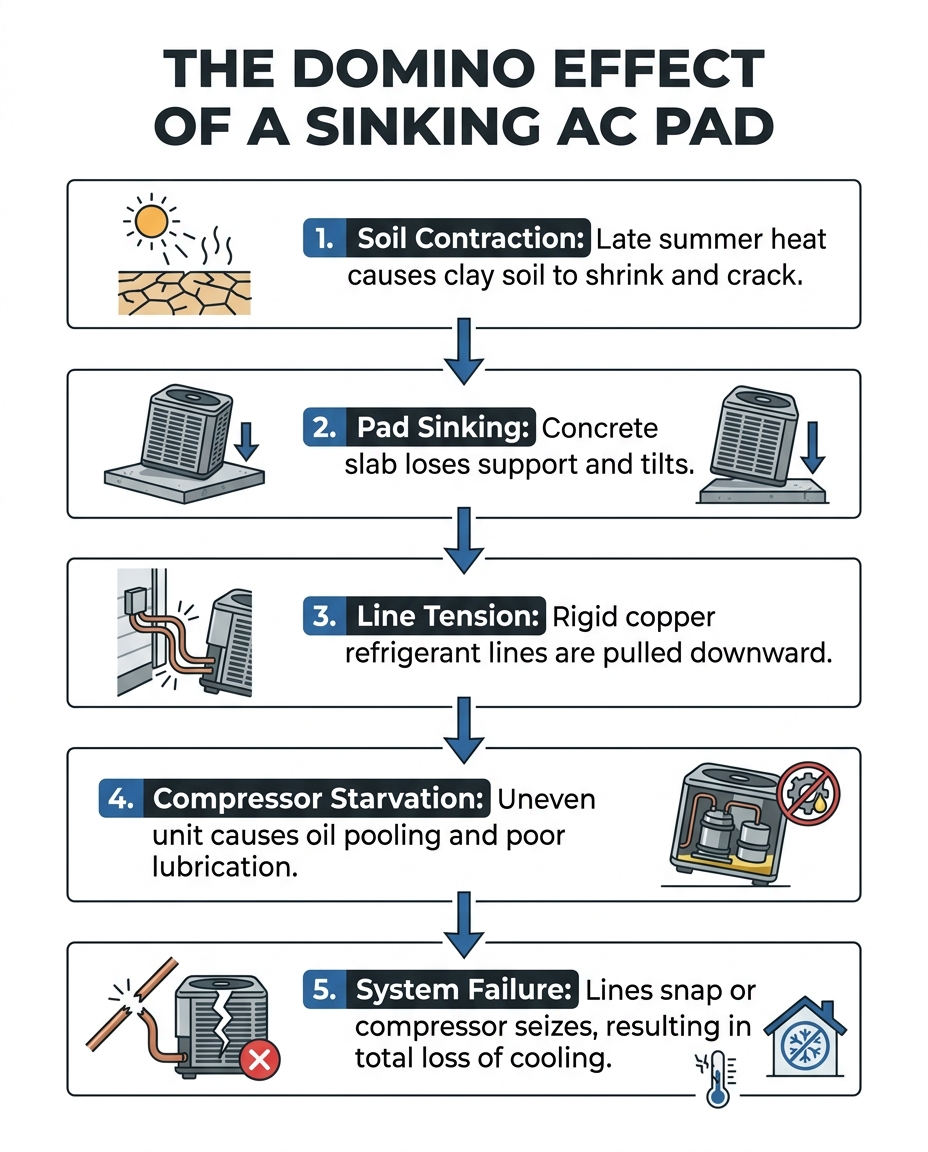
Many homeowners assume that a leaning condenser is just a natural part of a settling house. However, the heavy concrete pad beneath your outdoor unit requires a perfectly stable foundation to operate safely. During the intense heat of the year, specifically the August late-summer dry soil contraction, the earth beneath that pad changes dramatically. As the ground shrinks and cracks, the heavy concrete slab loses its uniform support. Because the condenser unit sitting on top of that pad weighs hundreds of pounds, gravity quickly takes over, pulling one side of the equipment down into the newly formed voids in the dirt.
The unseen risk: While you might only see a tilted box, the internal components and rigid connections attached to your home are suddenly subjected to immense physical stress. Addressing this tilt before catastrophic damage occurs to the system's vital connections is crucial. Ignoring a sinking AC pad allows the structural tension to build day by day, ultimately leading to a massive mechanical failure right when you need your cooling system the most.
The Mechanics of East Texas Clay: Why Your Equipment Shifts
To understand why your outdoor unit is tilting, you have to look at the ground beneath it. Conroe TX and surrounding East Texas areas are known for a specific type of earth called Vertisols. These clay-heavy soils are highly reactive to environmental changes. Unlike sandy or loamy soils that drain predictably, Vertisols act like a massive sponge that constantly changes size depending on the weather.
The specific climate of Montgomery County plays a massive role in this ongoing cycle. We experience incredibly wet springs followed by intense, dry late summers. This extreme weather whiplash creates a hostile environment for any heavy structure resting on the surface, including your air conditioning pad.
The Shrink-Swell Cycle of Local Terrain
The physical mechanics of our local soil create a relentless shrink-swell cycle. Here is exactly how moisture retention and evaporation destabilize your equipment:
• Spring expansion: During heavy spring rains, the clay soil absorbs massive amounts of water and physically inflates. This expansion lifts and softens the ground, pushing upward against the concrete pad.
• Summer contraction: When the moisture evaporates during late-summer heatwaves, the soil experiences severe physical volume loss. The ground contracts, pulls away from the concrete, and forms deep, visible cracks.
• Uneven settling: Because concrete pads bear the brunt of this uneven soil settling, the heavy condenser unit inevitably drops on the side where the soil has contracted the most.
• Spring (Heavy Rains) — Soil Moisture Level: High (Saturated) — Impact on Concrete AC Pad: Clay expands and softens, pushing upward and creating an unstable, spongy base.
• Late Summer (August) — Soil Moisture Level: Low (Severe Drought) — Impact on Concrete AC Pad: Clay contracts and cracks, removing support and causing the heavy pad to sink unevenly.
From Cosmetic Flaw to Mechanical Crisis: The Threat to Copper Lines
A sinking AC pad is not just an eyesore; it is an active threat to the structural integrity of your cooling system. Your outdoor condenser is connected to your indoor evaporator coil by a set of rigid copper refrigerant lines. These lines are designed to carry highly pressurized refrigerant back and forth, but they are not designed to stretch, bend, or support the weight of a falling air conditioner.
When the concrete pad sinks or tilts, it pulls the entire condenser unit downward. Because the copper lines are firmly anchored to the side of your brick or siding, this downward pull creates immense structural stress. The lines are pulled taut, acting like a tightrope holding up the leaning unit. Sometimes, the tension can even pull on the electrical whip, leading to a situation where you find your AC fan not working simply because the wiring connections have been physically strained to their breaking point.
One local homeowner reached out right before a severe spring thunderstorm when their system suddenly failed. A technician arrived as soon as it was safe, quickly diagnosing the issue and fixing the AC within an hour. While a rapid response saved their afternoon, sudden failures often trace back to underlying physical tension on the system's components that finally gave out.
The Anatomy of a Refrigerant Leak
When copper lines are placed under continuous downward tension, the metal begins to fail. Here is what happens behind the scenes:
• Micro-fissures develop: The immense stretching force creates microscopic cracks in the copper joints and bends.
• Refrigerant escapes: These tiny fissures allow pressurized refrigerant to slowly leak out into the atmosphere, causing a steady drop in your system's cooling capacity.
• Catastrophic snapping: If the pad sinks far enough, the copper line can suddenly snap completely. This results in a sudden, total loss of refrigerant and an immediate mechanical emergency.
Catching the tension early prevents these catastrophic mechanical emergencies. Line repairs, which require brazing new copper, pressure testing, pulling a deep vacuum, and recharging the system with expensive refrigerant, are significantly more intensive and invasive than preventative pad leveling.

Compressor Oil Starvation: The Silent Killer of Unlevel Units
Beyond the external threat to your copper lines, operating an air conditioner on an unlevel surface causes severe internal mechanical damage. Your AC compressor is the heart of the cooling system, responsible for pumping refrigerant through the lines. Much like a car engine, the compressor relies on a specific internal oil level to keep its rapidly moving metal parts fully lubricated.
When the August late-summer dry soil contraction causes your unit to tilt, the oil inside the compressor no longer sits level in the sump. Instead, the oil pools on the lower side of the tilted unit. This uneven distribution starves the critical moving parts on the higher side of the compressor of their necessary lubrication.
The symptoms of poor oil circulation: Operating an oil-starved compressor leads to massive increases in internal friction. You may notice the outdoor unit running hotter than usual or making harsh, grinding noises. This overheating and uneven compressor wear slowly grinds away the internal bearings and valves.
This internal stress often peaks during August when the system is running constantly to combat the extreme heat. The combination of non-stop operation and poor lubrication compounds the danger, rapidly accelerating premature system failure and significantly reducing the overall lifespan of your equipment.
Why Out-of-Town Contractors Miss Subtle Terrain Shifts
Diagnosing and addressing soil-related HVAC issues requires a deep understanding of local geography. Generic HVAC training teaches technicians how to measure refrigerant and check electrical components, but it often glosses over the specialized knowledge required to navigate regional soil challenges. An out-of-town technician might look at a leaning pad and treat it as a low-priority cosmetic issue rather than a structural hazard.
As a veteran-owned and family-run business local to the Conroe area, our team has firsthand experience navigating these unique Montgomery County terrain challenges. We know that the soil in Conroe TX and surrounding East Texas areas behaves differently than the soil just a few counties away. We understand the historical weather patterns and know exactly how the intense summer dry spells impact heavy outdoor equipment.
During a recent maintenance visit, one customer noted how extremely thorough the inspection was. The technician explained the possible problems related to their shifting yard and provided honest options so the family could decide what was best for their home. This level of personalized, honest assessment is vital. Relying on a contractor who understands the specific terrain of the community ensures that subtle warning signs are caught before they turn into expensive disasters across our local service areas.
Warning Signs Your Condenser Pad Needs Immediate Attention
Homeowners need to know how to spot a dangerous sinking AC pad before the copper lines snap. While you should never attempt to fix the tilt yourself, you can easily perform a routine inspection of your outdoor equipment. If you notice any of the following signs, it is time to call for professional AC repair in Conroe.
1. Visual check: Step back and look at the unit from a distance. Look for a noticeable tilt or check if one corner of the concrete pad is visibly sinking into the dirt. If the top of the unit is no longer parallel with the siding of your home, the pad has shifted.
2. Tension check: Carefully inspect the copper lines connecting the unit to your house. Do not touch or pull them. Look to see if they appear taut, stretched, or are pulling away from the exterior wall. If the insulation around the lines looks torn from stretching, the tension is already severe.
3. Auditory check: Listen to the unit while it is running. An unlevel unit often produces unusual vibrations, loud rattling, or harsher-than-normal operational noises caused by an unbalanced fan blade or an oil-starved compressor.
4. Operational check: Monitor your indoor comfort. A sudden drop in cooling efficiency or a system that runs constantly without satisfying the thermostat could indicate that a micro-leak has already formed due to line stress.
Professional Intervention: Securing Your System Safely
If you discover that your AC unit is leaning, you might be tempted to grab a shovel and fix it yourself. We strongly advise against any DIY fixes. Shoving gravel, sand, or wooden blocks under a live, heavy electrical unit is incredibly dangerous. The sudden jolt of lifting a 200-pound condenser by hand can instantly snap the taut copper lines, releasing pressurized refrigerant into your face and causing hundreds of dollars in mechanical damage.
Professionals know how to safely lift and stabilize the unit using specialized equipment without stressing the delicate connections. Because the August late-summer dry soil contraction creates deep, unpredictable voids in the clay, simply packing loose dirt under the pad is a temporary band-aid that will wash away during the next rainstorm.
The professional leveling process: A trained technician will carefully support the weight of the unit, re-level the base using proper structural materials, and thoroughly assess the copper lines for any existing micro-fissures. Once the unit is perfectly flat, they will ensure that proper compressor oil flow is restored and that the system is operating safely. This professional intervention provides the peace of mind that comes from a structurally sound, verified cooling system.
Protect Your Cooling System Before the Lines Snap
A leaning AC unit is a severe mechanical risk, not just a landscaping annoyance. When a sinking AC pad pulls your heavy equipment downward, it puts immense strain on your copper refrigerant lines and starves your compressor of vital lubricating oil. Addressing the issue early prevents catastrophic refrigerant loss and permanent compressor damage.
Do not wait for the lines to snap during the hottest week of the year. We highly encourage homeowners to have their outdoor units evaluated by a local expert who understands the unique behavior of East Texas clay. Reach out today to schedule a professional diagnostic and ensure your outdoor unit rests on a safe, solid foundation for seasons to come.
Frequently Asked Questions
Is it bad if my AC unit is not level?
Yes, an unlevel AC unit is a serious problem. It prevents the internal compressor oil from circulating properly, which leads to overheating and severe mechanical wear. Additionally, the tilt puts dangerous physical tension on the rigid copper refrigerant lines connected to your home.
Can an unlevel AC cause problems with cooling?
Absolutely. When the unit is tilted, the compressor struggles to pump refrigerant efficiently, which directly reduces your system's ability to cool your home. Furthermore, the structural stress can cause micro-leaks in the lines, allowing refrigerant to escape and drastically lowering your cooling capacity.
What happens if the AC condenser pad sinks into the ground?
If the pad sinks, it pulls the entire outdoor unit down with it. This creates a pulling force on the electrical wiring and copper pipes attached to your house. If left uncorrected, this tension will eventually snap the lines, resulting in a sudden and total system failure.
How much of a tilt is acceptable for an outdoor AC unit?
Air conditioning manufacturers design their equipment to sit perfectly flat. Even a slight tilt of just a few degrees can disrupt the flow of internal lubricants and put unnecessary strain on the fan motor bearings. If you can visibly see that the unit is leaning, it needs to be professionally leveled.
Can a sinking AC pad cause a Freon leak?
Yes, a sinking pad is a leading cause of refrigerant leaks. The downward force stretches the rigid copper lines and stresses the brazed joints. Over time, this constant stretching creates microscopic cracks where the pressurized refrigerant slowly escapes into the atmosphere.
Why does the soil around my AC unit crack and sink in the summer?
East Texas is home to expansive clay soils that react dramatically to moisture levels. During the intense heat of late summer, the soil loses its moisture, causing it to shrink in volume and crack deeply. As the soil contracts, it removes the structural support beneath your concrete pad, causing it to sink unevenly.