


The Heating Dilemma: Upgrading Your System for Unpredictable Cold Snaps
At Carl's Quality Cooling and Heating LLC, a common myth we hear from local homeowners is that electric heating systems simply cannot handle a true cold snap, leaving you shivering when the temperature drops. If you are researching a Gas Furnace vs. Electric Heat Pump: Which Makes Sense for Mild Texas Winters?, you likely share this exact concern. It is entirely understandable to feel anxious about upgrading your heating system ahead of the unpredictable Southeast Texas winter. You might be staring down an aging system right now, debating whether to stick with the familiar, intense heat blast of a traditional gas unit or switch to the modern, year-round efficiency of an electric alternative. The fear that a non-gas system will fail you during a sudden freeze is exactly what keeps many people clinging to older, less efficient technology.
Before the cold weather officially arrives, you need to understand how these two distinct technologies actually perform when the thermometer unexpectedly plummets. Making this choice requires looking past the myths and focusing on how your specific home operates during our short heating season. If you are ready to explore your options and find the perfect fit for your home, learn more about our comprehensive HVAC services.
Addressing the Fear of the Freeze
In our years of servicing HVAC systems across Conroe, we have found that the concrete problem for many homeowners is deciding whether to replace an aging gas furnace with another gas unit or make the leap to electric heat. The decision point usually comes down to trusting the familiar intense heat of gas versus embracing the steady, highly efficient performance of a heat pump. While freezing temperatures are rare in our region, they absolutely do happen. When they do, you want total confidence that your heating system will keep your family safe and warm. However, assuming that only combustion can conquer the cold is an outdated way of thinking. Modern electric systems are engineered specifically to handle the exact weather patterns we experience, providing reliable warmth without the heavy energy consumption of older models.
Decoding the Microclimate: Heating Demands in Conroe and Montgomery County
To make an informed decision, you have to look closely at the specific weather patterns in Conroe and Montgomery County. Our technicians know firsthand that we do not experience the months-long, deep freezes common in northern states like Minnesota or Illinois. Instead, our average winter lows typically hover in the 40s (Fahrenheit). This specific temperature range is incredibly important when evaluating heating equipment because it represents the absolute peak efficiency zone for modern electric heat transfer systems. When the outdoor air is in the 40s, there is still a massive amount of ambient heat energy available in the atmosphere.
In northern climates where temperatures stay below freezing for weeks on end, traditional gas furnaces are often the most viable option for residential heating. The intense combustion of gas is necessary to overcome the extreme, sustained cold. However, in Southeast Texas, our heating season is relatively short and generally mild. Installing a massive, high-capacity gas furnace here is often like buying a heavy-duty snowplow to clear a dusting of frost. It works, but it is massive overkill for the daily reality of our climate. If you want a system tailored to our actual weather data, you need to consult with local experts who understand these demands. You can rely on our professional heating services to guide you through the process.
Key climate factors our team considers:
• Short heating duration: Our systems sit idle for much of the year, making year-round utility a major bonus.
• Mild average lows: Temperatures mostly stay above freezing, allowing electric systems to operate at maximum efficiency.
• Occasional sudden drops: When cold snaps do occur, they are usually brief, meaning your system needs to recover temperatures effectively but does not need to run at maximum output for months.
Comfort Differences: The Intense Blast vs. Steady Warmth
One of the biggest adjustments we see homeowners face when switching heating technologies is the physical sensation of the air coming out of the vents. The way a system delivers warmth dramatically impacts your daily comfort, and understanding this difference is crucial before making a final choice.
• Air Temperature at Register — Traditional Gas Furnace: Very hot (often 120°F or higher) — Modern Electric Heat Pump: Warm and steady (typically 90°F to 100°F)
• Heating Cycle Length — Traditional Gas Furnace: Short, intense bursts of heat — Modern Electric Heat Pump: Longer, continuous cycles
• Temperature Consistency — Traditional Gas Furnace: Can cause noticeable temperature swings — Modern Electric Heat Pump: Maintains very even, consistent room temperatures
• Best Local Application — Traditional Gas Furnace: Rapid recovery during a rare, deep freeze — Modern Electric Heat Pump: Steady, highly efficient warmth all winter long
The Anatomy of Gas Heating
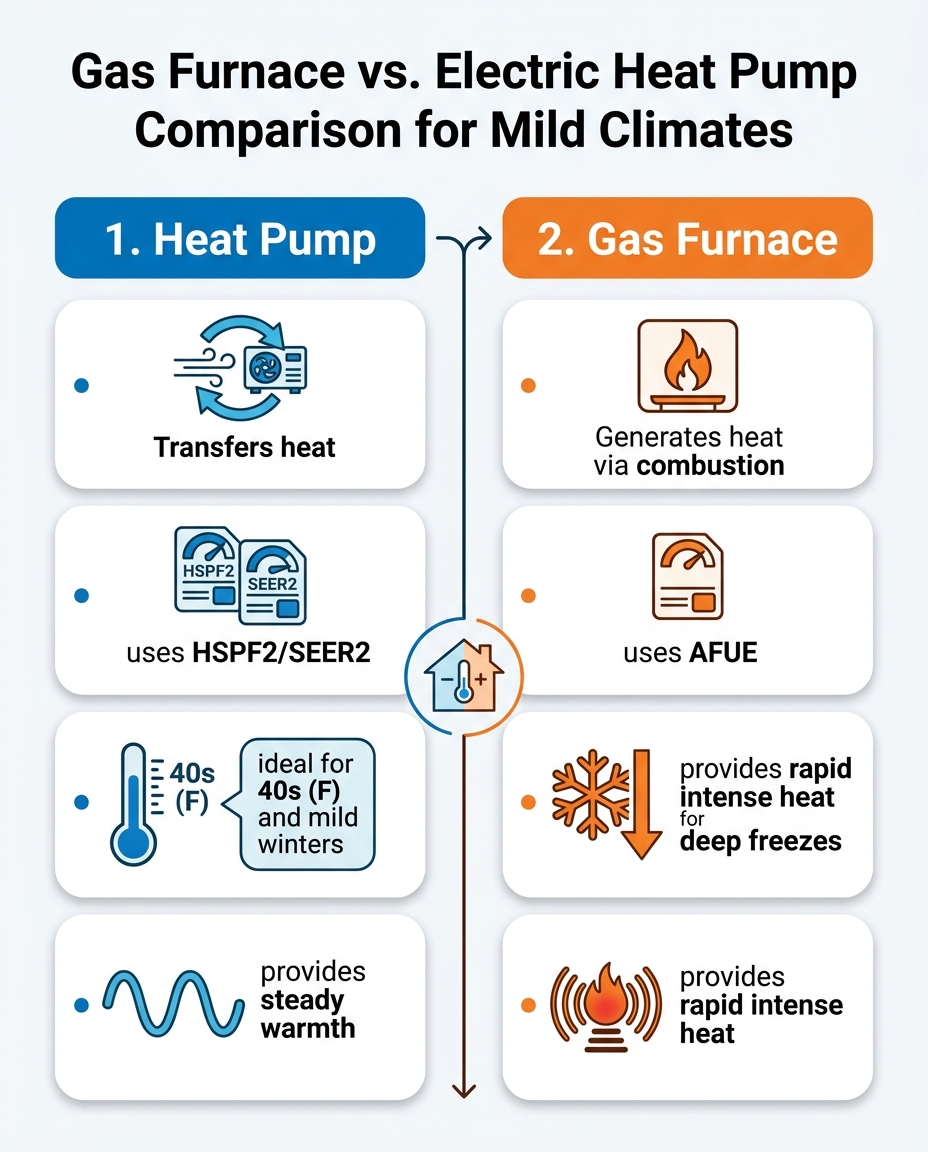
A traditional furnace generates heat through the process of combustion. It burns fuel to create a flame, which heats up a metal heat exchanger. The blower motor then forces air over this extremely hot metal, sending an intense blast of hot air through your ductwork. This method is exceptionally good at rapid temperature recovery. If you turn your thermostat up by ten degrees, a gas unit will blast hot air into the rooms and satisfy that demand very quickly. However, this intense heat can sometimes lead to temperature swings, where the house feels very hot while the system is running, and then cools down noticeably before the next cycle begins.
The Mechanics of Heat Transfer
Electric heat pumps do not generate heat; they move it. Using a specialized refrigerant cycle, they extract existing heat energy from the outside air and transfer it inside your home. Because they are moving heat rather than creating it, they can deliver up to three times more heat energy to your home than the electrical energy they consume. The resulting air coming from your vents will feel warm, but not scorching hot like a gas unit. Instead of short, intense blasts, these systems run longer, gentler cycles. This provides a steady, even warmth that eliminates cold spots and maintains a much more consistent indoor temperature throughout the day. When comparing a Gas Furnace vs. Electric Heat Pump for Mild Texas Winters, this steady warmth is often exactly what our customers prefer once they experience it.

Evaluating Efficiency Metrics and Operational Performance
When you are comparing a Gas Furnace vs. Electric Heat Pump for Mild Texas Winters, understanding how the industry measures efficiency is essential. Because these systems operate using completely different technologies, you cannot simply compare them on a one-to-one scale. Instead, you need to look at the specific performance metrics assigned to each type of equipment.
1. AFUE (Annual Fuel Utilization Efficiency): This is the standard measurement for gas furnaces. It tells you how much of the fuel consumed is actually converted into usable heat for your home. For example, an 80% AFUE rating means that 80% of the fuel becomes heat, while the remaining 20% escapes as exhaust. High-efficiency models can reach up to 98% AFUE, minimizing energy waste significantly.
2. HSPF2 (Heating Seasonal Performance Factor): This metric applies to heat pumps and measures their total heating output over a typical heating season divided by the total electrical energy consumed. The "2" indicates the newest, most rigorous testing standards. A higher HSPF2 rating means a more efficient unit, translating to less energy consumed during the winter months.
3. Cold-Weather Operation limits: Older electric models used to struggle when temperatures approached freezing. Today, modern units equipped with variable-speed compressors operate efficiently in temperatures well below freezing, easily handling the occasional cold snaps we see in our region without relying heavily on backup heat strips.
The financial benefit of high efficiency: Upgrading to highly efficient equipment often qualifies you for various incentives. While specific amounts vary, general energy rebates from local utility companies or federal tax credits may apply to qualifying high-efficiency installations. We always advise our customers to verify current programs with their utility provider or a tax professional to maximize their return on investment.
The Year-Round Advantage: Factoring in Summer Humidity
In Conroe and Montgomery County, the conversation about heating cannot exist in a vacuum. As local experts who spend all summer repairing ACs, we know firsthand that we endure long, hot, and intensely humid summers. Because of this, the cooling performance of your system often outweighs its heating capabilities in terms of year-round comfort and energy usage. This is where the dual functionality of electric systems truly shines.
Most homeowners do not realize that a heat pump is actually just a high-performance air conditioner with a reversing valve. During the summer, it operates exactly like a traditional AC, absorbing heat from inside your home and pumping it outside. Because these units are engineered to be highly efficient year-round, their cooling efficiency (measured by the SEER2 rating) is typically excellent. When you invest in one of these systems, you are not just buying a heater; you are upgrading your entire summer cooling infrastructure at the same time.
Furthermore, these systems excel at dehumidification. Managing indoor humidity is half the battle when trying to stay comfortable during a Southeast Texas summer. Variable-speed models run at lower capacities for longer periods, constantly pulling moisture out of the indoor air without overcooling the space. This continuous dehumidification makes your home feel cooler at higher thermostat settings. To dive deeper into why this dual-action performance is so valuable, read more about why heat pumps are ideal for hot, humid climates.
Making the Right Choice Without the Pressure
Choosing a new HVAC system involves navigating multiple options, brands, and configurations, which can quickly become overwhelming. You need a professional who will patiently explain the pros and cons of different setups based on your specific home layout, existing ductwork, and long-term comfort goals. Working with our veteran-owned, family-run company means you receive honest, straight-shooting advice designed to prioritize your long-term comfort over a quick upsell.
Thoroughness matters: We believe in investigating every detail before making a recommendation. For example, one local customer recently dealt with a persistent refrigerant leak that other technicians had completely missed. Our team at Carl's Quality Cooling and Heating LLC took the time to thoroughly investigate the system, successfully identified the hidden source of the leak, and completed the job properly. We apply that exact same meticulous attention to detail when helping you select a new heating system. We look at your home's insulation, the condition of your ductwork, and your daily comfort preferences to ensure the equipment matches your lifestyle.
Whether you lean toward the familiar power of combustion or the modern efficiency of heat transfer, the final decision should be made with confidence, not pressure. Once you have a clear understanding of the right equipment for your home, you can also explore flexible HVAC financing options to make the upgrade as smooth and stress-free as possible.
Why Early Fall is the Optimal Time for System Replacements
Timing your system replacement is almost as important as choosing the equipment itself. Waiting until your aging system completely fails is a recipe for stress, limited choices, and uncomfortable nights. We recently helped a local homeowner who experienced a complete system failure late at night during a harsh winter cold snap. While our technicians worked around the clock to get their heater up and running quickly, relying on emergency repairs is not the ideal way to handle your home's comfort.
September and early fall provide the absolute perfect window for pre-heating season prep. Taking action before the cold weather arrives gives you several distinct advantages:
• Ample time to compare: You can carefully weigh the benefits of different technologies without the pressure of a freezing house.
• Better scheduling flexibility: You avoid the massive local HVAC scheduling backlogs that inevitably occur the morning after the first major cold snap hits.
• Thorough installation: Pre-season preparation allows our technicians to evaluate your ductwork and home layout thoroughly, ensuring the new system is perfectly calibrated for peak performance.
Proactive homeowners who schedule their evaluations in the early fall enjoy peace of mind knowing their home is fully prepared for whatever unpredictable weather the Texas winter decides to deliver.
Frequently Asked Questions About Texas Heating Systems
Are heat pumps good for Texas winters?
Yes, our team finds they are exceptionally effective for Texas winters. Because our average winter temperatures mostly stay in the 40s, these systems operate in their absolute peak efficiency zone. They easily extract ambient heat from the mild winter air, providing consistent warmth while consuming significantly less energy than traditional combustion methods.
Is a gas furnace better than an electric heat pump?
Neither system is universally better; the right choice depends entirely on your home's infrastructure and your comfort preferences. Gas units are excellent for delivering rapid, intense heat during deep freezes, while electric units provide steady, highly efficient warmth and double as high-performance air conditioners during the summer.
At what temperature does a heat pump become inefficient in Texas?
Modern units equipped with variable-speed technology maintain high efficiency well below freezing. While older models used to struggle when temperatures dropped into the 30s, today's advanced systems can efficiently heat your home even during the rare, intense cold snaps we occasionally experience in Southeast Texas.
Do I need a furnace if I have a heat pump in Texas?
In most cases, you do not need a separate furnace. A standalone electric system is more than capable of handling the mild winters in Conroe and Montgomery County. However, some homeowners prefer a dual-fuel setup for added peace of mind during extreme weather events.
What is a dual-fuel or hybrid heating system?
A dual-fuel system combines an electric heat pump with a gas furnace. The system uses the highly efficient electric unit for the vast majority of the mild winter, and only switches over to the gas furnace if the outdoor temperature drops to an extreme low, giving you the best of both technologies.
Secure Your Winter Comfort with Expert Guidance
When deciding on a Gas Furnace vs. Electric Heat Pump: Which Makes Sense for Mild Texas Winters?, the most important takeaway is that both systems have distinct merits, but our mild local climate makes modern electric heat transfer incredibly efficient. A clear breakdown of comfort differences—from the intense blast of combustion to the steady, even warmth of heat transfer—allows you to make a choice that perfectly aligns with your home's needs.
Do not wait for the first freezing night to discover your aging system is no longer up to the task. Early fall and pre-heating season prep is the key to avoiding the winter rush. We encourage you to schedule a professional evaluation with Carl's Quality Cooling and Heating LLC today so you can weigh your options, understand the efficiency benefits tailored specifically to Southeast Texas, and make an informed, stress-free choice before the cold weather arrives.


