
The Central AC vs Ductless Mini Split Comparison Every Homeowner Needs
The central ac vs ductless mini split comparison comes down to a few key factors: whether your home has existing ductwork, how many rooms you need to cool, and how much control you want over your comfort.
| Factor | Central AC | Ductless Mini Split |
|---|---|---|
| Requires ductwork | Yes | No |
| Zoning control | Limited (add-on needed) | Built-in, room by room |
| Best for | Larger homes with existing ducts | Older homes, additions, targeted cooling |
| Energy efficiency | Up to 21 SEER2 (high-end) | Up to 38+ SEER2 (high-end) |
| Installation complexity | High (if no ducts exist) | Low (small wall penetration only) |
| Heating capability | Requires separate furnace | Built-in heat pump option |
| Air filtration | Superior whole-home filtration | Good, but room-level only |
If you already have solid ductwork in good condition, central AC is a proven, cost-effective solution for whole-home cooling. If your home lacks ducts — or you need precise room-by-room comfort — a ductless mini split is hard to beat.
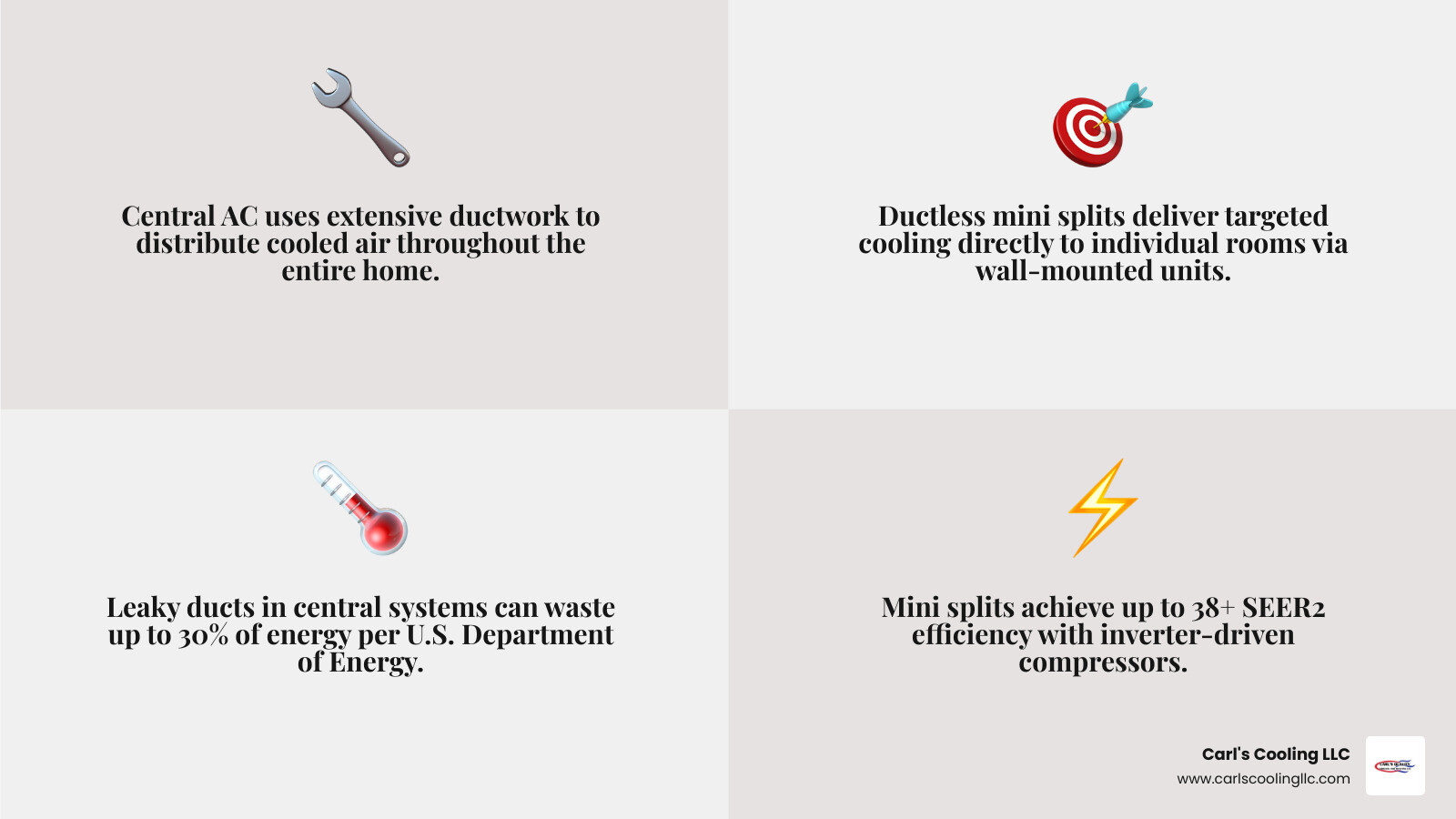
Choosing the wrong system for your home can mean wasted energy, uneven temperatures, and higher bills for years to come. According to the U.S. Department of Energy, leaky ducts alone can reduce a central AC system's efficiency by up to 30%. That's a significant hit that most homeowners never see coming.
In Texas, where your cooling system runs hard for most of the year, getting this decision right matters even more. Whether you're retrofitting an older home in Conroe, adding a bonus room in Montgomery, or replacing an aging system across Montgomery County, the choice between these two systems has real, long-term consequences.
This guide breaks it all down — clearly and without the sales pitch — so you can make a confident decision for your home.
Understanding the Mechanics: How Each System Cools Your Home

To understand the central ac vs ductless mini split comparison, we first have to look at how they move heat. Both systems rely on the same basic refrigeration cycle: they use a chemical refrigerant to absorb heat from inside your house and dump it outside.
A central AC system is often called a "split system" because it has two main parts. There is an outdoor condenser unit and an indoor evaporator coil, usually tucked away in a closet or attic as part of an air handler or furnace. The system cools the air at that one central point and then uses a powerful fan to push that chilled air through a network of ducts to every room in the house.
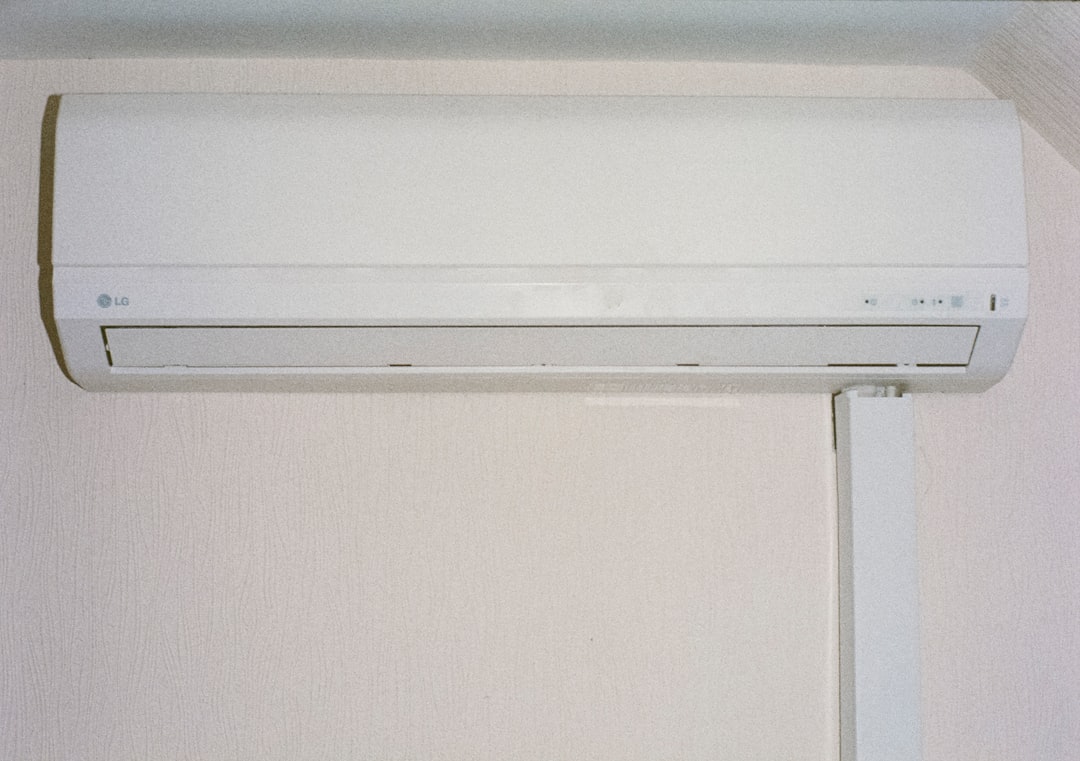
Ductless mini splits work differently. As the name suggests, they skip the ducts entirely. Instead of one central indoor unit, you have small, sleek air handlers mounted directly on the walls of the rooms you want to cool. These indoor units are connected to the outdoor compressor by a small bundle of refrigerant lines and power cables. Because the cooling happens right there in the room, there is no need for bulky ductwork. This direct delivery is one of the primary Ductless Mini Split AC Benefits that homeowners in areas like Spring and Tomball appreciate, as it eliminates the "middleman" of ductwork.
Energy Efficiency and SEER2 Ratings in 2026
When we talk about efficiency in April 2026, we are looking at SEER2 (Seasonal Energy Efficiency Ratio 2) ratings. These ratings tell us how much cooling a system provides for every watt of electricity it uses. In the central ac vs ductless mini split comparison, ductless systems almost always come out on top.
Why the big gap? It mostly comes down to two things: duct loss and compressor technology.
Standard central AC systems often use single-stage or two-stage compressors that essentially turn on and off like a light switch. Ductless mini splits, however, use advanced inverter technology. Think of an inverter like a dimmer switch for your AC. Instead of blasting at 100% and then shutting off, the variable-speed compressor slows down or speeds up to maintain a perfectly steady temperature. This "part-load operation" is incredibly efficient because the system rarely has to work at full capacity.
Furthermore, central systems lose a lot of energy through the ducts. Even in a well-insulated home in The Woodlands, cool air can warm up as it travels through a hot attic. Ductless systems avoid this "thermal loss" entirely. While premium central AC units in 2026 can reach ratings around 21 SEER2, top-tier ductless mini splits are pushing 35 to 38+ SEER2. Understanding The Benefits of Efficient Mini Split HVAC Systems means recognizing that these higher ratings translate directly to lower monthly utility bills.
A Detailed central ac vs ductless mini split comparison
Choosing between these two isn't just about the technology; it’s about how they fit into your daily life.
| Feature | Central AC | Ductless Mini Split |
|---|---|---|
| Aesthetics | Hidden; only small floor or ceiling vents are visible. | Visible indoor units mounted on walls or ceilings. |
| Noise Level | Indoor noise comes from rushing air; outdoor unit can be loud. | Extremely quiet; indoor units often operate at 19-26 dB (softer than a whisper). |
| Longevity | Typically 15–20 years. | Can last 20 years or more with meticulous care. |
| Installation Speed | Can take a week or more if installing new ducts. | Often completed in a single day with minimal mess. |
One of the biggest hurdles for central AC in older Texas homes is the ductwork requirement. If your home wasn't built with ducts, adding them can be an invasive, expensive nightmare that involves cutting into walls and losing closet space. Ductless AC Installation is far simpler, requiring only a small three-inch hole in the wall to connect the indoor and outdoor components.
Zoning Control in a central ac vs ductless mini split comparison
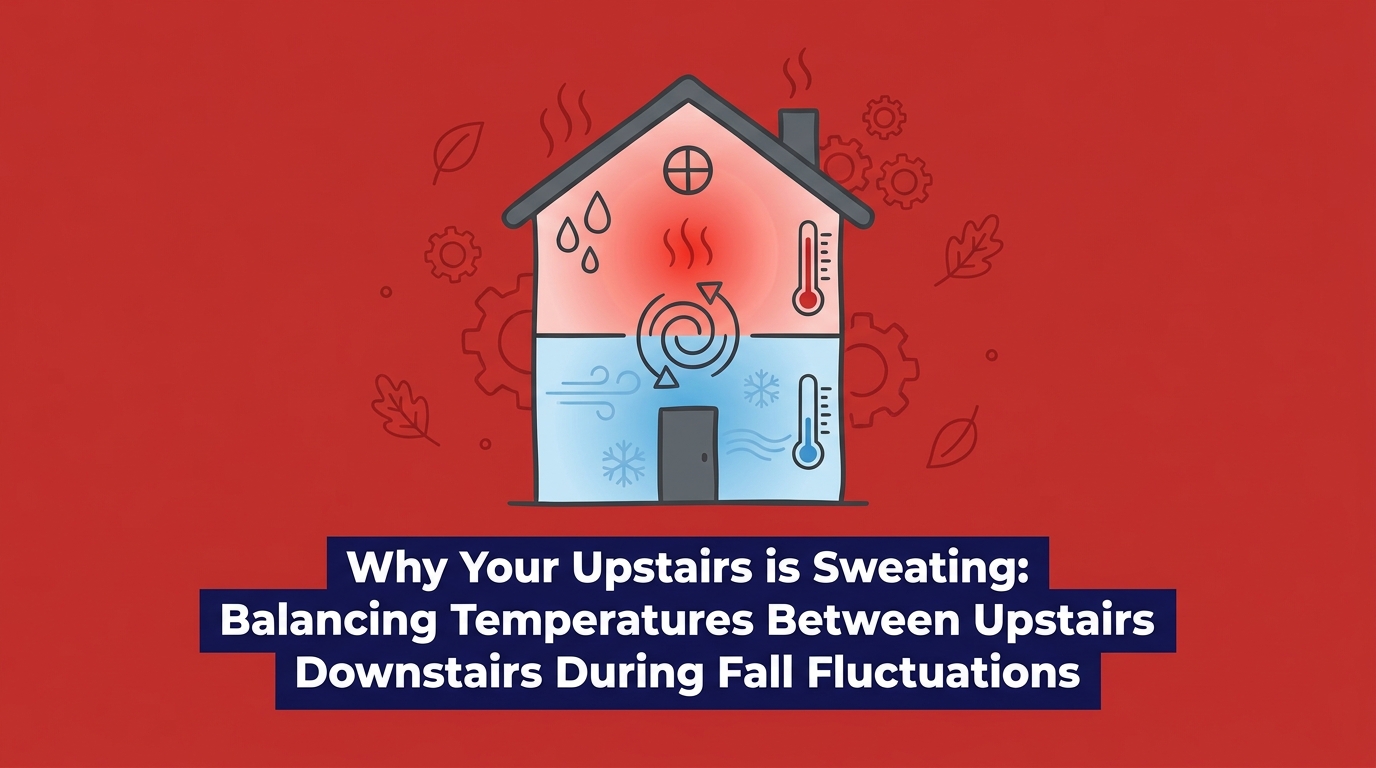
Have you ever had a "thermostat war" in your house? Maybe the upstairs bedroom is sweltering while the living room is a walk-in freezer. This is where the central ac vs ductless mini split comparison gets interesting.
Central AC usually relies on one thermostat to control the whole house. While you can add "zoning" to a central system using motorized dampers in the ducts, it is often a complex and imperfect fix. Ductless mini splits provide built-in zoning by default. Each indoor unit has its own thermostat. If you are working in your home office in Jersey Village, you can cool just that room to 72 degrees while leaving the rest of the house at 78. This room-by-room comfort is a major reason Why Choose Ductless AC Systems for families with different temperature preferences.
Installation Flexibility: central ac vs ductless mini split comparison
We see many homeowners in Conroe who are torn because they love the look of their home but hate the heat. Ductless AC Conroe TX services are popular because they offer a way to modernize a home's comfort without a major renovation.
Central AC is the "gold standard" for new construction because the ducts can be designed into the skeleton of the house. However, for a retrofit, ductless is much more flexible. The indoor units can be mounted on walls, recessed into ceilings, or even floor-mounted. This flexibility allows us to bring high-efficiency cooling to spaces where traditional ducts simply won't fit.
Choosing the Right System for Your Texas Home Layout
The layout of your home is often the deciding factor in the central ac vs ductless mini split comparison.
Older Home Retrofits:Many historic homes in our area were built before central air was common. These homes often have beautiful plaster walls or unique architectural details that you wouldn't want to disturb. Mini Splits Older Home Cooling Solutions allow us to preserve that history while providing modern relief from the Texas humidity.
Room Additions and Conversions:If you’ve recently finished a garage in The Woodlands or added a sunroom, your existing central AC might not have the capacity to handle the extra load. Instead of replacing your entire central system with a larger one and trying to tie in new ductwork, a single-zone mini split is often the smarter move. Ductless AC The Woodlands TX is an ideal solution for these "problem zones."
Open Floor Plans vs. Compartmentalized Layouts:Central AC excels in large, open-concept homes where air can circulate freely. However, in multi-story homes where the upstairs is always five degrees warmer than the downstairs, a multi-zone mini split can solve that imbalance far more effectively than a single central unit ever could.
Maintenance, Air Quality, and Long-Term Performance
Maintenance is non-negotiable for both systems if you want them to last. However, the tasks are slightly different.
For central AC, the biggest maintenance items are changing the central filter every 1–3 months and ensuring the ductwork stays sealed and clean. Leaky ducts don't just waste energy; they can also pull in dust, pollen, and attic insulation, blowing it right into your living space.
Ductless systems require a bit more "hands-on" attention from the homeowner but are easier to manage overall. You’ll need to follow a Ductless Mini Split Maintenance Guide, which includes rinsing the small filters inside each indoor unit every few weeks. Because there are no ducts to collect dust and mold, many people find that mini splits actually offer better localized air quality.
Our Ductless AC Benefits Ultimate Guide highlights that because these systems don't move air through hidden, often dirty ducts, they are excellent for people with severe allergies. Regardless of which system you choose, professional annual tune-ups are essential to check refrigerant levels and ensure the condensate drainage lines aren't clogged—a common issue in our humid Texas climate.
Frequently Asked Questions about HVAC Comparisons
Which system is better for improving indoor air quality?
This is a bit of a toss-up. Central AC systems allow for much more robust filtration. You can install high-end HEPA filters or whole-home air purifiers and UV lights directly into the ductwork. This cleans the air for the entire house at once.
Ductless systems have smaller filters that are great for catching dust and pet hair in a specific room, but they can't accommodate the heavy-duty HEPA filters found in ducted systems. If you're looking for a deep dive into local options, our Ductless AC Ductless Guide Conroe explains how to maximize air quality with these units.
How do mini splits handle heating compared to central systems?
In Texas, we don't need massive furnaces, but we do need reliable heat for those winter cold snaps. Most mini splits are actually "heat pumps." This means they can reverse the cooling process to pull heat from the outside air and move it indoors.
Modern heat pumps are incredibly efficient. Our Mini Split Heat Pumps Cypress Guide notes that high-quality systems can now provide effective heat even when temperatures drop well below freezing. Central systems usually rely on an electric or gas furnace, which can be more expensive to run than a heat pump during a mild Texas winter.
Can I use a mini split to supplement my existing central AC?
Absolutely! This is a very common "hybrid" approach. If you have a central system that works fine for most of the house but leaves your master bedroom or a new addition in Waters Edge uncomfortable, you don't have to start over. Installing a Ductless AC System in Waters Edge TX just for that specific area allows you to stay comfortable without overworking your main unit.
Conclusion
At the end of the day, the central ac vs ductless mini split comparison isn't about finding a "winner." It's about finding the right fit for your specific Texas home.
If you have a large, newer home with existing ducts, upgrading to a high-efficiency central AC is likely your best path. But if you're dealing with hot spots, high energy bills, a historic home, or a new addition, the flexibility and efficiency of a mini split are hard to ignore.
At Carl's Cooling LLC, we specialize in helping our neighbors across Conroe, Montgomery, The Woodlands, and the surrounding areas navigate these choices. We don't believe in one-size-fits-all cooling. Whether you are interested in Ductless Mini Split AC Systems or traditional central air, we are here to provide the expert, honest guidance you need to keep your family comfortable all year long.
Ready to settle the debate for your own home? Give us a call for a personalized comfort assessment today.