
The Challenge of Unpredictable September Weather in Two-Story Homes
Summer in Conroe is finally starting to loosen its grip, but balancing temperatures between upstairs and downstairs during fall fluctuations remains a massive headache for local homeowners. During the September early fall transition in Southeast Texas, it is completely normal to wake up to a crisp 65 degrees, only to see the afternoon sun push the thermometer right back into the 90s. This 20-plus degree daily temperature swing creates a frustrating dilemma for anyone living in a two-story house.
By late morning, your downstairs thermostat is satisfied and shuts the system down, leaving your upper floor to bake in the afternoon heat. If you are tired of living in a home where the living room feels like an icebox while the primary bedroom feels like a sauna, you are not alone. At Carl's Quality Cooling and Heating LLC, we see this pattern constantly during early fall service calls. Professional heating services and safe airflow management can solve this seasonal problem without resorting to risky shortcuts that damage your equipment.
The Mechanics of Thermal Stratification During the Fall Transition
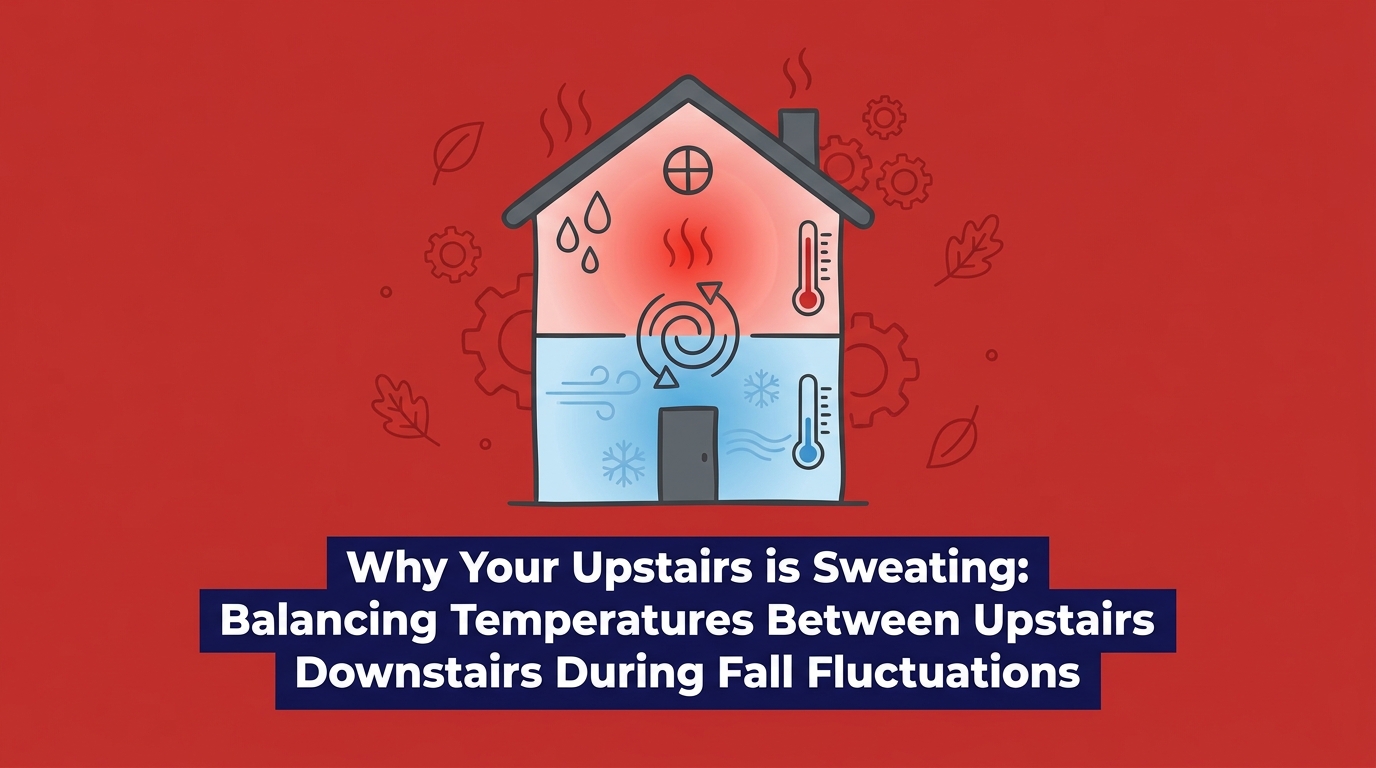
To fix a sweating upstairs, you first need to understand the invisible physics at play inside your house. The primary culprit is a scientific principle called thermal stratification. In simple terms, warm air is less dense than cold air, which means heat naturally rises to the highest point in an enclosed space.
In two-story homes in Conroe and Montgomery County, this creates a literal divide in your indoor climate. Our team frequently responds to calls where the cool air supplied by the air conditioner is heavy, cascading down staircases and settling on the first floor. Meanwhile, the heat generated by the afternoon sun beating down on the roof gets trapped on the second floor, warming the ceilings and walls of upstairs bedrooms.
How Your Thermostat Gets Tricked
Most homes operate on a standard, single-zone HVAC system. This means one thermostat—usually located in a downstairs hallway or living room—controls the temperature for the entire house. During the early fall, the downstairs cools off quickly because of the pleasant morning temperatures. The thermostat reads a comfortable 72 degrees and tells the system to shut off.
Unfortunately, the thermostat has no idea that the upstairs bedrooms are currently sitting at 80 degrees. The system stops running right when the second floor needs it the most. Without active air circulation, that heat simply pools near the ceiling, leaving you frustrated and uncomfortable by the time you head upstairs to sleep.
Why Closing Downstairs Vents is a Dangerous Mistake
When faced with a freezing downstairs and a roasting upstairs, almost every homeowner has the exact same instinct: close the vents on the first floor to force the cold air upstairs. It seems like logical problem-solving, but doing this during the September early fall transition in Southeast Texas is one of the most dangerous mistakes you can make for your HVAC equipment.
The Hidden Danger of High Static Pressure
Your heating and cooling system is carefully calibrated to move a specific volume of air. When you close supply vents, you are not redirecting the air; you are blocking it. Think of it like putting your thumb over the end of a garden hose. The water does not just safely disappear—the pressure builds up inside the hose.
In your ductwork, this buildup is called static pressure. As a veteran-owned company, our team at Carl's Quality Cooling and Heating LLC believes in doing things the right way with precise, disciplined airflow management, rather than taking harmful shortcuts. Closing vents forces your blower motor to work twice as hard against that trapped pressure.
The Domino Effect of Restricted Airflow
The mechanical breakdown: When air cannot escape the ductwork, the entire system suffers a chain reaction of failures. Modern HVAC systems are designed for balanced, open airflow. Taking shortcuts by closing vents will only lead to expensive emergency repairs.
• Open Vents (Recommended) — Airflow Dynamics: Air moves freely, returning to the equipment at the correct volume. — Equipment Impact: Normal static pressure; blower motor operates efficiently.
• Closed Vents (Dangerous) — Airflow Dynamics: Air is trapped in ductwork, unable to escape into the room. — Equipment Impact: High static pressure; motor overworks, risk of frozen coils and cracked heat exchangers.
Safe Airflow Management: Strategic Thermostat Settings
Instead of blocking vents, the goal is to safely mix the air throughout the house. You can achieve this by making a few simple, strategic adjustments to how your system operates. Here are the best seasonal steps we recommend for two-story homes in Conroe and Montgomery County to balance temperatures safely.
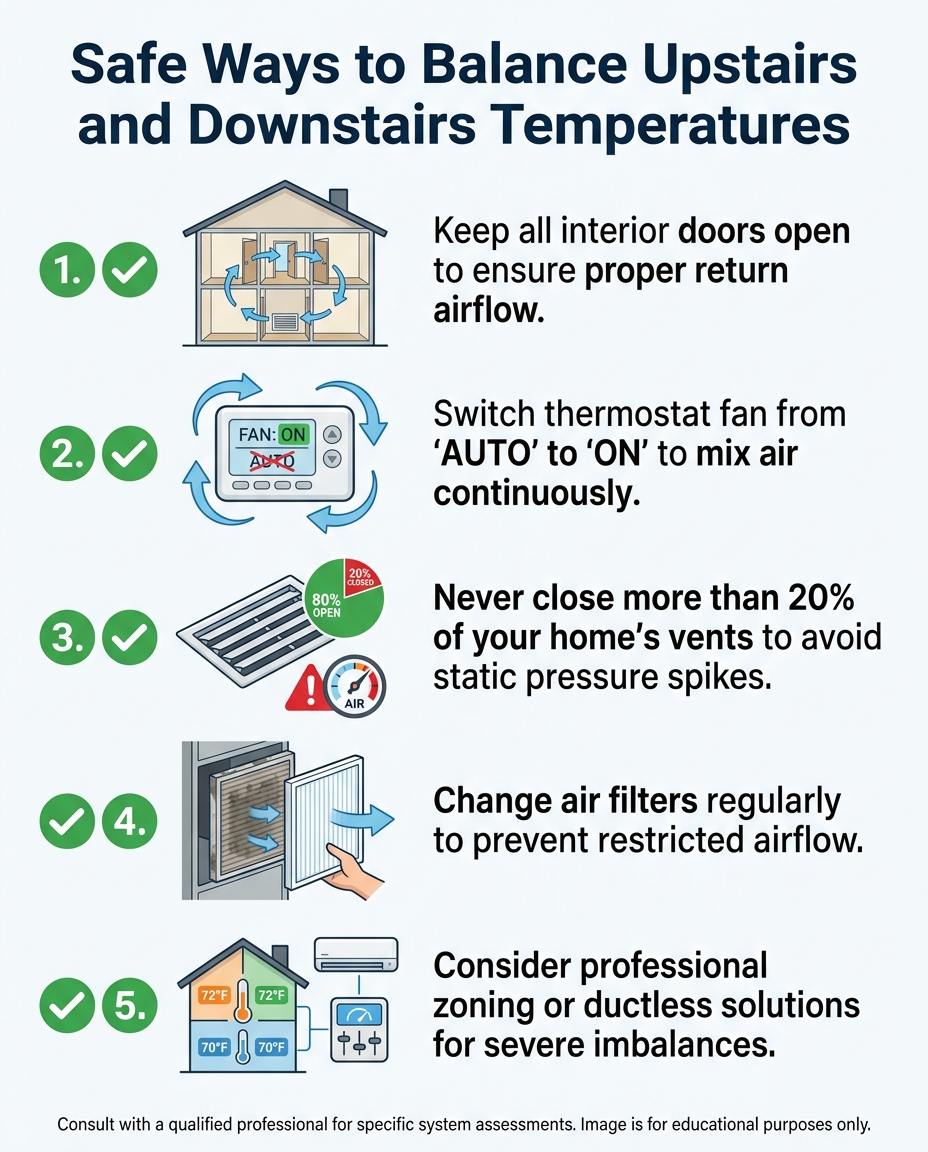
1. Switch your thermostat fan from "AUTO" to "ON": This is the single most effective change you can make. In the "AUTO" setting, the fan only runs when the system is actively cooling or heating. By switching it to "ON," the fan runs continuously, pulling the heavy cold air from downstairs and mixing it with the trapped heat upstairs. This continuous circulation evens out the temperature differential between floors.
2. Keep all interior doors open: Your HVAC system relies on return vents to pull stagnant air back to the equipment for conditioning. If you close bedroom doors, you trap the air inside those rooms, making them feel stuffy and hot. Leaving doors open promotes healthy, continuous return airflow.
3. Check for blocked return grilles: Ensure that furniture, rugs, or curtains are not obstructing the large return vents in your hallways or walls. The system needs to breathe freely to circulate air effectively.
4. Monitor the results: Give the continuous fan setting 24 to 48 hours to fully mix the air in your home. If you notice a significant improvement, you have solved the problem safely.
If these basic thermostat adjustments fail to resolve the hot spots, it may be time to evaluate your system's overall cooling capacity. Professional air conditioning services can determine if your equipment is properly sized for your home's layout.

Advanced Solutions: Zoning Systems and Targeted Cooling
Some homes simply have structural designs that make basic airflow balancing impossible. If your home has vaulted ceilings, large upstairs windows facing the afternoon sun, or undersized ductwork, you will need advanced solutions to achieve true comfort in two-story homes in Conroe and Montgomery County.
Professional HVAC Zoning Systems
An HVAC zoning system divides your home into separate climate zones, typically one for the downstairs and one for the upstairs. Licensed professionals install mechanical dampers inside your ductwork. These dampers open and close automatically to direct conditioned air precisely where it is needed. Each zone gets its own thermostat, allowing the upstairs to call for cooling even if the downstairs is already comfortable. Remember that duct modifications require licensed professionals to maintain proper static pressure safely.
Targeted Relief with Ductless Technology
If only one or two upstairs bedrooms are stubbornly hot, expanding your central ductwork might not be the most efficient choice. Instead, ductless mini-split solutions for targeted cooling offer incredible precision. These compact units mount directly on the wall and provide independent temperature control for specific rooms. They operate separately from your main central air system, meaning you can cool a hot bedroom at night without turning the rest of the house into a freezer.
Before jumping into major equipment upgrades, a professional evaluation is always the best first step. Regular evaluations prevent surprises. For example, during routine preventative maintenance visits, our thorough technicians map out possible airflow problems and provide a clear explanation of available options. Catching these structural limitations early means problems are solved before they become costly, ensuring your system's longevity while you decide on the best course of action.
The Hidden Role of Indoor Air Quality and Circulation
Temperature is only one half of the comfort equation; the other half is air quality. During the September early fall transition in Southeast Texas, trapped upstairs heat almost always comes with trapped humidity. High humidity makes warm air feel significantly hotter, stickier, and more oppressive, compounding your discomfort.
How Filtration Impacts Temperature
Proper air circulation is vital for both moisture control and temperature balance, and circulation relies entirely on a clean air filter. A dirty, clogged air filter restricts airflow just as severely as closing a downstairs vent. When the blower motor struggles to pull air through a wall of dust, the volume of air reaching your second floor drops dramatically.
Checking your return vents for dust buildup is a critical task during the fall transition. Upgrading to whole-home circulation and filtration solutions can dramatically improve both temperature balance and air purity.
Whole-Home Circulation Benefits
Professional indoor air quality solutions do more than just capture dust. Advanced media filters and whole-home ventilators work in tandem with your HVAC blower to keep air moving smoothly. When air flows without restriction, the system can effectively dehumidify the space. Lowering the indoor humidity by just a few percentage points can make an 80-degree upstairs bedroom feel much closer to 75 degrees, providing immediate relief without overworking the air conditioner.
Fall HVAC Preparation: Solving Problems Before Winter
The unpredictable fall season is the most critical window of the year to catch airflow and mechanical issues before the heavy heating season begins. Waiting until the first freeze to discover your system cannot push warm air upstairs is a recipe for a miserable winter.
In one instance involving a local home purchased after a major storm, the homeowners experienced a severe temperature differential between the floors during the winter months. By having our expert technicians at Carl's Quality Cooling and Heating LLC design and install a properly calibrated HVAC system, they were able to achieve efficient, quiet, and perfectly balanced heating and cooling across the entire house.
Proactive scheduling is the key to that kind of success. When a licensed technician performs a seasonal tune-up, they are looking for the hidden issues that cause hot and cold spots.
What a Professional Fall Inspection Covers
• Static pressure testing: Measuring the exact resistance inside your ductwork to ensure the blower motor is operating safely without strain.
• Blower motor health: Inspecting the motor's amperage draw to verify it has the strength to push air all the way to the second floor.
• Duct integrity: Checking for leaks, disconnected joints, or crushed runs in the attic that might be spilling conditioned air before it reaches your bedrooms.
• System calibration: Tuning the equipment to handle the wide temperature swings of fall efficiently.
Investing in a twice-yearly HVAC maintenance plan is the best way to prevent expensive mid-season breakdowns in two-story homes in Conroe and Montgomery County. As temperatures continue to fluctuate, knowing your system is mechanically sound provides ultimate peace of mind.
Frequently Asked Questions About Two-Story Home Temperatures
Why is my upstairs so hot and downstairs cold?
Heat naturally rises due to a process called thermal stratification, while heavy cold air sinks to the lowest level of the house. During the September early fall transition in Southeast Texas, the downstairs cools off quickly and shuts the thermostat off before the upstairs can cool down. This lack of circulation allows heat from the afternoon sun to pool on the second floor.
Should I close downstairs vents to cool upstairs?
No, you should never close downstairs vents to redirect air. Closing vents increases the static pressure inside your ductwork, which acts like putting your thumb over a garden hose. This restricted airflow can cause your blower motor to overheat, freeze your evaporator coil, and lead to expensive system failures.
How do I balance airflow in a two-story house?
The safest way to balance airflow is to switch your thermostat fan setting from "AUTO" to "ON" to continuously circulate and mix the air. Additionally, keep all interior doors open to ensure proper return airflow. If basic steps fail, professional zoning systems or duct modifications may be required to achieve true balance.
Does leaving the AC fan on help balance temperature?
Yes, leaving the AC fan on is highly effective for balancing temperatures between floors. Continuous fan operation pulls heavy, cool air from the lower levels and mixes it with the warm air trapped upstairs. This constant circulation evens out the overall temperature differential without running the outdoor compressor.
What happens to my HVAC system if static pressure gets too high?
High static pressure forces your HVAC blower motor to work significantly harder than it was designed to, leading to premature wear and potential breakdown. It also restricts the volume of air moving over the indoor coil, which can cause the system to freeze up completely in cooling mode or overheat dangerously in heating mode.
Can a ductless mini-split fix a hot upstairs bedroom?
Absolutely, a ductless mini-split is an excellent solution for persistently hot upstairs rooms. These systems provide targeted, independent temperature control for specific areas without requiring you to modify your existing central ductwork. They allow you to cool an upstairs bedroom comfortably while leaving the downstairs at a normal temperature.
Ready to Restore Complete Comfort to Your Home?
You do not have to spend another season living with a freezing downstairs and a sweating upstairs. Unpredictable fall weather can make temperature balancing difficult, but professional, safe airflow management can restore complete comfort to two-story homes in Conroe and Montgomery County. Schedule an inspection or a comprehensive maintenance visit today before the season fully shifts. Talk to our local experts about tailored solutions, and enjoy the peace of mind that comes with a perfectly balanced, efficient home climate.