
The October Surprise: When Your Heat Pump Fails to Switch Over
You turn on your thermostat during the first chilly night of the season, expecting warm air, but instead, you are greeted with strange smells, cold air, or a system that immediately shuts down—a situation where having reliable home maintenance tips and troubleshooting steps can save your evening. At Carl's Quality Cooling and Heating LLC, our team frequently responds to these exact panic calls. Turning on the heating system for the first time after a long, intensely humid summer often leads to unexpected smells, noises, or immediate short-cycling. Homeowners are suddenly faced with a critical decision: knowing whether these symptoms are a normal part of seasonal startup or a serious safety hazard that requires immediate attention.
If you are dealing with a system that refuses to cooperate, exploring professional air conditioning services can help you get back on track and ensure your equipment is operating safely.
The Impact of Summer Humidity on Dormant Components
Understanding how your system transitions from cooling to heating is the first step in diagnosing the issue safely. In our years of servicing HVAC systems across our local area, we've noticed that extreme summer temperatures and high humidity create a unique environment where dormant heating components are highly susceptible to oxidation and dust buildup. While your system has been working overtime to keep you cool, the heating elements have been sitting idle in a damp environment for over seven months. This extended downtime allows moisture to settle on metallic parts, leading to minor surface rust on burners or corrosion on electrical contacts.
When the October first cold snap finally arrives and you switch your thermostat to "heat," the system asks these dormant components to wake up and perform instantly. The sudden introduction of high heat to dusty, slightly oxidized parts is what generates those unsettling initial symptoms. Recognizing the difference between a harmless dust burn-off and a failing electrical component is essential for protecting your home and your equipment.
Why Is Your Heat Pump Not Cooling During Late-Season Warm Days?
The Problem: You experience a late-season warm day, switch your thermostat back to cooling mode, but your system continues to blow warm air. The unit is clearly running, you can hear the fan spinning, but the temperature inside your home refuses to drop.
The Cause: Heat pumps use a critical component called a reversing valve to switch the flow of refrigerant between cooling and heating modes. After operating exclusively in cooling mode for seven or more straight months throughout the long summer in the Conroe TX region, a pattern we see often is that the mechanical parts inside the reversing valve become physically stuck. When you finally ask the system to switch to heating, and then toggle it back to cooling for a sudden warm afternoon, the valve may fail to slide into the correct position. If your system is running but not changing temperature—or blowing warm air on a hot day—the reversing valve is always a primary suspect.
The Solution: While a stuck reversing valve is a mechanical failure that requires professional replacement, identifying the symptom early prevents you from running the system endlessly and driving up your energy bills. If you notice this happening, the best course of action is to turn the system off to prevent unnecessary strain on the compressor. Homeowners dealing with a system that refuses to drop the indoor temperature should review what to do when a heat pump not cooling enough on 100-degree days leaves their home uncomfortable.
How to Tell if the Reversing Valve is the Culprit
A failing reversing valve often gives subtle warning signs before it gets completely stuck. You might hear a loud clicking or hissing noise near the outdoor unit when the system tries to change modes, but the air temperature at the vents remains unchanged. Because the valve is sealed inside the refrigerant loop, it cannot be lubricated or manually unstuck by a homeowner. Recognizing that the system is trapped in the wrong mode allows you to shut it down safely and call for diagnostic support.
Normal Dust Burn-Off vs. Dangerous Electrical Smells
When our technicians perform pre-winter inspections, the most common homeowner concern we address is the smell. Dust naturally settles on coils and heat strips while the heating components sit dormant all summer. When the heat strips ignite or warm up, that accumulated dust is incinerated, producing a distinct odor. However, not all smells are created equal. Distinguishing between safe, expected odors and hazardous red flags is vital for your peace of mind.
Comparing Startup Odors
• Faint burning dust or hair — Common Cause: Incineration of settled dust on dormant heat strips — Expected Duration: Clears within the first 30 minutes of runtime — Action Required: Monitor safely; ensure proper ventilation.
• Musty or damp locker room — Common Cause: Mildew growth on the indoor evaporator coil — Expected Duration: Persistent during operation — Action Required: Schedule a professional coil cleaning and UV light check.
• Acrid, melting plastic, or ozone — Common Cause: Overheating wires, failing capacitors, or corroded electrical contacts — Expected Duration: Does not fade; often worsens — Action Required: Shut system down immediately at the thermostat.
• Rotten eggs or sulfur (Gas systems) — Common Cause: Natural gas leak near the furnace or gas line — Expected Duration: Immediate and persistent — Action Required: Evacuate home and call the gas company immediately.
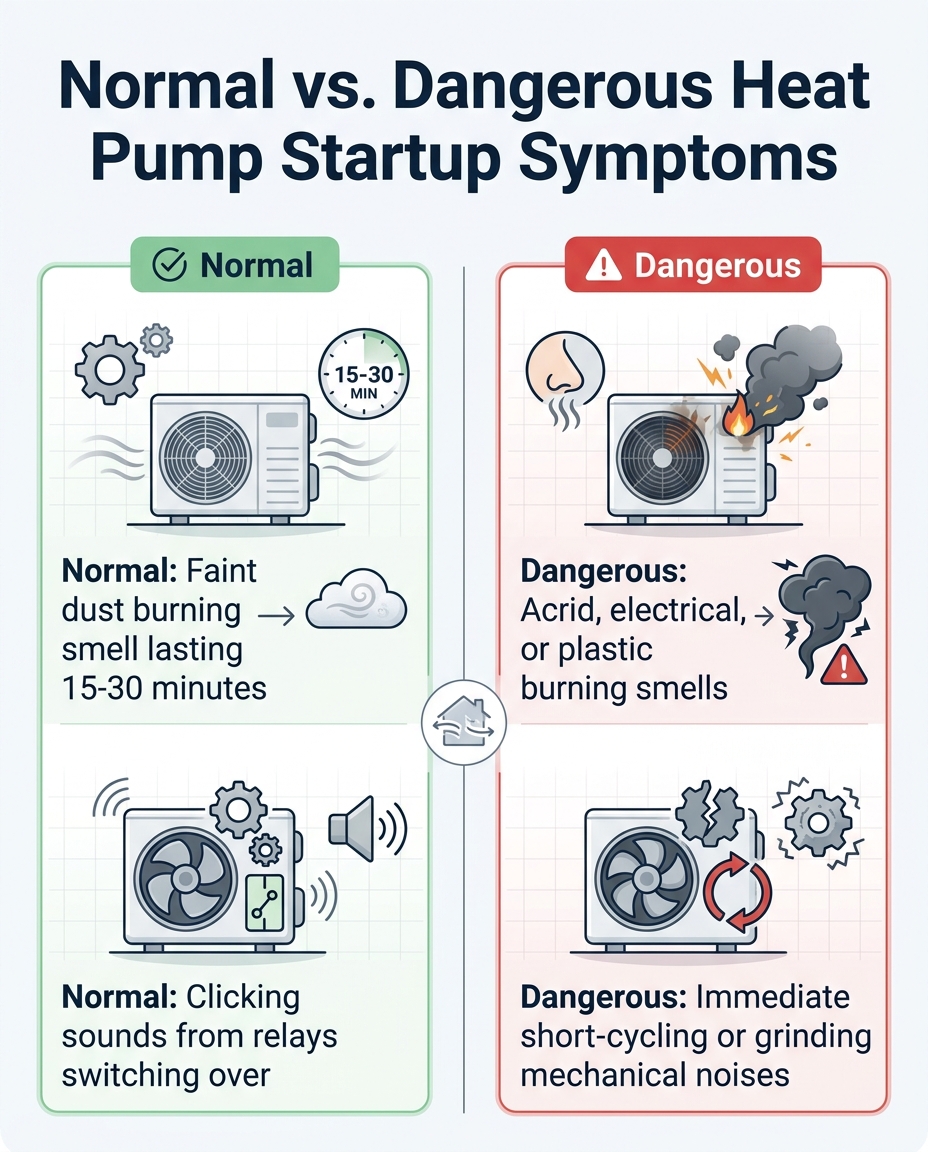
A faint burning dust smell is a normal part of the first startup and should dissipate quickly. If you open a few windows to let the air circulate, the odor should be completely gone within half an hour. Conversely, acrid, electrical, or persistent burning smells often indicate corroded electrical contacts or failing wiring. High humidity accelerates corrosion on these electrical connections, and when high voltage passes through a corroded terminal, it generates excessive heat, melting the surrounding wire insulation.

Safe DIY Home Maintenance Tips and Troubleshooting
Before you assume your system has suffered a catastrophic failure, our team recommends a few safe, basic checks. We always advise our customers to follow these exact home maintenance tips and troubleshooting steps to safely evaluate a heat pump without risking injury or damaging the unit. Following these guidelines ensures you cover the basics before paying for a service call.
1. Verify the thermostat settings: It sounds incredibly simple, but verify the thermostat is set to the correct mode (Heat) and the temperature is adjusted properly for the season. Sometimes, a bumped setting or a dead thermostat battery is the only thing standing between you and a warm house.
2. Check and replace dirty air filters: Restricted airflow can cause the system to freeze up or overheat. When a filter is clogged with summer dust and pet dander, the system has to work twice as hard to push air through. A clean filter is the single most important factor in maintaining proper airflow and system efficiency.
3. Inspect the outdoor unit for debris: Late summer storms in the Conroe TX region often blow heavy debris into the outdoor unit, making a visual inspection critical before the first fall freeze. Carefully clear away fallen leaves, branches, or tall grass that may be blocking the condenser coils. The outdoor unit needs at least two feet of clear clearance to breathe properly.
4. Check the circuit breaker: If the system is completely unresponsive, check your electrical panel. If the breaker is tripped, reset it only once to see if the system recovers. If it trips a second time immediately, leave it off—this indicates a serious electrical short that requires professional attention.
If you have walked through these steps and your system is still struggling to maintain temperature or refusing to turn on, it is time to seek professional heating and cooling repair to diagnose the underlying mechanical issue safely.
Red Flags: When to Stop Troubleshooting and Call an Expert
While basic maintenance is highly encouraged, there are strict safety boundaries regarding what homeowners should not attempt. Modern HVAC systems operate on high-voltage electricity and pressurized refrigerants. Over our years in the field, we've seen firsthand how crossing the line from basic troubleshooting into amateur repairs can result in severe injury, voided warranties, or catastrophic equipment damage.
Safety Boundaries You Should Never Cross
Never open the furnace or heat pump cabinet to inspect electrical components, wiring, or the heat exchanger yourself. The internal components hold powerful electrical charges even after the system is turned off at the thermostat. Attempting to clean electrical contacts or test capacitors without proper training and specialized multi-meters is incredibly dangerous.
Immediate short-cycling is a massive red flag. If the system repeatedly turns on and off rapidly (running for only a minute or two before shutting down), shut it down immediately to prevent compressor damage. Short-cycling forces the compressor to absorb the massive electrical surge of starting up over and over again, which can burn out the motor in a matter of hours.
Strange grinding, squealing, or persistent electrical smells require immediate professional intervention. A grinding sound usually means the blower motor bearings are failing, while a high-pitched squeal often points to a slipping fan belt or a failing compressor valve. One local homeowner experienced this firsthand during a winter freeze when their heater stopped working late at night. Because they recognized the red flags and called our team for help instead of attempting a dangerous DIY repair, our technicians were able to work around the clock to get the heater running safely within the hour.
As a veteran-owned business, we bring a disciplined, safety-first approach to home maintenance. We believe in providing honest and reliable diagnostics when systems fail, ensuring that every repair prioritizes the safety of your home and family. When the October first cold snap hits, you need a team that operates with integrity and precision.
Preventing Future Failures with a Routine Maintenance Plan
The most effective way to handle a seasonal startup failure is to prevent it from happening in the first place. We consistently recommend that homeowners transition from reactive troubleshooting to proactive, seasonal care—it is the smartest investment you can make in your home's comfort. Bi-annual maintenance prepares the HVAC system for harsh seasonal transitions before extreme weather hits, ensuring that dormant components are clean, tested, and ready to perform.
What Happens During a Professional Tune-Up?
During a comprehensive inspection, our technicians safely clean heavily dusted coils, check for rusted burners, and tighten corroded electrical contacts. By addressing the surface oxidation that builds up during our humid summers, technicians eliminate the risk of electrical shorts and reduce the intensity of that initial dust burn-off smell.
Routine inspections catch sticking reversing valves, failing capacitors, and minor wear-and-tear before they escalate into complete system failures. We saw this exact pattern with a customer whose faulty AC unit failed during the intense Texas heat. Because they reached out immediately, we provided same-day service and completed the work correctly. However, a proactive tune-up often catches these exact faults weeks before the system actually breaks down under load. Additionally, if an aging system requires replacement, federal tax credits or local utility incentive programs may apply to qualifying high-efficiency heat pump installations—we always advise readers to verify current programs with their utility or a tax professional.
If you want to ensure your system transitions flawlessly between heating and cooling, enrolling in a routine HVAC maintenance plan guarantees that a professional will evaluate your equipment during the critical first 30 minutes of runtime, verifying that all pressures, temperatures, and electrical draws are exactly where they should be.
Ensure Your Home Stays Comfortable and Safe This Fall
Navigating the transition from cooling to heating doesn't have to be a stressful experience. Knowing exactly what smells and sounds are normal during fall startup provides invaluable peace of mind. By understanding the difference between harmless dust burn-off and serious electrical red flags, you can confidently test your system before the bitter cold arrives.
Routine home maintenance tips and troubleshooting steps empower you to keep your system breathing easily, but you never have to tackle complex mechanical issues alone. If your troubleshooting steps haven't resolved the issue, or if you spot any safety red flags like short-cycling or grinding noises, professional help from Carl's Quality Cooling and Heating LLC is just a call away.
Explore our local service areas and let a local expert ensure your system is ready for the changing seasons. Taking action now ensures your home in the Conroe TX region remains a comfortable, safe haven all winter long.
Frequently Asked Questions
Why does my heat pump smell like burning dust?
A burning dust smell occurs because dust settles on the heat strips and coils while the system sits dormant during the summer. When the heat turns on for the first time, this accumulated dust is safely incinerated. It is a completely normal part of the seasonal transition and does not indicate a fire hazard.
How long should a heater smell when first turned on?
The normal dust burn-off smell should dissipate within the first 15 to 30 minutes of operation. Opening a few windows to allow fresh air to circulate will help clear the odor faster. If the smell persists for hours or changes to an acrid, electrical odor, shut the system down and call a professional.
Why is my heat pump running but not changing temperature?
If your system is running but failing to heat or cool, the reversing valve is likely stuck. This valve controls the flow of refrigerant, and after months of operating in only one mode, it can physically jam. A stuck valve requires a professional technician to diagnose and replace.
Why is my heat pump short cycling in fall?
Short-cycling happens when the system turns on and off rapidly, often caused by restricted airflow from a dirty filter or an electrical safety switch tripping. High humidity can also corrode electrical contacts, causing the system to lose power intermittently. You should turn the system off immediately to prevent permanent damage to the compressor.
How do I know if my heat pump reversing valve is stuck?
You may hear a loud clicking or hissing sound from the outdoor unit as it attempts to switch modes, but the air coming from your vents remains the same temperature. You might also notice the system blowing warm air when set to cool, or cool air when set to heat. Because this is a sealed mechanical part, it requires professional testing.
Is it safe to test my heat pump before it gets cold?
Yes, it is highly recommended to test your heating system on a mild fall day before freezing temperatures arrive. This allows you to safely burn off the accumulated dust and verify that the system is fully operational. If you discover an issue during the test, you have plenty of time to schedule a repair before you actually need the heat.