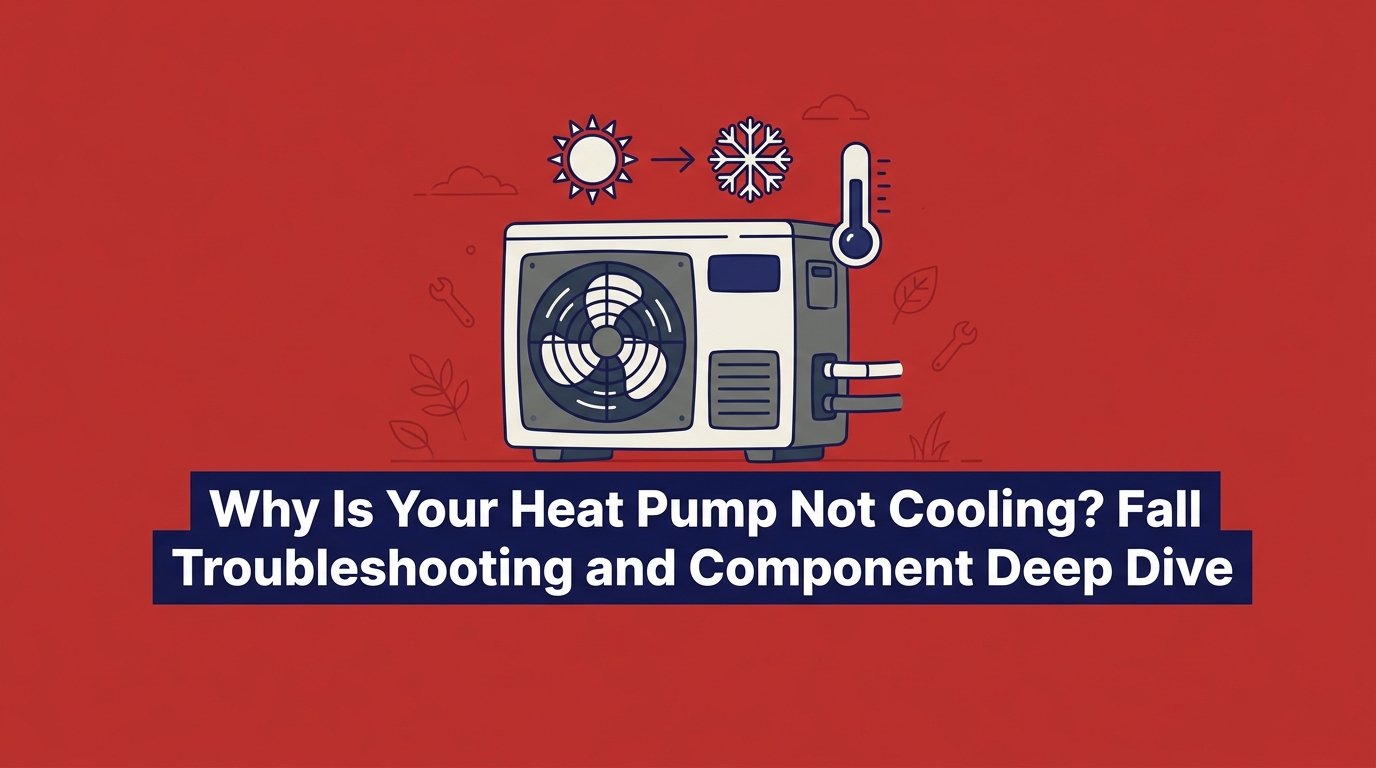

Is Your Heat Pump Struggling During the First Fall Temperature Swing?
Here at Carl's Quality Cooling and Heating LLC, we often get calls from homeowners wondering why their system is blowing lukewarm air during their first October heating startup. Having a reliable set of home maintenance tips and troubleshooting steps is critical when your heat pump struggles to transition between cooling and heating modes. Late fall brings erratic temperature swings, forcing your HVAC system to switch back and forth after months of operating in a single mode. You might turn on the system during a warm afternoon only to find it failing to cool the house, leaving you to decide if this is a minor seasonal quirk or a serious mechanical failure requiring professional intervention.
The mechanical reality of dormant components waking up can cause a variety of temporary operational lags. However, in our experience, ignoring persistent issues can turn a simple fix into a costly compressor replacement. Addressing these seasonal transitions proactively is the best way to protect your equipment. Regular upkeep through an HVAC maintenance plan can prevent these sudden switchover failures, ensuring your system responds properly whether you need heating on a chilly morning or cooling on a surprisingly hot afternoon.
The Mechanics of Fall Mode Switching: Why Reversing Valves Get Stuck
To understand why your system might run without properly conditioning the air, you have to look at the reversing valve. This specific component is the heart of a heat pump. It dictates the directional flow of refrigerant, allowing the system to absorb heat from inside your home and release it outside during the summer, or reverse the process to bring heat indoors during the winter. When you request a mode change at the thermostat, an electrical signal energizes or de-energizes a solenoid coil on the reversing valve, moving an internal slide mechanism to redirect the pressurized refrigerant.
After operating exclusively in one mode for months, this internal slide can physically stick. In our years of servicing homes across the area, we've seen how Conroe's high summer humidity and intense heat put prolonged strain on the system. The constant exposure to moisture and high temperatures can cause slight corrosion or thermal fatigue, making the valve much more susceptible to jamming when finally asked to shift in the fall. If the valve gets stuck halfway, the refrigerant bypasses the coils, resulting in a system that runs continuously but only blows room-temperature air. Because the valve deals with highly pressurized chemical refrigerant, forcing or manually tampering with it is extremely dangerous and requires professional air conditioning services.
How Dormant Components React to Sudden Mode Changes
When mechanical parts sit in a single state for an entire season, physics takes over. Here is what our technicians typically observe happening inside your heat pump during that first major seasonal transition:
• Thermal expansion and contraction: Metal components expand during the intense summer heat and contract as fall temperatures drop. This microscopic shifting can cause mechanical tolerances inside the reversing valve to tighten, leading to temporary friction.
• Lubricant pooling: The compressor oil that circulates with your refrigerant can settle in the lower sections of the outdoor unit during long periods of single-mode operation. When the flow reverses, it takes time for the lubrication to redistribute, causing temporary sluggishness.
• Electrical resistance: Contactors and relays that haven't been triggered in months may have developed a thin layer of oxidation, which can delay the electrical signal required to shift the valve.
A temporary lag of a few minutes while the system equalizes pressure is normal. However, if the system runs for an hour without changing the indoor temperature, our team usually finds that the valve solenoid has failed or the slide is permanently jammed.
Diagnosing 'Running But Not Cooling' During Unpredictable October Afternoons
When the afternoon temperature spikes and your heat pump refuses to blow cold air, immediate diagnosis is necessary to prevent system damage. Sudden cooling failures in the fall often stem from underlying issues that were masked during milder weather but expose themselves when the system is put under midday stress. In one instance, our team responded to a customer who experienced a sudden system issue right before an early fall storm; one of our technicians arrived as soon as it was safe, diagnosing and fixing the problem within an hour. Prompt attention to sudden operational failures prevents minor airflow issues from cascading into major electrical faults.
One common culprit we encounter is restricted airflow at the outdoor unit. Early fall storms often blow leaves, twigs, and debris into the condenser coils. If the outdoor unit cannot properly exhaust heat, the internal pressures rise until the safety sensors shut the compressor down, leaving only the indoor fan running. You might also be dealing with a dirty air filter that restricts indoor airflow, causing the evaporator coil to freeze. If you notice these symptoms, you might find similarities to a heat pump not cooling enough on 100-degree days, as the mechanical stress factors are nearly identical.
Safe DIY Checks Before Calling a Professional
Before scheduling a diagnostic visit with our team, homeowners can safely perform a few basic checks to rule out user error or simple airflow blockages. Never open the electrical panels or handle refrigerant lines, but do follow these steps:
1. Verify thermostat calibration: Ensure the thermostat is set to the correct mode (cooling or heating) and not accidentally locked into "emergency heat" or "fan only." Check the batteries if the display is fading.
2. Inspect the air filter: Pull the indoor air filter and hold it up to a light source. If you cannot see light passing through the media, the filter is severely clogged and must be replaced immediately to restore airflow.
3. Clear the outdoor condenser: Walk outside and visually inspect the heat pump cabinet. Remove any accumulated leaves, tall grass, or storm debris blocking the side louvers. The unit needs at least two feet of clear clearance on all sides to breathe properly.
4. Check the circuit breakers: Look at your main electrical panel. A power surge may have tripped the breaker for the outdoor unit while leaving the indoor air handler powered, causing the system to blow unconditioned air.
Harmless Dust Burn-Off vs. Hazardous Electrical Smells
A major concern we address during October heating startups in Conroe, TX is the sudden presence of burning odors coming from the vents. When a heat pump or auxiliary furnace sits idle from March until late October, dust, pet dander, and household particulates settle heavily on the electric heat strips and heat exchangers. Conroe's high humidity exacerbates this issue, causing the moisture-laden dust to cake and adhere strongly onto these dormant heating components. When the heating cycle finally engages, these caked-on particles literally toast, sending a distinct burning smell through your ductwork.
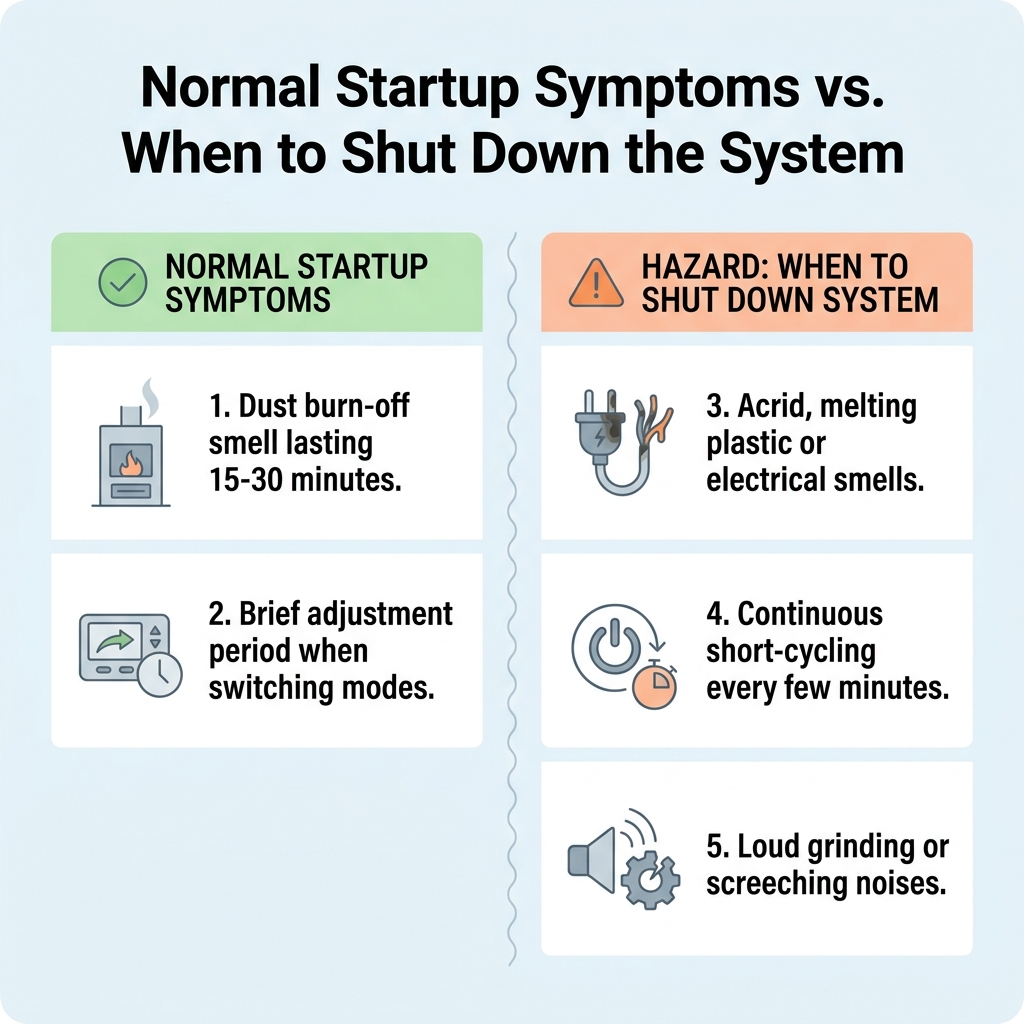
As a veteran-owned company, Carl's Quality Cooling and Heating LLC believes in honest, transparent diagnostics. We will explicitly tell you when a symptom is a harmless quirk that requires no further action, rather than using it as an excuse to upsell unnecessary repairs. Normal dust burn-off is entirely harmless and typically dissipates within 15 to 30 minutes of initial startup. However, it is critical to distinguish this toasted dust odor from the acrid, hazardous smell of melting wire insulation or failing electrical capacitors, which requires immediate shutdown. If you suspect an electrical fault, you need professional heating services right away.
• Odor Profile — Normal Dust Burn-Off: Smells like toasted dust, warm dirt, or a slightly musty burning scent. — Hazardous Electrical Issue: Smells like melting plastic, fish, ozone, or acrid burning rubber.
• Timeframe — Normal Dust Burn-Off: Fades completely within 15 to 30 minutes of the first heating cycle. — Hazardous Electrical Issue: Persists continuously or grows stronger the longer the system runs.
• Visual Signs — Normal Dust Burn-Off: No visible smoke; system operates smoothly and reaches temperature. — Hazardous Electrical Issue: Visible smoke from vents or outdoor unit; system shuts down or trips breaker.
• Required Action — Normal Dust Burn-Off: Open a window, let the cycle finish, and monitor the system. — Hazardous Electrical Issue: Shut off the system at the thermostat and the main breaker immediately.

Short-Cycling on Startup: Airflow Restrictions vs. Refrigerant Leaks
Another frequent issue our technicians see during seasonal transitions is short-cycling. This occurs when the heat pump turns on, runs for only two to five minutes, and shuts off abruptly before reaching the temperature set on the thermostat. This rapid on-and-off behavior prevents your home from properly cooling or heating and puts catastrophic wear and tear on the compressor motor. Short-cycling is almost always a symptom of a deeper mechanical or chemical imbalance within the system.
The two most common causes of short-cycling are severe airflow restrictions and low refrigerant levels. If your ductwork is blocked or your filter is clogged, the internal temperature of the equipment spikes, forcing a shutdown to prevent a fire. Alternatively, small, undetected refrigerant leaks that developed over the summer can cause the evaporator coil to freeze solid, leading to erratic cycling. In one recent case, our team helped a local homeowner who experienced severe system instability because it was unclear why or where the refrigerant line was leaking. A thorough professional diagnosis located the micro-leak, and the repair was completed in a timely manner, restoring normal cycle lengths. Handling refrigerant requires specialized gauges and EPA-certified professionals.
The Role of the High-Limit Safety Switch
Your heat pump is equipped with a high-limit safety switch designed to protect the system from destroying itself. Here is why we emphasize the importance of this component during short-cycling events:
• Thermal protection: If the blower motor fails or airflow is blocked, the heat strips or compressor can quickly reach dangerous temperatures. The limit switch detects this extreme heat and instantly cuts power to the unit.
• Preventing catastrophic failure: By forcing the system into a short-cycle loop, the switch prevents the compressor from burning out its internal windings.
• Diagnostic indicator: A system that repeatedly trips its high-limit switch is signaling a critical failure. Bypassing or ignoring this safety mechanism will almost certainly lead to an expensive, full-system replacement.
When to Troubleshoot Safely and When to Shut Down Your System
Knowing your limits as a homeowner is the best way to keep your family safe and your equipment intact. While changing air filters, clearing away yard debris, and verifying thermostat settings are excellent DIY maintenance habits, crossing the line into mechanical or electrical repairs is dangerous. Heat pumps utilize high-voltage electricity and pressurized chemicals that can cause severe injury if mishandled.
If you experience any of the following triggers, we advise you to shut the system down at the breaker immediately and refuse to run it until a professional inspects it. Fortunately, our certified experts at Carl's Quality Cooling and Heating LLC are readily available across the Conroe service areas to perform safe, accurate diagnostics.
• Persistent electrical smells: Any odor resembling melting plastic, burning rubber, or ozone that lasts longer than 30 minutes.
• Continuous short-cycling: A system that turns on and off every three minutes without altering the room temperature.
• Grinding or screeching noises: Metal-on-metal sounds indicate failing bearings or a dying compressor motor.
• Tripped breakers: If resetting the breaker causes it to trip again immediately, you have a hard electrical short.
• Ice accumulation: Heavy frost or solid ice forming on the refrigerant lines or the outdoor coil during mild weather.
Frequently Asked Questions About Fall Heat Pump Troubleshooting
Why does my heat pump smell like it's burning?
A burning smell during the first fall startup is usually caused by settled dust baking off the heat strips or heat exchanger. After sitting idle all summer, these components collect a layer of household particulates. When the heat engages, the dust burns off, creating a toasted smell that is completely normal and should dissipate within 15 to 30 minutes.
Why is my heat pump short cycling when I turn on the heat?
Short-cycling is frequently caused by severe airflow restrictions that trigger the system's high-limit safety switch to prevent overheating. It can also be caused by low refrigerant levels that disrupt internal pressures. If replacing a dirty air filter does not resolve the rapid on-and-off cycling, you need a professional to check the refrigerant charge and electrical sensors.
Is it normal for a heat pump to smell when first turned on?
Yes, it is entirely normal for a heat pump to emit a dusty, warm odor for a brief period during its first heating cycle of the season. However, this smell should fade quickly. If the odor smells like melting plastic, burning wire insulation, or ozone, it is not normal and indicates a dangerous electrical fault.
How do I know if my heat pump reversing valve is bad?
The clearest sign of a bad reversing valve is a system that blows hot air when set to cooling, or lukewarm air when set to heating, despite the thermostat registering the correct mode. You may also notice the outdoor unit failing to run its defrost cycle properly during colder weather, allowing ice to build up on the coils.
When should I turn off my heat pump and call a professional?
You should immediately turn off your heat pump at the breaker if you notice persistent electrical burning smells, loud grinding or screeching noises, or continuous short-cycling. Additionally, if the system runs for more than 30 minutes without changing the indoor temperature, shut it down to prevent further mechanical damage and call a licensed technician.
Get Expert Diagnostics for Your Heat Pump Today
Dealing with a malfunctioning heat pump during erratic fall weather is frustrating, especially when you are unsure if the issue is a minor quirk or a major mechanical failure. Guessing at the problem or ignoring strange symptoms can lead to costly breakdowns when you need your system the most. Honest, professional diagnostics from our team will determine exactly what is happening inside your unit, giving you the clarity to know if a simple repair or deeper maintenance is required. If your Conroe, TX home is struggling to stay comfortable, reach out to Carl's Quality Cooling and Heating LLC to schedule a comprehensive inspection today to ensure your heat pump is safe, efficient, and fully operational for the coming season.