
The Science of Precision: Understanding Manual J Load Calculations
's Comfort and Efficiency
Why correct system sizing matters for your home comes down to one simple truth: a system that's the wrong size — too big or too small — will cost you more money, wear out faster, and leave your home uncomfortable no matter how high-end the equipment is.
Here's a quick look at what's at stake:
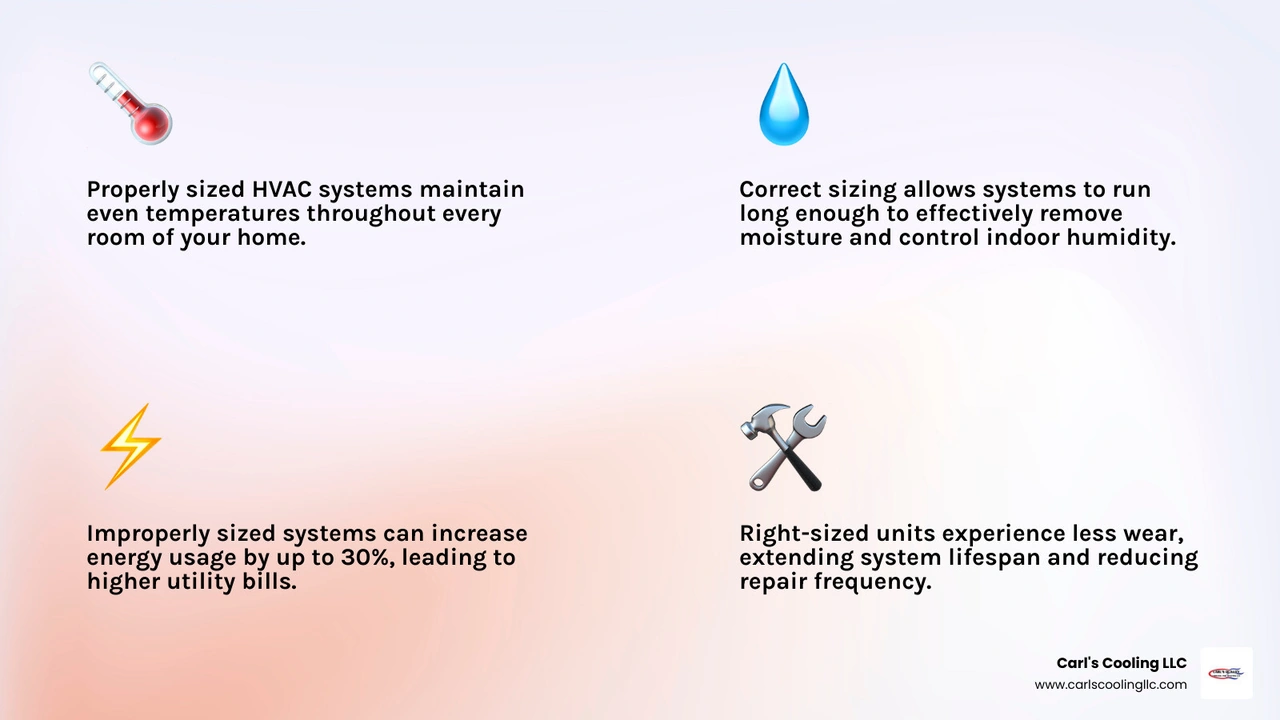
- Comfort: A properly sized system maintains even temperatures in every room
- Humidity control: Correctly sized systems run long enough to pull moisture out of the air
- Energy bills: Improperly sized systems can increase energy usage by up to 30%
- System lifespan: Poor sizing causes extra wear and earlier breakdowns
- Air quality: Right-sized systems filter and circulate air more effectively
Between 30 and 50% of residential AC systems are improperly sized — and the vast majority of those are oversized, not undersized. Even more surprising: fewer than 20% of HVAC contractors actually perform a proper load calculation before recommending a system. That means most homeowners in Conroe, Montgomery, and across Montgomery County are living with systems that were never correctly matched to their home in the first place.
Think of it like buying shoes without knowing your size. A system that's too big shuts off too quickly before it can do its job. One that's too small runs constantly and never quite keeps up. Either way, you pay the price — in energy bills, repairs, and discomfort.
The good news is that getting sizing right isn't complicated when you work with a team that follows industry-standard methods like the Manual J load calculation. It takes the guesswork out of the equation entirely.
In HVAC, "Manual J" isn't just a technical term; it is the industry-standard gold standard developed by the Air Conditioning Contractors of America (ACCA). It is a rigorous, scientific method used to determine the precise heating and cooling load of a building. Instead of guessing, we use this calculation to account for every factor that influences how much heat your home gains in the summer and loses in the winter.
A proper Manual J calculation considers:
- The total square footage and volume of your home.
- The insulation levels in your attic, walls, and floors.
- The number, size, and orientation of your windows (a south-facing window in The Woodlands lets in much more heat than a north-facing one!).
- Local climate data for the Conroe and Montgomery area.
- Internal heat gains from appliances, lighting, and even the number of people living in the house.
By accurately measuring these variables, we can select a system that provides the perfect amount of "BTUs" (British Thermal Units). This precision is what allows us to deliver The Benefits of Proper HVAC Sizing and Installation, ensuring your equipment isn't fighting an uphill battle against the Texas heat.
Why correct system sizing matters for your home's humidity control
In our part of Texas, humidity is often a bigger comfort challenge than the actual temperature. This is where "latent heat" comes in. Your AC system has two jobs: lowering the air temperature (sensible cooling) and removing moisture (latent cooling).
When a system is oversized, it suffers from "short cycling." It reaches the temperature set on your thermostat so quickly that it shuts off before the indoor coil has a chance to remove moisture from the air. This leaves you with "clammy air"—where the house feels cold but sticky. A properly sized unit runs for longer, balanced cycles, which is the only way to effectively dehumidify your living space. Knowing How to Choose the Right AC Size is the difference between a home that feels like a swamp and one that feels like an oasis.
Why correct system sizing matters for your home's ductwork efficiency
You can buy the most efficient AC unit on the market, but if your ductwork isn't designed to handle the airflow, you won't see the benefits. This is where Manual D comes into play. Manual D is the standard for duct design, ensuring that the "static pressure" within your system is balanced.
If you install a 5-ton unit on a duct system designed for 3 tons, the air will be noisy, the motor will burn out prematurely, and you won't get proper "return air" flow. Airflow optimization is a critical part of the Complete AC Installation Process. Every room needs the right amount of conditioned air to maintain a consistent temperature throughout the house.
Why Correct System Sizing Matters for Your Home and Your Wallet
As we move through April 2026, energy efficiency has never been more important for homeowners in Montgomery County. Why correct system sizing matters for your home becomes very clear when you look at your monthly utility statements.
Research shows that improperly sized systems can increase energy consumption by 8% to 30%. An oversized system wastes energy during frequent startups (which is when the system draws the most power), while an undersized system wastes energy by running 20% to 30% longer than it should, often without ever reaching the desired temperature. By right-sizing, you aren't just buying comfort; you're investing in system longevity. A system that doesn't overwork itself lasts years longer and requires fewer emergency repairs, proving that Professional AC Installation Worth It in the long run.
Rebate eligibility and federal tax credits
In 2026, there are significant financial incentives available for homeowners who choose high-efficiency, properly sized equipment. Federal tax credits (such as those under the Inflation Reduction Act) can provide up to $2,000 back for qualifying heat pump installations.
However, there’s a catch: to qualify for many of these rebates and credits, the system must meet specific SEER2 and HSPF2 efficiency ratings and be installed according to strict standards. If a contractor installs an oversized unit that short-cycles, it may not meet the real-world efficiency requirements needed for these programs. It’s vital to understand What to Know Before AC Installation so you don't leave money on the table.
The Hidden Risks of Oversized and Undersized Units
To help you visualize the impact of poor sizing, we've broken down the most common issues homeowners face in the table below:
| Feature | Oversized System | Undersized System |
|---|---|---|
| Run Time | Short cycles (5-10 mins) | Runs constantly without stopping |
| Humidity | High (sticky, clammy feel) | Moderate, but air feels "stale" |
| Energy Usage | High (spikes during startups) | High (never-ending operation) |
| System Wear | Extreme stress on the compressor | Excessive wear on the blower motor |
| Temperature | Uneven (hot and cold spots) | Consistently too warm in summer |
| Lifespan | Significantly shortened | Shortened due to overwork |
Signs your current system is incorrectly sized
Are you suspicious that your current HVAC unit isn't the right fit? Here are the red flags we often see in homes across Spring, Tomball, and Magnolia:
- Frequent On/Off Cycling: If your AC kicks on and then shuts off five minutes later, it’s likely oversized.
- The "Never-Ending" Cycle: If it’s 95 degrees in Conroe and your AC has been running for six hours straight without reaching 72 degrees, it’s likely undersized.
- High Indoor Humidity: If the thermostat says 70 degrees but you feel like you're in a sauna, the system isn't running long enough to dehumidify.
- Sky-High Utility Bills: Sudden spikes in energy costs often point to a system that is struggling to perform due to poor sizing.
- Hot and Cold Spots: If the living room is freezing but the bedrooms are stuffy, the system's airflow isn't matched to the home's needs.
Recognizing these issues early can help you avoid Common AC Installation Mistakes to Avoid when it comes time to replace your equipment.
Professional Design: Beyond the "Rule of Thumb"
Many contractors still use the "Rule of Thumb"—usually 500 square feet per ton of cooling. In 2026, this is not only outdated but flat-out wrong. Modern homes are built with better insulation, tighter seals, and high-performance windows, meaning they often require less cooling capacity than older homes of the same size.
At Carl's Cooling LLC, we use advanced tools like Wrightsoft design software to perform our calculations. This allows us to move beyond the square footage myth and look at:
- Manual S: To select the specific equipment that matches the Manual J load.
- Climate Zones: Tailoring the system to the specific heat and humidity of Montgomery County.
- Window Orientation: Accounting for the sun's path across your property.
- Insulation Quality: Verifying the R-value of your attic and wall insulation.
Frequently Asked Questions about HVAC Sizing
Can I determine my HVAC size based on square footage alone?
No. While square footage is one factor, it doesn't account for your home's layout, ceiling height, insulation quality, or window placement. Two 2,000-square-foot homes in Willis could have completely different cooling needs if one has vaulted ceilings and large windows while the other is a single-story with heavy shade.
What is the difference between a BTU and a Ton?
A BTU (British Thermal Unit) is a measure of heat energy. One "ton" of air conditioning is equal to 12,000 BTUs per hour. The term comes from the amount of energy needed to melt one ton of ice in 24 hours. Most residential systems range from 1.5 tons (18,000 BTUs) to 5 tons (60,000 BTUs).
How does insulation affect the size of the HVAC system I need?
Insulation acts as a blanket for your home. Better insulation (higher R-values) keeps the cool air inside during the summer and the heat inside during the winter. A well-insulated home in Woodforest will actually require a smaller HVAC system than a poorly insulated home of the same size, because the heat "load" is much lower.
Conclusion
At the end of the day, why correct system sizing matters for your home is about your peace of mind and your family's comfort. Whether you are in The Woodlands, Montgomery, or Willis, you deserve a system that works efficiently, keeps you dry, and doesn't break the bank every month.
Don't settle for a contractor who "eyeballs" your home's needs. Trust the experts who use science, data, and the latest technology to ensure your home is perfectly balanced. Our team at Carl's Cooling LLC is proud to serve our neighbors throughout Montgomery County with precision and care.
Ready to see the difference a right-sized system can make? Schedule your professional load calculation today and take the first step toward a more comfortable, energy-efficient home.