
Is That Mildew Smell Normal When Your AC First Turns On?
If you find yourself asking, why does my AC smell like mildew when it first kicks on, you are dealing with one of the most common late-summer cooling complaints. You are waiting for relief from the heat, and instead, you get hit with a blast of air that smells like a wet locker room the second the vents start blowing. This specific timing—smelling the odor only at startup—is a major clue about what is happening inside your air handler. The problem is not continuous throughout your house; rather, it is isolated entirely inside the dark, damp cabinet of your HVAC system between cooling cycles.
As we push deeper into August and late summer, systems that have been running nonstop begin to show signs of trapped moisture. This trapped moisture creates the perfect breeding ground for biological growth. The foul odor you smell is the direct result of the blower motor pushing stagnant, microbe-laden air into your ductwork before the cooling process fully engages. For comprehensive air conditioning services, resolving this trapped moisture issue is the first step to breathing easier and restoring your home's comfort.
The Mechanical Sequence Behind the Initial Odor Blast
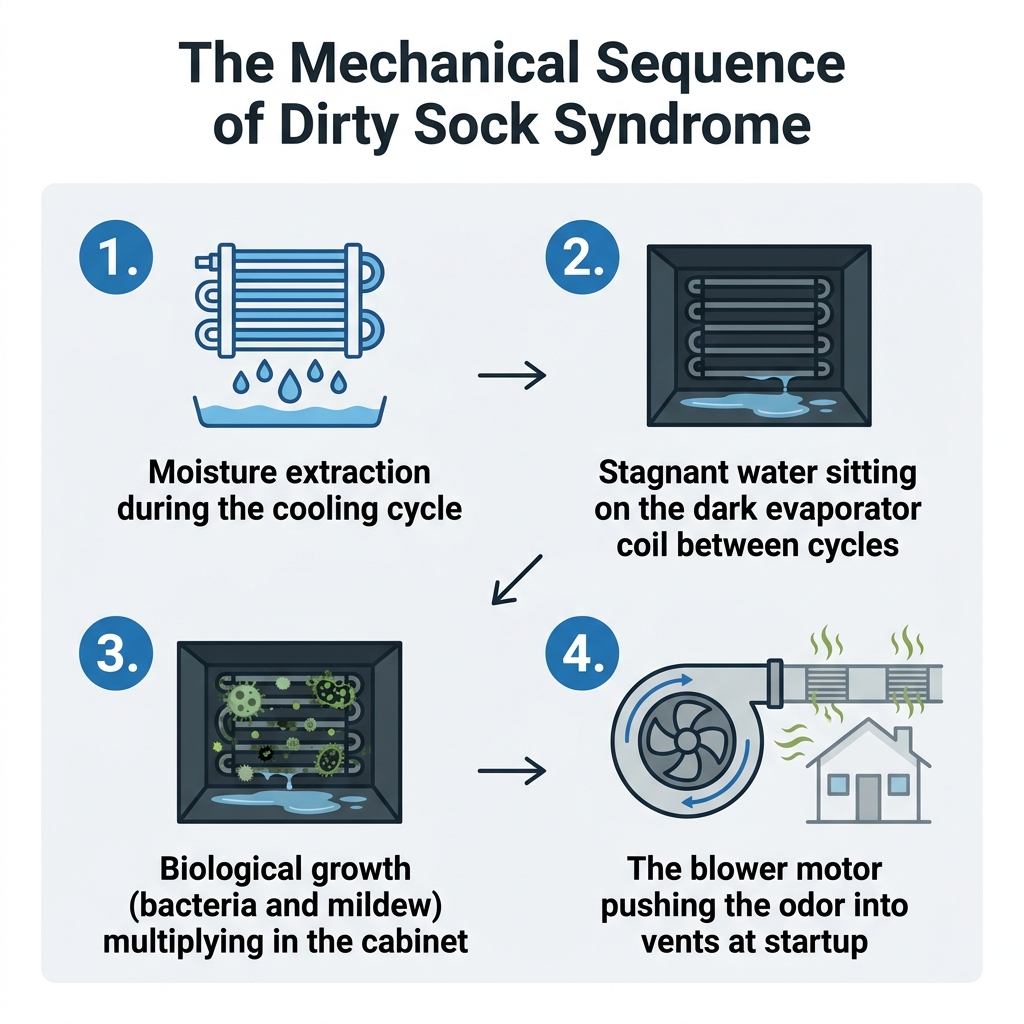
To understand why the mildew smell happens specifically when the system first kicks on, you have to look at the physics of the cooling cycle. Your air conditioner does more than just lower the temperature; it actively dehumidifies your home. Here is the exact mechanical sequence that leads to that unpleasant startup odor:
1. Moisture Extraction: During a normal cooling cycle, your system extracts gallons of water from the indoor air. This warm, humid air passes over the freezing cold evaporator coil, causing the moisture to condense into liquid water, much like a cold glass of water sweating on a hot day.
2. The Stagnant Period: When your thermostat reaches the desired temperature, the system shuts off. The evaporator coil is left sitting in a dark, warm, and damp cabinet. Because of the intense Conroe TX and Gulf Coast humidity, this coil rarely has the opportunity to dry out completely before the next cycle begins.
3. The Startup Blast: When the system kicks on again, the blower motor immediately starts pushing air over that wet, stagnant coil. Before the coil gets cold enough to produce new condensation and wash the fins, the fan forces the trapped, musty air directly into your ductwork.
4. The Wash Down: After a few minutes of running, the coil gets cold, fresh condensation begins to flow, and the biological odors are temporarily washed down the condensate drain line. The smell typically dissipates, masking the underlying issue until the next time the system cycles off.

Unmasking 'Dirty Sock Syndrome' in Your HVAC Cabinet
Industry professionals have a specific name for this phenomenon: "Dirty Sock Syndrome." This term perfectly validates the homeowner's specific experience of smelling a foul, damp, gym-bag odor coming from the vents. Dirty Sock Syndrome is not just a sign of a "dirty AC" in the traditional sense of dust and dirt. It is a specific biological reaction to trapped moisture inside the air handler.
What Exactly is Growing Inside the Cabinet?
The odor is caused by a buildup of biological growth—specifically bacteria, microbes, and mildew—that feed on fine dust particles and trapped moisture on the evaporator coil. The indoor air handler provides the ultimate breeding ground: it is completely dark, it remains consistently damp, and the ambient temperature inside the cabinet is warm between cycles.
By the time August and late summer arrive, your system has likely been pulling massive amounts of moisture from the air for months. If the coil has not been professionally cleaned, the layers of biological growth multiply rapidly. The bacteria produce volatile organic compounds (VOCs) as a byproduct of their lifecycle, and those VOCs are exactly what you smell when the blower motor first turns on. Understanding that this is a biological issue, rather than just a mechanical quirk, is essential for finding a permanent solution.
Why Standard Air Filters Can't Stop Evaporator Coil Odors
A common misconception is that changing the air filter will eliminate the mildew smell. While maintaining a clean filter is critical for airflow, standard 1-inch fiberglass filters cannot prevent biological growth on the evaporator coil. These basic filters are designed to catch large debris—like pet hair, heavy dust, and lint—to protect the blower motor. They are not designed to stop microscopic bacteria or moisture.
The Limits of Basic Filtration
Even with a brand-new, clean filter in place, fine microscopic dust particles inevitably bypass the media and stick to the wet evaporator coil. Once that dust mixes with the condensation, it creates a food source for bacteria and mildew. Changing the filter will not remove the existing biological growth that is actively producing the mildew smell on the coil itself.
If you are dealing with a persistent odor in August and late summer, you have to bypass basic filter-changing advice and address the coil directly. Proper maintenance involves more than just swapping out a piece of pleated cardboard. When considering cleaning your AC unit, the focus must shift from simple airflow management to targeted biological eradication on the internal components.
The Trapped Moisture Problem: How Climate Accelerates Growth
Your geographic location plays a massive role in how quickly Dirty Sock Syndrome develops. Systems in dry, arid climates rarely experience this specific issue because the evaporator coil dries out entirely between cycles. However, the reality of Conroe TX and extreme Gulf Coast humidity means your air conditioner has to work significantly harder to manage the moisture load.
The Compounding Effect of Continuous Cooling Cycles
Because the outside air is so heavily saturated with moisture, your AC must run almost constantly to maintain a comfortable indoor humidity level. This constant operation pulls massive amounts of water from the air. The problem arises when the system cycles off; the ambient humidity is so high that the evaporator coil never truly has a chance to dry out completely before the thermostat calls for cooling again.
This continuous dampness creates peak conditions for rapid microbial multiplication. Months of heavy condensation buildup mean that by the end of the season, the coil is coated in a biofilm of bacteria and mildew. High-humidity regions are significantly more susceptible to these odors because the fundamental environment inside the HVAC cabinet never shifts out of the biological growth zone.
Harmless Nuisance or a Sign You Need Professional IAQ Help?
Determining whether this smell requires immediate attention depends on its persistence and severity. Sometimes, a very faint odor at the beginning of the cooling season is just a passing adjustment as the system clears off winter dust. However, a strong mildew smell in August and late summer is a clear indicator of a persistent biological issue.
Allowing mold and mildew to circulate through your vents impacts more than just your comfort; it directly affects your indoor air quality (IAQ). Biological growth can eventually become thick enough to restrict airflow across the coil, forcing your system to work harder, consume more energy, and reduce overall efficiency. A persistent startup odor always warrants a professional inspection to rule out serious indoor air quality threats.
• Duration of Smell — Passing Odor (Harmless): Only happens the first few times the AC runs in spring. — Persistent Dirty Sock Syndrome (Action Needed): Happens every single time the system cycles on in late summer.
• Smell Intensity — Passing Odor (Harmless): Faint, dusty smell that fades in seconds. — Persistent Dirty Sock Syndrome (Action Needed): Strong, foul, wet-dog or gym-bag odor that fills the room.
• Airflow Impact — Passing Odor (Harmless): Normal, strong airflow from all vents. — Persistent Dirty Sock Syndrome (Action Needed): Potentially reduced airflow due to biofilm buildup on the coil.
• Health Impact — Passing Odor (Harmless): No noticeable change in comfort. — Persistent Dirty Sock Syndrome (Action Needed): May irritate respiratory sensitivities or trigger allergies.
Safe, Professional Solutions for Eradicating Coil Odors
Because the evaporator coil is located deep inside the air handler and features highly delicate aluminum fins, accessing and cleaning it requires a licensed professional. Attempting a DIY cleaning with household chemicals can easily bend the fins, restricting airflow permanently, or introduce corrosive substances that eat away at the metal, leading to catastrophic refrigerant leaks.
Honest Diagnostics and Targeted Cleaning
The professional coil cleaning process involves neutralizing the biological growth safely without damaging the equipment. Technicians use specific, non-corrosive foaming cleaners designed to push debris out from between the tight fins. Once the coil is restored to a clean state, advanced indoor air quality upgrades, such as UV germicidal lights, can be installed. These lights actively destroy microbes on the coil before they can multiply, preventing the odor from returning.
Working with a veteran-owned company means you get the discipline of an honest, thorough inspection. One customer recently reached out for a fall AC servicing because they were concerned about system performance. Our technician performed a thorough inspection and explained the findings and recommendations honestly, giving the homeowner clear options without any high-pressure sales tactics. We believe in solving the root cause with targeted cleaning and IAQ solutions, rather than using a late-summer odor as a scare tactic to aggressively upsell a brand-new AC unit. Enrolling in a preventative maintenance plan ensures your coil stays clean year-round, stopping biological growth before it starts.
Frequently Asked Questions About AC Startup Odors
Why does my AC smell like mildew when it first turns on?
The smell is caused by "Dirty Sock Syndrome," which is a buildup of biological growth on the damp evaporator coil. Because of the intense Conroe TX and Gulf Coast humidity, moisture sits on the coil between cycles. The blower motor pushes this odor into the home before the cooling cycle fully engages and washes the coil with fresh condensation.
Is it dangerous to breathe in AC mildew?
While often just a nuisance, prolonged exposure to biological growth can irritate allergies or respiratory sensitivities. The bacteria and mildew release volatile organic compounds into the air you breathe. We highly recommend professional cleaning to ensure optimal indoor air quality and peace of mind.
How do I get rid of the mildew smell in my air conditioner?
The most effective method is a professional evaporator coil cleaning performed by a licensed HVAC technician. Once the existing buildup is safely removed, installing a UV germicidal light inside the cabinet can actively destroy new microbes and prevent the growth from returning.
Can a dirty air filter cause a mildew smell?
While a dirty filter restricts airflow and worsens moisture buildup inside the system, the filter itself is rarely the source of the mildew smell. The odor originates from the wet evaporator coil located directly behind the filter. Changing the filter is important, but it will not eliminate existing biological growth.
How do you fix Dirty Sock Syndrome safely?
You should completely avoid DIY chemical sprays, which can damage the delicate coil fins or circulate toxic fumes throughout your home. The safe fix is hiring a licensed HVAC technician to properly apply safe, non-corrosive microbial cleaners that neutralize the bacteria without harming the equipment.
Will running the fan help dry out the AC coil?
Leaving the fan in the "ON" position can sometimes help evaporate residual moisture between cooling cycles. However, in highly humid climates, running the fan continuously may just pull more humid air into the system and re-introduce moisture into the house. This is only a preventative measure, not a cure for existing growth.
Breathe Easier with Expert Indoor Air Quality Solutions
You do not have to live with a foul odor every time the AC turns on. Understanding the exact cause of Dirty Sock Syndrome—and how August and late summer humidity fuels it—is the first step to eradicating the problem for good. By relying on honest diagnostics and professional coil cleaning, you can restore your system's efficiency and protect the air your family breathes. If you are tired of that initial blast of mildew, it is time to schedule a professional diagnostic to explore targeted indoor air quality solutions that stop biological growth at the source.