
Sudden Heat Loss in Conroe: Is It Your Heater or Your Home?
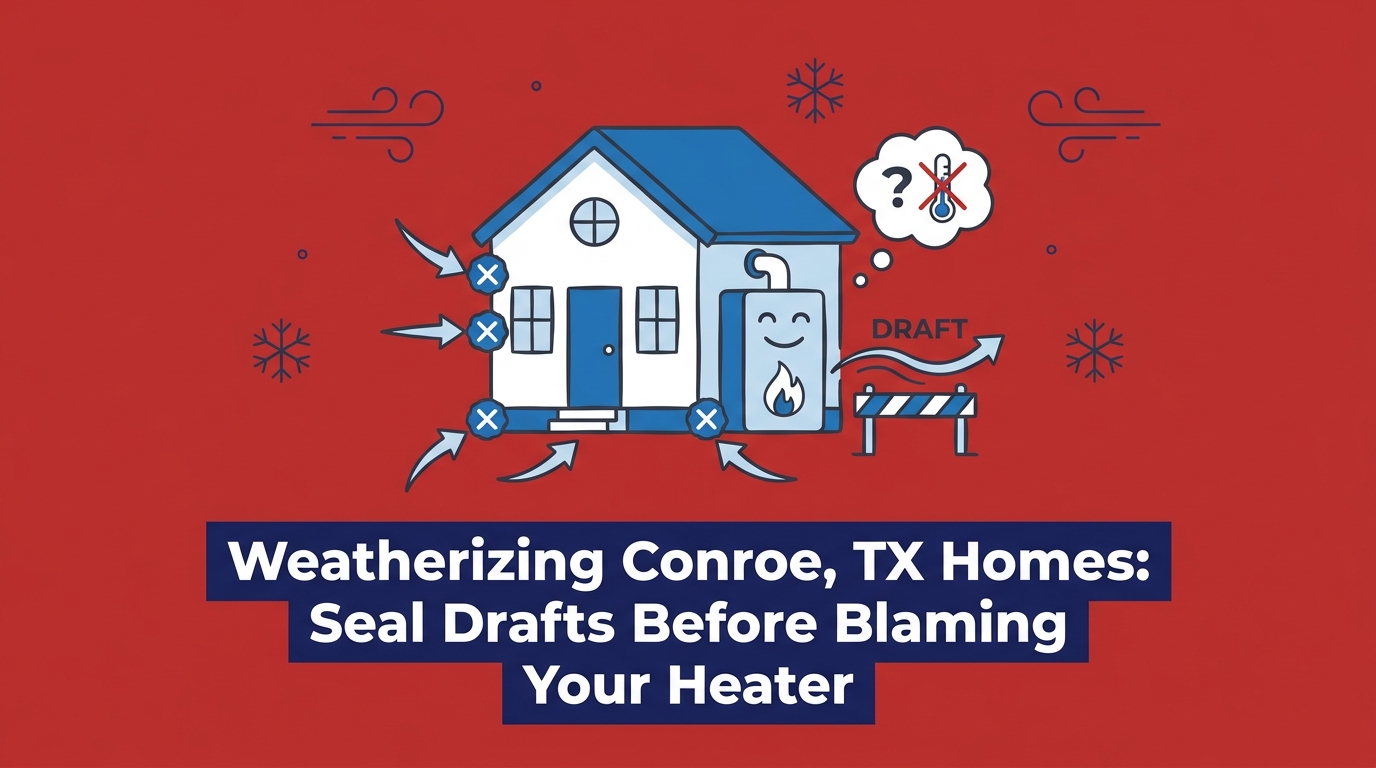
You hear the furnace running continuously, but there is still a noticeable chill settling into your living room. The key to Weatherizing Conroe Homes: Seal Drafts Before Blaming Your Heater is addressing this exact scenario before you do anything else. At Carl's Quality Cooling and Heating LLC, our team frequently hears from Conroe TX homeowners who experience sudden indoor temperature drops during early fall cold snaps and immediately assume their heating equipment is failing. Before you start requesting a quote for a larger, more powerful furnace, it is critical to evaluate your home's thermal envelope. A leaky house will drain heat much faster than a properly sized heating system can produce it, leading to wasted energy and drastically uneven temperatures throughout the day. Addressing these structural envelope issues first is the most practical, cost-effective step for long-term indoor comfort.
The next step: Learn more about our Heating Services and secure an HVAC Maintenance Plan to keep your system running smoothly all season long.
The Mechanics of Heat Loss in Local Architecture
To understand why your house feels cold despite the heater running, you have to look at how buildings are constructed. The thermal envelope acts as the physical barrier between your conditioned indoor air and the harsh outside elements. It includes your roof, foundation, windows, doors, and exterior walls. When this barrier is compromised, your heating system faces an uphill battle that it was never designed to win.
In our years of servicing aging properties throughout Conroe, we've noticed that many older beam and block houses suffer from natural settling over the decades. This settling creates invisible gaps around window frames, door jambs, and foundation lines. When warm, conditioned air escapes through these high gaps—a process driven by the stack effect—cold outside air is simultaneously pulled in through lower gaps to replace it, creating a constant, uncomfortable draft across your floors.
Upgrading an HVAC system without fixing these structural gaps is exactly like pouring water into a leaky bucket. You might get more heat momentarily, but it will slip right through the cracks. For example, our technicians recently visited an older beam and block house locally where the homeowner thought they needed a massive new HVAC system installed. By showing them how addressing the structural gaps alongside the installation of the new equipment would resolve the issue, their highly efficient system has worked perfectly ever since. The envelope and the equipment must work together to maintain a stable temperature.
Identifying Common Draft Locations Before Winter Arrives
Finding where your home is leaking heat is a process of elimination. During our September pre-heating-season maintenance visits, we always advise homeowners to take the time to inspect their home's exterior and interior perimeters. Catching these leaks early prevents you from paying to heat the neighborhood once the cold weather sets in.
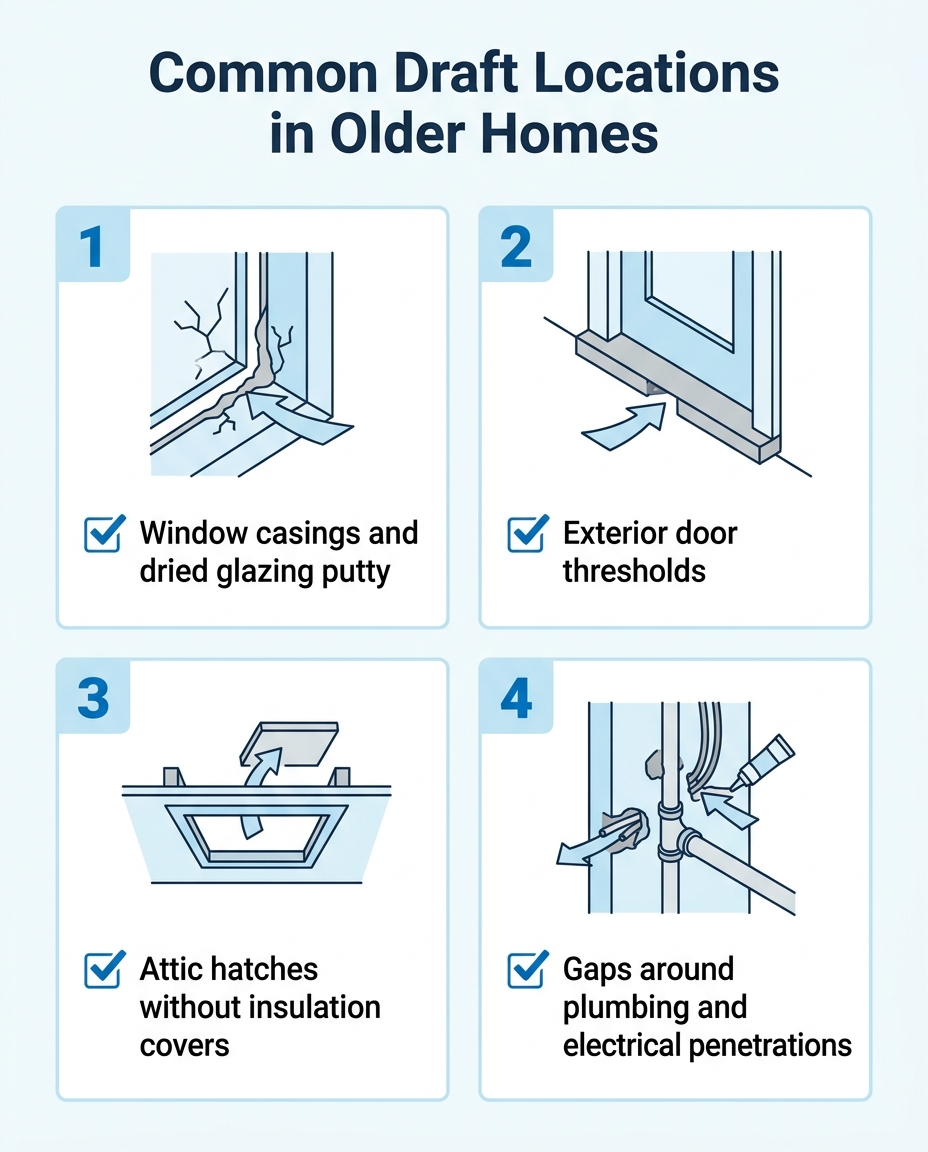
• Window casings and aging glazing putty: The intense Texas summer sun bakes window seals. By early fall, glazing putty and caulking have often dried out, cracked, and shrunk, leaving direct pathways for cold air to bypass the glass entirely.
• Exterior door thresholds and weatherstripping: The rubber and foam strips around your front and back doors compress over time. If you can see daylight under your door or feel a breeze when you run your hand along the edge, the seal is no longer tight.
• Attic hatches and pull-down stairs: Heat rises. If your attic access door lacks a proper insulation cover or weatherstripping, it acts like an open chimney, funneling your expensive heated air straight into the unconditioned attic.
• Plumbing and electrical penetrations: The holes cut into your exterior walls for pipes, outdoor faucets, and electrical outlets are rarely sealed perfectly during construction. These hidden gaps allow cold air to flow directly into your wall cavities and living spaces.
• Disconnected ductwork in unconditioned spaces: If your ducts run through a crawlspace or attic, a loose joint or tear means you are pumping hot air directly into the outdoors before it ever reaches your vents.

How a Leaky Thermal Envelope Causes HVAC Short-Cycling
The relationship between your home's structure and your mechanical equipment is deeply intertwined. When drafts constantly lower the indoor temperature, your thermostat registers the drop and continuously signals the heater to turn on. Because the heat escapes almost as fast as it is generated, the system becomes caught in a frustrating loop.
This leads directly to short-cycling, a condition where the heating system turns on and off rapidly without ever completing a full, steady heating cycle. Your furnace is designed to run in long, efficient phases. When it is forced to constantly stop and start, it never reaches its peak operating efficiency. Properly sizing a system requires an accurate calculation of the home's heat loss; a severely drafty home completely skews this calculation. This is exactly why our installation team knows that sizing HVAC systems for historic Conroe homes with drafty windows requires careful attention to the building's specific architectural quirks.
The True Cost of Overworking Your Equipment
Short-cycling is more than just an annoyance; it is actively damaging your heating infrastructure. When your system operates in this start-and-stop pattern, the consequences stack up quickly over a single winter season.
• Skyrocketing utility bills: Furnaces use the most energy during the initial startup phase. Continuous stopping and starting drives up energy consumption significantly compared to steady operation.
• Premature component failure: The constant on-and-off strain on blower motors, igniters, and heat exchangers leads to rapid wear and tear, drastically reducing the lifespan of the equipment.
• Severe temperature imbalances: Short-cycling prevents the blower from running long enough to distribute air evenly, leaving rooms near the thermostat sweltering while distant bedrooms remain freezing.
• Drafty Envelope (Unsealed) — HVAC Operation Pattern: Short-cycling, rapid on/off switching — Long-Term Impact: High energy waste, premature motor failure
• Sealed Envelope (Weatherized) — HVAC Operation Pattern: Long, steady heating cycles — Long-Term Impact: Lower utility costs, extended equipment lifespan
The Honest Advisor Approach: Envelope First, Equipment Second
When your home feels cold, the immediate reaction is often to blame the machine in the closet or the attic. However, at Carl's Quality Cooling and Heating LLC, we pride ourselves on being honest advisors. Our trustworthy local experts will recommend simple, effective envelope sealing before ever suggesting a major equipment upgrade. Our technicians evaluate the home's overall performance during a routine check-up, rather than just inspecting the mechanical box in isolation.
Often, the most effective recommendation we can make is replacing worn weatherstripping, adding attic insulation, or applying fresh caulk to window frames. Identifying these potential heating problems early in the September pre-heating-season allows homeowners to make informed, practical decisions about their property. Oversizing a furnace to compensate for drafts is a common industry mistake that only exacerbates short-cycling and indoor comfort issues. A larger unit will blast hot air, satisfy the thermostat quickly, and shut down, leaving the rest of the house cold as drafts pull the heat away.
During a recent September maintenance visit for a local homeowner, one of our technicians thoroughly explained possible heating problems tied directly to the home's aging envelope and provided clear, step-by-step options. Because the customer was given the full picture of how their house was losing heat, they were able to decide on the best course of action for their budget and comfort, rather than being pushed into an unnecessary replacement.
Protecting Indoor Air Quality While Sealing Your Home
There is a delicate balance between a tightly sealed home and maintaining healthy, breathable indoor air. As a home is weatherized and drafts are successfully eliminated, less fresh outside air enters the living space naturally. While this is fantastic for your heating efficiency and utility bills, it changes how the air inside your home behaves.
Without those natural drafts, indoor pollutants, household dust, pet dander, and cooking humidity can quickly become trapped inside the living space. In many Conroe TX residential homes our team visits, we find that weatherizing without considering ventilation leads to stale air and lingering odors. We highly recommend considering professional Indoor Air Quality Services to maintain a healthy environment once your envelope is sealed tight.
Proper ventilation strategies, such as mechanical ventilators or advanced filtration systems, ensure the home remains both energy-efficient and comfortable to breathe in. These systems exchange stale indoor air for fresh outdoor air without losing the valuable heat your furnace just worked so hard to produce. By addressing both the envelope and the air quality, you create a truly comfortable indoor climate.
Preparing for Sudden Texas Cold Snaps
While the Gulf Coast region generally enjoys mild winters, as local HVAC professionals, we know firsthand that sudden and sharp cold fronts are a defining feature of the local climate. Conroe's mild winters are punctuated by sudden, sharp cold snaps, making pre-heating-season draft detection absolutely critical to prevent rapid indoor heat loss. A beautiful seventy-degree afternoon can plummet to near-freezing temperatures by the following morning when a strong front pushes through.
Older homes lose heat incredibly rapidly during these sudden drops if the building envelope is compromised. The heating system is suddenly forced to transition from sitting idle to running at maximum capacity against a massive influx of freezing drafts. Taking proactive steps during the September pre-heating-season ensures the home retains heat when the temperature unexpectedly plummets in November or December.
A well-sealed home requires significantly less energy to maintain a stable temperature during these extreme weather shifts. The thermal envelope acts as a buffer, holding the warmth inside and giving your heating system the time it needs to operate efficiently and effectively, no matter how fast the weather changes outside.
Take Control of Your Home's Comfort This Fall
Sealing drafts is the correct, practical first step to ensuring a warm home and a properly functioning heating system. Before you assume your furnace is broken or undersized, our team recommends taking the time during the September pre-heating-season to inspect your windows, doors, and attic access points. Fixing these leaks protects your equipment from the damaging effects of short-cycling and keeps your hard-earned heat inside where it belongs.
Once the thermal envelope is secure, our professional evaluation can confirm if your HVAC equipment is operating efficiently and safely. Scheduling a thorough system evaluation ensures any remaining performance issues are addressed before the heavy winter weather arrives. You deserve clear guidance on how to identify heat escape points and confirmation that sealing drafts is the right move for your home's long-term comfort.
Frequently Asked Questions
Why is my house so cold even with the heating on?
The short answer is that your home is likely losing heat faster than your furnace can produce it. Drafts around windows, doors, and unsealed attics pull cold air in while allowing warm air to escape. If the thermal envelope is compromised, even a brand-new heating system will struggle to keep the living space comfortable. Sealing these gaps is usually the most effective way to restore consistent warmth.
Does weatherstripping save on heating bills?
Yes, replacing worn weatherstripping directly reduces energy waste. When your doors and windows have tight seals, your heating system does not have to run as frequently to maintain the set temperature on your thermostat. This reduction in operating time translates directly to lower utility usage over the course of the winter season.
How can I tell if my house is drafty?
A simple visual and physical inspection can reveal most major drafts. Look for visible daylight around exterior door frames or dried, cracked putty on window panes. You can also hold your hand near window casings and electrical outlets on a windy day; if you feel a noticeable breeze indoors, cold air is penetrating your home's envelope.
How do drafts affect my HVAC system?
Drafts force your heating system into a damaging pattern called short-cycling. Because the warm air escapes quickly, the thermostat constantly triggers the heater to turn on, only to shut off shortly after. This rapid start-and-stop operation causes significant wear and tear on blower motors and heat exchangers, ultimately shortening the lifespan of your equipment.
Should I replace my furnace or insulate my house?
Our team and most industry experts highly recommend sealing and insulating your home first. Upgrading to a larger furnace in a drafty house will only result in higher energy bills and uneven heating, as the new unit will short-cycle just like the old one. Once the thermal envelope is sealed, you can accurately determine if your current furnace is actually undersized or failing.
What is the best time of year to check for drafts in Texas?
Early fall is the ideal time to evaluate your home's thermal envelope. Checking for drafts in September or October allows you to replace caulking and weatherstripping before the first sudden cold snap hits. Being proactive ensures your heating system is protected and your home is ready before the extreme temperature shifts occur.