
Cutting Through the Fall Duct Cleaning Hype
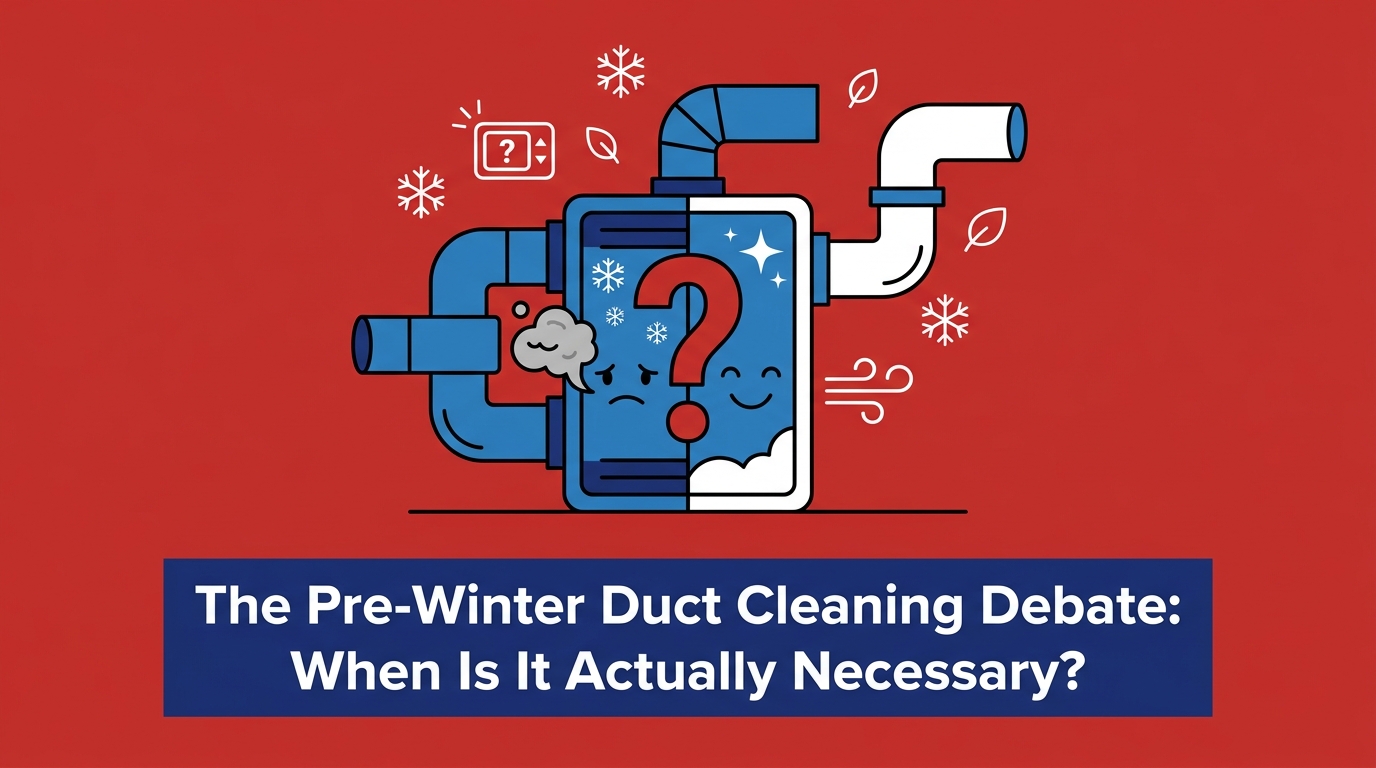
Having your air ducts scrubbed every single autumn doesn't guarantee a healthier home—and in many cases, it might be an unnecessary expense. At Carl's Quality Cooling and Heating LLC, The Pre-Winter Duct Cleaning Debate: When Is It Actually Necessary? is a question our team hears constantly as the September pre-heating transition begins across Conroe. You check your mailbox and find it stuffed with "fall special" coupons promising to purify your home's air, eliminate dust, and protect your family from seasonal allergens. While comprehensive indoor air quality services are absolutely vital for maintaining a healthy living environment, aggressive seasonal marketing often blurs the line between genuine mechanical needs and profitable upsells.
Before you schedule any heating services for the colder months, it helps to understand what is actually lurking in your ventilation system. Ductwork is out of sight, which makes it incredibly easy for marketers to leverage the fear of the unknown. Homeowners are led to believe that months of idle time during the summer have turned their heating ducts into hazardous dust traps. The reality of indoor air quality is far more nuanced. This guide cuts through the seasonal marketing hype to help you evaluate your own HVAC system honestly, providing the facts you need to decide if a professional duct cleaning is a mandatory step this fall, or if your money is better spent on standard system maintenance.
That First-Time Furnace Smell: Normal Dust or Dirty Ducts?
The biggest trigger for duct cleaning anxiety usually happens the very first time you turn your thermostat to the heat setting. During the September pre-heating transition, firing up the furnace after months of dormancy often produces a distinct, slightly alarming burning odor that fills the house. Naturally, many homeowners panic, assuming this smell means their ductwork is choked with hazardous debris that is actively catching fire.
The mechanical reality: This temporary odor is rarely a sign of catastrophically dirty ducts. Throughout the long cooling season, microscopic household dust naturally settles on the surface of your furnace's heat exchanger. When the burners ignite for the first time in the fall, those metal components heat up rapidly, and that thin layer of accumulated dust simply burns off. The resulting smell is pushed through your vents by the blower motor, giving the false impression that the ductwork itself is the source of the burning dust.
This normal seasonal occurrence is frequently weaponized by aggressive marketing campaigns to sell unnecessary cleanings. A standard system check is usually all that is required to ensure safe operation. To help you distinguish between a harmless seasonal startup and a real issue, our technicians rely on specific patterns we see every fall:
• Brief dusty/burning smell lasting 30-60 minutes on first startup — Likely Cause: Normal dust burning off the heat exchanger — Recommended Action: Open a window; allow the system to run its cycle.
• Acrid, electrical, or melting plastic smell — Likely Cause: Failing blower motor, burnt wiring, or electrical short — Recommended Action: Turn off the system immediately and call a professional.
• Persistent musty or "dirty sock" odor every time the system runs — Likely Cause: Bacterial growth on the indoor coil or moisture in the system — Recommended Action: Schedule an HVAC inspection to locate the moisture source.
• Smell of rotten eggs or sulfur — Likely Cause: Natural gas leak — Recommended Action: Evacuate the home and contact your gas provider immediately.
The takeaway: Do not let a temporary, predictable startup smell pressure you into a reactive purchase. If the dusty odor dissipates within an hour, your ducts are likely in acceptable condition, and your heating system is simply shaking off the summer dust.
What the EPA Actually Says About Air Duct Cleaning
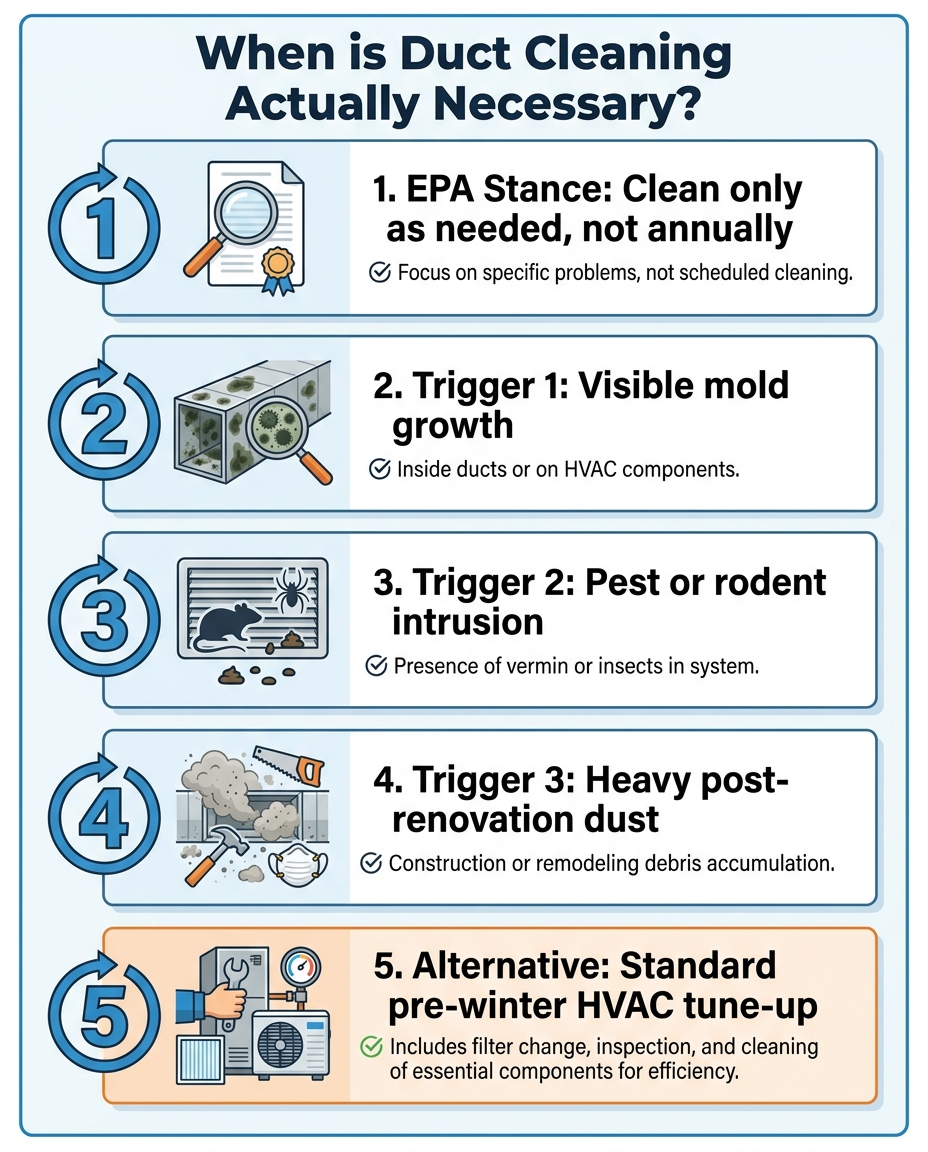
When our team evaluates indoor air quality for Conroe area homes, we always base our recommendations on data rather than advertisements. The Environmental Protection Agency (EPA) has a very clear, heavily researched stance on residential ductwork: routine, annual air duct cleaning has never been proven to prevent health problems outright. Furthermore, studies have not conclusively demonstrated that particle levels inside homes increase significantly simply because the ducts are dirty.
The EPA's official recommendation is that ducts should only be cleaned on an "as needed" basis. This contradicts the popular marketing narrative that duct cleaning should be treated like an annual oil change. The reasoning comes down to the basic physics of airflow. Much of the dirt that accumulates inside air ducts adheres to the duct surfaces and does not necessarily enter the living space. As long as your system is equipped with a clean, properly fitting air filter, the majority of airborne particulates are captured before they ever reach the blower motor.
More importantly, the EPA warns that indiscriminate cleaning of ductwork can sometimes cause more harm than good. Modern HVAC systems often utilize flexible, insulated ductwork (commonly called flex duct) in attics and crawlspaces. If an untrained operator uses aggressive rotary brushes or improper negative pressure vacuums on these flexible materials, they can easily tear the inner lining. A torn duct immediately begins leaking conditioned air into the attic, drastically reducing your home's energy efficiency and potentially pulling fiberglass insulation particles directly into your breathable air. Cleaning should be a targeted remedy for specific, verified problems, not a blind annual routine.
The 3-Point Checklist: When You Genuinely Need Duct Cleaning
If annual cleaning isn't the standard, how do you know when to pull the trigger? The decision ultimately comes down to physical evidence. Based on our years of field experience, we encourage homeowners to use a clear, hype-free checklist to evaluate their own systems. Without the following three specific triggers, a full duct cleaning is likely an unnecessary expense.
1. Visible Mold Growth Inside Hard Surface Ducts
True mold requires three things to thrive: moderate temperatures, a food source (like dust), and consistent moisture. Unconditioned attic ductwork can sometimes provide all three. However, it is crucial to differentiate between heavy dust—which looks dark and intimidating but is generally harmless—and actual biological growth.
What to look for: If you remove a vent cover and see fuzzy, patchy, or slimy growth spreading across the sheet metal or the plastic components of your system, you may have a mold issue. Because many types of mold look similar to compacted dust, a professional assessment is often required to verify biological growth. If mold is confirmed, the ductwork must be professionally cleaned and treated, and the underlying moisture problem must be resolved so the growth does not immediately return.
2. Evidence of Pest Intrusion
Ductwork provides a dark, sheltered environment that can be highly attractive to rodents, insects, and other pests seeking refuge from the elements. When pests breach your duct system, they leave behind droppings, urine, nesting materials, and sometimes carcasses.
The health risk: When the blower motor kicks on, the air forced through the ducts can pick up dangerous biohazards, allergens, and bacteria from the pest waste, distributing it throughout the living space. If you hear scratching noises in your vents, notice strange odors, or find insect casings near your registers, pest intrusion is a strong possibility. In this scenario, professional cleaning is absolutely required to remove the biohazards safely—but only after an exterminator has successfully eradicated the pests and sealed their entry points.
3. Post-Renovation Debris
Major home remodels can wreak havoc on an HVAC system, especially if the heating or cooling was running during heavy construction. Sanding drywall, refinishing hardwood floors, and cutting tile generate massive amounts of ultrafine particulate matter.
The impact on airflow: These microscopic dust particles are often too fine for standard fiberglass filters to catch. They bypass the filter, coat the blower motor, settle on the indoor coil, and eventually collect heavily inside the return and supply ducts. If you have recently completed a significant home renovation without taking strict precautions to seal off your return vents, a thorough, professional duct cleaning is a highly recommended investment to reset your home's air quality and protect your mechanical equipment from premature wear.

Gulf Coast Climate Factors: High Humidity and Your Ductwork
While the EPA guidelines apply nationwide, we know from daily service calls that Conroe area homes face a unique set of environmental challenges that directly impact the health of their ventilation systems. The Gulf Coast climate heavily influences the condition of your HVAC system, particularly when it comes to the first item on our checklist: mold growth. With average summer humidity frequently exceeding 70 percent, your home's infrastructure spends months battling massive amounts of moisture in the air.
The physics of condensation play a major role here. During the peak of summer, your air conditioner pushes cold air (often around 55 degrees) through ductwork that is routed through an unconditioned attic. That attic can easily reach temperatures well over 130 degrees. If the insulation around those ducts is degraded, compressed, or improperly sealed, the cold surface of the duct meets the hot, humid attic air. The result is condensation. Your ducts begin to "sweat."
Over the course of a long cooling season, this persistent summer moisture can accumulate inside the ductwork or drip onto the ceiling below. By the time the fall heating season arrives, that trapped moisture, combined with normal household dust, has created the perfect breeding ground for actual mold growth. This is why the distinction between "harmless dust" and "hazardous mold" is so critical for local readers. Routine AC unit cleaning and proper maintenance during the cooling season are your best defenses against this moisture buildup, preventing the need for an expensive duct remediation later in the year.
Why a Pre-Winter Tune-Up is Often the Better Investment
For roughly 90 percent of homes that do not have visible mold, pest infestations, or heavy post-remodel dust, a standard seasonal tune-up provides significantly better value and actual performance improvements compared to an arbitrary duct cleaning. While scrubbing the vents might make you feel productive during the September pre-heating transition, it does very little to improve the mechanical reliability or safety of your furnace.
A proper, professional heating tune-up focuses on the critical components that actually consume energy and pose potential safety risks. During a comprehensive maintenance visit, a technician will:
• Inspect the heat exchanger: Checking for microscopic cracks that could leak carbon monoxide into the home.
• Test safety limit switches: Ensuring the system will shut down automatically if it overheats or if airflow is restricted.
• Clean the flame sensor and burners: Removing the soot and oxidation that cause a furnace to short-cycle or fail to ignite.
• Measure blower motor amperage: Verifying that the motor is not overworking due to electrical wear or a clogged filter.
• Calibrate the thermostat: Ensuring the system responds accurately to temperature changes in the home.
At Carl's Quality Cooling and Heating LLC, being a veteran-owned, family-run business means you receive the discipline and accountability that military service demands. We believe in honest recommendations over high-pressure sales tactics. We see the value of this trust year-round, especially during the crucial fall transition. For example, when local homeowners call us in September worried about dusty startup odors, our technicians perform a thorough inspection and honestly tell them if they just need a standard tune-up, rather than pushing an unnecessary duct cleaning. That exact same commitment to straightforward, reliable service applies to all of our heating maintenance.
Investing in a routine HVAC maintenance plan ensures that these critical mechanical checks happen automatically every season, protecting your equipment and your peace of mind without wasting money on unneeded services.
Frequently Asked Questions About Pre-Winter Duct Care
Is duct cleaning a waste of money?
It can be a waste of money if it is done simply as a routine annual chore without physical evidence of a problem. The EPA states that cleaning ducts solely because they look dusty does not yield measurable health benefits. However, if your system has suffered from pest intrusion, visible mold growth, or heavy construction debris, professional cleaning becomes a necessary and valuable investment. Always base your decision on a physical inspection rather than a marketing calendar.
How often should you clean your air ducts?
There is no standard timeline for duct cleaning, as it should be performed strictly on an as-needed basis. Some homes may go a decade or more without ever requiring the service, provided they change their air filters regularly and maintain their equipment. You should only schedule a cleaning if you confirm the presence of mold, pests, or excessive blockages. Focusing on biannual HVAC tune-ups is a much better strategy for long-term system health.
What happens if you don't clean your air ducts?
In most normal situations, nothing negative happens if you leave lightly dusty ducts alone. The dust simply remains adhered to the walls of the ductwork and does not enter your living space in significant quantities. However, if you ignore severe issues like active mold or a rodent infestation in the ducts, the system will continuously circulate allergens, biohazards, and foul odors throughout your home. This can lead to respiratory irritation and diminished indoor air quality.
How do I know if my ducts actually need cleaning?
You can usually identify the need for cleaning through visual inspection and physical symptoms. Look for visible mold growth on the vent covers or inside the hard duct surfaces, watch for signs of insects or rodents entering the registers, and note if your home recently underwent a massive remodeling project that generated heavy dust. If you experience a sudden, unexplained spike in allergy symptoms indoors, a professional can inspect the ductwork to see if it is the culprit.
Can cleaning air ducts cause damage to the HVAC system?
Yes, improper cleaning techniques can cause severe damage, particularly to flexible ductwork. If an untrained technician uses stiff rotary brushes or applies excessive negative vacuum pressure, they can easily tear the inner plastic lining of insulated flex ducts. Once torn, the duct will leak conditioned air into your attic and draw fiberglass insulation into your air supply. It is crucial to hire certified professionals who use the correct equipment for your specific type of ductwork.
Are fall duct cleaning specials usually legitimate?
While some reputable companies offer genuine seasonal discounts, many "fall specials" are designed as loss-leaders to get a salesperson into your home. These heavily discounted offers often result in high-pressure upsells for expensive UV lights, whole-home purifiers, or unnecessary deep-cleaning services. Always read the fine print, ask exactly what the promotional price covers, and be wary of technicians who claim your system is dangerous without showing you concrete photographic evidence.
Get an Honest HVAC Assessment This Fall
Resolving The Pre-Winter Duct Cleaning Debate: When Is It Actually Necessary? ultimately comes down to knowing exactly what your system needs—no more, no less. Peace of mind during the colder months doesn't come from buying every service advertised; it comes from having a trustworthy local partner evaluate your equipment honestly. If you are unsure about the state of your ductwork, or if you simply want to ensure your furnace is safe and ready for the season, our team is here to help. Reach out to Carl's Quality Cooling and Heating LLC for reliable heating services today, and get a clear, hype-free understanding of what it takes to keep your home comfortable and safe.