
Is Your AC Struggling to Keep Up with the Summer Heat?
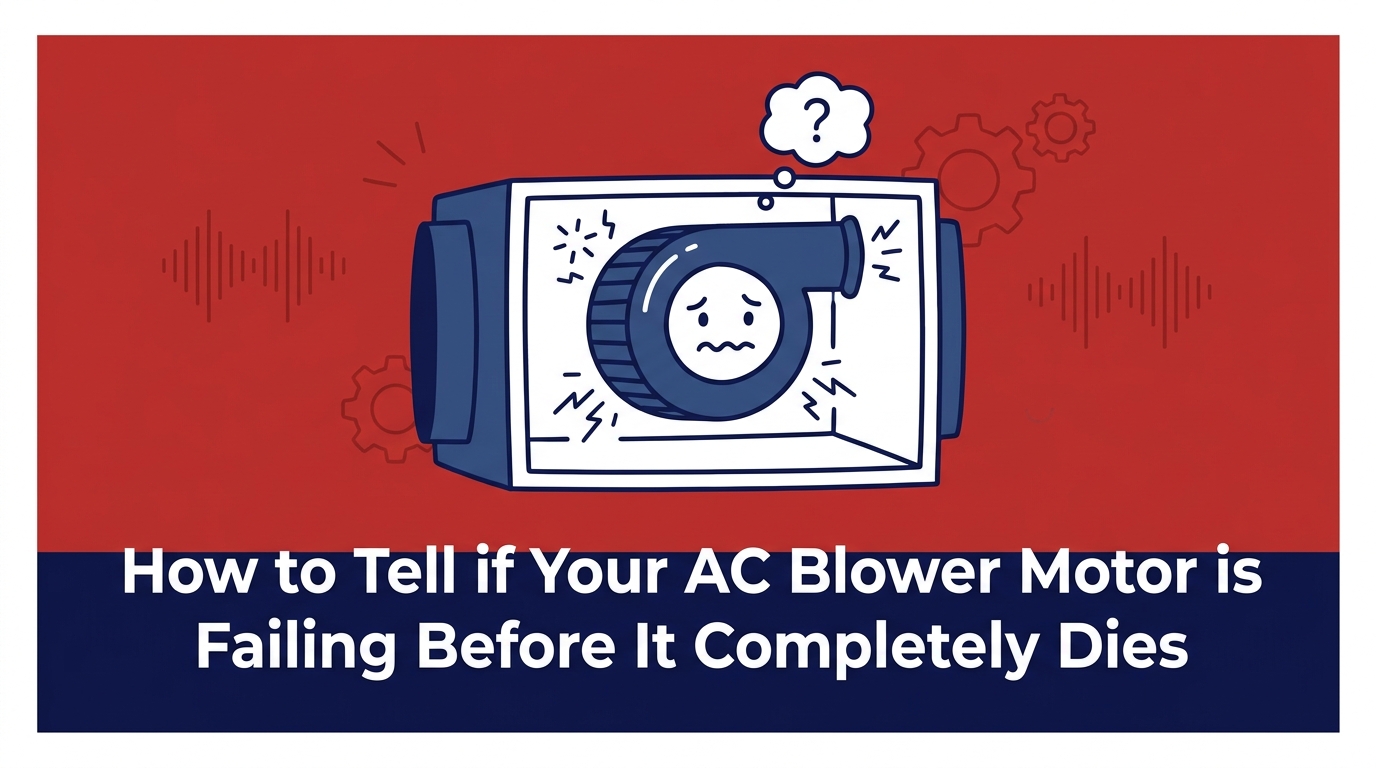
Is your system running nonstop, leaving you searching for how to tell if your AC blower motor is failing before it completely dies? You are not alone. When the intense summer weather arrives, your air conditioning system becomes the most important appliance in your home. The blower motor acts as the heart of your indoor air circulation, tirelessly pushing cooled air through your ductwork. However, this critical component does not usually fail without warning. It typically gives you subtle signs that it is struggling long before it grinds to a halt.
The decision you face right now is critical: you can either address these early warning signs proactively, or you can risk a complete emergency breakdown on a 100-degree afternoon. During the July peak-heat in Conroe TX, the extreme temperatures force your air conditioning system to run almost constantly. This continuous operation accelerates wear and tear on aging components, especially the blower motor bearings and electrical parts. Ignoring the symptoms usually leads to a much larger, more stressful repair situation when you least expect it.
Addressing these issues early is always the smarter choice. By investing in professional air conditioning services at the first sign of trouble, you protect your system from further damage. Furthermore, keeping your system enrolled in a proactive HVAC maintenance plan ensures that these wear-and-tear issues are caught by a technician before they ever escalate into an emergency. Knowing what to listen for and what to feel at your vents gives you the power to act before your home loses its cooling entirely.
Indoor Blower Motor vs. Outdoor Condenser Fan: Knowing the Difference
Before you can accurately diagnose a problem, you need to know exactly which part of your system is acting up. Homeowners frequently confuse the two main fans in their HVAC system. A typical split-system air conditioner relies on two distinct motors to keep your home comfortable, and understanding their different roles helps you identify where the failure is occurring.
The Indoor Blower Motor: This component is located inside your home, usually within the attic, basement, or a dedicated utility closet. Its sole job is to pull warm indoor air through the return ducts, push it over the cold evaporator coil, and distribute the freshly cooled air back into your living spaces. If you are experiencing weak or inconsistent airflow at the vents despite the system running constantly, the issue is almost certainly with this indoor blower motor.
The Outdoor Condenser Fan: This fan is located inside the large metal cabinet sitting outside your home. Its job is to pull outside air across the condenser coils to exhaust the heat that the refrigerant absorbed from inside your house. If this fan fails, your system will blow warm air indoors, but the volume of air coming out of the vents will remain strong.
• Indoor Blower Motor — Location: Inside (Attic/Closet) — Primary Function: Circulates conditioned air through the home — Signs of Failure: Weak airflow at vents, squealing indoors, frozen coils
• Outdoor Condenser Fan — Location: Outside (Condenser Unit) — Primary Function: Removes heat from the refrigerant — Signs of Failure: System blows warm air, loud grinding outside, hot compressor
By establishing this foundational knowledge, you can accurately communicate your symptoms to a professional. If the strange noises or airflow issues are happening inside the house, you are dealing with a blower motor problem that requires immediate attention.
Auditory Red Flags: What Does a Failing Blower Motor Sound Like?
Your ears are often the best diagnostic tools you have. A healthy blower motor operates with a smooth, quiet hum that fades into the background noise of your home. When components begin to degrade, the sounds change dramatically. Recognizing these auditory red flags early can save you from a complete system failure during the brutal July peak-heat in Conroe TX.
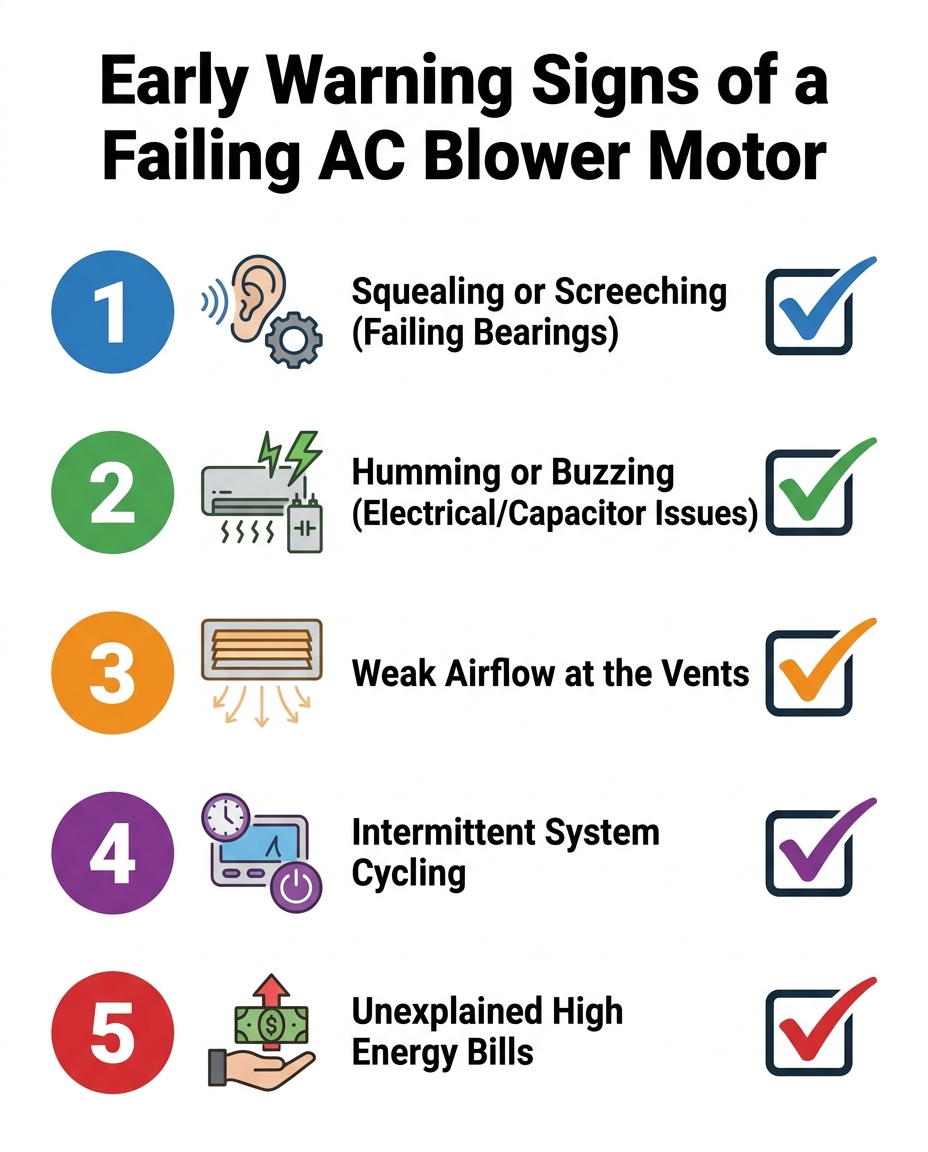
• Squealing or screeching: A high-pitched, continuous squeal is a classic sign of mechanical friction.
• Loud humming or buzzing: A deep, electrical vibration sound usually points to a motor that is receiving power but cannot physically spin.
• Grinding or metal-on-metal scraping: A harsh, jarring noise indicates that internal components have broken or the motor mounts have failed entirely.
• Rattling or banging: This often means a part is loose, or the blower wheel itself has become unbalanced and is hitting the housing.
Squealing or Screeching Noises
A typical pattern we see is a high-pitched squealing noise echoing through the return vents. This sound almost always indicates that the motor's bearings are wearing out. Bearings require precise lubrication to allow the motor shaft to spin freely at high speeds. Over years of use—especially during periods of constant operation—this lubrication breaks down or dries out. Once the metal bearings begin rubbing directly against the housing, the resulting friction creates that unmistakable screech. If caught early, a professional can often resolve this before the excessive heat causes the motor to seize completely.
Humming Without Airflow
If you stand near your indoor unit and hear a loud electrical humming or buzzing, but no air is moving, you are listening to a motor struggling to start. This points to a motor that is receiving the correct electrical voltage but lacks the torque to begin spinning. Very often, this is related to a failing run capacitor rather than a dead motor. The capacitor acts like a heavy-duty battery that gives the motor the initial jolt it needs to start. When the capacitor weakens, the motor just sits there and hums, absorbing electricity and generating dangerous amounts of heat until a professional replaces the faulty electrical component.

Airflow Changes: Feeling the Problem at the Vent Level
Beyond the sounds your system makes, the physical sensation of the air entering your rooms tells a compelling story. Under normal conditions, your air conditioner should push a strong, steady stream of cold air to the farthest corners of your house. If you place your hand over a vent and feel weak or inconsistent airflow at the vents despite the system running constantly, your blower motor is actively failing to do its job.
The impact on cooling capacity: When a blower motor slows down due to failing bearings or a weak capacitor, it simply cannot move the required volume of air over the evaporator coil. This means your house takes significantly longer to cool down, and the system must run continuously to try and reach the temperature set on your thermostat. You might notice that rooms far away from the indoor unit, like master bedrooms or upstairs spaces, become unbearably warm while the hallway remains somewhat cool.
The impact on indoor humidity: Proper airflow is essential for both cooling and dehumidification. In high-humidity environments, a struggling blower motor directly leads to a muggy, uncomfortable indoor environment. As the warm indoor air passes over the cold evaporator coil, the moisture condenses and drains away. If the air moves too slowly, the system cannot effectively dehumidify the volume of air in your home. Your thermostat might read 74 degrees, but the stagnant, humid air will make it feel sticky and miserable inside. If you notice this heavy, damp feeling combined with weak airflow, professional diagnostic testing is required immediately.
Operational Red Flags: Intermittent Starting and High Energy Bills
Sometimes the warning signs are not auditory or physical, but behavioral. A blower motor that is on the verge of failure will often exhibit strange operational patterns as it struggles to overcome mechanical resistance or electrical deficits. Paying attention to how your system cycles on and off can provide critical clues.
Intermittent cycling and thermal overload: One common operational red flag is intermittent starting. You might hear the motor turn on, run for three or four minutes, shut off prematurely, and then try to start again a few minutes later. This happens because modern blower motors are equipped with internal thermal overload protectors. Continuous operation during July's peak heat in Conroe TX puts maximum thermal stress on the motor windings. If the motor is working too hard due to bad bearings or a clogged filter, it overheats. The thermal switch trips, shutting the motor down to prevent an electrical fire. Once it cools off, it tries to run again, creating a frustrating cycle of short, ineffective bursts of cooling.
Unusually high energy bills: A struggling motor is a massive drain on your household electricity. When bearings begin to fail, the motor encounters physical resistance. To maintain its required speed, it draws more and more amperage from your electrical panel. This excessive electrical draw spins your utility meter faster, leading to surprisingly high energy bills at the end of the month. If your cooling habits have not changed, but your electricity usage has spiked dramatically, a failing blower motor drawing excessive amperage is a prime suspect. Continuous high-load operation reduces the lifespan of these components rapidly, turning a simple wear-and-tear issue into a complete motor burnout if left unchecked.
The Danger of Waiting: Why Proactive Diagnostics Save Your Summer
Human nature often tempts us to ignore a problem as long as the air conditioner is still producing some cold air. However, running a compromised system is a gamble that rarely pays off. There is a massive difference between the calm, controlled process of a scheduled diagnostic visit and the sheer panic of an emergency outage during the hottest week of the year.
One local homeowner reached out during a summer holiday weekend when their air conditioner went out during extreme July 4th heat. Because they acted quickly when the system failed, a technician was able to come out, assess the need for replacement components, and return the next morning to get the new unit installed and working well by the end of the day. While this situation was resolved quickly, waiting until a holiday weekend to address known symptoms often means competing with dozens of other desperate homeowners for limited emergency repair slots.
Catching a failing component early changes the entire trajectory of the repair. For example, if you call a professional when you first hear a humming noise, they might only need to replace an inexpensive capacitor. If you wait until the motor burns itself out trying to start without that capacitor, you are facing a much larger, more complex repair. Working with a veteran-owned company means you benefit from a culture of integrity and accountability. Proactive care empowers you to get honest, calm diagnostics without the high-pressure fear tactics often used by others during late-night emergencies. You get the truth about your system's condition, allowing you to make informed decisions before the July peak-heat in Conroe TX forces your hand.
Next Steps: When to Call for Professional AC Troubleshooting
Once you recognize the early warning signs, taking the correct next steps is vital to protecting your equipment and your home. Testing electrical components, handling high-voltage capacitors, and replacing heavy blower motors requires specialized training and a professional license. Here is exactly what you should do when you suspect a failure.
1. Turn off the system immediately: If you hear loud grinding, smell burning electrical components, or feel weak or inconsistent airflow at the vents despite the system running constantly, turn the thermostat to the "Off" position. Forcing a failing motor to run will only cause cascading damage to other parts of your HVAC system.
2. Check your air filter: A severely clogged air filter can mimic the symptoms of a failing blower motor by choking off the airflow. Verify that your filter is clean and unobstructed before calling for help.
3. Contact a licensed professional: Reach out to a trusted, local HVAC technician to perform a comprehensive diagnostic check. They have the multimeters and tools necessary to safely test the motor windings and capacitors.
4. Explore your options: If the diagnostic reveals that a major repair or system replacement is necessary, remember that flexible financing options are often available to help manage the investment without unnecessary stress.
Another local customer experienced a faulty AC unit during intense Texas hot weather. Because they reached out promptly, they received service the same day they called, and the work was done correctly and fairly. If you wait too long and your system shuts down entirely, you will want to know what to do if your AC fan stops working completely. Proactive action is always your best defense against the heat.
Frequently Asked Questions About AC Blower Motor Failure
What does a failing AC blower motor sound like?
A failing AC blower motor typically sounds like high-pitched squealing, screeching, loud grinding, or deep electrical humming. Squealing usually indicates that the internal bearings have lost their lubrication and are experiencing severe metal-on-metal friction. A humming or buzzing sound often means the motor is receiving electricity but a failed capacitor is preventing it from spinning. If you hear loud grinding or banging, shut the system down immediately, as components may have broken loose inside the housing.
Will the AC still run if the blower motor is bad?
The outdoor condenser unit may continue to run even if the indoor blower motor has failed, but this creates a dangerous situation for your system. Without the indoor blower motor pushing warm air over the indoor evaporator coil, the refrigerant inside the coil will drop below freezing. This causes thick ice to form over the entire indoor unit, which can eventually lead to liquid refrigerant flowing backward and destroying your outdoor compressor. Always turn the system completely off if the indoor fan stops blowing air.
How long does an AC blower motor typically last?
Under optimal conditions, an AC blower motor typically lasts between 10 and 20 years. However, this lifespan is heavily dependent on regular maintenance and operating conditions. Continuous high-load operation, such as running constantly during the extreme July peak-heat in Conroe TX, accelerates wear on the bearings and windings. Changing your air filters regularly and scheduling annual maintenance can significantly extend the life of the motor by reducing the physical resistance it has to overcome.
Why is my AC fan humming but not turning on?
If your AC fan is humming but not turning on, it is usually struggling with a bad run capacitor rather than a completely dead motor. The capacitor stores energy and provides a massive jolt of electricity to get the heavy fan blades spinning. When the capacitor degrades, it cannot deliver that initial torque, leaving the motor humming as it absorbs electricity it cannot use. This requires a licensed professional to safely discharge and replace the high-voltage capacitor.
Can a bad capacitor cause the blower motor to fail?
Yes, a weak or failing capacitor forces the blower motor to work much harder to start, which can eventually cause total motor failure. When the motor tries to start without the proper electrical boost, it draws excessive amperage and generates extreme heat. Over time, this heat melts the protective insulation on the motor's copper windings, leading to an electrical short. Replacing a weak capacitor during routine maintenance is a highly effective way to protect the expensive blower motor.
Why is my AC blowing weak air despite running constantly?
Your AC blows weak air when a failing motor cannot reach its required RPMs, resulting in a severe drop in airflow volume at the vents. This can be caused by worn-out bearings creating physical drag, a failing capacitor providing insufficient power, or an accumulation of dirt on the blower wheel blades. Because the air is moving too slowly through the ductwork, your home will not reach the desired temperature, causing the system to run endlessly in a futile attempt to cool the space.
Don't Wait for a Total Breakdown to Get Help
Recognizing the early warning signs gives you complete control over your home's comfort and your budget. If you are noticing strange sounds or weak or inconsistent airflow at the vents despite the system running constantly, you do not have to wait for the system to break down completely to ask for help. Symptom-based criteria are entirely valid reasons to call a professional. Understanding how to tell if your AC blower motor is failing before it completely dies allows you to schedule a convenient, stress-free diagnostic visit. Protect your home from the extreme summer temperatures by reaching out to a local expert to diagnose and resolve your system's struggles today.