
Don't Let Your HVAC Catch You Off Guard
How often should you service your HVAC is one of the most important questions a homeowner can ask — and most people only think about it when something goes wrong. Here's the short answer:
| System Type | Recommended Service Frequency |
|---|---|
| Central Air Conditioner | Once a year (spring) |
| Gas Furnace | Once a year (fall) |
| Heat Pump | Twice a year (spring and fall) |
| Older Systems (10+ years) | Every 3-6 months |
Most homes in Conroe and Montgomery County benefit from at least two professional tune-ups per year — one before cooling season and one before heating season. If you have a heat pump, pets, allergies, or an older system, you may need more frequent attention.
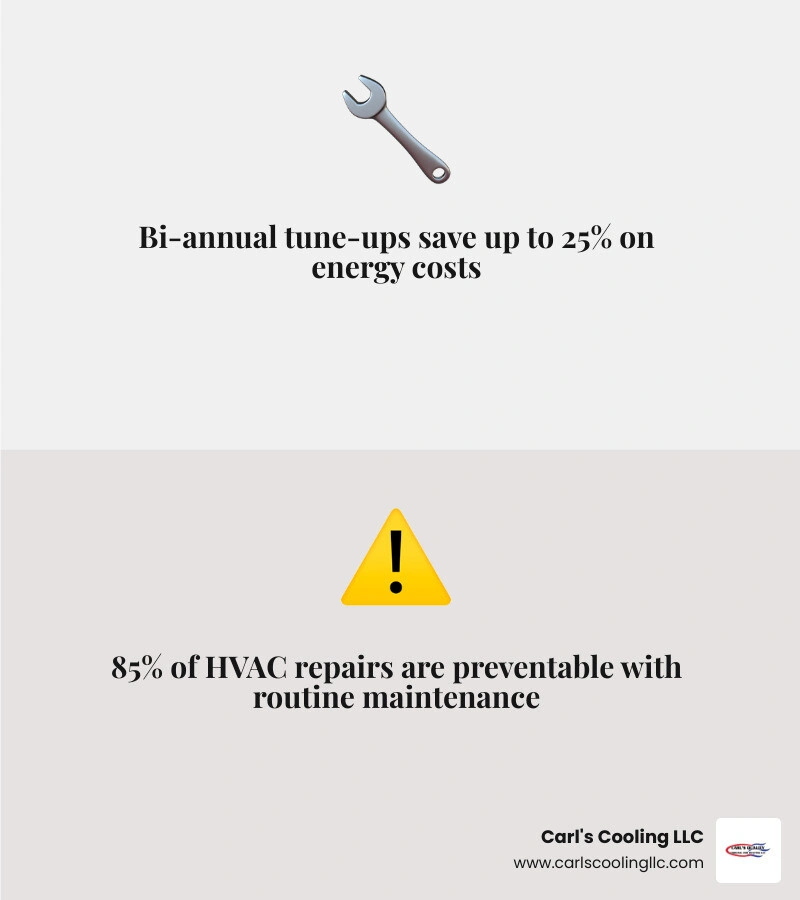
Think of it like skipping oil changes on your car. A neglected HVAC system can use up to 25% more energy than one that gets routine care. And according to industry data, 85% of HVAC repairs are tied directly to a lack of proper maintenance — breakdowns that a simple tune-up could have prevented.
Texas summers are no joke. When your system fails in July, you're not just uncomfortable — you're scrambling for an emergency repair that could have been avoided. At Carl's Cooling LLC, we see it every season: a small problem left unchecked becomes a costly breakdown at the worst possible time.
This guide walks you through exactly how often to schedule service, what factors change that timeline, and what you can do between visits to keep your system running strong.
How Often Should You Service Your HVAC for Maximum Efficiency?

Efficiency isn't just a buzzword; it’s the difference between a reasonable utility bill and a monthly shock. To keep your system running at peak performance, a bi-annual schedule is the gold standard. In our corner of Texas, where the humidity can feel like a heavy blanket, your system works incredibly hard.
We recommend scheduling your cooling tune-up in the spring and your heating tune-up in the fall. By following these Spring HVAC System Maintenance Tips, you ensure that your AC is ready to handle the first 90-degree day in April or May without breaking a sweat. A well-tuned system can use 10% to 30% less energy than a neglected one, simply because it doesn't have to fight through dust, grime, or worn-out mechanical parts to circulate air.
The Ideal Maintenance Schedule for Central AC and Furnaces
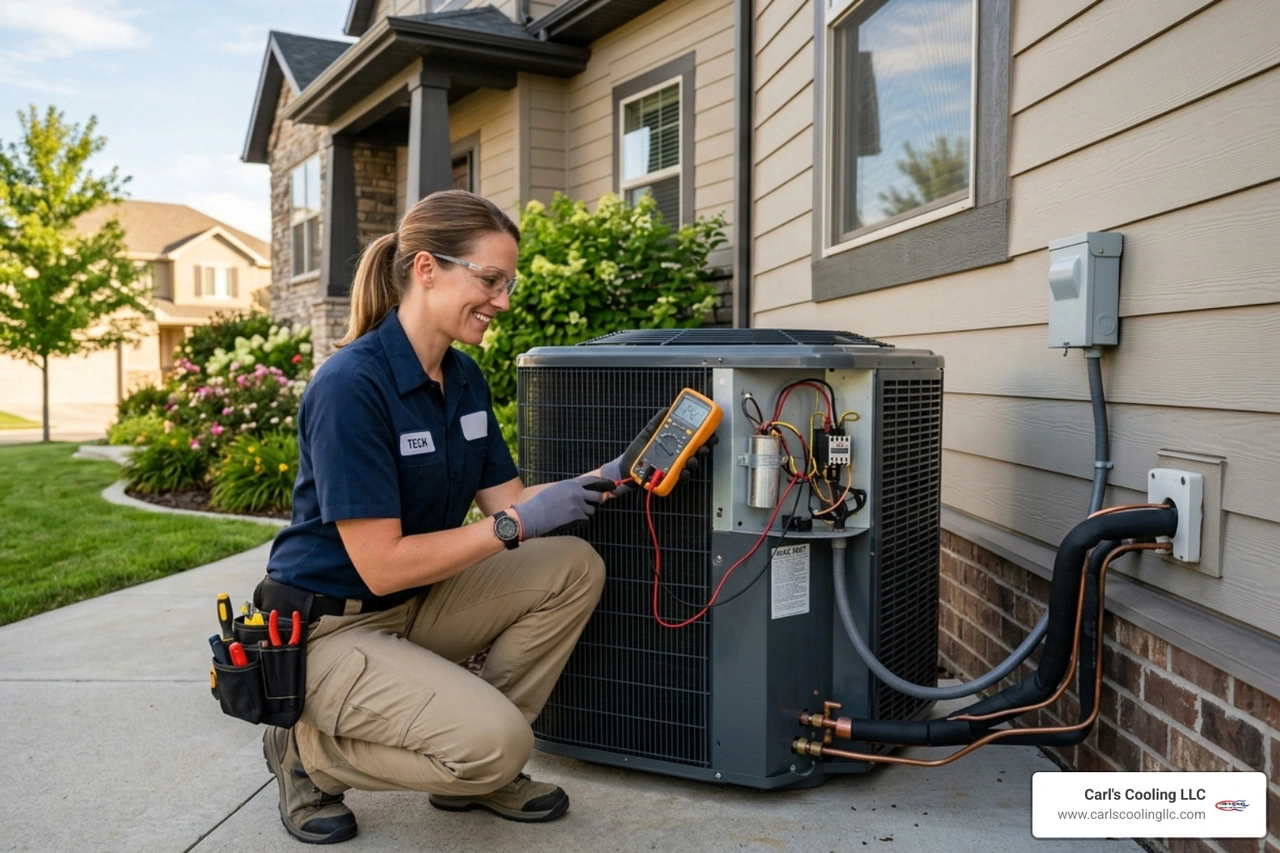
For most traditional setups, "annual" is the magic word for each component. Your central air conditioner needs an annual professional inspection every spring. This is when we check refrigerant levels, clean the outdoor condenser, and ensure the electrical components are safe.
Conversely, your heating system requires an Annual Furnace Service every fall. Even though our winters in places like The Woodlands or Magnolia are shorter than our summers, a furnace that hasn't been used in months can harbor dust, cracked heat exchangers, or faulty igniters. Servicing the furnace annually ensures that when that first cold front hits, your home stays warm and, more importantly, safe from carbon monoxide risks.
Why Heat Pumps Require Service Twice a Year
If your home uses a heat pump, the rules change slightly. Unlike a furnace that rests all summer or an AC that sleeps all winter, a heat pump is a year-round workhorse. It provides cooling in the summer and reverses its cycle to provide heat in the winter.
Because the reversing valve, defrost cycle, and compressor are in constant use, heat pumps experience double the wear and tear of a standard AC unit. Servicing them twice a year—once in the spring and once in the fall—is essential to check for component wear and ensure the transition between seasons is seamless.
Factors That Influence Your Maintenance Frequency
While the "twice-a-year" rule is a great baseline, your specific lifestyle and environment in Montgomery County might mean you need more frequent visits. Factors like system age, usage patterns, and even your landscaping can dictate how often should you service your hvac. For instance, if your outdoor unit is surrounded by cottonwood trees or heavy brush, it may need cleaning more often to prevent airflow blockages. Understanding these variables is key to Extending Your HVAC System Lifespan.
How Often Should You Service Your HVAC if You Have Pets?
We love our furry friends, but they are undeniably tough on HVAC systems. Pet dander and fur are experts at bypassing standard filters and accumulating on the evaporator coils and inside the blower motor.
If you have multiple pets, you may need to check your filters every 30 days and consider professional maintenance more frequently. Excessive fur buildup can lead to "suffocating" the system, causing it to overheat and fail. Regular servicing helps with allergy management by ensuring your indoor air quality remains high and your system isn't circulating dander throughout the house.
Determining How Often Should You Service Your HVAC Based on System Age
As a system enters the 10-to-15-year mark, it begins to experience mechanical fatigue. Parts that were once resilient become brittle, and motors may begin to draw more electricity. For older units, we often recommend moving to a more frequent inspection schedule—perhaps every six months without fail—to catch small leaks or failing capacitors before they lead to a total system replacement.
Furthermore, many manufacturer warranties for newer systems actually require proof of annual professional maintenance to remain valid. Following a Complete HVAC System Inspection Guide ensures you aren't just keeping the air cool, but also keeping your financial protections intact.
Why Routine Maintenance is Essential for Texas Homeowners
In areas like Conroe, Spring, and Tomball, our HVAC systems aren't just a luxury; they are a necessity for health and safety. The extreme heat puts a massive strain on the compressor. Regular maintenance is the most effective way to achieve Maintenance Optimal Efficiency, reducing your energy consumption by as much as 30%.
When you consider that 85% of repairs are preventable, the "why" becomes clear. A professional technician can spot a frayed wire or a slightly low refrigerant charge during a routine visit, fixing it for a fraction of the cost of an emergency midnight call-out in the middle of a July heatwave.
Protecting Your Manufacturer Warranty
If your HVAC system was installed within the last few years, it likely came with a 5-to-10-year parts warranty. However, there is often a "fine print" catch: you must provide professional documentation of regular service. If a major component like a compressor fails and you cannot prove the system was maintained, the manufacturer may deny your claim. Utilizing Professional HVAC Maintenance Solutions keeps your paperwork in order and your coverage secure.
Improving Indoor Air Quality in Montgomery County
Texas is famous for its pollen, dust, and high humidity—all of which can compromise your home's air. During AC Home Inspections, we look for signs of mold growth in the drain pan and dust accumulation in the ductwork. Proper maintenance includes cleaning the condensate lines to prevent water backups and humidity spikes, ensuring that your home remains a sanctuary rather than a source of allergy triggers.
Professional vs. DIY: Balancing Your HVAC Care
Maintenance is a partnership between the homeowner and the professional. While there are critical tasks that require a licensed technician, there are several HVAC Maintenance Tips for Homeowners that you can handle yourself to keep things running smoothly between our visits.
What a Professional Tune-Up Includes
A professional visit is much more than a "quick look." When we arrive for a tune-up, we are performing a deep dive into the system's health. Your AC Home Inspection Expectations should include:
- Checking and balancing refrigerant levels (low refrigerant reduces efficiency by 10-20%).
- Tightening all electrical connections to prevent fire hazards.
- Cleaning the condenser and evaporator coils (dirty coils reduce efficiency by up to 25%).
- Testing safety controls and thermostat calibration.
- Lubricating moving parts to reduce friction and wear.
Monthly Tasks for Homeowners
Between professional visits, your primary job is "airflow." The best thing you can do is follow these Summer AC Maintenance Tips:
- Change Air Filters: Do this every 1–3 months. A clogged filter can raise energy bills by 5–15% and is the leading cause of "frozen" AC coils.
- Clear the Outdoor Unit: Ensure there is at least a 2-foot clearance around your outdoor condenser. Remove leaves, grass clippings, and weeds.
- Check Vents: Make sure indoor supply and return vents aren't blocked by furniture or curtains.
- Monitor the Drain: Keep an eye on the condensate drain line to ensure water is flowing out and not backing up into your home.
Warning Signs Your System Needs Immediate Attention
Even with the best maintenance, parts can occasionally fail. Knowing the signs of trouble can help you request Regular Maintenance to Prevent AC Repairs before a small glitch becomes a total system failure. If you see ice on your lines, hear a screeching sound, or notice your energy bills spiking for no apparent reason, your system is crying for help.
Identifying Short Cycling and Odors
Short cycling—when your AC turns on and off every few minutes—is a major red flag. It puts immense stress on the compressor and rarely cools the home effectively. Similarly, if you notice a burning smell or a "musty" odor coming from your vents, it could indicate electrical issues or mold growth. To Ensure Year-Round Performance AC Service, never ignore these "early warning" smells or sounds.
Frequently Asked Questions about HVAC Servicing
How often should I change my air filters in 2026?
In 2026, the standard remains every 90 days for high-quality pleated filters, but in homes with pets or smokers, every 30 days is much safer. If you live in a high-dust area like a new construction zone in Woodforest or Cypress, check them monthly.
Is a maintenance plan worth it for older systems?
Absolutely. In fact, a maintenance plan is more valuable for older systems. It provides the consistent monitoring needed to keep an aging unit alive while giving you priority service if a breakdown does occur. It’s the best way to avoid the "emergency" price tag on a Saturday night.
When is the best time to schedule service in Conroe?
The "sweet spot" is March through April for AC tune-ups and September through October for furnace checks. Scheduling during these off-peak months ensures you get your preferred time slot before the rush of "my AC won't turn on" calls begins in the heat of summer.
Conclusion: Secure Your Comfort in Montgomery County
Maintaining your home’s climate shouldn't be a guessing game. By understanding how often should you service your hvac, you take control of your home’s comfort, safety, and monthly budget. From the quiet streets of Alden Bridge to the lakeside homes in Walden and Point Aquarius, Carl's Cooling LLC is here to ensure your system survives the Texas sizzle.
We are a family-owned team dedicated to reliability and expertise. Whether you need a quick spring tune-up or a comprehensive HVAC Maintenance Plan to protect your investment for years to come, we serve the entire Montgomery County area with the same commitment to quality. Don't wait for the heat to catch you off guard—schedule your maintenance today and breathe easy knowing your comfort is in expert hands.