
Transitioning to Fall: The Critical Window for Heating Safety
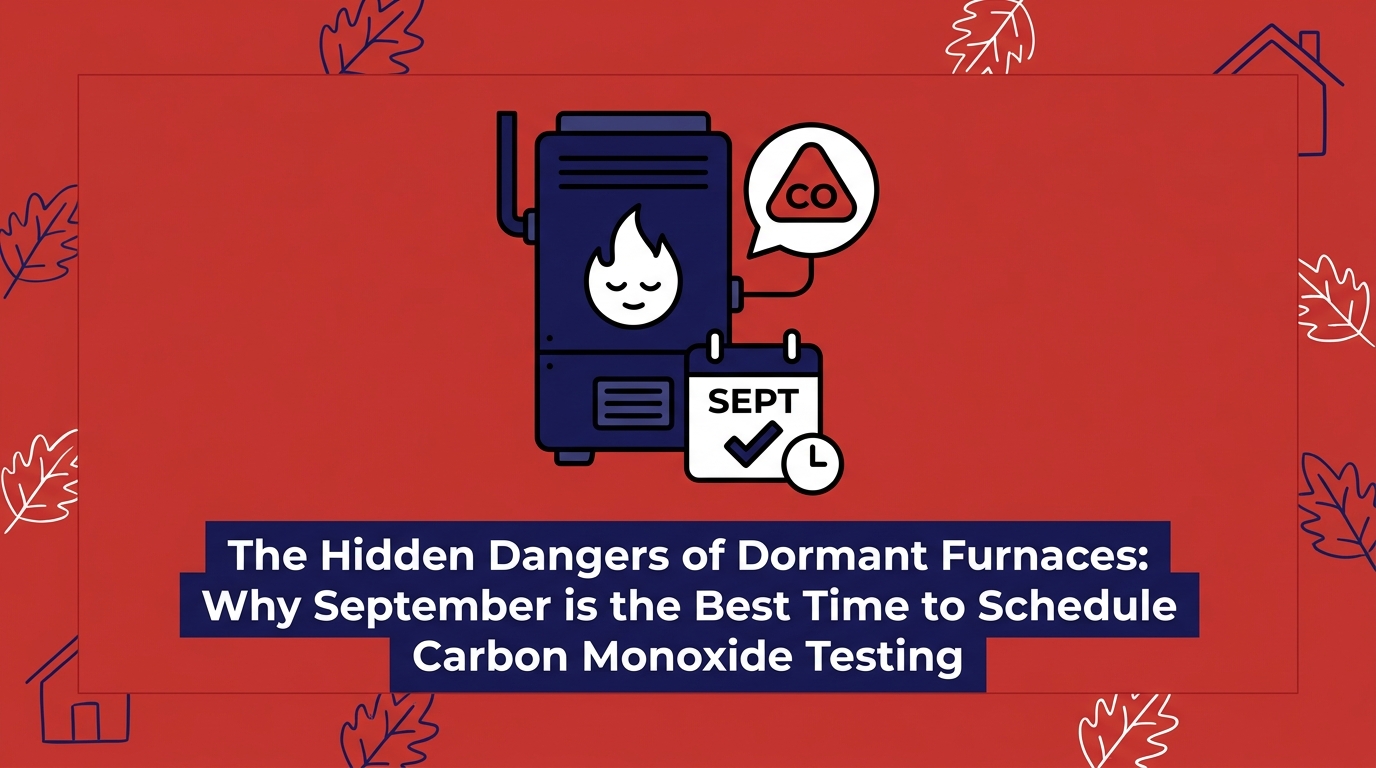
Before the first true cold front arrives, understanding why September is the best time to schedule carbon monoxide testing can make the difference between a safe home and a dangerous one. At Carl's Quality Cooling and Heating LLC, we've seen firsthand how off-season dormancy affects local heating systems. As summer fades and households begin preparing for autumn, your heating system remains sitting idle. It has likely been dormant for months. While you might not need to turn the heat on just yet, the transition period leading into the September pre-heating season is actually the most critical window for verifying your equipment's safety.
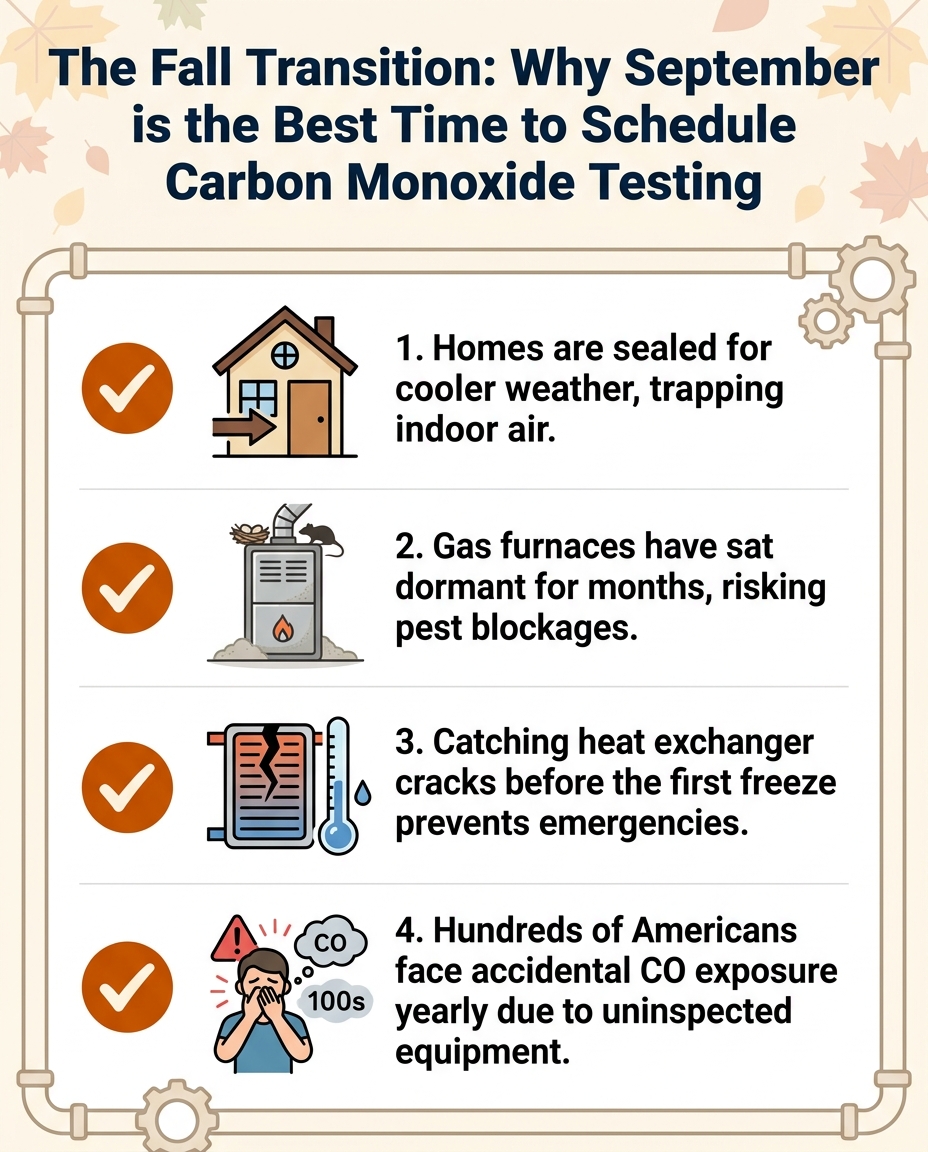
The core issue lies in the combination of a dormant gas furnace and a freshly sealed home. When temperatures drop, our first instinct is to lock the windows, close the exterior doors, and block out the drafts. If you fire up a gas furnace that has developed unseen venting issues over the summer, any trapped combustion gases will immediately circulate through your living space. Because carbon monoxide is completely invisible, odorless, and tasteless, it poses a severe threat if your venting systems are compromised.
Making the decision to schedule professional testing right now—before the heating system is forced to run continuously—eliminates this risk. To ensure your system is ready for the shift in weather, our professional heating services provide the proactive protection your household needs.
How Sealing Your Home Traps Unseen Hazards
Living in Conroe TX means dealing with a very specific seasonal rhythm. In our years of keeping local families comfortable, we've noticed that the sudden shift from intense summer heat to cooler September weather prompts residents to quickly seal up their homes. While this is great for retaining comfortable indoor temperatures, it drastically changes how air flows through your house. Modern homes are built tightly for maximum energy efficiency, but that same airtight seal becomes dangerous if a carbon monoxide leak is present.
Understanding the mechanical reality of this transition period requires looking at how your home breathes. Here is exactly what our technicians see happening when you prepare your house for the fall:
1. Loss of natural drafts: Open windows and doors during the warmer months allow fresh air to dilute indoor pollutants. Closing them removes this natural exhaust path.
2. Increased indoor pressure: Running exhaust fans in kitchens and bathrooms without a fresh air intake can create negative pressure, which actually pulls exhaust gases backward down your furnace flue.
3. Continuous air circulation: Once your thermostat switches from cooling to heating, your blower fan will push whatever is in the utility closet through the ductwork and into every bedroom.
September is recognized nationally as Preparedness Month, making it the ideal benchmark for life-safety checks. Enrolling in our comprehensive HVAC maintenance plan ensures these ventilation changes don't compromise your indoor safety.
The Shift in Natural Ventilation
The loss of fresh air exchange when windows are locked for the season cannot be overstated. During the summer, even minor drafts help cycle the air. In the fall, a tightly sealed home relies entirely on mechanical ventilation. If your gas furnace is producing trace amounts of carbon monoxide, the lack of natural ventilation means those gases have nowhere to go but into your living spaces. Furthermore, changes in indoor air pressure can severely affect how your furnace drafts. If the pressure inside the house drops below the pressure outside, the furnace exhaust can backdraft, spilling dangerous combustion byproducts directly into the home.
The Mechanical Reality: What Happens to a Dormant Gas Furnace?
A gas furnace sitting idle for six to eight months does not simply pause in perfect condition. Our team routinely discovers that this off-season dormancy directly contributes to the two leading causes of residential carbon monoxide leaks: blocked venting systems and compromised heat exchangers. These mechanical failures develop silently during the summer and remain completely undetectable to the naked eye until the system is fired up for the September pre-heating season.
The problem: Homeowners often assume that because the heater worked perfectly on the last cold day of spring, it is perfectly safe for the first cold day of fall. This assumption ignores the physical changes we see occurring during months of inactivity.
The cause: Environmental factors, pest activity, and the lingering effects of metal fatigue all take their toll on dormant equipment. Without active heat and airflow to keep the system clear, the furnace becomes vulnerable to unseen damage.
The solution: Professional diagnostic testing is the only way to verify that the combustion chamber is sealed and the exhaust pathways are completely clear before the system runs continuously.
Blocked Flues and Venting Failures
During our early fall tune-ups, it's incredibly common for us to find that local wildlife found the exhaust flue of a furnace to be an inviting, sheltered pipe over the summer. Birds, rodents, and insects—especially mud daubers and wasps—frequently build nests inside these vents. When autumn arrives and the furnace ignites, these blockages prevent the toxic exhaust gases from escaping through the roof. Instead of venting safely outside, the carbon monoxide backdrafts into the utility room and is immediately sucked into the return air ducts.
Compromised Heat Exchangers
The heat exchanger is the metal shield that separates the toxic combustion fire from the clean air blowing into your home. Every time the furnace runs, this metal expands from the intense heat and contracts as it cools. Over years of winter usage in Conroe, this constant expansion and contraction leads to metal fatigue. Hairline cracks often form as the metal cools during the spring and summer. Because these microscopic cracks only open up when the metal gets hot again, visual inspections by a homeowner are entirely insufficient to spot them.

Wall Alarms vs. Professional Combustion Checks
We frequently have to remind our customers of a dangerous misconception: store-bought carbon monoxide detectors are not a preventative maintenance tool. While wall alarms are a crucial last line of defense for your family, they are designed to alert you only when a life-threatening emergency is already happening. They do not prevent the leak, and they do not tell you if your furnace is operating safely.
Pressing the "test" button on a standard wall alarm only verifies that the battery has juice and the internal horn is capable of making a loud noise. It does not test the sensor's ability to detect actual gas, nor does it check the condition of your heating equipment. If you want to spot the early signs of a carbon monoxide leak, you need a professional combustion analysis.
• Primary Purpose — Standard Wall Alarm: Emergency evacuation alert — Professional Combustion Analyzer: Preventative safety diagnostic
• Detection Threshold — Standard Wall Alarm: Typically alerts at 70+ PPM over time — Professional Combustion Analyzer: Detects trace amounts down to 1 PPM
• Testing Method — Standard Wall Alarm: Checks battery and horn only — Professional Combustion Analyzer: Measures actual exhaust gases in the flue
• Action Required — Standard Wall Alarm: Evacuate the home immediately — Professional Combustion Analyzer: Repair or replace compromised parts early
Our professional technicians at Carl's Quality Cooling and Heating LLC use highly calibrated equipment to measure combustion efficiency directly at the source. We can detect trace amounts of carbon monoxide leaking from a hairline heat exchanger crack long before those gases build up enough to trigger a standard wall alarm. Homeowners should never attempt DIY combustion testing, as accessing the burner compartment without proper training can inadvertently damage the safety switches designed to protect the unit.
Military-Grade Precision: Why Strict Safety Protocols Matter
For us, carbon monoxide testing is not a casual maintenance suggestion; it is a non-negotiable life-safety protocol. When dealing with an invisible, odorless threat that can silently fill a home, there is absolutely no room for guesswork or corner-cutting. This is where the standard of care makes a massive difference in residential HVAC services.
Because Carl's Quality Cooling and Heating LLC is a veteran-owned company, our customers benefit from military-grade precision and a strict adherence to safety protocols. Just as military operations rely on rigorous checklists to ensure equipment is field-ready and personnel are protected, our professional heating technicians follow exhaustive, step-by-step verification processes. Every single component of the heating system—from the draft inducer motor to the venting pipe slope—is systematically checked and verified safe for operation.
Our rigorous approach includes:
• Verifying draft pressure: Ensuring the exhaust is actively pulling gases out of the home rather than spilling them back inside.
• Inspecting the burner flame: A crisp blue flame indicates safe combustion, while a lazy yellow flame is a major warning sign of excessive carbon monoxide production.
• Testing safety interlocks: Confirming that the furnace will automatically shut itself down if a venting failure occurs.
This level of discipline and accountability ensures that families in Conroe TX are protected by technicians who view safety checks as a profound responsibility, not just another task on a clipboard.
The Value of Proactive Fall Maintenance
Connecting the specific need for carbon monoxide testing to the broader benefits of a comprehensive fall HVAC tune-up reveals the true value of proactive care. When you schedule an inspection during the September pre-heating season, you are doing more than just looking for gas leaks. You are ensuring the entire system is clean, efficient, and ready to perform reliably when the freezing weather finally arrives.
Thorough maintenance visits identify potential problems early, giving homeowners the luxury of time to evaluate their options rather than making panicked decisions during a midnight breakdown. During a recent maintenance visit, one of our expert technicians, Issac, performed a thorough inspection of a local heating unit. Instead of just checking boxes, he took the time to explain potential problems that had developed over the summer and provided clear options tailored to the family's needs. This proactive approach kept the family safe and informed before the cold weather hit.
Beyond safety, a well-maintained system directly impacts your daily comfort. Cleaning the blower assembly, replacing clogged filters, and verifying airflow all contribute to better indoor air quality as your family begins spending more time indoors. If you are looking to further protect your home's environment, exploring our professional indoor air quality services alongside your heating tune-up is a highly effective strategy for a healthier fall and winter.
Frequently Asked Questions About Fall Carbon Monoxide Testing
Why is carbon monoxide testing important before winter?
Testing is vital because carbon monoxide is a toxic, invisible gas that can accumulate quickly in a sealed home. Before winter arrives, your house is shut tight against the cold, removing natural ventilation. If your dormant furnace developed a venting issue or a cracked heat exchanger over the summer, firing it up without testing traps those dangerous gases indoors with your family.
Can a gas furnace leak carbon monoxide?
Yes, any appliance that burns fossil fuels can potentially leak carbon monoxide if it malfunctions. While modern gas furnaces are built with multiple safety switches, mechanical failures like a cracked heat exchanger or a blocked exhaust flue can force combustion gases into the blower airstream. Professional testing verifies that all safety mechanisms are functioning properly to prevent this.
When should you test for carbon monoxide?
The optimal time for professional testing is early fall, specifically in September, right before you need to rely on your heating system daily. Having our certified technicians perform a combustion analysis during this pre-heating season ensures any off-season damage is caught and repaired before the furnace runs continuously.
How often should CO detectors be replaced?
Most standard carbon monoxide detectors have a lifespan of five to seven years, though some newer models last up to ten years. The sensors inside the alarms degrade over time, meaning an expired detector may not trigger even if gas is present. You should check the manufacturing date printed on the back of the unit and replace it according to the manufacturer's guidelines.
What are the early signs that a furnace is venting improperly?
Early warning signs we tell our customers to watch for include excess moisture or condensation building up on your windows, a lingering stale or stuffy smell near the utility closet, or soot accumulating around the furnace registers. You might also notice the furnace flame burning yellow or orange instead of a crisp blue. If you observe any of these signs, shut the system off and call a professional immediately.
Why do furnaces leak carbon monoxide after sitting dormant?
Furnaces leak after dormancy primarily due to unseen environmental damage. Over the summer, pests like wasps or birds often build nests inside the exhaust flue, blocking the escape route for toxic gases. Additionally, metal fatigue from the previous winter can cause the heat exchanger to develop microscopic cracks as it cools and sits idle, which then leak gases once the furnace is fired up again.
Secure Your Family's Safety Before the First Cold Snap
The reality of fall heating safety is logical and straightforward: testing your system now prevents life-threatening emergencies later. Once the windows are sealed shut and the cold weather hits, the window for proactive, stress-free safety checks closes. Your gas furnace has been sitting dormant for months, and assuming it is perfectly safe without a professional verification is a risk no homeowner should take.
Our team at Carl's Quality Cooling and Heating LLC wants to ensure you don't wait for a wall alarm to tell you there is an emergency in the middle of a freezing night. By taking action during the September pre-heating season, you can ensure that your combustion equipment is venting safely, your heat exchanger is intact, and your family is fully protected. Schedule a professional inspection with us today to guarantee peace of mind throughout the entire heating season.