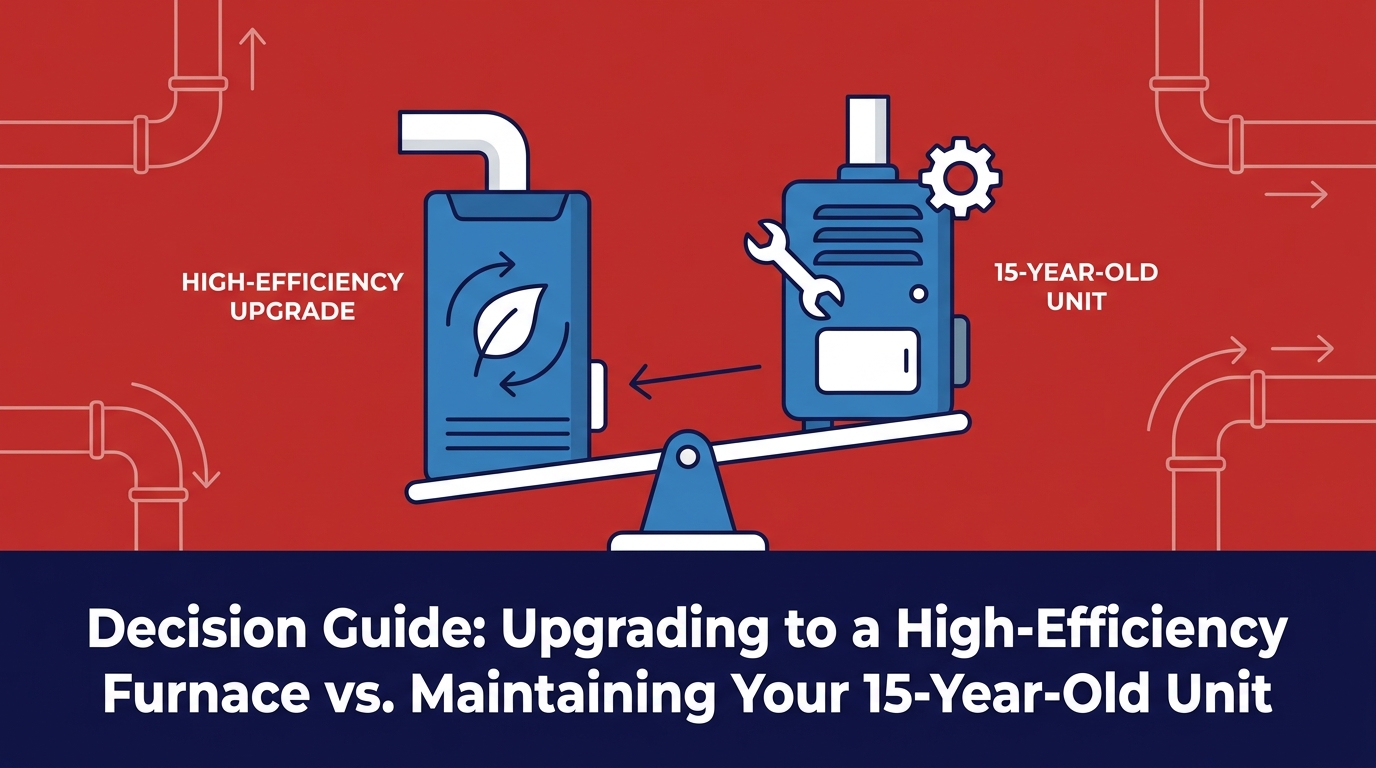

The Pre-Winter Dilemma: Patching the Old vs. Investing in the New
A common myth among homeowners is that Texas winters are simply too mild to worry about heating efficiency. The reality is much different. When you find yourself weighing the options of upgrading to a high-efficiency furnace vs. maintaining your 15-year-old unit, you quickly realize that reliable heat is not optional when a sudden cold front drops the temperature below freezing. Making the right call now prevents emergency breakdowns when you need warmth the most.
If you need guidance evaluating your current system, our team provides professional heating services to help you make an informed choice.
September pre-heating prep is the optimal window to evaluate your aging equipment. Right now, the weather is cooperative, and technicians have the schedule availability to perform thorough assessments. Waiting until November or December often means facing long wait times during peak emergency season. Your 15-year-old furnace has worked hard over its lifespan, but regular upkeep can only extend a system's life so far. Eventually, the metal components fatigue, the motors draw more power, and the efficiency drops well below its original rating. At that point, another expensive repair becomes a risky gamble rather than a smart investment.
Deciding between repairing and replacing is a concrete problem that requires looking at the facts. You have to evaluate the compounding cost of frequent repairs, the safety of your family, and the long-term reliability of your heating system. By addressing this dilemma before the winter chill sets in, you retain total control over the process, the timeline, and the final decision.
Understanding the Limitations of a 15-Year-Old 80% AFUE Furnace
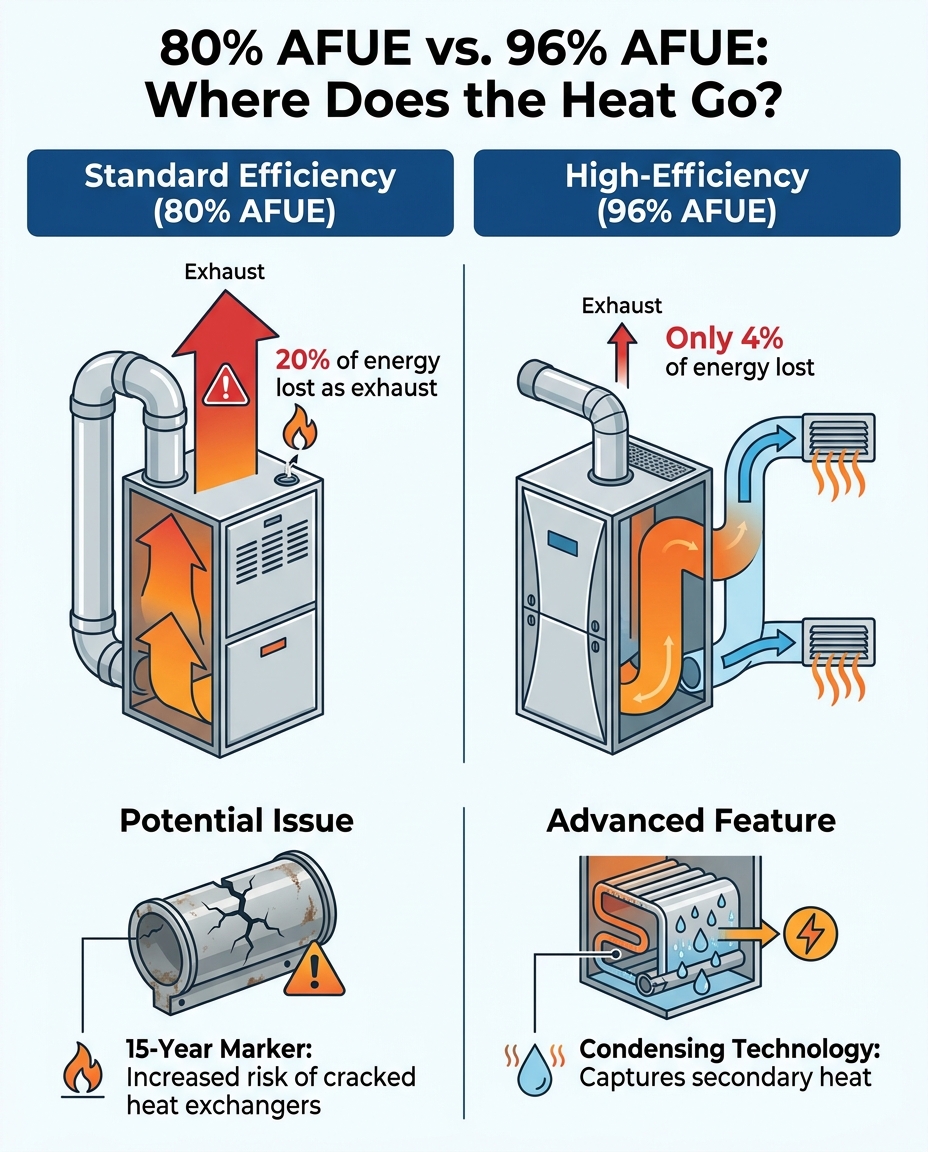
The Problem: Older heating systems were built to a different standard. A 15-year-old furnace typically operates at a maximum of 80% AFUE (Annual Fuel Utilization Efficiency). In practical terms, this means that for every unit of energy your furnace consumes, 20 percent is immediately lost as exhaust waste up the chimney. You are paying for heat that never actually reaches your living room.
The Cause: Beyond the inherent design limitations of an 80% AFUE rating, 15 years of seasonal cycling takes a heavy toll on mechanical parts. A furnace operates by rapidly heating up and cooling down, causing metal components to expand and contract thousands of times per year. Over a decade and a half, this natural wear and tear degrades the system's performance. Parts like the blower motor begin to struggle against friction, drawing more electricity to do the same job. The electronic ignitor becomes brittle, and the gas valve may stick. Furthermore, these older units almost always use single-stage operation. A single-stage furnace only has one speed: fully on or fully off. It blasts your home with maximum heat until the thermostat clicks off, leading to uncomfortable temperature swings and wasted energy.
The Solution: You can attempt to manage these compounding issues by enrolling in a preventative maintenance plan to keep the old parts clean and lubricated. However, maintenance cannot reverse the aging process or change the fundamental 80% efficiency limit. As parts begin failing with compounding frequency, the only permanent solution to eliminate the waste and the repair cycle is upgrading to modern technology.
The Mechanics of a 96% AFUE Condensing Furnace
To truly understand the value of an upgrade, it helps to look closely at 96% AFUE vs 80% AFUE technology. A modern 96% AFUE furnace converts 96 percent of its fuel directly into usable heat for your home, leaving a mere 4 percent as exhaust waste. This massive leap in efficiency is not just a minor tweak; it requires a completely different approach to heating your home.
The secret lies in condensing technology. Standard 80% furnaces have a single heat exchanger. They burn gas, heat the air, and send the hot combustion gases straight out the flue. A 96% AFUE furnace features a secondary heat exchanger. Before those hot exhaust gases can escape, the system routes them through this second exchanger, capturing the residual thermal energy until the gas cools enough to condense into liquid water. This process squeezes almost every available drop of heat out of the fuel you pay for.
Additionally, high-efficiency models utilize multi-stage gas valves and variable-speed blower motors. Instead of blasting at 100% capacity all the time, a multi-stage furnace can run at a lower, quieter speed to maintain the temperature gently. This consistent, low-level operation eliminates hot and cold spots, reduces the annoying whoosh of air from your vents, and significantly decreases the mechanical strain on the system over its lifespan. The technology works smarter, not harder.

Hidden Safety Risks: Why Aging Heating Systems Fail
While efficiency and energy waste are important, the most critical reason to evaluate a 15-year-old furnace is the hidden safety risk. Furnaces generate heat through combustion, and keeping that combustion safely contained is the job of the heat exchanger. Over 15 years of expanding and contracting, the metal of the heat exchanger becomes stressed. Eventually, microscopic cracks can form.
A cracked heat exchanger is a severe hazard because it can allow carbon monoxide—an invisible, odorless, and dangerous gas—to leak directly into your home's ductwork and circulate through your living spaces. This is why attempting to squeeze just one more year out of a compromised system is never recommended. Peace of mind and family safety always outweigh the desire to delay an upgrade.
Furthermore, sudden heavy loads on dormant older systems often cause catastrophic part failures. One homeowner reached out late at night during a winter cold snap when their heater stopped working entirely. A technician was able to get the system up and running within the hour, but sudden, late-night breakdowns like this highlight the stress aging equipment faces when forced to work hard without warning.
Warning Signs of Immediate Failure
1. Unusual noises on startup: A loud booming, banging, or rattling sound when the furnace ignites often indicates delayed ignition or a cracked heat exchanger.
2. Yellow or flickering burner flames: A healthy gas furnace should have a solid, crisp blue flame. A yellow or wavy flame suggests incomplete combustion and a potential carbon monoxide risk.
3. Frequent tripping of safety switches: If your furnace constantly shuts itself down before reaching the target temperature, the internal safety sensors are detecting overheating, poor venting, or flame rollout.
Navigating Southeast Texas Weather: Mild Winters and Sudden Freezes
Homeowners in Conroe TX know that our climate is unique. We run our air conditioners heavily for much of the year, while our heating systems sit idle for months at a time. Because of this, it is easy to assume that a failing furnace isn't a pressing issue. However, Conroe's mild winters are frequently punctuated by sudden, sharp freezes that put immediate, heavy loads on dormant heating systems.
When the temperature drops thirty degrees in a matter of hours, your 15-year-old furnace goes from zero activity to maximum capacity instantly. This sudden demand places immense strain on aging ignitors, blower motors, and heat exchangers. Parts that seemed fine during a mild November can easily snap or burn out during a harsh January freeze.
This dynamic creates severe anxiety regarding mid-winter breakdowns. When a major freeze hits Southeast Texas, every aging furnace in the region struggles at the exact same time, causing emergency service wait times to spike. Upgrading to a high-efficiency system before the weather turns acts as an insurance policy. It guarantees consistent, reliable comfort during unpredictable weather swings, ensuring you are never left shivering while waiting for an emergency repair.
Beyond the Utility Bill: The Non-Financial ROI of an Upgrade
When evaluating a major home improvement, it is natural to focus on the monthly energy savings. While a 96% AFUE furnace will use significantly less fuel, the non-financial return on investment is often what homeowners appreciate the most. Modern condensing furnaces drastically improve your daily quality of life indoors.
For example, another customer purchased a home in January and immediately noticed a significant temperature differential between floors, making the upstairs sweltering while the downstairs remained frigid. After having a new, efficient HVAC system designed and installed, the temperatures balanced out perfectly, and the new unit provided highly efficient and quiet operation. Variable-speed technology constantly mixes the air in your home, eliminating those stubborn hot and cold spots.
Additionally, modern systems offer vastly improved indoor air quality and run so quietly you often won't even notice they are on. It is also worth noting that generic federal tax credits and state energy rebates may apply to qualifying high-efficiency installations, helping to offset the initial investment. You can learn more about navigating these incentives by reviewing our guide to Texas energy rebates for HVAC upgrades.
• Temperature Consistency — 15-Year-Old 80% AFUE Furnace: Frequent hot and cold spots; single-speed blasts — New 96% AFUE Condensing Furnace: Even, consistent heating via variable-speed blowers
• Noise Level — 15-Year-Old 80% AFUE Furnace: Loud startup "whoosh" and noticeable running hum — New 96% AFUE Condensing Furnace: Whisper-quiet operation; barely noticeable
• Safety & Peace of Mind — 15-Year-Old 80% AFUE Furnace: High risk of metal fatigue and cracked heat exchangers — New 96% AFUE Condensing Furnace: Brand new components with advanced safety shut-offs
• Incentive Eligibility — 15-Year-Old 80% AFUE Furnace: None available — New 96% AFUE Condensing Furnace: May qualify for generic tax credits and energy rebates
Making the Call: A Framework for Repairing vs. Replacing
Deciding to replace a major appliance is never taken lightly. To remove the guesswork, we recommend using a clear, objective framework. As a veteran-owned business, we believe in providing honest, mission-driven assessments to help you decide without dealing with high-pressure sales tactics. Here is how to evaluate your current situation.
• Apply the 50% Rule: If the cost of your current required repair approaches half the value of a brand-new replacement system, investing in the new unit is generally the wiser financial decision.
• Evaluate Repair Frequency: Look back at the last two years. If you have required more than two service calls to keep the heat running, your system has entered the compounding breakdown phase.
• Consider the Age: Once a furnace passes the 15-year mark, it enters the danger zone for major, catastrophic failures. Even if it runs today, the likelihood of a heat exchanger or blower motor failing this winter is exceptionally high.
• Review Payment Solutions: Upgrading does not have to drain your savings. We offer flexible financing options that make a new, reliable system more accessible than paying out-of-pocket for constant, unpredictable emergency repairs.
By stepping through this checklist, you can logically determine if patching the old unit makes sense, or if it is finally time to embrace the reliability of a new system.
Secure Your Home's Winter Comfort Today
The transition from mild autumn to freezing winter can happen overnight. Making a proactive decision before the first freeze hits ensures you aren't caught off guard by a failing 15-year-old system. By using a clear, non-financial framework to evaluate your furnace, you can confidently choose the safest, most reliable path for your family.
Don't wait for an emergency breakdown to force your hand. Book an objective assessment of your current heating system today, and secure the peace of mind that comes with knowing your home will stay warm, safe, and comfortable all winter long.
Frequently Asked Questions
Should I repair or replace my 15-year-old furnace?
If your furnace is 15 years old and requires a major repair, replacing it is usually the safest and most cost-effective choice. At this age, components like the heat exchanger are prone to cracking, which poses a safety risk. Applying the 50% rule—where replacement is recommended if repairs cost half the value of a new unit—often points toward an upgrade. A new unit also resets your warranty and stops the cycle of constant service calls.
Is upgrading to a high-efficiency 96% AFUE furnace worth it?
Yes, upgrading to a 96% AFUE furnace provides significant long-term value through improved comfort and drastically reduced energy waste. Because it converts 96 percent of its fuel into heat, you lose very little energy out the exhaust. Furthermore, the variable-speed technology found in these units provides quieter operation and eliminates hot and cold spots throughout your home. The non-financial benefits of reliability and comfort often make the upgrade highly rewarding.
What happens when an 80% AFUE furnace gets too old?
As an 80% AFUE furnace ages past 15 years, the metal components suffer from severe thermal fatigue due to thousands of heating cycles. The most critical failure point is the heat exchanger, which can crack and leak dangerous carbon monoxide into your ductwork. Additionally, mechanical parts like the blower motor and ignitor begin to fail frequently, leading to sudden breakdowns and a sharp decrease in overall heating performance.
What is the difference between 80% and 96% AFUE?
The primary difference lies in how much fuel is converted into usable heat versus how much is wasted as exhaust. An 80% AFUE furnace loses 20 percent of its thermal energy up the chimney. A 96% AFUE furnace utilizes a secondary heat exchanger to capture condensing gases, reducing waste to just 4 percent. This advanced condensing technology makes the 96% model vastly more efficient at heating your home.
How can I tell if my older furnace has a cracked heat exchanger?
A cracked heat exchanger often presents warning signs such as a yellow or flickering burner flame instead of a steady blue one, or loud rattling and booming noises when the furnace turns on. You might also notice soot buildup around the unit or experience frequent tripping of the system's safety switches. Because a cracked heat exchanger can leak carbon monoxide, any suspicion of this issue requires immediate evaluation by a trained professional.
Are there energy rebates for upgrading my heating system in Texas?
Yes, homeowners who upgrade to qualifying high-efficiency heating systems may be eligible for various incentives. Generic federal tax credits and state-level energy rebates are frequently available to encourage the adoption of 96% AFUE condensing furnaces and heat pumps. Because these programs change frequently, it is always best to consult with a tax professional or your local utility provider to verify current eligibility requirements before installation.