

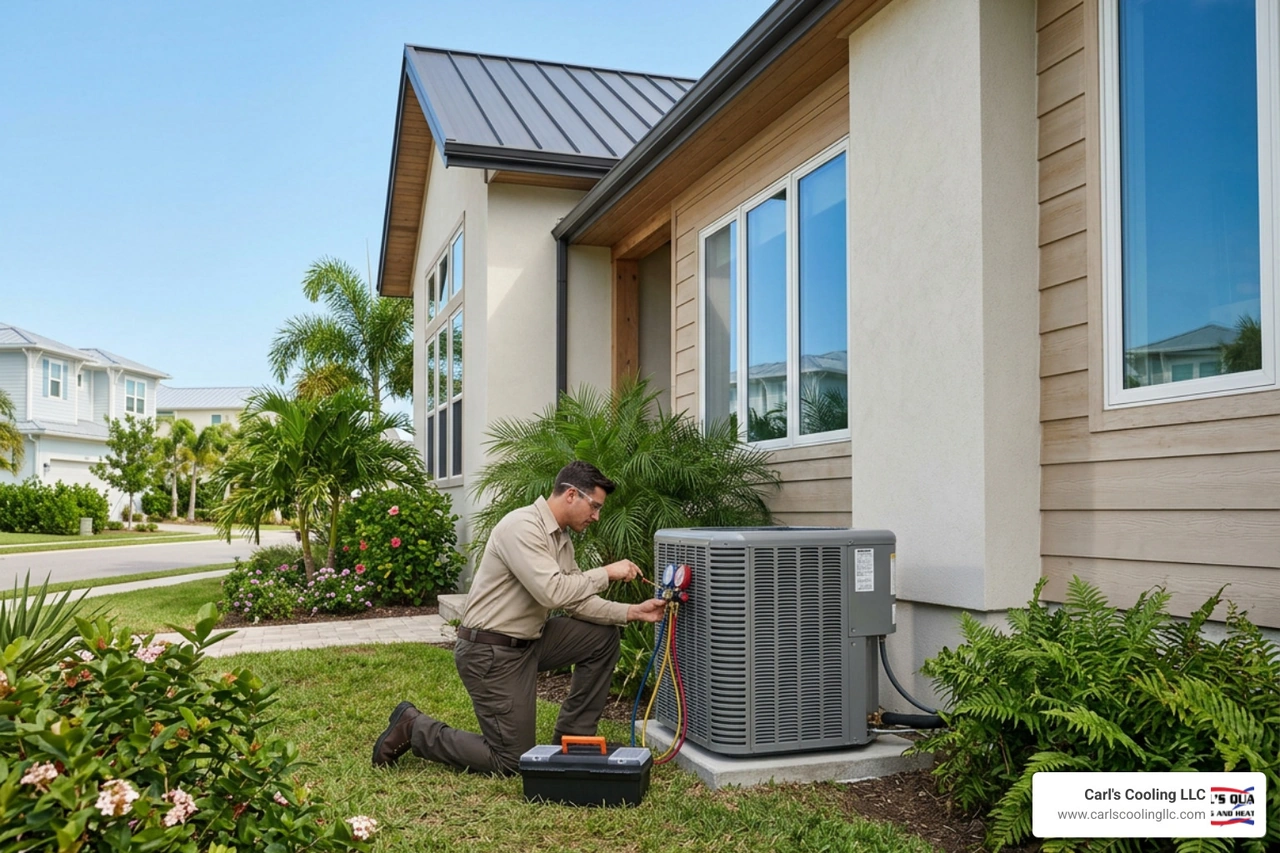

Why the Benefits of Regular HVAC Maintenance in Hot, Humid Gulf Coast Climates Matter So Much
The benefits of regular HVAC maintenance in hot humid Gulf Coast conditions go far beyond simple peace of mind. If you live in Conroe, Montgomery County, or anywhere along the Gulf Coast, your AC system works harder than almost any other system in the country — battling relentless heat, thick humidity, and long cooling seasons that can stretch well past nine months a year.
Here is a quick look at what regular maintenance actually delivers:
- Lower energy bills — Well-maintained systems can reduce energy costs by 15–25% compared to neglected units
- Longer system life — Routine care can extend your AC's lifespan from around 10 years to 15 years in Gulf Coast conditions
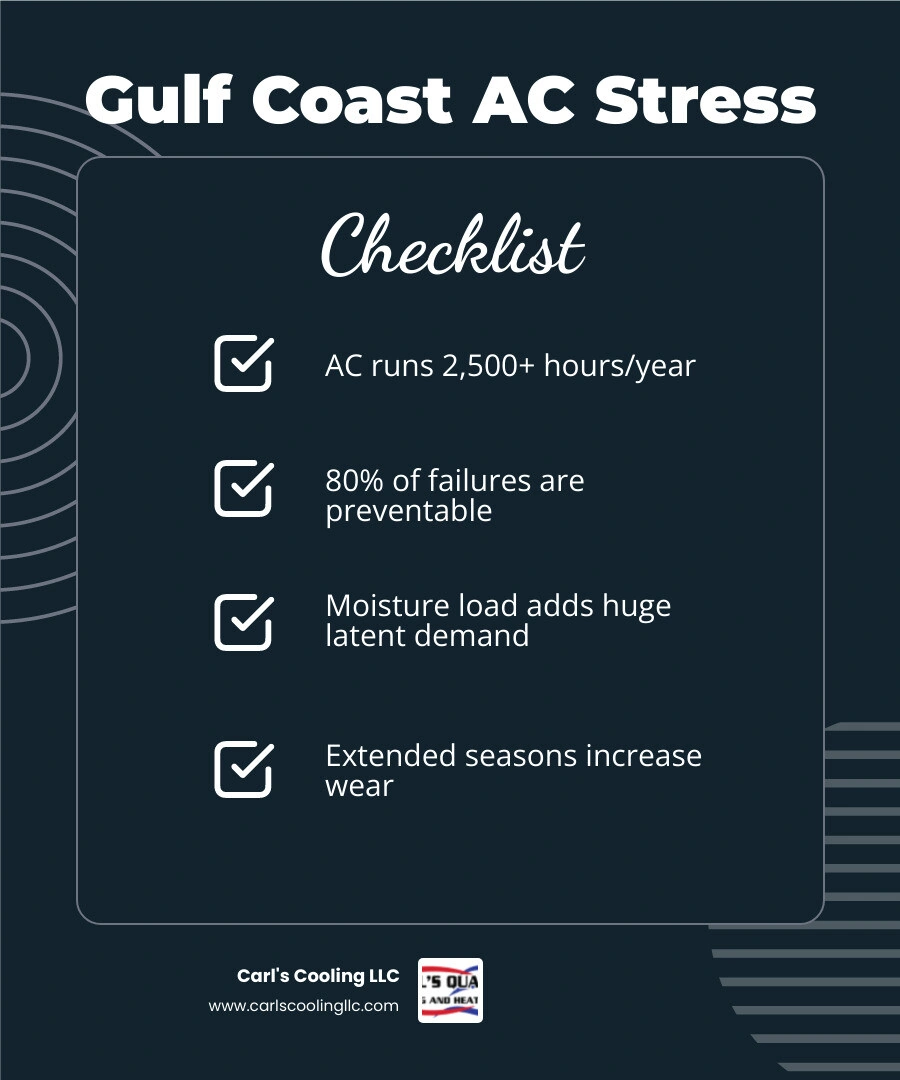
- Fewer surprise breakdowns — Up to 80% of major AC failures are preventable with routine service
- Better indoor air quality — Clean coils, clear drain lines, and fresh filters reduce mold, allergens, and humidity-related pollutants
- Warranty protection — Most manufacturers require documented annual service to honor warranty claims
- Improved humidity control — A properly maintained system removes moisture more effectively, keeping indoor air comfortable
Gulf Coast AC systems run roughly 2,500 or more hours every year — compared to about 500 hours annually for systems in northern states. That kind of workload accelerates wear on every component, from capacitors and coils to drain lines and electrical connections. Without regular attention, small issues quietly compound into expensive failures, often at the worst possible time.
At Carl's Cooling LLC, we see this play out constantly in Montgomery County homes. The good news is that consistent, proactive maintenance changes the equation entirely.
Why the Gulf Coast Climate Demands Specialized HVAC Care
Living in Southeast Texas means enjoying beautiful master-planned communities, gorgeous lakes, and a wonderfully warm climate. However, our weather presents a unique set of challenges for mechanical systems. The combination of intense heat and heavy, moisture-laden air means your air conditioner is essentially running a marathon every single day.
Standard HVAC maintenance guides written for homeowners in the Midwest or Northeast simply do not apply here. On the Gulf Coast, environmental stressors like salt-tinged air, high pollen counts, and relentless moisture create a "perfect storm" for mechanical wear and tear.
For instance, salt air carried inland by Gulf breezes can settle on your outdoor condenser coils. Over time, this salt accumulation leads to galvanic corrosion, a chemical process that pits the aluminum fins and degrades the copper tubing. This corrosion acts as an insulating barrier, preventing the unit from releasing heat efficiently and forcing the compressor to work twice as hard.
Furthermore, our systems must manage a massive "latent heat load"—which is the energy required to remove moisture from the air, rather than just lowering the actual temperature. To understand how this constant battle impacts your equipment, read more about How Year-Round Heat and Humidity Stress Your AC.
How Extreme Humidity Stresses Your Cooling System
When humidity levels soar in places like Conroe, Magnolia, and The Woodlands, your air conditioner must pull double duty. In addition to cooling your home, the system acts as a giant dehumidifier. As warm, sticky indoor air passes over the freezing evaporator coil, moisture condenses on the cold metal surface and drips into a condensate collection pan before draining out of your home.
On a typical July day along the Gulf Coast, a residential AC system can extract up to 20 gallons of water from your indoor air. This constant volume of water places immense stress on your condensate drain system. If the drain line is neglected, a combination of dust, pollen, and dark, damp conditions will inevitably lead to algae and mold growth. This organic sludge can easily clog the narrow PVC drain pipes, leading to water backups that can overflow into your attic, ruin your drywall, or flood your closets.
Moisture management is also directly tied to your health. When an AC system struggles to keep up with humidity removal, indoor relative humidity can rise above 60%. This creates the perfect breeding ground for mold spores, dust mites, and mildew. To learn more about how to protect your home from these hidden moisture threats, check out our guide on How Extreme Humidity Stresses Your Cooling System.
Benefits of Regular HVAC Maintenance in Hot Humid Gulf Coast
Investing in preventive maintenance is the single most effective way to protect your comfort and your wallet. When you establish a routine care schedule, you transition from a reactive approach—waiting for the system to break down during a triple-digit heatwave—to a proactive strategy that keeps your equipment running in peak condition.

The primary benefits of regular HVAC maintenance in hot humid Gulf Coast homes include:
- Uninterrupted Reliability: There is nothing worse than waking up sweating at 2:00 AM in August because your outdoor unit stopped working. Regular maintenance catches weak capacitors, worn contactors, and failing fan motors before they leave you stranded in the heat.
- Precision Dehumidification: Clean coils and properly calibrated blowers ensure your system runs long enough to pull moisture out of the air without overcooling your home.
- Superior Indoor Comfort: When your system is balanced and clean, you will notice fewer hot spots, more consistent temperatures, and a lighter, fresher feel to your indoor air.
- Prevention of Costly Water Damage: Keeping your condensate drain lines clean prevents catastrophic water overflows that can lead to thousands of dollars in home repairs.
For a deeper dive into how scheduled tune-ups keep your home safe and comfortable, read our article on Regular Maintenance to Prevent AC Repairs.
Maximizing Efficiency and Lowering Energy Bills

With summer temperatures regularly climbing into the high 90s (and beyond) in Conroe and Montgomery, it is no secret that cooling accounts for 40% to 60% of your monthly electric bill. When your AC system is neglected, its efficiency drops by roughly 5% each year due to dirt buildup, minor electrical degradation, and airflow restrictions.
Dirty evaporator and condenser coils are the leading causes of high utility bills. If a layer of dust, pollen, or grass clippings coats your outdoor unit, the heat-transfer process is severely compromised. The system cannot release heat effectively, forcing it to run longer cycles and consume significantly more electricity.
Similarly, restricted airflow caused by clogged filters or dirty blower wheels forces the system's fan motor to work harder, pulling more power while delivering less cool air through your vents. Routine maintenance restores your system to its original manufacturing specifications, keeping your SEER2 (Seasonal Energy Efficiency Ratio) rating as high as possible.
| HVAC System Condition | Average Energy Efficiency | Risk of Summer Breakdown | Estimated Lifespan in Gulf Coast |
|---|---|---|---|
| Maintained Regularly | Peak (100% of SEER2 rating) | Very Low (< 5%) | 12 to 15+ Years |
| Neglected (1-2 Years) | Moderate (85-90% efficiency) | Moderate (20-30%) | 10 to 12 Years |
| Severely Neglected (3+ Years) | Poor (70-80% efficiency) | High (> 50%) | 8 to 10 Years |
Financial Benefits of Regular HVAC Maintenance in Hot Humid Gulf Coast
The financial return on regular maintenance is immediate. By keeping your coils clean and your system balanced, you can expect to reduce your monthly cooling costs by 15% to 20%. In our demanding climate, those monthly savings quickly add up over a long summer season.
Beyond monthly utility savings, regular maintenance protects highly sensitive electrical components. For example, your AC's run capacitor acts like a battery that helps start and run the compressor and fan motors. In extreme heat, capacitors are under immense stress and are often the first parts to fail.
If a capacitor begins to lose its electrical charge, the compressor will draw higher amperage to compensate. This extra strain can cause the compressor—the most expensive component in your system—to overheat and burn out prematurely. Catching a weak capacitor during a routine tune-up is a simple, cost-effective fix that prevents a major financial headache down the road. For more practical advice on saving money, check out these Essential AC Maintenance Tips.
Extending System Lifespan and Preventing Costly Repairs
An air conditioning system is one of the most significant investments you will make in your home. In milder parts of the country, a standard AC unit might easily last 15 to 20 years with minimal attention. However, on the Gulf Coast, a neglected system often fails completely by year 8 or 10.
By committing to regular professional maintenance, you can extend your system's useful life to 15 years or more. That extra five years of performance represents an incredible return on investment.
Furthermore, industry data shows that approximately 80% of all air conditioning breakdowns are entirely preventable. Most emergency service calls in the middle of summer are caused by simple issues—like a clogged drain line, a dirty coil, or a loose electrical connection—that would have been easily identified and resolved during a routine spring tune-up.
Regular maintenance also preserves your manufacturer's warranty. Most major HVAC brands explicitly state in their warranty terms that the equipment must be serviced annually by a licensed professional. If you need to file a warranty claim for a failed compressor or heat exchanger, you may be asked to provide service records proving the system was maintained. Without this documentation, your claim could be denied, leaving you to cover the replacement cost out of pocket. To learn more, read about Regular Maintenance to Prevent AC Repairs.
How to Help Your AC During Heat Waves
When sustained heat waves hit Southeast Texas, your air conditioner faces its ultimate test. Most residential cooling systems are designed to maintain a maximum temperature difference of about 20 degrees between the outdoor temperature and the indoor air. When it is 100°F outside in Conroe, your system is working at its absolute limit to keep your home at a comfortable 78°F.
During these periods of extreme thermal gain, your system will run for hours at a time. To help your system survive these high-demand periods, you should:
- Keep blinds and curtains closed on south- and west-facing windows to block radiant solar heat
- Avoid using heat-generating appliances like ovens and dryers during the hottest parts of the afternoon
- Use ceiling fans to create a wind-chill effect, making the room feel cooler without lowering the thermostat
- Ensure your system has been professionally tuned up before summer peaks so it can handle the intense workload
For more detailed strategies on protecting your cooling system when the mercury rises, read our guide on How to Help Your AC During Heat Waves.
Homeowner DIY Tasks vs. Professional Maintenance
Maintaining a healthy HVAC system is a partnership between you and your professional service technician. While there are several critical tasks you can handle yourself to keep things running smoothly, other complex procedures require the specialized training, tools, and safety equipment of a licensed professional.
Essential DIY HVAC Maintenance Tips for Homeowners
As a homeowner, your primary focus should be on keeping your system clean and ensuring unrestricted airflow. Here are the most important DIY tasks you should perform:
- Check and Replace Air Filters Monthly: During our long cooling seasons, filters clog quickly with dust, pet dander, and pollen. Inspect your filter every 30 days. If you cannot see light through it, replace it. For most homes, we recommend using high-quality MERV 8 to MERV 11 pleated filters, which provide excellent filtration without restricting airflow.
- Maintain Outdoor Unit Clearance: Keep grass, weeds, shrubs, and debris cleared at least two feet away from your outdoor condenser unit. This ensures the fan can pull in plenty of fresh air to cool the internal coils.
- Flush Your Condensate Drain Line: Once a month during the summer, pour a cup of distilled white vinegar down your condensate drain access point. This simple step helps kill algae and prevents sludge from forming and clogging the pipe.
For a complete list of DIY strategies you can use to protect your system, explore our HVAC Maintenance Tips for Homeowners.
Why Professional HVAC Maintenance Solutions Are Essential
While DIY tasks are highly beneficial, they cannot replace the deep technical inspection provided by a professional. Modern air conditioners are complex mechanical, electrical, and chemical systems that require expert calibration.
During a professional visit, a certified technician will perform critical tasks that homeowners cannot do safely or effectively. These include:
- Checking Refrigerant Levels: An undercharged or overcharged system will run inefficiently, waste energy, and eventually destroy the compressor. Technicians use specialized gauges to measure subcooling and superheat to ensure the perfect charge.
- Testing Electrical Components: Loose connections, worn contactors, and weak capacitors must be tested with professional multimeters to prevent electrical shorts and fires.
- Deep Coil Cleaning: While a homeowner can lightly rinse an outdoor unit, deep cleaning requires specialized, non-acidic chemical cleaners that dissolve dirt and salt buildup without damaging the delicate aluminum fins.
To learn more about why these advanced services are crucial for your system's health, read about our Professional HVAC Maintenance Solutions.
What to Expect During a Professional Tune-Up and How Often to Schedule
In the demanding Gulf Coast climate, we highly recommend scheduling professional HVAC maintenance twice a year: once in the spring to prepare your air conditioner for the summer heat, and once in the fall to inspect your heating system before the winter months.
When a technician from Carl's Cooling LLC visits your home, you can expect a comprehensive, multi-point inspection that takes between 60 and 90 minutes. A typical professional tune-up includes:
- Inspecting and cleaning both evaporator and condenser coils
- Testing the thermostat calibration and programming
- Checking all electrical connections and measuring motor amperages
- Inspecting the blower wheel and cleaning the housing
- Checking refrigerant levels and inspecting lines for leaks
- Flushing the condensate drain line and testing safety overflow switches
- Inspecting ductwork for visible leaks or air restrictions
To ensure your system gets the exact care it needs for our local weather, check out our comprehensive HVAC Maintenance Checklist for Hot Humid Gulf Coast homes.
Long-Term Benefits of Regular HVAC Maintenance in Hot Humid Gulf Coast
Enrolling in a structured maintenance agreement or service plan offers incredible long-term value. Beyond keeping your system running efficiently, being a maintenance plan member typically provides you with priority scheduling. If your system does experience an issue during peak summer demand, you will jump to the front of the line, avoiding long wait times.
Additionally, consistent professional care provides invaluable peace of mind. Knowing that your system has been thoroughly inspected, cleaned, and tested by a certified expert allows you to face the hottest summer days with confidence. Discover how a professional service agreement can simplify your home maintenance by reading about the Benefits of Professional AC Service.
Frequently Asked Questions about Gulf Coast HVAC Care
How often should I schedule professional HVAC maintenance on the Gulf Coast?
Because of our extended cooling season and extreme humidity, you should schedule professional service twice a year—once in the spring (cooling focus) and once in the fall (heating focus). This bi-annual schedule ensures your system is always ready for the upcoming season's demands.
What are the signs that my AC needs immediate professional attention?
You should call a professional if you notice:
- Warm air blowing from your supply vents
- Unusual noises like squealing, grinding, or loud rattling
- Water pooling around your indoor furnace or air handler
- The system turning on and off rapidly (short cycling)
- A sudden, unexplained spike in your monthly electric bill
Does regular maintenance really protect my manufacturer warranty?
Yes. Nearly all major HVAC manufacturers require proof of annual professional maintenance to honor parts warranties. Keeping your service receipts and documentation is essential if you ever need to file a claim. For a detailed breakdown of how to protect your equipment and its warranty in our local area, read our Ultimate HVAC Maintenance Guide Montgomery County.
Conclusion
Your air conditioner is the heart of your home's comfort, especially during our long, hot, and humid Gulf Coast summers. By prioritizing regular preventive care, you can enjoy lower utility bills, cleaner indoor air, fewer unexpected breakdowns, and a system that lasts for years to come.
At Carl's Cooling LLC, we are proud to serve families throughout Conroe, Montgomery, Spring, The Woodlands, Willis, Magnolia, and the surrounding Montgomery County communities. Our friendly, experienced technicians are dedicated to keeping your home cool, dry, and comfortable all year long.
Don't wait for the next major heatwave to find out if your system is up to the challenge. Take control of your home's comfort and Schedule your maintenance plan today with the local experts who know Gulf Coast cooling best!


