


That First Chilly Night: Why Your Heater Smells Like It's Burning
The September fall transition is finally bringing cooler evenings to Texas, and for the first time in months, you switch your thermostat from 'cool' to 'heat.' Almost immediately, a strange odor fills the room. Knowing exactly what that burning smell means when you turn on the heat for the first time can save you from unnecessary panic and help you make the right decision for your home.
For most homeowners, smelling smoke or a burning odor coming from the air vents triggers an immediate alarm. Your first instinct is likely to worry about a fire hazard or a catastrophic system failure. The primary decision you face in this moment is distinguishing between a harmless, temporary nuisance and a genuine electrical emergency that requires immediate attention.
Because your system has been sitting completely dormant throughout the long summer, a sudden odor during that initial startup is incredibly common. In the vast majority of cases, this scent is not a sign of danger. However, understanding the nuances of different odors ensures you never ignore a true warning sign. If you need professional guidance or a thorough system inspection, exploring our heating services can provide the reassurance you need to operate your system safely.
The Harmless Culprit: Normal Dust Burn-Off Explained
To understand why your heater produces a burning smell, you have to look at what happens inside the unit during the summer. In Conroe TX area homes, heating systems often sit completely dormant for seven to eight months out of the year. While your air conditioner works overtime to combat the subtropical heat, your furnace's heat exchanger remains inactive.
Even though the heating function is off, air continues to circulate through the system. Over those long months, household dust, pet dander, pollen, and microscopic airborne debris settle on the cold metal surface of the heat exchanger. When you finally call for heat in the fall, those metal burners ignite, and the heat exchanger rapidly climbs to hundreds of degrees. The accumulated layer of summer dust instantly incinerates.
What Dust Burn-Off Smells Like
The sensory experience of dust burning off is very specific. It typically smells dry, dusty, and slightly warm, similar to the scent of a hot clothing iron or a space heater that has just been plugged in. It is not an acrid, harsh, or chemical smell. If you notice a light, dusty odor, you are simply experiencing the normal mechanical process of your system clearing its internal components.
The 30-Minute Rule
Setting clear expectations for this process is vital for your peace of mind. A normal dust burn-off should follow a strict timeline:
1. Initial Startup: The smell will be strongest during the first five to ten minutes of the heating cycle.
2. Gradual Fading: As the system runs, the odor should noticeably dissipate.
3. Total Clearance: The smell should vanish entirely within 15 to 30 minutes of continuous operation.
If you are sensitive to smells or simply want to clear the air faster, you can temporarily open a few windows to allow cross-ventilation while the system runs its first cycle. Preparing for this annual occurrence is just one reason why enrolling in an HVAC maintenance plan is highly recommended, as a pre-season cleaning physically removes this dust before it ever has a chance to burn.
Red Flag Odors: Identifying Melting Plastic and Electrical Smells
While dust burn-off is a routine part of the fall transition, there are several odors that should immediately raise a red flag. These smells indicate a mechanical or electrical failure somewhere inside the furnace cabinet, and they require a completely different response.
Working with a veteran-owned company means you get the same level of discipline and accountability that military service demands. We believe in honest diagnostics and safety-first principles, which means we want you safe and informed, not panicked. If you encounter any of the smells listed below, do not attempt to open the furnace cabinet or diagnose the internal wiring yourself. Your immediate action should be to turn the system off at the thermostat to prevent further damage or fire risk.
The Scent of Melting Plastic
If your vents emit a harsh, acrid smell that stings your nose, you may be dealing with melting plastic or burning rubber. This often occurs when a foreign object—like a child's toy or a piece of plastic packaging—has fallen down a floor register and into the ductwork. It can also indicate that the rubber casing around a wire is overheating and melting against a hot metal component.
The Scent of Frying Electronics
An electrical fault has a very distinct odor. It is often described as smelling like ozone, metallic smoke, or even dead fish. This scent usually points to a failing blower motor that is overheating due to excessive friction, or a failing capacitor that is leaking fluid. Unlike dust burn-off, electrical smells will not fade after 15 minutes; they will persist and often grow stronger the longer the system runs.
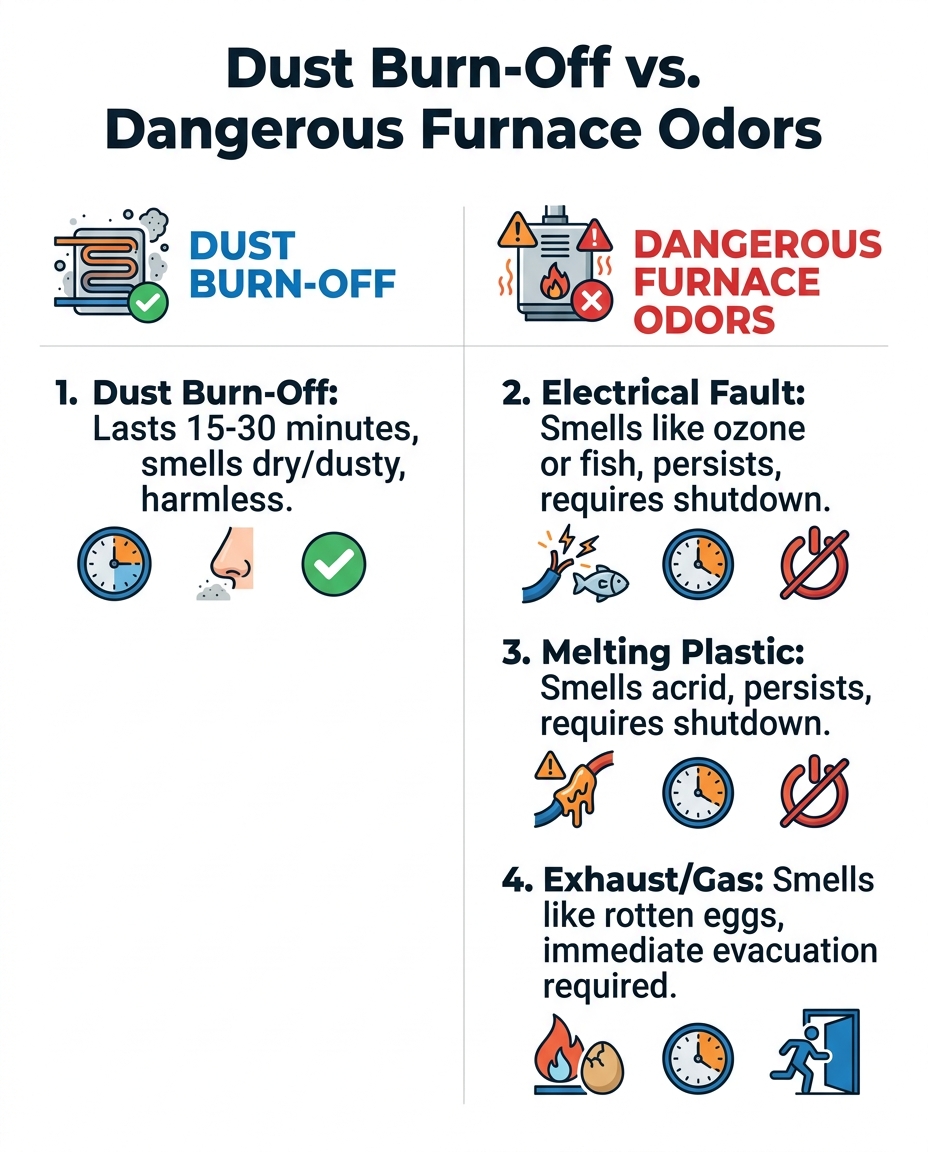
Use this guide to distinguish between normal and dangerous odors:
• Normal Dust — Sensory Description: Dry, dusty, warm, similar to a hot iron — Typical Duration: 15 to 30 minutes — Required Action: Monitor system, open windows to ventilate
• Melting Plastic — Sensory Description: Acrid, harsh, chemical, stinging — Typical Duration: Persists and worsens — Required Action: Shut down system immediately at thermostat
• Electrical Fault — Sensory Description: Ozone, metallic, fishy, burning rubber — Typical Duration: Persists and worsens — Required Action: Shut down system immediately at thermostat

Exhaust and Musty Odors: When to Shut the System Down
Beyond electrical faults and melting plastic, there are other concerning smells that can emerge from your vents during the heating season. These odors are directly linked to your home's air quality and overall safety.
The Silent Threat of Carbon Monoxide
If you turn on your heater and smell exhaust, fumes, or the distinct "rotten egg" scent of sulfur, you are dealing with a critical safety hazard. Natural gas is naturally odorless, but utility companies add a chemical called mercaptan to give it that rotten egg smell specifically so you can detect a leak. An exhaust smell can indicate a cracked heat exchanger, a venting failure, or a dangerous gas leak.
It is vital to understand that carbon monoxide itself cannot be smelled, tasted, or seen. Because this toxic gas is completely undetectable by human senses, paying attention to other exhaust smells is your first line of defense. Always ensure your home's carbon monoxide detectors have fresh batteries before the heating season begins. If exhaust smells accompany your system's startup, immediately evacuate the house and call for professional help. Understanding the signs of a carbon monoxide leak is non-negotiable for winter safety.
Tackling Poor Indoor Air Quality
Not all concerning smells are related to fire or gas. Sometimes, turning on the heat produces a musty, damp, or "dirty sock" odor. This smell is usually caused by biological growth on the indoor evaporator coil. During the summer, the coil is constantly wet from condensation. If that moisture doesn't drain properly before the system goes dormant, bacteria can thrive in the dark, damp cabinet.
When the blower motor kicks on in the fall, it pushes air past that dirty coil, distributing the musty smell throughout your home. Changing your air filters regularly and having the internal coils professionally cleaned will eliminate this odor and significantly improve your overall home health.
Frequently Asked Questions About Heater Startup Smells
It is completely normal to have questions when your home's heating equipment behaves unexpectedly. By addressing these common concerns, you can better understand your system's behavior and know exactly when it is time to seek out professional indoor air quality services.
How long should a heater smell like it is burning?
A normal dust burn-off should typically last between 15 to 30 minutes. The smell will be most prominent when the system first cycles on and should fade completely after the first or second heating cycle. If the odor continues for hours or days, it is no longer normal dust burn-off.
Is it dangerous if my heater smells like burning?
It is not dangerous if the smell is just summer dust burning off the heat exchanger. However, it is highly dangerous if the system smells like melting plastic, burning rubber, or electrical ozone. Those specific chemical odors indicate a mechanical failure that requires immediate intervention.
Why does my heater smell like burning plastic?
A burning plastic smell is often a sign of melting wire insulation inside the furnace cabinet, a failing electrical capacitor, or a foreign object that has fallen into your home's ductwork. Because this poses a direct fire hazard, you must shut the system down immediately at the thermostat and call a professional.
Can dust in a heater catch fire?
While it is rare for normal, light household dust to cause a massive fire, heavy buildup can damage the heat exchanger and pose a localized hazard. Excessive dirt restricts airflow, causing the system to overheat and potentially trip its safety limit switches. Regular cleaning prevents this risk entirely.
What does an electrical fire in a furnace smell like?
An electrical fire or failing motor usually produces a sharp, metallic odor that smells like ozone. Many homeowners also describe it as smelling oddly like fish or burning rubber. This scent is distinct from the dry, dusty smell of a normal startup.
How can I prevent my heater from smelling next fall?
The best way to prevent the autumn burning smell is to schedule a professional tune-up before you turn the system on for the first time. A technician will physically clean the heat exchanger, removing the dust and debris so there is nothing left to burn when the system ignites.
How Proactive Maintenance Prevents Startup Surprises
The transition from diagnosing a burning smell to preventing it altogether comes down to professional maintenance. A typical pattern we see with our twice-a-year check-ups—checking everything over in the spring and fall—is that potential problems are solved before they cause expensive mid-winter breakdowns. When a technician opens the cabinet before the cold weather hits, they are doing much more than just changing a filter.
During a pre-season tune-up, the heat exchanger is thoroughly inspected and cleaned. This means the layer of summer dust is removed manually, vastly reducing or entirely eliminating the 30-minute burning smell when you finally turn the system on. Furthermore, technicians use specialized tools to check the electrical components.
By measuring the amp draw on the blower motor and inspecting the wire terminals, a professional can catch frayed wires or a failing motor long before they overheat and create that alarming melting plastic smell. This proactive approach grants you the comfort of knowing your system is operating safely. Routine check-ups are an investment in longevity, ensuring that residents across our local service areas stay warm without the stress of unexpected odors or emergency failures.
Get Honest Answers for Your Heating Safety Concerns
When it comes to your home's heating equipment, safety should always come first. While a brief, 15-minute dusty smell is a normal part of the fall transition, you should never ignore odors that are harsh, electrical, or persistent. Trusting your senses is the first step toward protecting your home.
If you have turned on your heater and the burning smell has not dissipated, or if you detect the distinct scent of melting plastic or ozone, do not wait it out. Turn off your system at the thermostat and schedule a professional inspection immediately. Our team is dedicated to providing clear, honest diagnostics so you can enjoy a warm, safe home with absolute confidence all winter long.


