
Is Your Furnace Ready for Fall, or Is the Ignitor About to Fail?
Is your AC actually broken, or are you just wondering, how long do furnace ignitors actually last before needing replacement? You turn on the heat for the first time during the September pre-heating season, and something goes wrong. The thermostat clicks, the system hums, but the air coming out of the vents stays completely cold. This is an incredibly common frustration for homeowners. More often than not, the culprit behind this silent failure is a dead furnace ignitor. While these components are consumable parts that naturally wear out over time, a premature failure is often a glaring symptom of a larger airflow or system cycling issue.
Understanding the difference between normal wear-and-tear and a heating system that desperately requires professional diagnosis is critical before winter weather sets in. The ignitor is the literal spark that keeps your home warm, and its health tells a much larger story about your equipment. Catching these hidden vulnerabilities early through proactive heating services and a routine HVAC maintenance plan can save you from waking up to a freezing house on the first chilly morning of the year.
How Long Should a Furnace Ignitor Actually Last?
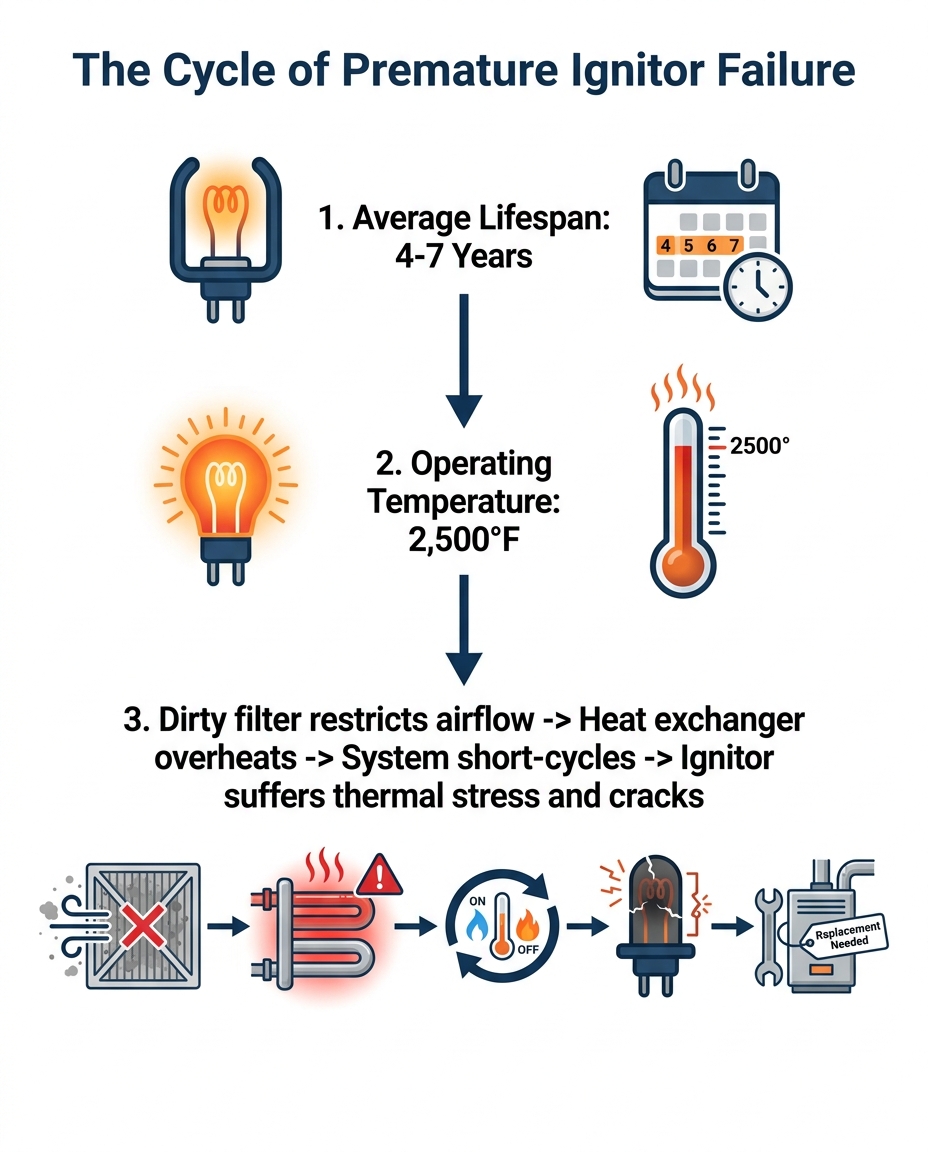
The short answer is: A furnace ignitor typically lasts between 4 to 7 years under normal operating conditions. However, this lifespan does not simply depend on the calendar. Instead, an ignitor's longevity is highly dependent on how frequently your furnace cycles on and off.
If you live in Conroe TX, your heating system faces a unique set of demands that can significantly alter that 4-to-7-year average. An ignitor does not just die of old age. Its lifespan is a direct reflection of your furnace's overall cycling health. Every single time your thermostat calls for heat, the ignitor must activate. If your system is working overtime or turning on and off too rapidly, that expected lifespan shrinks dramatically.
A critical safety warning: Replacing a furnace ignitor is absolutely not a DIY job. This component operates on high voltage and sits directly in the path of your home's natural gas supply. Mishandling the installation can result in electrical shorts, gas leaks, or immediate damage to the new part. A licensed professional must handle the replacement to ensure the system is safely calibrated and ready for operation.
The Mechanics of Thermal Stress: What Happens Inside Your Furnace
To understand why these components fail right in the middle of the September pre-heating season, you have to look at the extreme conditions they endure. Hot surface ignitors are heavy-duty electrical resistors. When your furnace receives a signal to start, electricity passes through the ignitor, causing it to glow white-hot. These components must reach temperatures upwards of 2,500 degrees Fahrenheit in a matter of seconds to safely ignite the natural gas flowing into the combustion chamber.
This rapid heating and cooling process introduces a massive amount of physical strain known as thermal stress. Every time the ignitor heats up, the material expands. When the furnace shuts off, the material rapidly cools and contracts. Over thousands of heating cycles, this constant expansion and contraction causes microscopic cracks to form deep within the ignitor's structure. Once a crack becomes large enough to break the electrical circuit, the ignitor fails completely, and the furnace will refuse to open the gas valve.
• Silicon Carbide — Average Lifespan: 3 to 5 Years — Durability Characteristics: Older technology, highly brittle, extremely susceptible to cracking from minor physical impacts or rapid temperature shifts.
• Silicon Nitride — Average Lifespan: 4 to 7+ Years — Durability Characteristics: Modern standard, much more durable, resists physical shock better, but still degrades over time from excessive short-cycling.
Regardless of whether your system uses an older silicon carbide model or a newer silicon nitride version, the physics of thermal stress remain the same. The more cycles the ignitor endures, the faster it degrades.
Short-Cycling: The Number One Cause of Premature Ignitor Death
The Problem: You notice your furnace turning on, blowing warm air for just a few minutes, shutting down before the house reaches the target temperature, and then turning right back on. This rapid on-and-off sequence is called short-cycling, and it is the absolute fastest way to destroy a furnace ignitor.
The Cause: In homes across Conroe TX, short-cycling is usually triggered by underlying system restrictions rather than a broken part. Common culprits include severely restricted airflow from clogged filters, dirty flame sensors that fail to read the fire, or an improperly placed thermostat that registers false temperatures. When these issues occur, the furnace's internal safety mechanisms force the system to shut down prematurely to prevent overheating or gas buildup.
The Solution: Short-cycling multiplies the number of times the ignitor must heat up to 2,500 degrees and cool back down in a single day. If your ignitor fails after only two or three years, short-cycling is almost certainly the root cause. Simply paying a technician to replace the burned-out ignitor without diagnosing and fixing the underlying short-cycling issue guarantees that your brand-new ignitor will suffer the exact same premature death.

How Mild Winters and Sudden Cold Snaps Accelerate Wear
It might seem counterintuitive, but heating systems in milder climates often experience accelerated wear and tear on specific components. In Conroe TX, the mild winters combined with sudden, sharp cold snaps create a perfect storm for oversized or poorly maintained systems to short-cycle aggressively, wearing out the ignitor much faster than expected.
When the weather is relatively mild, an oversized furnace heats the home far too quickly. It blasts the house with hot air, satisfies the thermostat in just a few minutes, and shuts off. Thirty minutes later, it repeats the process. This fluctuating temperature demand forces the system to cycle on and off constantly, multiplying the thermal stress on the ignitor.
When a sudden cold snap finally hits, a compromised ignitor is pushed to its breaking point. One local homeowner experienced this exact scenario during a severe winter freeze. Their heater completely stopped running at 10:00 at night, leaving the house freezing. Technicians were dispatched and worked around the clock to diagnose the failure, ultimately getting the heater fully operational within the hour. Proactive maintenance prevents these midnight emergencies.
The Surprising Link Between Dirty Summer Filters and Fall Heating Failures
Most homeowners do not realize that the way they treat their air conditioner in July directly impacts whether their furnace will work in November. Because central HVAC systems typically share the same indoor air handler and the same air filter for both cooling and heating, neglect carries over from season to season.
During the September pre-heating season, technicians frequently discover that fall heating failures trace directly back to dirty summer filters. Here is exactly how a neglected filter destroys your furnace ignitor:
1. The Summer Buildup: Over a long, demanding cooling season, the system's air filter becomes packed with dust, pet dander, and airborne debris.
2. The Airflow Restriction: When you switch the thermostat to heat for the first time in the fall, that clogged filter severely restricts the amount of air moving over the furnace's heat exchanger.
3. The Overheating Trigger: Without enough cold air passing over the heat exchanger to absorb the heat, the internal temperature of the furnace skyrockets.
4. The Safety Shutdown: The furnace's high-limit switch detects the dangerous heat levels and immediately shuts the system down to prevent a fire.
5. The Short-Cycling Loop: The furnace cools off, tries to restart, overheats again, and shuts down. This rapid loop forces the ignitor to expand and contract endlessly until it shatters.
Positioning a pre-season filter change and a professional inspection at the end of summer is the absolute easiest way to protect your ignitor from premature failure.
Why Honest Diagnostics Matter More Than a Quick Part Swap
When your furnace refuses to ignite, the easiest thing for a technician to do is swap the broken part, hand you an invoice, and leave. But a generic part-swap approach does you a massive disservice. If the ignitor failed due to short-cycling, bad airflow, or electrical surges, that new part is already doomed.
As a veteran-owned and family-run business, Carl's Quality Cooling and Heating LLC prioritizes honest, root-cause diagnostics over quick transactional fixes to ensure the long-term safety of your home. Investigating why a part failed is far more important than just replacing it. For instance, a failing ignitor often causes delayed ignition, where natural gas builds up in the combustion chamber before finally catching a spark. This creates a small explosion inside the unit. Repeated delayed ignition can physically crack the metal heat exchanger, potentially leading to a highly dangerous carbon monoxide leak.
Thorough diagnostics prevent these hazards. During a recommended twice-a-year check-up in Conroe TX, a technician named Shaun discovered a struggling system that needed crucial repairs. By taking the time to properly diagnose the airflow and cycling issues, Shaun fixed everything up and restored the system to like-new condition, saving the homeowner from a catastrophic winter breakdown. That is the value of having a technician explain potential issues clearly and provide honest options.
Frequently Asked Questions About Furnace Ignitors
Homeowners frequently ask us about the mechanics of their heating systems as the September pre-heating season approaches. Here are the clear, direct answers to the most common questions regarding furnace ignitor health and replacement.
What causes a furnace ignitor to go bad?
Frequent short-cycling due to airflow restrictions is the primary cause of premature ignitor failure. Normal thermal stress from expanding and contracting over thousands of cycles will eventually break down even the most durable materials. Additionally, oils from human skin can create hot spots that shatter the component if it is touched improperly during previous maintenance.
What are the symptoms of a bad furnace ignitor?
The most obvious symptom is that the furnace clicks on, but the blower never engages to push warm air. The system will blow cold air because the gas valve will not open without receiving a confirmed ignition signal from the control board. If you look closely at the part, you may also see a visible crack or a white blister on the ignitor element itself.
Can a furnace ignitor be cleaned or repaired?
No, hot surface ignitors are highly fragile and cannot be repaired once they are cracked. Attempting to clean them with a brush or cloth almost always breaks the delicate silicon material. Replacement by a licensed professional is the only safe and effective solution to restore your heat.
How long does it take a professional to replace a furnace ignitor?
A licensed technician can typically replace the physical component in under an hour. However, the majority of the service visit should be spent diagnosing the root cause of the failure. Proper service includes airflow testing, checking the flame sensor, and performing safety checks to ensure the new ignitor won't fail immediately.
Will a dirty flame sensor cause the ignitor to fail?
A dirty flame sensor causes the furnace to shut down immediately after ignition because it cannot detect the fire. This rapid, repeated shutdown directly contributes to short-cycling. The resulting short-cycling forces the ignitor to fire far more often than necessary, which in turn accelerates wear and tear on the component.
Ensure Your Heating System is Ready Before the Cold Weather Hits
Understanding the lifespan of your furnace ignitor helps you recognize when your heating system is struggling before a minor issue becomes a major breakdown. An ignitor that burns out every few years is not a fluke; it is a clear warning sign of short-cycling, restricted airflow, or thermal stress that needs immediate professional attention.
There is incredible peace of mind that comes from having a comprehensive pre-season check before the first freeze hits Conroe TX. If your system is clicking without producing heat, or if you suspect your furnace is short-cycling, do not wait for the dead of winter to find out why. Schedule a professional diagnostic across our local service areas today, and ensure your home stays safe, warm, and comfortable all season long.