


The Hidden Fall Risk: Is Your Furnace Ready for the First Cold Snap?
The September pre-heating season is quickly approaching, and before you switch your thermostat from cooling to heating, recognizing the early warning signs of a cracked furnace heat exchanger is the most important safety check you can make for your home. At Carl's Quality Cooling and Heating LLC, our team frequently sees how the long, hot months leave your gas furnace sitting completely dormant in the attic or utility closet. While you are focused on keeping the house cool, the internal metal components of your heating system are waiting for their first major test of the year. For aging furnaces, that sudden transition from months of inactivity to intense, high-heat operation can expose hidden structural failures that put your household at serious risk.
The heat exchanger is the only physical barrier standing between the toxic combustion gases created by your furnace burners and the breathable air circulating through your living room, bedrooms, and hallways. When this critical component develops microscopic stress fractures, the safety of your indoor environment is compromised. Instead of waiting for dangerous symptoms to appear on a freezing night, taking action during the September pre-heating season gives you the upper hand. Before the temperature drops, securing your home with professional heating services and enrolling in a reliable furnace maintenance plan ensures your system runs safely all winter long.
What Is a Heat Exchanger and Why Does It Crack?
To understand why a furnace becomes unsafe, you have to understand the immense physical stress it undergoes every time it turns on. The heat exchanger is a series of metal tubes or curved metal coils located directly above the furnace burners. When your thermostat calls for heat, the burners ignite, filling these metal chambers with extremely hot combustion gases. As the metal heats up, your blower motor kicks on, pushing cold indoor air across the outside of the hot metal. The heat transfers into the air, warming your house, while the toxic gases remain safely trapped inside the metal chambers and are vented out through the roof.
The Role of the Heat Exchanger
The heat exchanger acts as an absolute physical shield. It allows thermal energy to pass into your home's air supply without ever allowing the combustion gases—like carbon monoxide, sulfur dioxide, and nitrous oxide—to mix with the air you breathe. As long as the metal remains solid and intact, the system operates safely. However, this component operates in an extreme environment. The temperature differential between the hot flames inside the exchanger and the cold air blowing across its exterior creates intense physical strain on the metal.
The Impact of Thermal Expansion
Physics dictates that metal expands when it gets hot and contracts when it cools down. Every single time your furnace cycles on, the heat exchanger swells and expands. When the cycle ends, the metal cools and shrinks back to its original size. Over many years, this constant expansion and contraction leads to metal fatigue. In our years of servicing the Conroe TX area, we've found that our specific climate actually accelerates this wear and tear. Because we experience mild winters punctuated by sudden, severe cold snaps, furnaces often sit idle for weeks, only to be forced into maximum capacity overnight. This rapid, high-demand usage forces dormant, cold metal to rapidly expand, maximizing thermal stress. Eventually, just like a paperclip bent back and forth too many times, the fatigued metal develops hairline stress fractures.
The Silent Threat: How Carbon Monoxide Escapes
When a heat exchanger cracks, the fundamental safety mechanism of your furnace is broken. The toxic byproducts of burning natural gas or propane are no longer contained. Because the HVAC blower motor pushes air across the outside of the heat exchanger with significant force, the pressure dynamics inside the furnace change. In some cases, the blower forces air into the crack, disrupting the burner flame. In other, more dangerous cases, the toxic gases seep out of the crack and are caught in the airstream, where the blower motor accidentally distributes them through your ductwork and into every room of your home.
The most dangerous of these gases is carbon monoxide (CO). According to the Centers for Disease Control and Prevention (CDC), carbon monoxide is an odorless, colorless gas responsible for hundreds of non-fire-related deaths annually. You cannot see it, you cannot taste it, and you cannot smell it. When it enters your living space, it displaces the oxygen in your bloodstream, leading to severe health consequences before you even realize there is a problem.
Because this threat is completely invisible, functional carbon monoxide detectors placed on every level of your home, especially near sleeping areas, serve as your last line of defense. However, detectors are reactive—they only sound the alarm once the toxic gas is already inside your home. If an alarm ever sounds, or if you ever suspect a carbon monoxide leak, you must evacuate the premises immediately and call emergency services. The goal of proactive furnace care in the Conroe TX area is to identify a failing heat exchanger long before a detector ever has to alert you to danger.
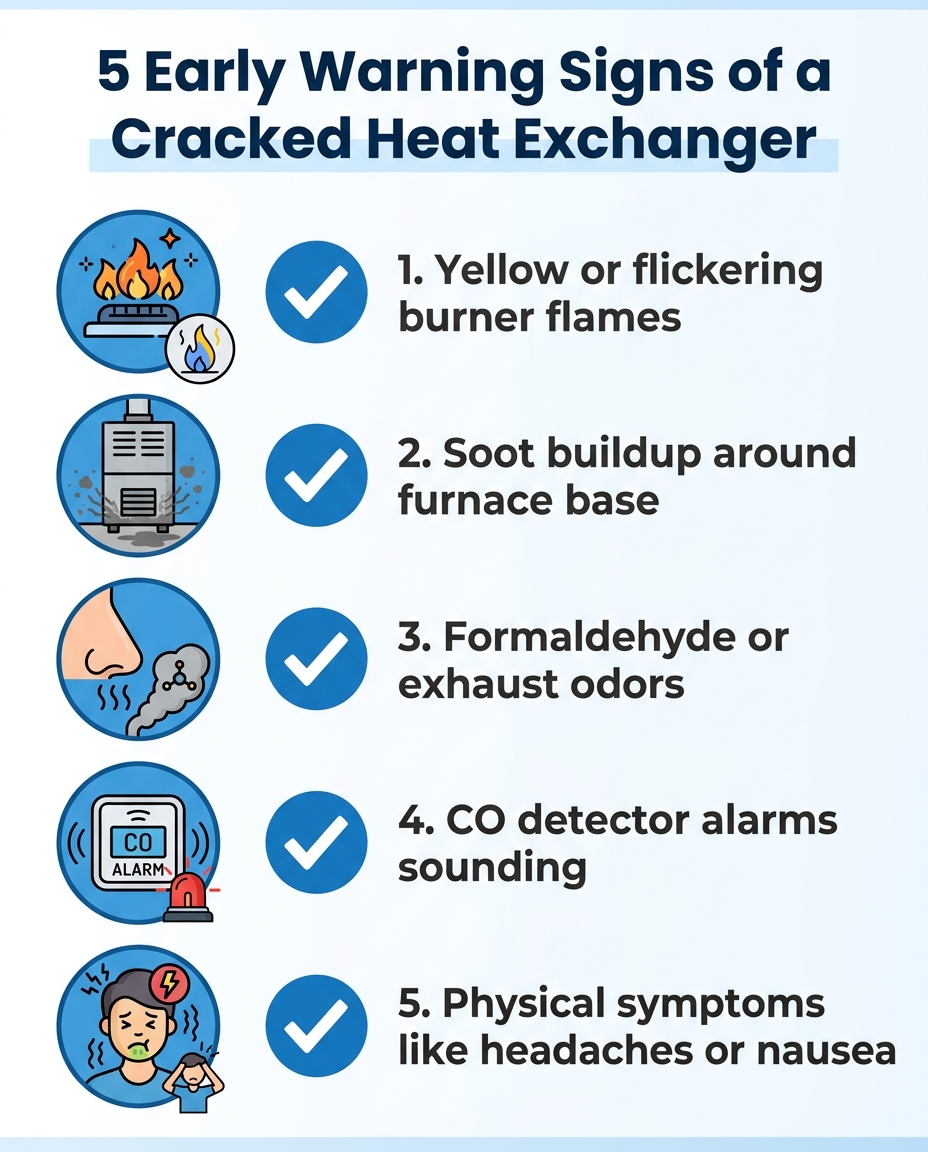
5 Early Warning Signs of a Cracked Furnace Heat Exchanger
While the cracks themselves are often microscopic and hidden deep inside the unit, a failing heat exchanger produces secondary symptoms that a vigilant homeowner can spot. During the September pre-heating season, keep a close eye out for these five critical warning signs.
1. Yellow or Dancing Burner Flames
Under normal, safe operating conditions, your furnace burners should produce a steady, bright blue flame with perhaps a tiny tip of yellow. This blue color indicates complete, efficient combustion. If you look into the burner viewport and see a lazy, flickering, or entirely yellow flame, you have a combustion problem. A cracked heat exchanger alters the air pressure inside the burner compartment, allowing excess oxygen or disrupted drafts to interfere with the flame. A yellow flame means the gas is not burning completely, which drastically increases the production of carbon monoxide and soot.
2. Soot Buildup Around Furnace Components
Soot is a fine, black carbon powder created by incomplete combustion. If your furnace is operating safely, it should burn cleanly without leaving a residue. If you notice a buildup of black dust around the exterior of the furnace cabinet, near the burner compartment, or around the exhaust flue, it is a major red flag. When our technicians perform fall tune-ups, this is a primary visual cue we look for. Soot indicates that the burners are starving for proper oxygen or that combustion gases are rolling out of the unit instead of venting up the chimney. This is frequently caused by the structural failure of the heat exchanger.
3. Unusual Formaldehyde or Exhaust Odors
While carbon monoxide itself is completely odorless, the other byproducts of burning gas are not. If your heat exchanger is cracked, you may begin to notice strange, unpleasant smells coming from your air vents when the heat kicks on. Homeowners often describe this scent as similar to formaldehyde, harsh chemicals, or vehicle exhaust. If your home smells like a running car engine when the furnace is operating, combustion gases are entering your ductwork. Addressing this immediately is vital for maintaining safe indoor air quality and protecting your family's health.
4. Carbon Monoxide Detector Alerts
A carbon monoxide detector that chirps or goes into full alarm mode should never be ignored, unplugged, or dismissed as a "false alarm." These devices are highly sensitive and are designed to alert you to life-threatening conditions. If your detector sounds while the furnace is running, it is highly probable that the heat exchanger has failed and is venting toxic gas into the home. Evacuate immediately, contact emergency services, and do not turn the furnace back on until it has been evaluated by a licensed professional.
5. Unexplained Physical Symptoms
The most critical and frightening warning sign of a cracked heat exchanger is the physical toll it takes on your family. Low-level carbon monoxide exposure mimics the symptoms of the flu or a common cold. Watch for unexplained headaches, nausea, dizziness, fatigue, or a feeling of confusion that seems to affect multiple family members at once. The defining characteristic of CO exposure is that these physical symptoms often clear up magically when you leave the house for a few hours, only to return shortly after you come back inside. If you notice this pattern, shut the system down immediately.

Why Visual Inspections by Homeowners Aren't Enough
It is incredibly common for homeowners to assume their furnace is perfectly safe simply because it turns on, blows hot air, and looks fine from the outside. This false sense of security can be dangerous. A cracked heat exchanger rarely causes the furnace to stop working completely; the system will often continue to heat the home while silently leaking toxic gases. Relying on a quick visual glance into the furnace cabinet is not enough to confirm the structural integrity of the metal.
The primary reason DIY inspections fail is the physics of the metal itself. Hairline stress fractures are often microscopic when the metal is cold. Because the metal contracts when the furnace is off, the crack pinches tightly shut, making it nearly invisible to the naked eye. The crack only opens up and becomes dangerous when the furnace is running and the metal expands under intense heat. By the time the crack is open, the furnace is fully operational, making it impossible (and highly dangerous) to look inside.
• Homeowner Visual Check — What Is Visible: Outer cabinet, basic flame color, external soot. — Safety Reliability: Low. Cannot see inside the heat exchanger cells; cracks close when cold.
• Professional Diagnostic — What Is Visible: Internal chambers via camera, combustion gas analysis, draft pressure. — Safety Reliability: High. Detects microscopic failures and measures actual gas leakage.
Furthermore, modern gas furnaces in the Conroe TX area feature complex internal geometry. The heat exchanger is intentionally buried deep inside the cabinet, often featuring curved clamshell or serpentine tubular designs. You simply cannot see the back, sides, or internal curves of the heat exchanger without completely dismantling the unit. Dismantling a gas appliance is highly dangerous and requires a licensed professional to ensure gas lines and venting are handled safely. Never attempt to take your furnace apart yourself to look for a crack.
Military-Grade Precision: The Importance of Professional Safety Checks
Because these fractures are so difficult to detect, standard visual checks fall short. As a veteran-owned company, our team at Carl's Quality Cooling and Heating LLC ensures you receive the same level of discipline, accountability, and military-grade precision that military service demands. A safety inspection should never be a quick glance with a flashlight; it must be an uncompromising mission to protect your household from hidden dangers.
Licensed professionals use specialized tools to diagnose heat exchanger integrity. We utilize high-resolution inspection cameras (boroscopes) that snake deep into the curved chambers of the heat exchanger to visually confirm microscopic stress fractures. More importantly, we use highly calibrated combustion analyzers. These electronic devices measure the exact chemical makeup of the exhaust gases and the oxygen levels in the airstream. If there is a crack, the combustion analyzer will detect the abnormal gas mixture instantly, even if the crack is entirely invisible to the camera.
Proactive care makes all the difference. We recently had a Conroe homeowner schedule a routine pre-season check-up where our technician recommended and performed a comprehensive system evaluation. Because of this disciplined approach, underlying system issues were identified and resolved early. The outcome was exactly what we strive for: the problems were solved before they could evolve into expensive, dangerous failures down the road. Treating the September pre-heating season with this level of seriousness ensures your family is protected before the extreme weather arrives.
Frequently Asked Questions About Furnace Safety
Can a cracked heat exchanger cause carbon monoxide poisoning?
Yes, a cracked heat exchanger is one of the leading causes of carbon monoxide leaks in residential homes. When the metal cracks, the toxic combustion gases that are supposed to vent safely out of the chimney are instead allowed to mix with the clean air circulating through your ductwork. This bypasses all standard safety venting and pumps carbon monoxide directly into your living space, making it a severe health hazard.
Can you still use a furnace with a cracked heat exchanger?
No, it is extremely dangerous and against all HVAC safety codes to operate a furnace with a cracked heat exchanger. The unit must be shut down immediately to prevent toxic gas exposure. There is no safe way to patch, weld, or temporarily seal a cracked heat exchanger, as the extreme thermal expansion will simply break the repair. The equipment must remain off until the component or the entire furnace is replaced.
Why do heat exchangers crack?
Heat exchangers crack primarily due to age, repeated thermal expansion, and poor airflow. Every time the furnace heats up, the metal expands, and when it cools, it contracts. Over many years, this constant movement causes metal fatigue. In the Conroe TX area, lack of routine maintenance, such as operating the system with a clogged air filter, restricts cooling airflow over the metal, causing the heat exchanger to overheat and accelerating the cracking process.
How much does it cost to fix a cracked heat exchanger?
While specific costs vary based on the make and model of the unit, replacing a heat exchanger is a major, labor-intensive repair. The entire furnace must be dismantled to remove the heavy metal component. In our experience, we typically advise homeowners that for older units already nearing the end of their lifespan, replacing the entire furnace is often much more cost-effective and provides better long-term reliability than attempting to install a new heat exchanger in an aging cabinet.
Protect Your Family Before the Cold Weather Arrives
Your furnace is a powerful appliance that requires respect and proactive care to operate safely. Catching the early warning signs of a cracked heat exchanger—like yellow burner flames, soot buildup, strange exhaust odors, or physical health symptoms—can prevent a catastrophic safety failure in your home. However, you should never wait for these symptoms to appear. The microscopic stress fractures caused by years of thermal expansion are easily missed by an untrained eye, making a professional safety check completely non-negotiable for older heating systems.
As the September pre-heating season approaches, now is the time to take action. Don't let your furnace sit unchecked until the first freezing night forces it into overdrive. Scheduling a comprehensive, military-grade safety evaluation today ensures that your system is structurally sound, giving you total peace of mind that your family will stay warm and safe all winter long.


