
Shivering Through an Early Autumn Night: The Desperate DIY Trap
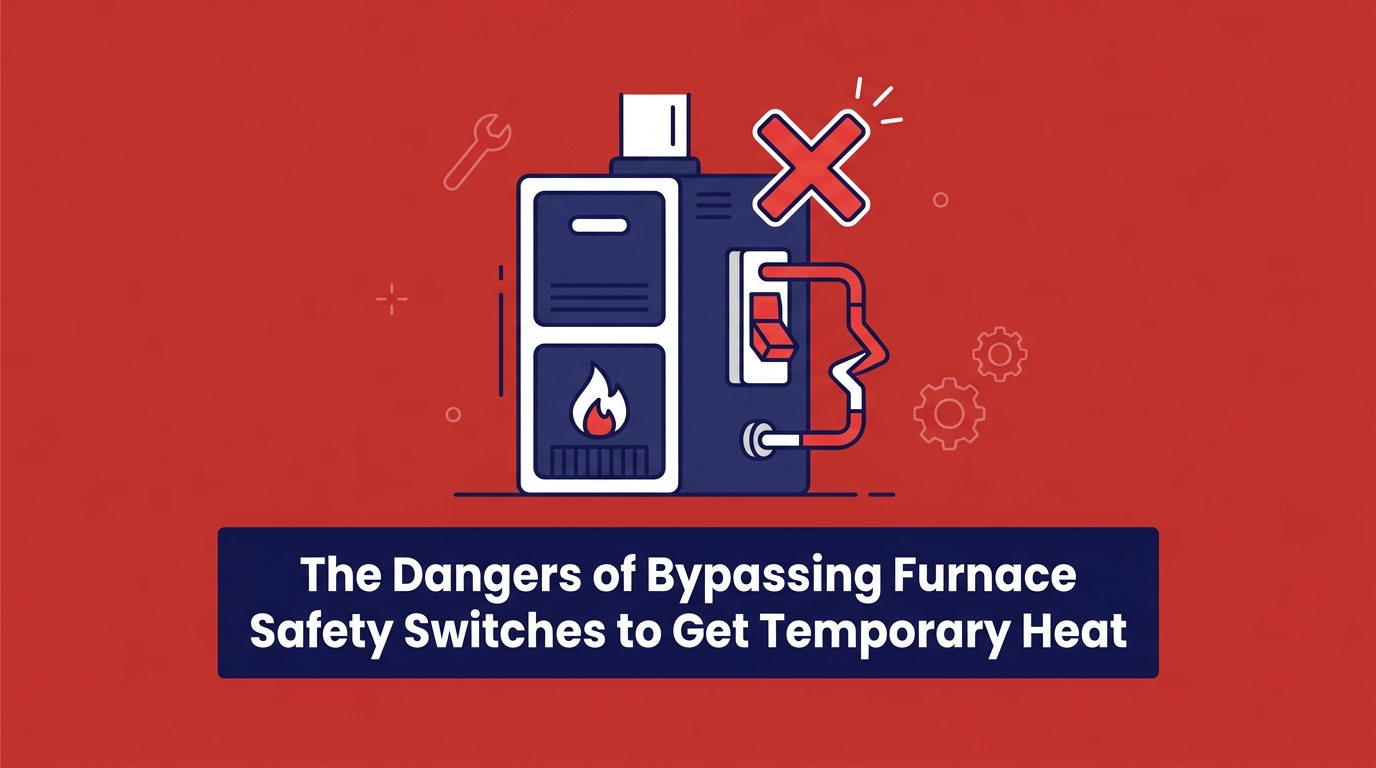
When the first unexpected early fall cold snap hits Conroe, our team at Carl's Quality Cooling and Heating LLC sees a sharp increase in emergency no-heat calls. You are relying on your heating system to keep your family comfortable, but in our years serving Montgomery County, we've found that understanding the dangers of bypassing furnace safety switches to get temporary heat is absolutely vital before you reach for your toolbox. The temperature drops rapidly, you turn on the thermostat, and you hear the furnace kick on—only for it to shut down a few minutes later. As the house grows colder, the temptation to search online for a quick fix becomes overwhelming. Many homeowners stumble across internet forums suggesting they use a jumper wire or a simple paperclip to bypass a tripping limit switch or rollout switch just to get through the night.
Here is the reality we constantly stress to our customers: bypassing these built-in safety mechanisms is never a harmless hack or a clever temporary workaround. These switches are the only fail-safes standing between your living space and catastrophic equipment damage, active fires, or toxic gas leaks. When a switch trips repeatedly, it is not a nuisance; it is a blaring alarm that your system is operating in a highly dangerous state.
If your furnace refuses to stay running, the only acceptable solution is to rely on professional heating services to diagnose the root cause of the shutdown. Attempting to force the system to run without its safety monitors is playing Russian roulette with your home. Furthermore, we highly recommend enrolling in a routine HVAC maintenance plan. Based on what we see in the field, preventive maintenance is the most effective way to stop these terrifying, sudden failures before freezing temperatures ever arrive.
Understanding the High-Limit Switch: Your Furnace's Thermal Shield
Your furnace generates an intense amount of heat during the combustion process, and the high-limit switch acts as the primary thermal shield for the entire system. This crucial component is a temperature-sensitive probe mounted directly above the heat exchanger. Its sole job is to monitor the internal temperature of the furnace cabinet and ensure it stays within a safe operating range.
During sudden temperature drops in Conroe TX, our technicians frequently see homeowners rushing to turn on heating systems that have sat dormant and gathered dust for months. A pattern we see often during these early fall startups on unmaintained systems is immediate airflow restriction. When the furnace cannot push the hot air out into your home—whether due to a severely clogged air filter, blocked return vents, or a failing blower motor—the heat remains trapped inside the metal cabinet. The internal temperatures skyrocket in a matter of minutes.
The Problem: The furnace is generating heat, but restricted airflow prevents that heat from being distributed, causing the heat exchanger to rapidly overheat.
The Cause: Summer dust accumulation, neglected filter changes, or mechanical failures in the blower assembly trap the heat inside the system.
The Solution: The high-limit switch detects this unsafe temperature spike and immediately cuts electrical power to the gas valve, extinguishing the burner flames before the metal can warp or melt.
• Normal Airflow — Internal Temperature: 140°F - 170°F — High-Limit Switch Action: Remains Closed — System Status: Heating cycle continues normally
• Mild Restriction (Dirty Filter) — Internal Temperature: 170°F - 190°F — High-Limit Switch Action: Approaching Threshold — System Status: System struggles, runs longer cycles
• Severe Restriction (Blocked Airflow) — Internal Temperature: 200°F+ (Unsafe) — High-Limit Switch Action: Trips Open (Cuts Power) — System Status: Burners shut down to prevent damage
This is why our crew insists you must never attempt to manually jump this switch. Bypassing the high-limit switch forces the furnace to generate uncontrolled, trapped heat with no mechanism to shut it down, leading directly to catastrophic equipment failure.
The Flame Rollout Switch: Guarding Against Blocked Flues
While the high-limit switch monitors internal air temperature, the flame rollout switch is designed to protect your home from active fires outside the combustion chamber. In a properly functioning furnace, the flames and the resulting toxic combustion gases are drawn deep into the heat exchanger and eventually vented safely out of your home through the flue pipe.
Flame rollout occurs when those combustion gases and flames cannot vent properly. Instead of moving smoothly through the exhaust system, the heat and flames "roll out" backward into the furnace cabinet, right where the delicate wiring and gas valves are located.
In our experience inspecting dormant exhaust flues around the area, the most common culprits for flame rollout often reveal themselves during an early fall cold snap. Over the long summer months, birds, rodents, or insects frequently build nests inside the exhaust flue. We also often find severe rust that has eaten through the heat exchanger, or draft issues pushing outside air back down the chimney. When you start the furnace for the first time, the exhaust has nowhere to go.
The rollout switch is strategically positioned near the burner opening to detect this misdirected heat. The moment it senses flames or extreme heat spilling backward, it immediately shuts down the combustion process. A tripped rollout switch is never a minor inconvenience or a simple glitch; it is a glaring sign of a severe, active mechanical failure that requires immediate professional intervention.
The Catastrophic Chain Reaction of a Jumper Wire
When a homeowner decides to bypass a safety switch using a jumper wire or a paperclip, they are not just "tricking" the furnace into turning on; they are initiating a catastrophic chain reaction. We always warn our customers that the safety switches in your Conroe TX home are not designed to be optional accessories. Removing them from the electrical circuit guarantees that a minor mechanical issue will escalate into a life-threatening emergency.
Fire Hazards from Uncontrolled Combustion
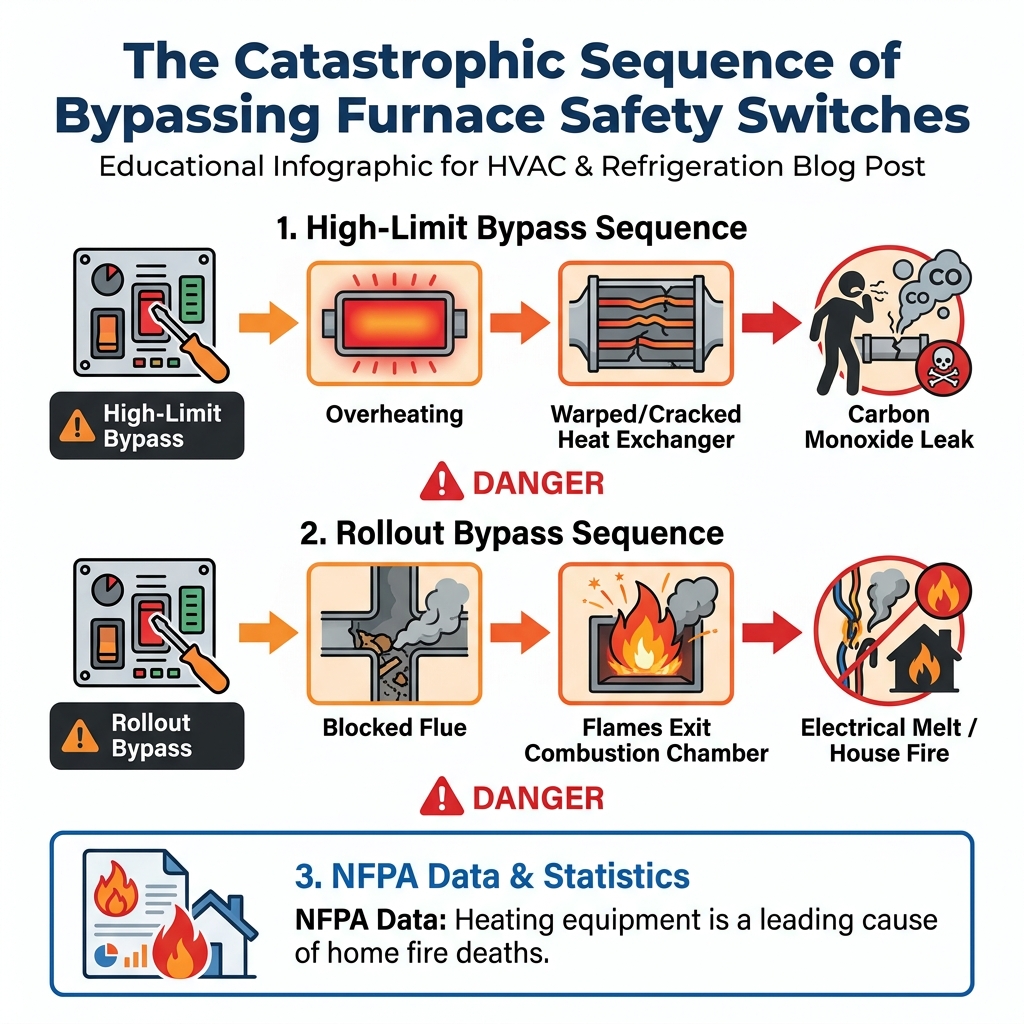
If you bypass a flame rollout switch, you are allowing flames to continuously spill out of the combustion chamber. Without the switch to cut the power to the gas valve, these flames will quickly melt the internal wiring of the furnace, scorch the control board, and ignite the surrounding furnace casing. From there, the fire can easily spread to nearby combustibles, such as drywall, stored boxes, or wooden framing. Heating equipment remains a leading cause of home fire deaths, and bypassed safety mechanisms are a primary factor in these devastating events.
Toxic Gas Exposure
Bypassing a high-limit switch often results in a cracked heat exchanger. When the furnace overheats continuously, the metal of the heat exchanger expands, warps, and eventually cracks under the intense thermal stress. Once the heat exchanger is compromised, the toxic gases created during combustion—including deadly carbon monoxide—are no longer contained. Instead, these gases mix with the breathing air that your blower motor circulates throughout your living space. Understanding the dangers of a carbon monoxide leak is critical; this colorless, odorless gas can cause severe illness or fatalities, especially when a system is left running overnight with bypassed safety controls.

Debunking the Myth of the 'Glitchy' Sensor
One of the most common—and dangerous—excuses our technicians hear during early fall service calls is the assumption that a tripping switch is just a "glitchy sensor." Because the furnace sounds normal when it first turns on, and the flames look fine for the first few minutes, it is easy to convince yourself that the mechanical components are perfectly healthy and the sensor is simply being overly sensitive.
Here is the truth: furnace safety switches are incredibly simple, highly robust mechanical devices. They are typically bimetallic discs that physically warp and break an electrical connection when exposed to a specific, precise temperature. They rarely fail on their own.
• They do not have complex software that can "glitch."
• They do not trip randomly due to old age.
• They do not need to be "reset" just to see if the problem goes away.
If a limit switch or rollout switch trips repeatedly, it is doing exactly what it was engineered to do: detecting a very real, very dangerous hazard. Resetting a switch over and over without diagnosing the root cause is playing a dangerous game with your home's safety. Assuming a part is just glitching because the furnace seems otherwise fine is exactly how preventable fires and toxic gas leaks occur.
By-The-Book Solutions for Sudden Furnace Failures
When the heat goes out unexpectedly, panic often sets in, but resorting to internet hacks is never the answer. Professional diagnosis requires specialized tools—such as multimeters to test electrical continuity, manometers to check gas pressure, and combustion analyzers to detect invisible gases—along with licensed expertise to interpret the readings safely.
If your furnace repeatedly shuts down, follow these safe, by-the-book steps:
1. Turn the system off completely: Go to your thermostat and switch the heating setting to "OFF." Do not attempt to reset the system multiple times.
2. Check your air filter: A severely clogged air filter is the only homeowner-serviceable issue that causes high-limit trips. If it is completely caked in dust, replace it, and try running the system once more.
3. Clear the surrounding area: Ensure all supply and return vents in the home are open and unobstructed by furniture or rugs.
4. Call for professional help: If the filter is clean and the system still shuts down, leave it off and contact a licensed technician immediately.
The value of a rapid professional response cannot be overstated. Our team remembers one local homeowner who reached out to us on an unusually chilly autumn night at 10 p.m. when their heater completely stopped running, causing indoor temperatures to plummet. Instead of attempting a dangerous bypass, they called our emergency service. Our technicians worked quickly, correctly diagnosed the mechanical failure, and had the heater running safely within an hour.
As a veteran-owned and family-run business, Carl's Quality Cooling and Heating prioritizes doing things "by the book" to ensure community safety over life-threatening shortcuts. If you are experiencing repeated furnace shutdowns, we strongly direct readers in our Montgomery County service areas to rely on certified experts rather than dangerous DIY workarounds.
Prioritize Your Home's Safety Over a Quick Fix
Your furnace's limit and rollout switches are the ultimate guardians against devastating house fires and silent, toxic gas leaks. While an early fall cold snap can make a broken heater feel like an emergency, bypassing these critical safety mechanisms for temporary heat is an unacceptable, catastrophic risk that puts your entire household in danger.
Never let the desperation for a quick fix override your family's safety. If your system is struggling to stay on, the safest course of action is to leave the unit powered down and trust a qualified professional to find the true source of the problem. We encourage all homeowners to learn more about professional diagnostic services to keep their heating systems running safely and reliably all season long.
Frequently Asked Questions
What happens if you bypass a furnace limit switch?
Bypassing a furnace limit switch forces the system to generate heat without any temperature regulation. This trapped, uncontrolled heat will rapidly warp and crack the metal heat exchanger. Once the heat exchanger cracks, toxic combustion gases, including carbon monoxide, are pushed directly into your home's breathing air.
Why does my furnace safety switch keep tripping?
A safety switch keeps tripping because it is detecting a dangerous operating condition, not because the switch itself is broken. Common causes include severely restricted airflow from a clogged filter, a failing blower motor, or a blocked exhaust flue. The switch cuts power to prevent immediate fire hazards or equipment destruction.
Can you bypass a flame rollout switch temporarily?
No, you must never bypass a flame rollout switch, even temporarily. A tripping rollout switch means that active flames and extreme heat are spilling backward out of the combustion chamber into the furnace cabinet. Bypassing this switch allows those flames to melt internal wiring and potentially ignite a house fire within minutes.
How do I know if my furnace heat exchanger is cracked?
A cracked heat exchanger often presents subtle warning signs before complete failure. You might notice unusual odors, soot buildup around the furnace, a yellow burner flame instead of blue, or your carbon monoxide detectors sounding an alarm. Because cracks can be microscopic and hidden, a professional technician must inspect the heat exchanger using specialized cameras and combustion analysis tools.
Why does my furnace shut off after a few minutes?
If your furnace shuts off after just a few minutes, it is likely short-cycling due to a tripped high-limit switch. The system starts normally, but restricted airflow causes the internal temperature to spike rapidly, forcing the safety switch to cut power to the gas valve. Checking and replacing a dirty air filter is the first step in troubleshooting this issue.
Is it safe to reset a tripped furnace limit switch?
It is generally safe to reset the system once after replacing a severely clogged air filter to see if normal airflow resolves the issue. However, if the switch trips a second time, it is not safe to continue resetting it. Repeatedly resetting a tripping switch without fixing the underlying mechanical problem forces the furnace to endure damaging thermal stress.