

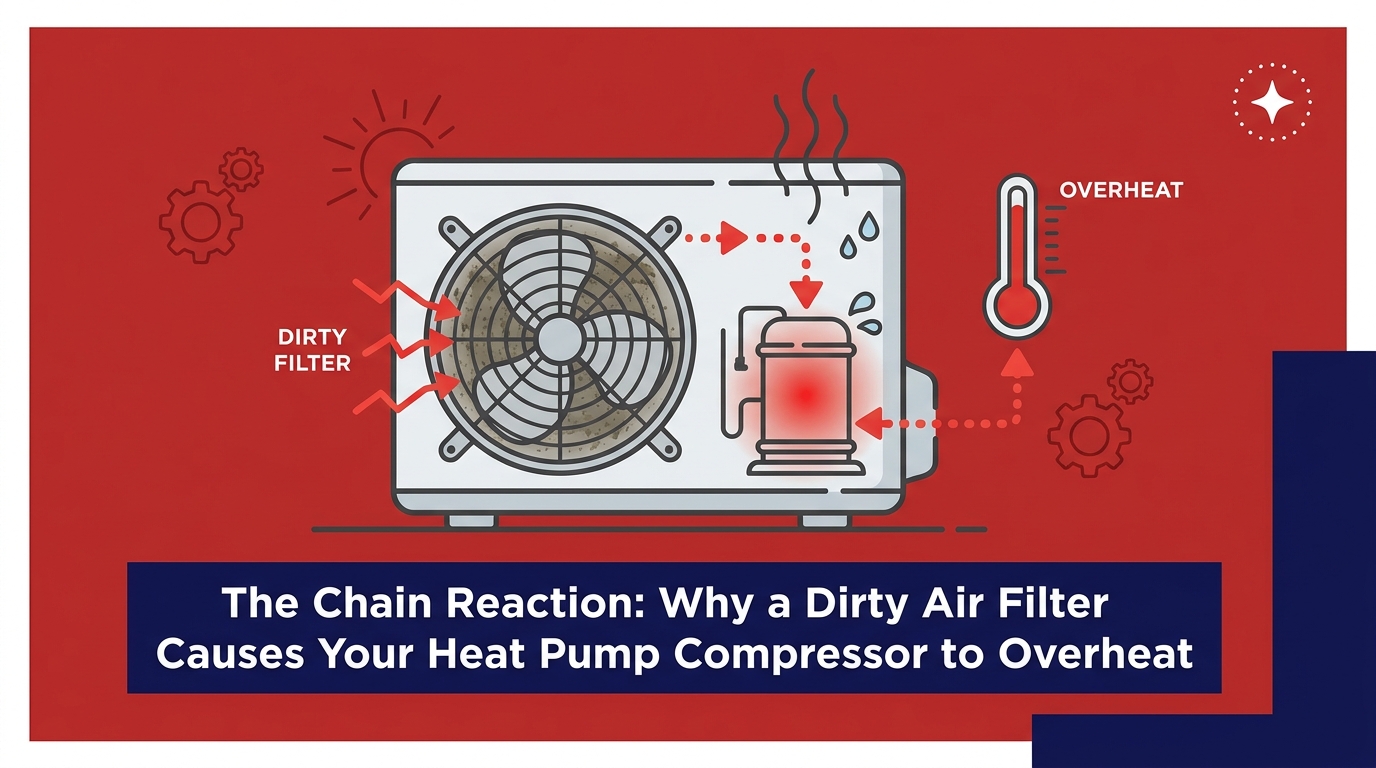

When Summer Heat Meets Restricted Airflow
Your system is running nonstop, but the house still feels warm, and you are left wondering exactly why a dirty air filter causes your heat pump compressor to overheat. At Carl's Quality Cooling and Heating LLC, our team sees this scenario play out time and time again. It is one of the most misunderstood mechanical failures in residential HVAC. You might notice the air coming from your supply vents feels weak, or perhaps the outdoor unit sounds noticeably louder than usual. These are the first warning signs of a system struggling to breathe.
While modern systems are celebrated for providing exceptional heating services during cooler weather, it is the peak summer July heat that puts unique and extreme stress on the equipment. When temperatures soar, your system operates near its maximum capacity for hours on end. During these high-demand periods, any restriction in airflow initiates a devastating mechanical chain reaction.
Many homeowners mistakenly believe that the primary job of an air filter is simply to improve indoor air quality by catching dust and pet dander. In reality, the filter's most critical function is protecting the internal components of the equipment itself. A neglected filter does not just leave you with a dusty house; it triggers a sequence of thermodynamic failures that can ultimately destroy the system's most vital and expensive component.
Understanding this chain reaction is the key to protecting your investment. By looking closely at the mechanical steps our technicians observe when airflow is choked off, you can see exactly how a simple piece of pleated fabric holds the power to shut down an entire central cooling system.
The Baseline Mechanics: Why Heat Pumps Demand Unrestricted Airflow
To grasp why a dirty filter is so destructive, you first need to understand how these systems actually cool your home. Heat pumps and traditional air conditioners do not "create" cold air out of nothing. Instead, they act as heat transfer machines. They absorb unwanted heat from inside your living spaces and pump it outside. This delicate process requires a very specific volume of air moving across the indoor coils at all times.
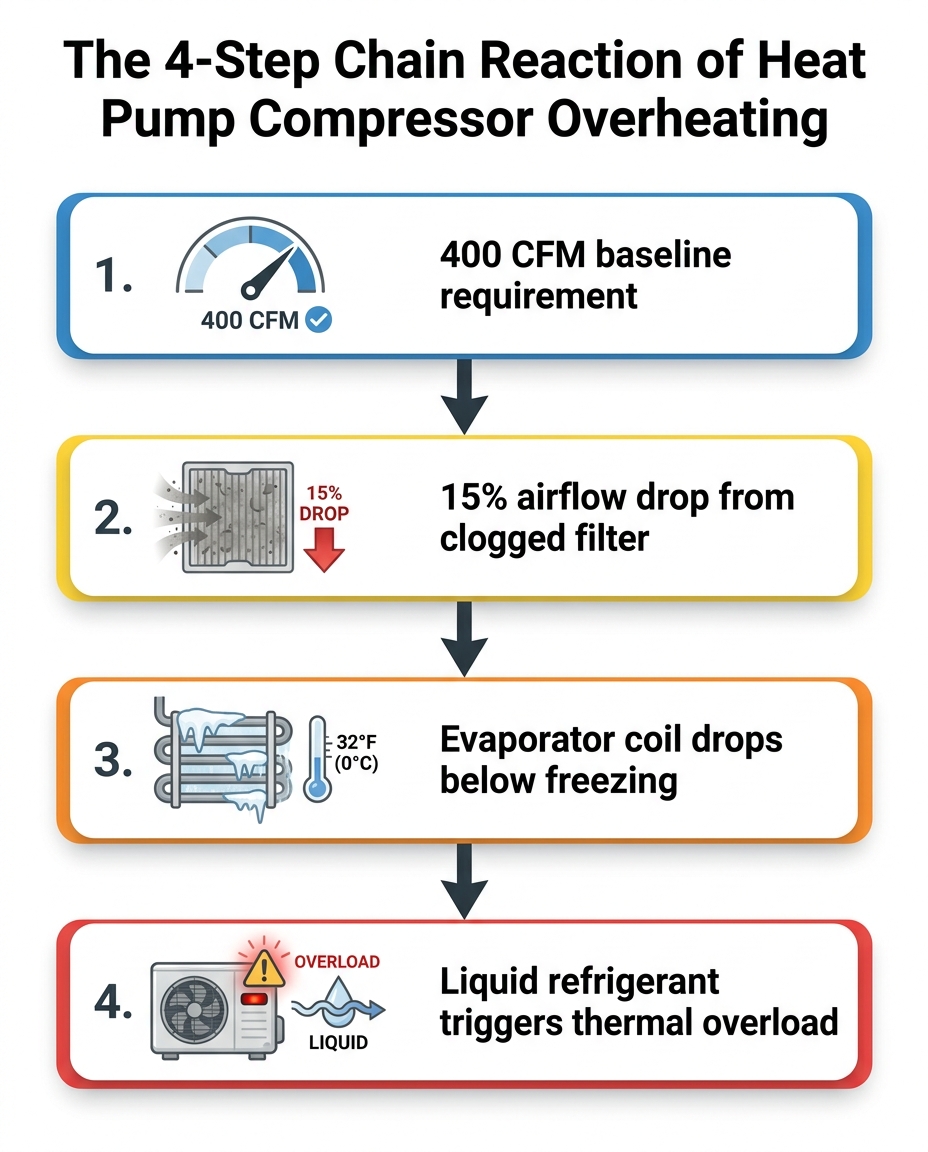
For a residential heat pump compressor to function properly, the system requires a baseline of approximately 400 CFM (Cubic Feet per Minute) of airflow for every ton of cooling capacity. If you have a standard three-ton system, that means the blower motor must push 1,200 cubic feet of air through the ductwork every single minute. This is a massive volume of air, and the system relies on this exact measurement to facilitate proper heat exchange.
When you seek professional air conditioning services from our team, our technicians are constantly measuring this airflow. Any deviation from this baseline forces the system to operate outside of its designed thermodynamic parameters.
• Clean Filter (Normal) — Airflow Volume (CFM): 400 CFM per ton — System Impact: Optimal heat transfer, balanced pressures, efficient cooling.
• Slightly Dirty Filter — Airflow Volume (CFM): 360 CFM per ton — System Impact: Longer run times, higher energy consumption, mild system strain.
• Severely Clogged Filter — Airflow Volume (CFM): 340 CFM or lower — System Impact: Evaporator coil freezes, liquid slugging begins, high risk of shutdown.
The outdoor compressor is the heart of this entire operation. It is responsible for pumping the chemical refrigerant through the copper lines between the indoor and outdoor units. However, the compressor can only do its job safely if the indoor coil is absorbing enough heat from the house. When airflow drops, that heat absorption stops, setting the stage for a catastrophic failure.
Step 1: A Clogged Filter Chokes the Return Air
The first stage of this destructive chain reaction begins invisibly at the return air grille. As the system runs day after day, the pleated filter traps dust, pollen, pet hair, and airborne particulates. Over weeks and months, this debris forms a dense, solid mat across the surface of the filter media. What was once a breathable barrier becomes a physical wall.
This is why knowing when to change your air filter is the single most important maintenance task a homeowner can perform. A severely dirty filter can reduce system airflow by up to 15 percent. While that might not sound like a massive number, it completely alters the physics of the system.
1. The blower motor struggles: The indoor fan must work significantly harder to pull air through the clogged barrier, increasing electrical draw and motor heat.
2. Static pressure spikes: The resistance inside the ductwork increases, creating a high-pressure environment that the blower was not designed to handle continuously.
3. Return air volume plummets: Less warm, unconditioned air is pulled from the hallways and living rooms into the system.
4. Supply air weakens: Because less air enters the system, less conditioned air is pushed out of the supply vents, leaving the home feeling warm and stagnant.
This physical restriction is the root cause of the mechanical failures that follow. Even if you invest heavily in premium indoor air quality services, a neglected primary filter will still choke the system.
The Invisible Drop in CFM
The danger of a 15 percent drop in CFM is that you may not immediately feel the difference when standing near a vent. The air blowing out might still feel somewhat cool, tricking you into thinking the system is fine. However, inside the air handler, the environment has drastically changed. The residential heat pump compressor is still pumping the same volume of cold refrigerant indoors, but there is no longer enough warm air crossing the coil to absorb that cold energy.
Step 2: The Evaporator Coil Drops Below Freezing
With the return air physically choked off, the thermodynamics of the system rapidly break down. Inside your indoor unit sits the evaporator coil, a series of copper tubes filled with highly pressurized, extremely cold liquid refrigerant. Under normal conditions, the warm air from your house blows over these tubes, transferring its heat into the refrigerant. This heat transfer warms the refrigerant while simultaneously cooling the air.
When a dirty filter blocks that warm air from reaching the coil, the cold refrigerant has absolutely no heat to absorb. As a result, the surface temperature of the evaporator coil plummets rapidly, quickly dropping well below the freezing point of 32 degrees Fahrenheit.
This is where the local climate accelerates the failure. In our years of servicing homes across Conroe, our team has seen firsthand how our extreme summer humidity plays a role. There is a massive amount of moisture suspended in the indoor air. Normally, this moisture condenses on the cold coil and drips harmlessly down the drain pan—a process known as latent cooling. But when the coil temperature drops below freezing due to restricted airflow, that condensation instantly turns into a solid block of ice.
Once a thin layer of ice forms, it creates a runaway effect. The ice acts as an insulator, further preventing any remaining warm air from touching the copper tubes. The ice also physically blocks the narrow fins of the coil, restricting airflow even more. Within hours during the peak summer July heat, the entire indoor coil can become encased in a thick block of solid ice, completely halting any cooling capacity.
Step 3: Liquid Refrigerant Returns to the Compressor
As the indoor coil freezes solid, the danger shifts to the outdoor unit. This is the critical phase where the actual damage to the residential heat pump compressor occurs. To understand why, you have to look at the physical state of the refrigerant traveling through the copper lines.
Refrigerant is designed to change states. It enters the indoor coil as a cold liquid. As it absorbs heat from your home's air, it is supposed to boil and evaporate into a warm gas before traveling back outside to the compressor. The compressor is appropriately named—its sole mechanical purpose is to compress gas.
Because the frozen indoor coil cannot transfer any heat, the refrigerant never boils. Instead, it remains a freezing cold liquid as it exits the house and travels down the suction line directly into the outdoor unit.
The Dangers of Liquid Slugging
When liquid refrigerant enters the compressor, it causes a violent mechanical reaction known in the industry as "liquid slugging." Compressors are engineered with incredibly tight tolerances to squeeze vapor. You cannot compress a liquid. When the internal pistons or scroll plates attempt to compress this returning liquid refrigerant, it places immense physical strain on the metal components.
Worse still, the liquid refrigerant acts as a solvent. It washes away the critical lubricating oils inside the compressor housing. Without this oil, the moving metal parts grind against each other. Friction skyrockets, internal wear and tear accelerates rapidly, and the temperature of the motor begins to climb to dangerous levels.
Step 4: Thermal Overload and Complete System Shutdown
Fighting against abnormally high head pressure, starved of essential lubrication, and violently attempting to pump liquid instead of gas, the compressor motor quickly overheats. The internal temperatures soar far beyond safe operating limits.
Fortunately, modern systems are equipped with a built-in safety mechanism called a thermal overload switch. This switch monitors the temperature of the compressor motor windings. When the heat becomes critical, the switch trips, instantly cutting electrical power to the compressor to prevent a catastrophic electrical short, a melted wire, or a complete motor burnout.
Our team at Carl's Quality Cooling and Heating LLC saw this exact sequence unfold for a local homeowner when their system went out on the Fourth of July during extreme heat. One of our technicians had to come out quickly, assess the damage to the overworked unit, and return the next morning to completely replace it. When the thermal overload trips, the outdoor fan might still spin, and the indoor blower might still push air, but the air coming from the vents will be entirely warm because the cooling cycle has been forcibly shut down.
At this stage, many homeowners try to "fix" the problem by flipping the breaker off and back on to reset the system. While this might temporarily force the compressor to start again once it cools down, doing so without addressing the clogged filter will only repeat the exact same cycle. Forcing a system to repeatedly hit thermal overload during the peak summer July heat will eventually cause the compressor to fail permanently, requiring a massive and avoidable replacement.

Recognizing Early Warning Signs of Compressor Stress
The best way to handle thermal overload is to prevent it from happening in the first place. Long before the residential heat pump compressor shuts down completely, our team typically sees several warning signs indicating that a system is struggling against restricted airflow. Catching these symptoms early can save you from a severe mechanical failure.
We advise our customers to pay close attention to how your system behaves during the hottest parts of the day. If you notice any of the following symptoms, the mechanical chain reaction has likely already begun:
• Short cycling: The system turns on, runs for only a few minutes, shuts off abruptly, and then restarts again shortly after. This rapid on-and-off cycling is a classic sign of internal stress and overheating.
• Unusually high energy bills: Replacing a dirty filter can lower your energy consumption by 5 to 15 percent. If your summer electricity bills spike suddenly without a change in thermostat settings, a clogged filter is forcing the blower motor to draw excess amperage.
• Lukewarm supply air: If the air blowing from your ceiling or floor registers feels room-temperature rather than crisp and cold, the indoor coil is likely beginning to freeze over.
• Visible ice formation: Check the indoor air handler or look at the large, insulated copper refrigerant line running to the outdoor unit. If you see frost or solid ice accumulating on the copper, the system is starved for airflow.
• Excessive outdoor noise: A compressor that is experiencing liquid slugging or running without proper oil lubrication will often sound noticeably louder, producing a harsh buzzing or grinding noise.
If you observe any of these signs, the first and most immediate step is to turn the thermostat off completely. Allow the system to thaw if ice is present, and immediately check the condition of your air filter.
Preventing Catastrophic Failures with Proactive Care
Protecting your system from this mechanical domino effect does not require a degree in thermodynamics. It simply requires a preventative mindset. Changing the air filter every 30 to 90 days is the easiest, most cost-effective way to protect the compressor from unnecessary heat and strain. By maintaining that critical baseline airflow, you ensure the refrigerant phase changes happen exactly as engineered.
Working with a veteran-owned company like ours means you get the same level of discipline and accountability that military service demands. Our team at Carl's Quality Cooling and Heating prioritizes honest, preventative education because we've seen too many homeowners face costly, easily avoidable compressor replacements. We believe in fixing the root cause of a problem, not just addressing the symptoms.
Beyond changing the filter, enrolling in a routine HVAC maintenance plan ensures that a professional is verifying optimal airflow, checking the exact refrigerant charge, and deep-cleaning the evaporator and condenser coils before the peak summer July heat arrives. Proactive care keeps the air flowing, keeps the compressor cool, and ensures your home stays comfortable when you need it most.
Frequently Asked Questions
Can a dirty filter cause a heat pump to stop working?
Yes, a dirty filter can absolutely cause the entire system to shut down. When the filter becomes clogged, it restricts the airflow needed to transfer heat properly. This leads to a frozen indoor coil, which eventually causes the outdoor compressor to overheat and trip its internal safety switch. Once this thermal overload switch trips, the system will stop cooling your home until it is reset and the airflow issue is resolved.
Why is my heat pump not cooling?
If your system is running but blowing warm or room-temperature air, a severely restricted air filter is one of the most common culprits. Without enough warm return air blowing over the indoor coil, the system cannot absorb heat from your home. This often results in the indoor coil freezing solid, which completely blocks the cooling process and forces the outdoor unit to pump liquid refrigerant, leading to a loss of cooling capacity.
Will a dirty filter cause an AC compressor to overheat?
Yes, restricting airflow is a primary cause of compressor overheating. When a dirty filter blocks air from reaching the indoor coil, the refrigerant cannot evaporate into a gas. Instead, freezing liquid refrigerant travels back to the compressor. The compressor struggles to pump this liquid, which washes away vital internal lubricants, causing friction and heat to skyrocket until the motor overheats and shuts down.
What happens if you don't change your heat pump filter?
Failing to change the filter forces the blower motor to work significantly harder, leading to increased energy consumption and higher utility bills. Over time, the lack of airflow will cause the indoor evaporator coil to freeze over. If left unchecked, this mechanical stress will travel to the outdoor unit, potentially causing permanent damage to the compressor and requiring a major system replacement.
How long does it take for a dirty filter to freeze an evaporator coil?
During peak summer conditions with high humidity, a severely clogged filter can cause an evaporator coil to freeze in a matter of hours. The exact timeframe depends on how restricted the airflow is and the moisture levels inside the home. Once a thin layer of frost forms, it acts as an insulator, accelerating the process until the entire coil is encased in solid ice.
Can a heat pump compressor recover from thermal overload?
A compressor can often recover from a single thermal overload event once the motor cools down and the safety switch resets. However, if the underlying cause—such as a dirty filter—is not fixed, the system will repeatedly overheat and trip the switch. Forcing a compressor to repeatedly endure thermal overload will eventually degrade the motor windings and lead to irreversible mechanical failure.
Understanding exactly why a dirty air filter causes your heat pump compressor to overheat highlights just how critical basic maintenance really is. By keeping the air flowing freely, you protect the heart of your system from invisible mechanical stress. A clear, logical approach to routine filter changes and professional tune-ups validates the importance of preventative care, giving you peace of mind and reliable cooling all summer long.


